
- Home
- Cisco Certifications
- 820-605 Cisco Customer Success Manager (CSM) Dumps
Pass Cisco CSM 820-605 Exam in First Attempt Guaranteed!
Get 100% Latest Exam Questions, Accurate & Verified Answers to Pass the Actual Exam!
30 Days Free Updates, Instant Download!

820-605 Premium Bundle
- Premium File 178 Questions & Answers. Last update: Sep 27, 2026
- Training Course 24 Video Lectures
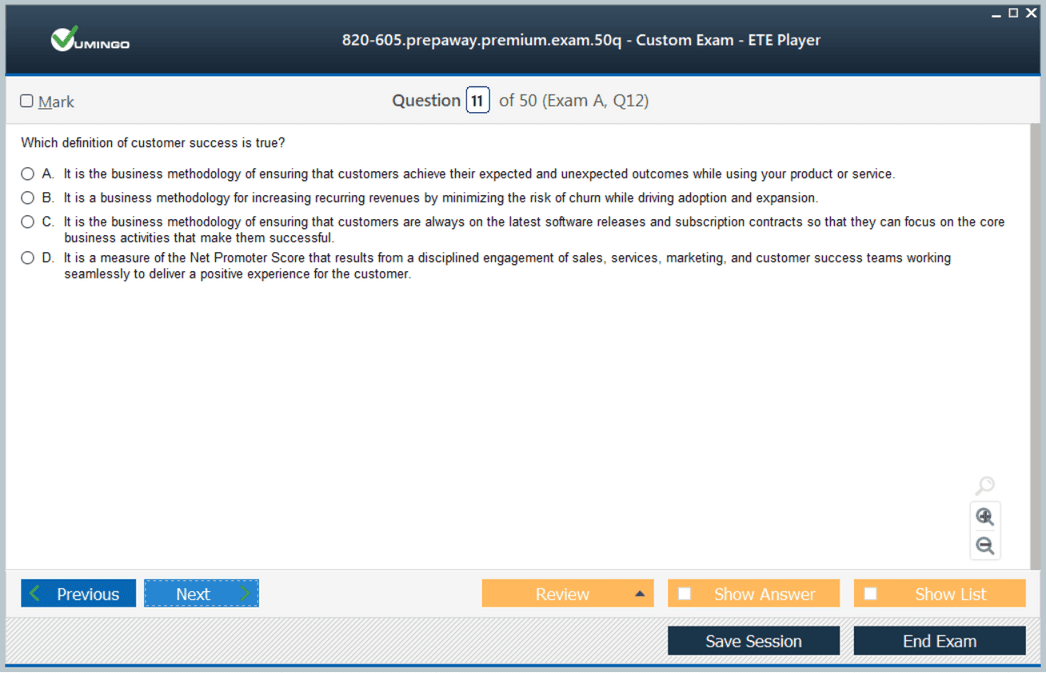
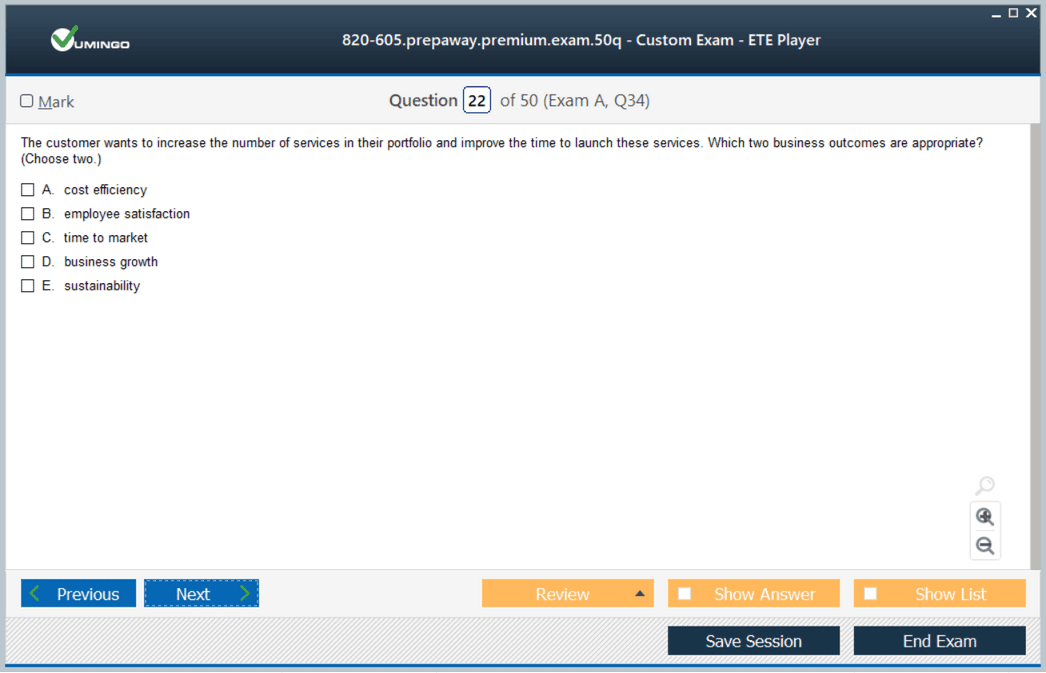
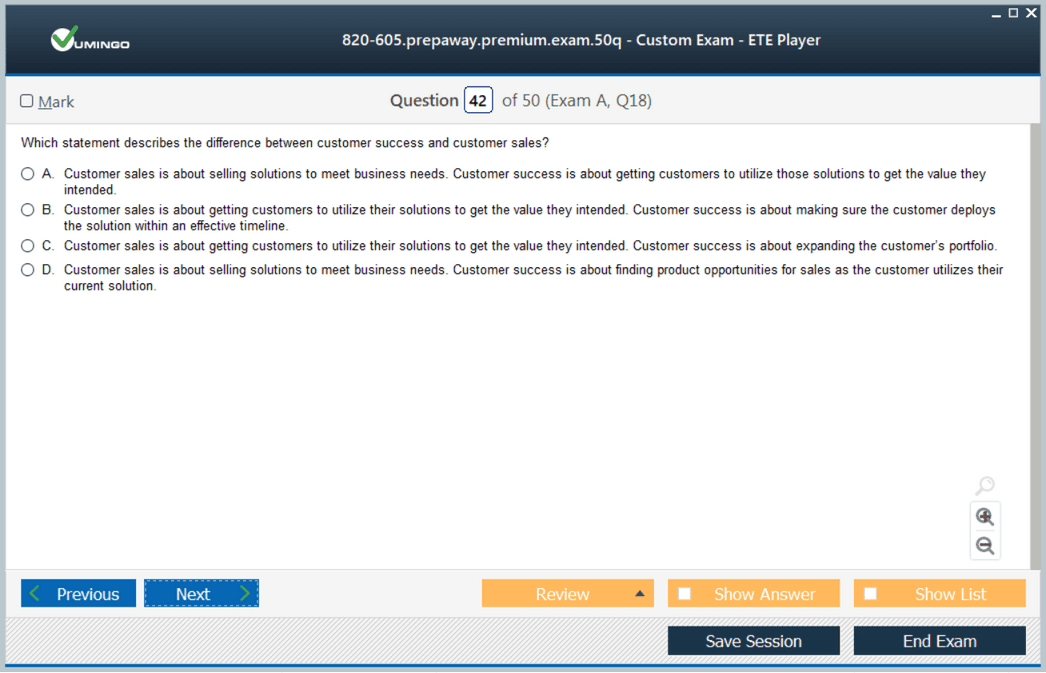
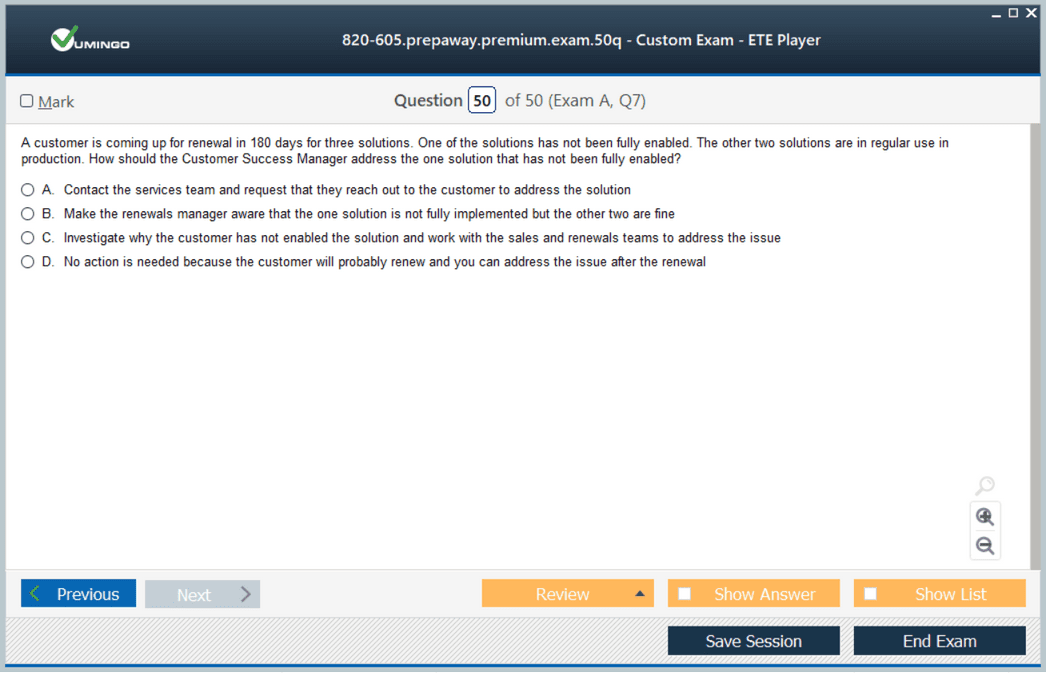
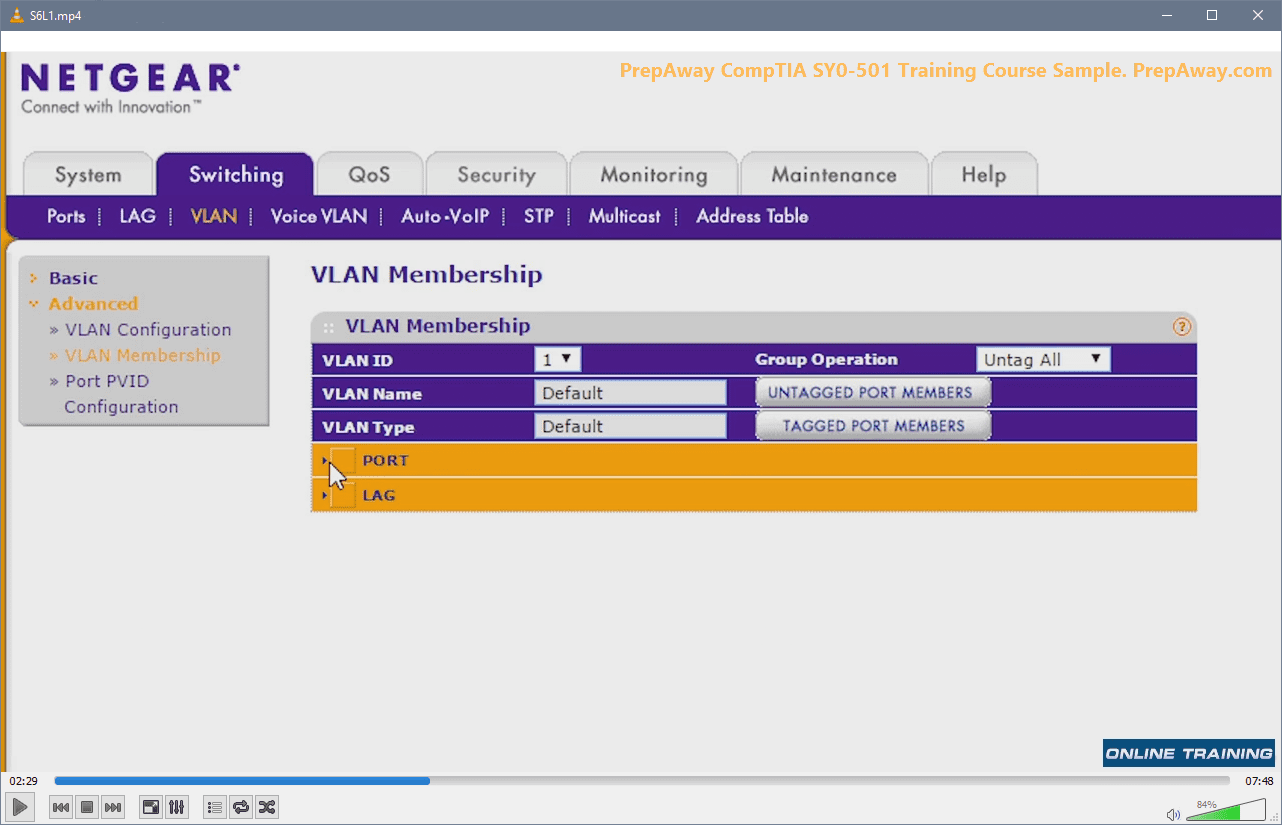
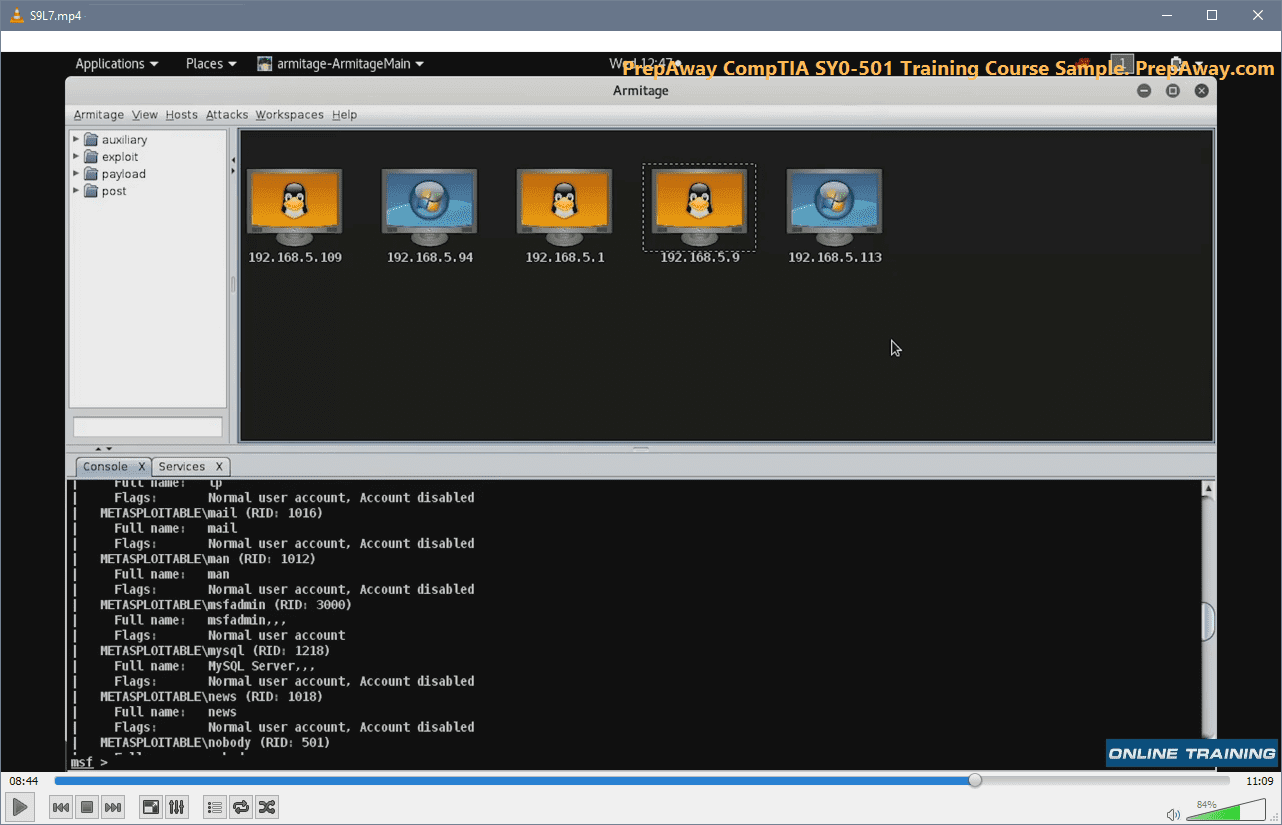
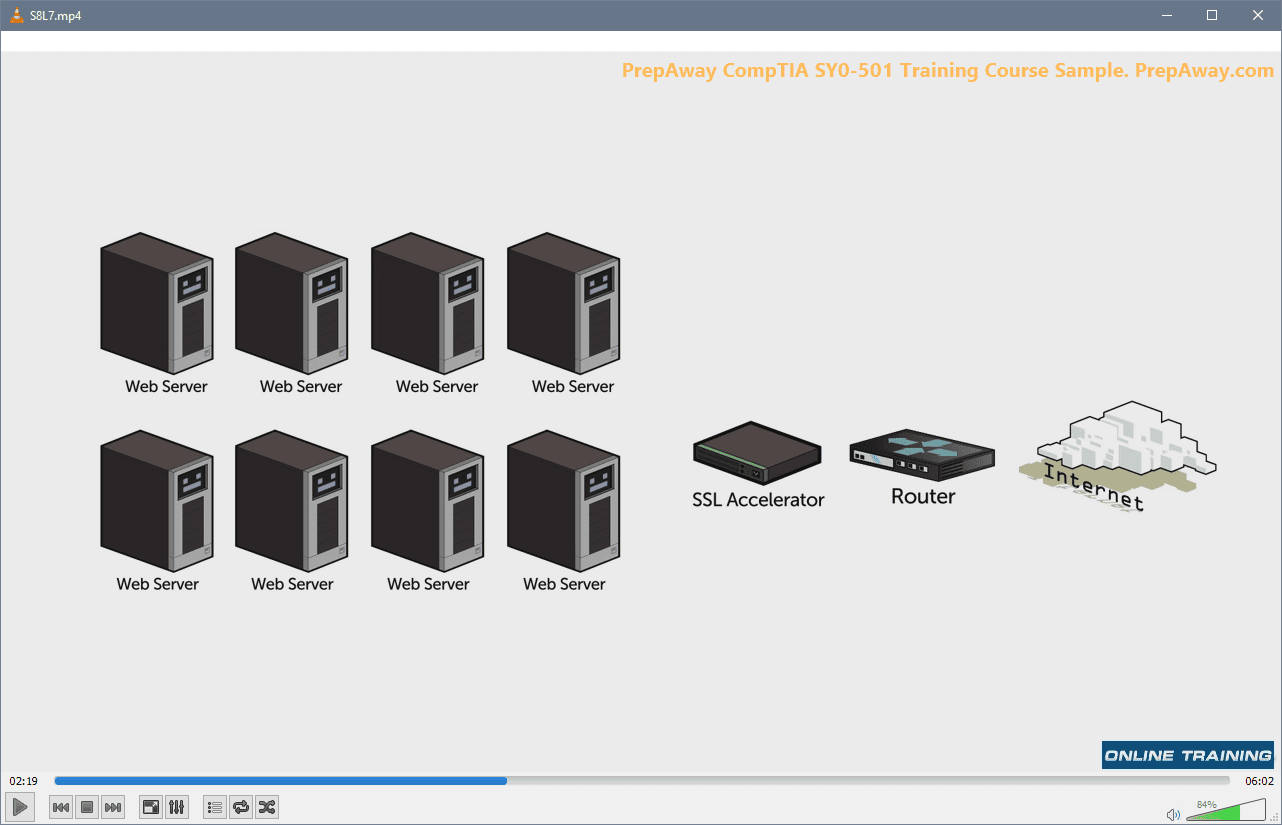
Last Week Results!
 83% students found the test questions almost same

Includes question types found on the actual exam such as drag and drop, simulation, type-in and fill-in-the-blank.
Based on real-life scenarios similar to those encountered in the exam, allowing you to learn by working with real equipment.
All Cisco CSM 820-605 certification exam dumps, study guide, training courses are Prepared by industry experts. PrepAway's ETE files povide the 820-605 Cisco Customer Success Manager (CSM) practice test questions and answers & exam dumps, study guide and training courses help you study and pass hassle-free!
820-605 CSM: Cisco Customer Success Manager
The 820-605 CSM exam is the current Cisco Customer Success Manager assessment. Cisco lists it as a 90-minute exam associated with the Cisco Customer Success Manager Specialist certification. The v2.0 blueprint tests the ability to develop and integrate solutions, identify adoption barriers, implement adoption frameworks, interpret customer usage data, support renewals, and cultivate expansion opportunities across the customer lifecycle.
The role is closely related to but broader than commercial renewal execution. The 700-805 CRM exam focuses on Renewals Manager concepts and tools, while CSM begins earlier with outcomes, success planning, adoption, health, and barrier removal. A good CSM creates the conditions that make renewal a logical consequence of realized value rather than a last-minute sales event.
Some of the outcome-based thinking resembles the historical 810-440 DTBAA business-architecture approach, but 820-605 is a live customer-success credential with its own lifecycle methods and metrics. Study the current blueprint rather than assuming older business-architecture terminology is interchangeable.
Customer success exists because subscription economics reward realized value
In a subscription or recurring-revenue model, the customer can reconsider the relationship at renewal. That changes the vendor’s responsibility: the purchase is not the finish line. The customer must deploy, adopt, and use the solution in ways that produce enough value to justify continued investment.
The CSM therefore operates between sales, support, services, product teams, and the customer. Sales focuses on the commercial transaction, support resolves incidents, and services may implement or optimize technology. Customer success orchestrates the lifecycle around outcomes and adoption, making sure the customer can turn the solution into business value.
Metrics such as renewal, churn, expansion, lifetime value, and recurring revenue are consequences of customer outcomes. A CSM should understand the financial significance of those measures without reducing the role to sales. Sustainable commercial results come from customers who can see and explain the value they receive.
A success plan connects the purchased solution to the customer’s desired outcome
The blueprint devotes significant weight to success-plan creation. Start by identifying what was purchased, why it was purchased, who the key stakeholders are, and what outcome the customer expects. Then identify critical success factors, current-state gaps, target use cases, responsibilities, and the metrics that will show progress.
A success plan should be specific enough to guide action. “Improve collaboration†is vague; “increase adoption of standardized meeting workflows across regional teams while reducing support incidents†is more useful. The plan can then define milestones, owners, telemetry, training, and review cadence.
Plans also need governance. A RACI or similar responsibility model clarifies who owns technical implementation, adoption communication, executive sponsorship, measurement, and escalation. Customer-success activity becomes much more effective when ownership is explicit.
Success plans should be living documents. Outcomes, stakeholders, timelines, and business priorities can change after implementation begins. Regular reviews should capture what changed, why the plan changed, and which new action is required rather than preserving an outdated plan for reporting consistency.
Customer health should combine usage, quality, sentiment, and business context
A health score is not a single magic number. Cisco’s blueprint references product usage, product quality, customer sentiment, and customer financials as inputs. Those signals can point in different directions: usage may be high while sentiment is deteriorating because of repeated incidents, or satisfaction may be positive while adoption remains limited to one team.
The CSM should interpret health rather than merely report it. Look for trends, segment by use case or stakeholder, and understand what changed. A drop in activity after an organizational restructure means something different from a drop caused by technical instability.
Health models also need calibration. If every account scores green despite churn, the model is not useful. Review whether the indicators actually predict value and risk, and adjust thresholds or data sources. The objective is earlier and better action, not a decorative dashboard.
Health data is most useful when it creates a specific play. A declining usage signal may trigger discovery, a severe support trend may trigger technical escalation, and negative executive sentiment may require sponsor engagement. If the score changes but nobody knows what action follows, the metric is not operationally useful.
Adoption barriers can be technical, operational, business, or cultural
The blueprint explicitly separates barrier types. A stalled implementation may be technical; a lack of trained staff may be operational; a budget change may be business-related; resistance to a new workflow may be cultural. The intervention should match the barrier.
Identify barriers through data, observation, and conversation. Telemetry may show that a feature is unused, but only a stakeholder discussion may reveal that the team lacks authority to change the process. Support cases may reveal product friction, while project records may show that the implementation never completed.
The CSM does not personally fix every barrier. The role is to coordinate the right resource: technical specialist, services team, executive sponsor, training, support, or account team. Good orchestration shortens time to value because the problem reaches the person who can actually solve it.
Time to value is a useful lens for prioritization. Some barriers prevent any useful outcome and should be addressed immediately; others limit optimization after the core use case is already working. The CSM should focus effort where removing the barrier materially advances the customer’s success plan.
Use cases translate product capability into adoption work
A use case defines who will use the capability, for what purpose, under which conditions, and what outcome it should create. Targeted use cases make adoption concrete. Instead of asking a customer to “use more features,†the CSM helps a team adopt a workflow that solves a real problem.
Prioritization matters. Start with use cases that have clear value, willing stakeholders, and achievable dependencies. Early success can build credibility and create internal advocates for broader adoption. Trying to activate every capability at once can overwhelm the customer and make progress difficult to measure.
Use-case reviews should connect behavior to outcomes. If the technical feature is enabled but the user process did not change, adoption may be superficial. The CSM should ask whether the capability is being used in the way that produces the intended business result.
Lifecycle orchestration keeps value visible from onboarding through renewal
Customer success is a sequence: onboarding, implementation, adoption, value realization, expansion, and renewal. Different customers may use different terminology or frameworks, but the CSM should know what healthy progression looks like and what evidence indicates that an account is stalled.
Cadence should match account complexity and risk. High-touch customers may need regular success reviews and executive engagement, while digital-touch segments rely more heavily on automated guidance and telemetry. The blueprint expects candidates to understand engagement models rather than assume every account receives the same service.
Renewal readiness should be built throughout the lifecycle. Document achievements, resolve barriers, maintain stakeholder relationships, and keep the success plan current. When value evidence is already visible, the renewal conversation becomes a continuation of the relationship rather than a surprise negotiation.
Executive business reviews should summarize outcomes, evidence, risks, and next priorities rather than repeat operational activity. A sponsor may not need every usage detail, but should be able to see whether the relationship is producing the intended business result and where leadership help is required.
Expansion is credible when it grows from outcomes the customer already values
Expansion opportunities can appear when a customer adds users, business units, sites, use cases, or strategic priorities. The CSM can help identify those needs because the role sees adoption data and stakeholder feedback over time. Expansion should follow evidence, not a quota-driven attempt to sell more into every account.
A useful question is whether the next capability helps the customer reach an outcome already in the success plan or addresses a newly discovered objective. If yes, expansion can be framed as the next stage of value. If the existing solution is underused or trust is weak, the CSM should address those conditions first.
The handoff to sales should preserve context: business need, stakeholders, adoption evidence, expected outcome, and timing. This makes the commercial conversation more relevant and prevents the customer from having to repeat discovery that the success team already completed.
Expansion can also mean deeper use of an existing entitlement rather than a new purchase. Driving adoption of capabilities the customer already owns may create more value and strengthen trust. Commercial growth becomes more sustainable when the CSM is seen as optimizing the customer’s investment, not merely finding new spend.
Prepare with account cases that force you to choose the next best action
Build scenarios with a desired outcome, success plan, usage data, health indicators, stakeholders, barriers, support history, and renewal date. Then decide what the CSM should do next. The correct answer may be stakeholder alignment, an adoption workshop, technical escalation, measurement review, or executive engagement depending on the evidence.
Use Cisco’s current 820-605 blueprint and DTCSM training as the source of truth. Customer-success terminology varies across companies, so generic CSM material can be useful for perspective but should not replace Cisco’s definitions, metrics, and lifecycle framing when preparing for the exam.
The strongest study habit is to connect every activity to value realization. A meeting is not success; a dashboard is not success; a feature being enabled is not success. The question is whether the customer is progressing toward the outcome that justified the investment and whether the CSM can remove the barriers that stand in the way.
Practice explaining why one action should happen before another. A technically blocked deployment may need engineering help before an executive value review, while a healthy deployment with weak sponsor awareness may need the opposite. Sequencing is part of customer-success judgment.
Cisco CSM 820-605 practice test questions and answers, training course, study guide are uploaded in ETE Files format by real users. Study and Pass 820-605 Cisco Customer Success Manager (CSM) certification exam dumps & practice test questions and answers are to help students.
Exam Comments * The most recent comment are on top
- 200-301 - Cisco Certified Network Associate (CCNA)
- 350-401 - Implementing Cisco Enterprise Network Core Technologies (ENCOR)
- 300-410 - Implementing Cisco Enterprise Advanced Routing and Services (ENARSI)
- 350-701 - Implementing and Operating Cisco Security Core Technologies
- 300-415 - Implementing Cisco SD-WAN Solutions (ENSDWI)
- 300-715 - Implementing and Configuring Cisco Identity Services Engine (300-715 SISE)
- 300-420 - Designing Cisco Enterprise Networks (ENSLD)
- 350-601 - Implementing and Operating Cisco Data Center Core Technologies (DCCOR)
- 810-110 - Cisco AI Technical Practitioner (AITECH)
- 350-801 - Implementing Cisco Collaboration Core Technologies (CLCOR)
- 350-101 - Implementing and Operating Cisco Wireless Core Technologies (WLCOR)
- 350-501 - Implementing and Operating Cisco Service Provider Network Core Technologies (SPCOR)
- 500-220 - Cisco Meraki Solutions Specialist
- 350-201 - Performing Cybersecurity Using Cisco Security Technologies (CBRCOR)
- 400-007 - Cisco Certified Design Expert
- 200-901 - DevNet Associate (DEVASC)
- 300-710 - Securing Networks with Cisco Firewalls
- 200-201 - Understanding Cisco Cybersecurity Operations Fundamentals (CBROPS)
- 300-620 - Implementing Cisco Application Centric Infrastructure (DCACI)
- 300-730 - Implementing Secure Solutions with Virtual Private Networks (SVPN 300-730)
- 100-150 - Cisco Certified Support Technician (CCST) Networking
- 350-901 - Designing, Deploying, and Managing Network Automation Systems
- 820-605 - Cisco Customer Success Manager (CSM)
- 300-110 - Designing Cisco Wireless Networks (WLSD)
- 300-640 - Implementing Cisco Data Center AI Infrastructure (DCAI)
- 300-435 - Automating Cisco Enterprise Solutions (ENAUTO)
- 300-510 - Implementing Cisco Service Provider Advanced Routing Solutions (SPRI)
- 300-745 - Designing Cisco Security Infrastructure
- 800-150 - Supporting Cisco Devices for Field Technicians
- 300-815 - Implementing Cisco Advanced Call Control and Mobility Services (CLASSM)
- 300-720 - Securing Email with Cisco Email Security Appliance (300-720 SESA)
- 300-440 - Designing and Implementing Cloud Connectivity (ENCC)
- 500-442 - Administering Cisco Contact Center Enterprise
- 300-425 - Designing Cisco Enterprise Wireless Networks (300-425 ENWLSD)
- 300-220 - Conducting Threat Hunting and Defending using Cisco Technologies for Cybersecurity
- 100-160 - Cisco Certified Support Technician (CCST) Cybersecurity
- 100-140 - Cisco Certified Support Technician (CCST) IT Support
- 700-805 - Cisco Renewals Manager (CRM)
- 300-610 - Designing Cisco Data Center Infrastructure for Traditional and AI Workloads
- 300-515 - Implementing Cisco Service Provider VPN Services (SPVI)
- 300-215 - Conducting Forensic Analysis and Incident Response Using Cisco CyberOps Technologies (CBRFIR)
- 300-830 - Implementing Cisco Collaboration Cloud Customer Experience (CLCCE)
- 700-750 - Cisco Small and Medium Business Engineer
- 700-246 - Cisco Environmental Sustainability Practice-Building - Stage 2 (CESPB)
- 700-242 - Cisco Environmental Sustainability Fundamentals - Stage 1 (CESF)
- 500-560 - Cisco Networking: On-Premise and Cloud Solutions (OCSE)
- 500-470 - Cisco Enterprise Networks SDA, SDWAN and ISE Exam for System Engineers (ENSDENG)
- 500-443 - Advanced Administration and Reporting of Contact Center Enterprise
- 300-445 - Designing and Implementing Enterprise Network Assurance
- 300-430 - Implementing Cisco Enterprise Wireless Networks (300-430 ENWLSI)
- 300-615 - Troubleshooting Cisco Data Center Infrastructure (DCIT)
- 300-725 - Securing the Web with Cisco Web Security Appliance (300-725 SWSA)
- 300-820 - Implementing Cisco Collaboration Cloud and Edge Solutions
- 010-151 - Supporting Cisco Data Center System Devices (DCTECH)
Purchase Cisco 820-605 Exam Training Products Individually
Why customers love us?
What do our customers say?
The resources provided for the Cisco certification exam were exceptional. The exam dumps and video courses offered clear and concise explanations of each topic. I felt thoroughly prepared for the 820-605 test and passed with ease.
Studying for the Cisco certification exam was a breeze with the comprehensive materials from this site. The detailed study guides and accurate exam dumps helped me understand every concept. I aced the 820-605 exam on my first try!
I was impressed with the quality of the 820-605 preparation materials for the Cisco certification exam. The video courses were engaging, and the study guides covered all the essential topics. These resources made a significant difference in my study routine and overall performance. I went into the exam feeling confident and well-prepared.
The 820-605 materials for the Cisco certification exam were invaluable. They provided detailed, concise explanations for each topic, helping me grasp the entire syllabus. After studying with these resources, I was able to tackle the final test questions confidently and successfully.
Thanks to the comprehensive study guides and video courses, I aced the 820-605 exam. The exam dumps were spot on and helped me understand the types of questions to expect. The certification exam was much less intimidating thanks to their excellent prep materials. So, I highly recommend their services for anyone preparing for this certification exam.
Achieving my Cisco certification was a seamless experience. The detailed study guide and practice questions ensured I was fully prepared for 820-605. The customer support was responsive and helpful throughout my journey. Highly recommend their services for anyone preparing for their certification test.
I couldn't be happier with my certification results! The study materials were comprehensive and easy to understand, making my preparation for the 820-605 stress-free. Using these resources, I was able to pass my exam on the first attempt. They are a must-have for anyone serious about advancing their career.
The practice exams were incredibly helpful in familiarizing me with the actual test format. I felt confident and well-prepared going into my 820-605 certification exam. The support and guidance provided were top-notch. I couldn't have obtained my Cisco certification without these amazing tools!
The materials provided for the 820-605 were comprehensive and very well-structured. The practice tests were particularly useful in building my confidence and understanding the exam format. After using these materials, I felt well-prepared and was able to solve all the questions on the final test with ease. Passing the certification exam was a huge relief! I feel much more competent in my role. Thank you!
The certification prep was excellent. The content was up-to-date and aligned perfectly with the exam requirements. I appreciated the clear explanations and real-world examples that made complex topics easier to grasp. I passed 820-605 successfully. It was a game-changer for my career in IT!



could you please let me know if somebody passed the 820-605
i have tried many times but all failed