
- Home
- Cisco Certifications
- 010-151 Supporting Cisco Data Center System Devices (DCTECH) Dumps
Pass Cisco CCT Data Center 010-151 Exam in First Attempt Guaranteed!
Get 100% Latest Exam Questions, Accurate & Verified Answers to Pass the Actual Exam!
30 Days Free Updates, Instant Download!


010-151 Premium File
- Premium File 141 Questions & Answers. Last Update: Oct 01, 2026
Whats Included:
- Latest Questions
- 100% Accurate Answers
- Fast Exam Updates
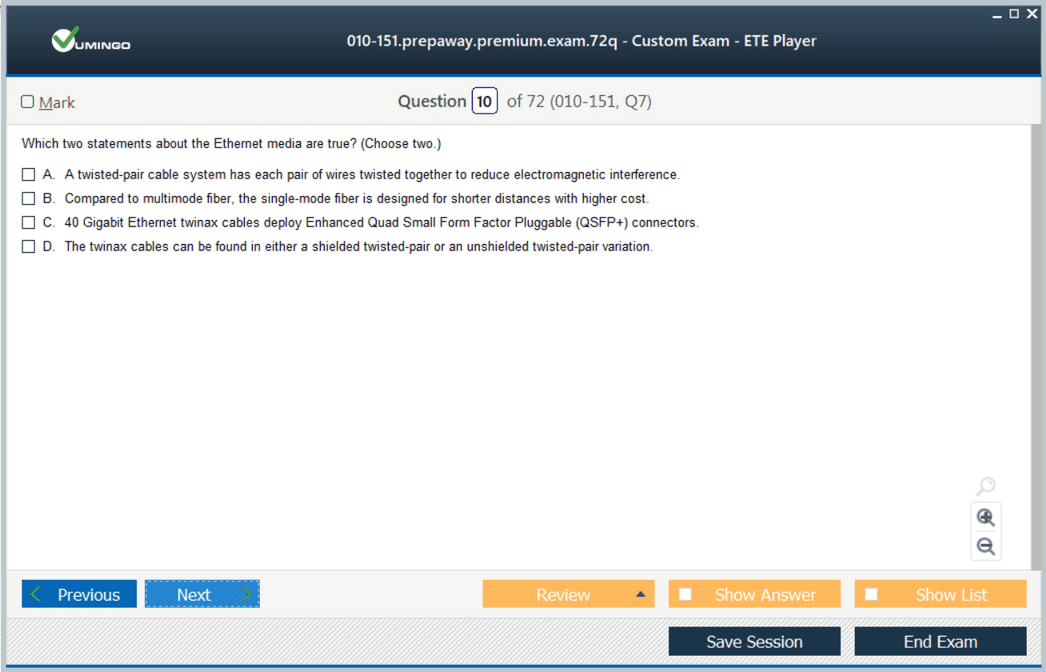
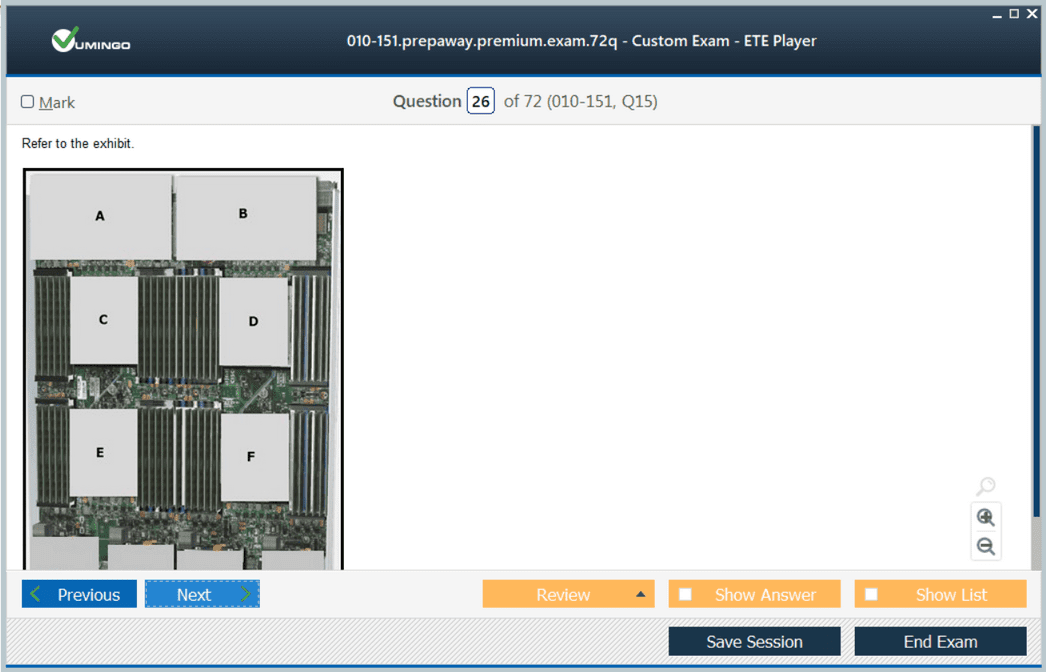
Last Week Results!
 83% students found the test questions almost same
All Cisco CCT Data Center 010-151 certification exam dumps, study guide, training courses are Prepared by industry experts. PrepAway's ETE files povide the 010-151 Supporting Cisco Data Center System Devices (DCTECH) practice test questions and answers & exam dumps, study guide and training courses help you study and pass hassle-free!
010-151 DCTECH: Legacy CCT Data Center Exam and the FLDTEC Transition
010-151 DCTECH was the Cisco Certified Technician Data Center exam for technicians who supported Cisco data-center hardware on site. Cisco retired the exam on February 9, 2025. It is no longer a current booking target, so candidates who find 010-151 in an older training plan should treat it as a historical credential rather than an active certification requirement.
The page still matters because the technical work did not disappear. Cisco consolidated the former Data Center, Routing and Switching, and Collaboration technician tracks into the current 800-150 FLDTEC exam. The older CCT Data Center material is useful for understanding the lineage, but anyone preparing now should use the current Cisco blueprint and the broader Cisco certification structure as the authority.
The retirement date is important because old exam marketplaces and archived employer documents can continue to show 010-151 long after Cisco stops offering it. A candidate should separate three questions: whether the technical subject is still relevant, whether the old certification remains valid for an existing holder, and whether the exam can still be scheduled. For 010-151, only the first two historical questions remain; new candidates must use FLDTEC.
010-151 was built around practical data-center field support
DCTECH was not an architecture-design or advanced data-center engineering exam. Its center of gravity was the work performed by a field technician who arrives at a site to identify equipment, replace a failed component, verify physical connectivity, restore service, and communicate accurately with remote engineering or support teams. That distinction affects how the old blueprint should be read today.
A candidate needed enough networking knowledge to understand where a device sat in the environment, but the exam emphasized hardware recognition, service procedures, console access, configuration verification and safe replacement. This made it different from professional-level data-center exams, where design choices, policy models, automation and deep troubleshooting carry more weight.
The old role also demanded careful pre-service preparation. A technician arriving at a data center might have a replacement part, a remote engineer on the phone and a narrow maintenance window. Before removal, the technician needed to confirm chassis identity, slot, serial number, cabling and current fault state. That verification protects against replacing a healthy component in a dense environment where many systems look similar.
Cisco UCS hardware knowledge was a major part of the exam
The 010-151 blueprint covered Cisco Unified Computing System components in detail. Candidates were expected to recognize C-Series rack servers, blade-server environments, Fabric Interconnects, Fabric Extenders, adapters, expansion modules and common chassis layouts. A field technician had to distinguish the part being serviced from the broader system so that a replacement did not create a new outage.
LED states, serial-number locations, power components, interfaces and cabling all mattered because replacement work begins with accurate physical identification. In real operations, the wrong module or transceiver can create downtime even when the logical diagnosis is correct. That is why the exam rewarded disciplined observation rather than only memorized product names.
UCS service work also illustrates why dependency awareness matters. A blade can depend on shared power, Fabric Interconnect connectivity, service profiles and upstream switching. Removing or rebooting the wrong shared component can affect workloads far beyond the original incident. The safest technicians understand which elements are local to one server and which elements are shared by an entire domain.
Nexus and MDS platforms connected compute to network and storage
DCTECH also expected familiarity with Cisco Nexus switching and MDS storage-networking hardware. The technician did not need to design a fabric from first principles, but had to understand the role of the platform, identify modules and interfaces, and verify whether a replacement had restored connectivity. This required a working mental model of Ethernet, Fibre Channel and the physical paths between servers, switches and storage.
That physical-to-logical connection remains valuable under FLDTEC. A technician who understands why a Fabric Interconnect, Nexus switch or MDS director is present can interpret alarms and cabling more accurately. The goal is not to turn hardware replacement into blind part swapping; it is to restore the intended service while preserving the configuration and topology around the device.
Storage-networking support added another layer of caution. Fibre Channel paths and MDS modules may provide redundancy, so one failed path can be hidden by multipathing until a second problem appears. A field technician should preserve cable identity and verify the expected redundant paths after service. Even when remote specialists own the logical storage configuration, accurate physical restoration is essential.
UCS Manager, CIMC and NX-OS gave technicians the software context
The old exam included Cisco UCS Manager, the Cisco Integrated Management Controller and NX-OS operations. Candidates had to know how these tools exposed hardware state, firmware information, configuration and serviceability data. Console and management access were therefore part of the support process, not separate administrative topics.
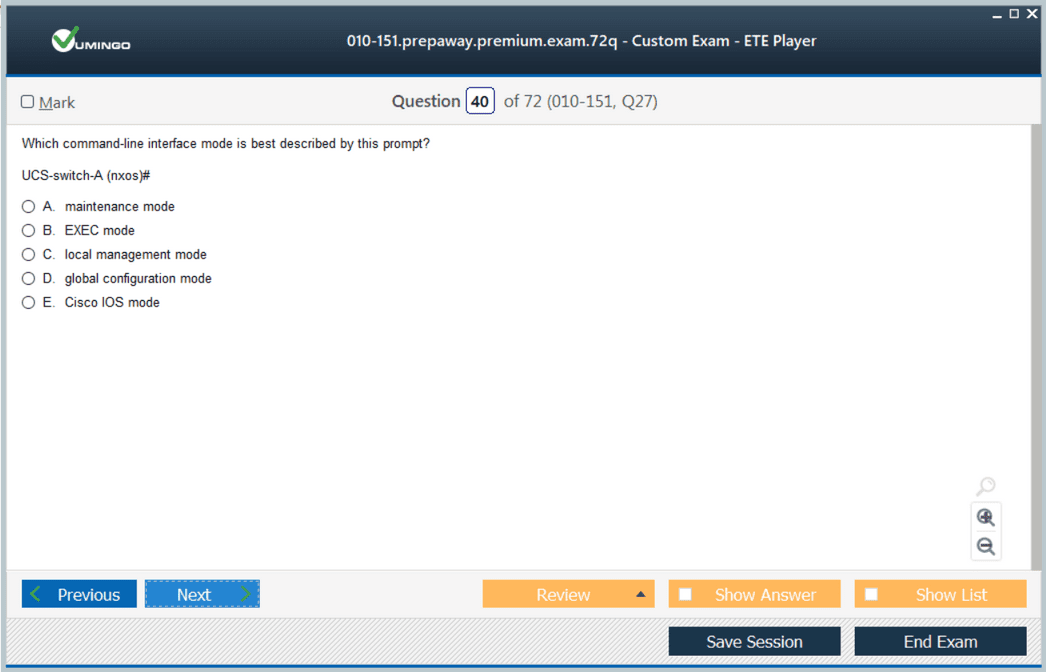
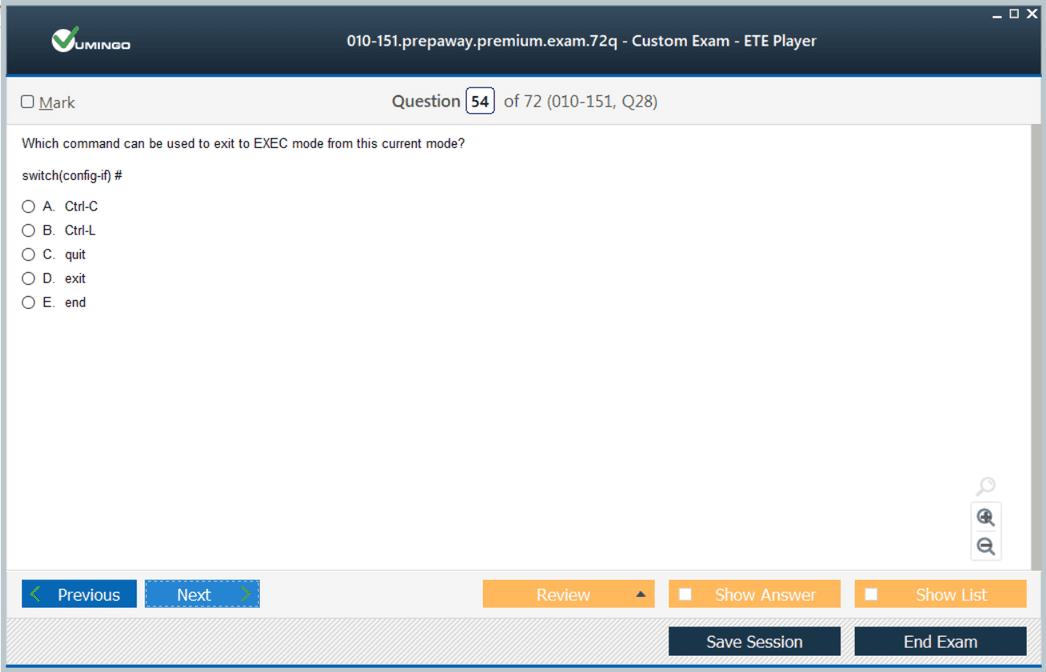
For NX-OS, the practical requirement was to recognize command modes, inspect configuration and use basic commands safely. For UCS systems, it was important to understand where hardware identity and firmware status appeared. These skills reduce guesswork during replacement because the technician can confirm that the system recognizes the new component and that the expected configuration is present.
Management interfaces also help establish a before-and-after record. Screenshots, inventory output and health information captured before a change make it easier to prove that the intended component was replaced and that the system returned to the expected state. This evidence is especially valuable when the incident crosses teams, because the next engineer can distinguish the completed physical task from any remaining logical fault.
Firmware and software procedures carried operational risk
DCTECH included BIOS, CIMC and Fabric Interconnect upgrade or downgrade concepts because field work often intersects with software state. A replacement server or module may arrive with a different firmware level, and a support procedure may require synchronization before the device can rejoin the environment cleanly. The exam therefore linked hardware replacement with version awareness.
The useful lesson is change control. Technicians should know the approved image, capture the current state, follow the documented sequence and verify service after the change. Firmware work is rarely difficult because of one command; it becomes risky when dependencies, reboot behavior, power state or compatibility are ignored.
Version compatibility should be checked against the actual platform and support procedure rather than guessed from a nearby system. Data-center estates often contain multiple hardware generations and firmware baselines. A package that is correct for one chassis may be wrong for another. Historical DCTECH study is strongest when it reinforces this controlled approach instead of encouraging candidates to memorize a single upgrade sequence.
Service restoration required evidence, not assumption
A successful replacement is not finished when a new component powers on. DCTECH expected candidates to verify the result: check indicators, confirm management visibility, validate connectivity and look for remaining faults. In practice, this is where disciplined technicians separate themselves from simple hands-on installers.
Verification should be tied to the original symptom. If the incident involved a failed network path, confirm interface and link state. If a server component was replaced, confirm inventory, firmware and health status. If service depended on a storage path, verify that the relevant path is present again. A green light without service-level validation can leave a hidden problem behind.
Escalation is also part of restoration. If a new component fails to initialize, repeated reseating or rebooting may increase risk. A good technician knows when the evidence has reached the limit of the field procedure and when the next step belongs to TAC or a platform engineer. That boundary protects the environment and produces a cleaner incident record.
The exam also tested safe, repeatable field procedures
Data-center environments impose physical and procedural constraints: electrostatic-discharge protection, cable labeling, rack safety, power sequencing, maintenance windows and access controls all matter. The old DCTECH objectives treated service work as a controlled process rather than improvised repair. That mindset remains current even though the exam code has retired.
Before touching hardware, technicians should understand the work order, identify the exact device, confirm dependencies and know the rollback or escalation point. During the task, they should preserve labels and document changes. Afterward, they should leave the environment in a known state. These behaviors reduce the risk that a small repair becomes a wider incident.
Data centers also require disciplined cable management because a single maintenance task may involve copper, fiber, storage links and management connections in the same rack. Labeling, cleaning fiber where appropriate, respecting bend radius and returning cables to the documented port are operational quality controls. The old exam's hardware focus made these habits part of certification preparation rather than treating them as informal technician experience.
The 2025 transition combined three separate technician tracks
Cisco retired 010-151 together with 100-490 RSTECH and 100-890 CLTECH. The current 800-150 FLDTEC exam combines field-support knowledge across routing, switching, data center, UCS and collaboration. Cisco's change reflects the reality that field technicians increasingly encounter mixed environments rather than remaining inside one narrow platform family.
That means a candidate who studied DCTECH in the past already has useful depth, but the current exam expects broader coverage. Routing and switching foundations, general hardware identification, software and configuration handling, collaboration equipment and common service tools now sit in one technician path. Historical specialization has become a cross-platform support role.
The consolidation did not make data-center knowledge unimportant; it changed the expected breadth. FLDTEC candidates still need to recognize UCS and data-center architecture, but they must also work across campus networking and collaboration hardware. Someone with an old DCTECH background should therefore spend less time relearning familiar UCS concepts and more time closing the routing, switching and collaboration gaps introduced by the merged role.
Current preparation should start with FLDTEC, not archived DCTECH material
Archived DCTECH content can still help a technician understand UCS, Nexus, MDS and data-center service procedures, especially when supporting older estates. It should not define a 2026 study plan. The current 800-150 blueprint is broader and reflects the consolidated CCT Field Technician role.
A practical study plan should therefore use DCTECH as background, then map every old topic to the current FLDTEC domains. Keep the data-center strengths that still apply—hardware recognition, cabling, configuration preservation, firmware awareness and service verification—but add the routing, switching and collaboration coverage that the single current exam now requires. That approach preserves the value of the legacy material without confusing historical requirements with today's certification path.
Cisco CCT Data Center 010-151 practice test questions and answers, training course, study guide are uploaded in ETE Files format by real users. Study and Pass 010-151 Supporting Cisco Data Center System Devices (DCTECH) certification exam dumps & practice test questions and answers are to help students.
Exam Comments * The most recent comment are on top
- 200-301 - Cisco Certified Network Associate (CCNA)
- 350-401 - Implementing Cisco Enterprise Network Core Technologies (ENCOR)
- 300-410 - Implementing Cisco Enterprise Advanced Routing and Services (ENARSI)
- 350-701 - Implementing and Operating Cisco Security Core Technologies
- 300-420 - Designing Cisco Enterprise Networks (ENSLD)
- 300-415 - Implementing Cisco SD-WAN Solutions (ENSDWI)
- 300-715 - Implementing and Configuring Cisco Identity Services Engine (300-715 SISE)
- 350-601 - Implementing and Operating Cisco Data Center Core Technologies (DCCOR)
- 810-110 - Cisco AI Technical Practitioner (AITECH)
- 350-101 - Implementing and Operating Cisco Wireless Core Technologies (WLCOR)
- 350-801 - Implementing Cisco Collaboration Core Technologies (CLCOR)
- 350-501 - Implementing and Operating Cisco Service Provider Network Core Technologies (SPCOR)
- 300-710 - Securing Networks with Cisco Firewalls
- 350-201 - Performing Cybersecurity Using Cisco Security Technologies (CBRCOR)
- 400-007 - Cisco Certified Design Expert
- 200-901 - DevNet Associate (DEVASC)
- 500-220 - Cisco Meraki Solutions Specialist
- 300-620 - Implementing Cisco Application Centric Infrastructure (DCACI)
- 200-201 - Understanding Cisco Cybersecurity Operations Fundamentals (CBROPS)
- 100-150 - Cisco Certified Support Technician (CCST) Networking
- 300-730 - Implementing Secure Solutions with Virtual Private Networks (SVPN 300-730)
- 350-901 - Designing, Deploying, and Managing Network Automation Systems
- 820-605 - Cisco Customer Success Manager (CSM)
- 300-640 - Implementing Cisco Data Center AI Infrastructure (DCAI)
- 300-745 - Designing Cisco Security Infrastructure
- 300-435 - Automating Cisco Enterprise Solutions (ENAUTO)
- 300-110 - Designing Cisco Wireless Networks (WLSD)
- 300-510 - Implementing Cisco Service Provider Advanced Routing Solutions (SPRI)
- 800-150 - Supporting Cisco Devices for Field Technicians
- 300-440 - Designing and Implementing Cloud Connectivity (ENCC)
- 300-720 - Securing Email with Cisco Email Security Appliance (300-720 SESA)
- 300-220 - Conducting Threat Hunting and Defending using Cisco Technologies for Cybersecurity
- 300-815 - Implementing Cisco Advanced Call Control and Mobility Services (CLASSM)
- 300-425 - Designing Cisco Enterprise Wireless Networks (300-425 ENWLSD)
- 100-140 - Cisco Certified Support Technician (CCST) IT Support
- 300-215 - Conducting Forensic Analysis and Incident Response Using Cisco CyberOps Technologies (CBRFIR)
- 100-160 - Cisco Certified Support Technician (CCST) Cybersecurity
- 300-610 - Designing Cisco Data Center Infrastructure for Traditional and AI Workloads
- 500-442 - Administering Cisco Contact Center Enterprise
- 300-515 - Implementing Cisco Service Provider VPN Services (SPVI)
- 700-805 - Cisco Renewals Manager (CRM)
- 300-830 - Implementing Cisco Collaboration Cloud Customer Experience (CLCCE)
- 300-820 - Implementing Cisco Collaboration Cloud and Edge Solutions
- 300-615 - Troubleshooting Cisco Data Center Infrastructure (DCIT)
- 500-560 - Cisco Networking: On-Premise and Cloud Solutions (OCSE)
- 700-242 - Cisco Environmental Sustainability Fundamentals - Stage 1 (CESF)
- 500-443 - Advanced Administration and Reporting of Contact Center Enterprise
- 300-430 - Implementing Cisco Enterprise Wireless Networks (300-430 ENWLSI)
- 700-750 - Cisco Small and Medium Business Engineer
- 300-635 - Automating Cisco Data Center Solutions (DCAUTO)
- 300-445 - Designing and Implementing Enterprise Network Assurance
- 300-725 - Securing the Web with Cisco Web Security Appliance (300-725 SWSA)
- 010-151 - Supporting Cisco Data Center System Devices (DCTECH)
- 500-470 - Cisco Enterprise Networks SDA, SDWAN and ISE Exam for System Engineers (ENSDENG)
Why customers love us?
What do our customers say?
The resources provided for the Cisco certification exam were exceptional. The exam dumps and video courses offered clear and concise explanations of each topic. I felt thoroughly prepared for the 010-151 test and passed with ease.
Studying for the Cisco certification exam was a breeze with the comprehensive materials from this site. The detailed study guides and accurate exam dumps helped me understand every concept. I aced the 010-151 exam on my first try!
I was impressed with the quality of the 010-151 preparation materials for the Cisco certification exam. The video courses were engaging, and the study guides covered all the essential topics. These resources made a significant difference in my study routine and overall performance. I went into the exam feeling confident and well-prepared.
The 010-151 materials for the Cisco certification exam were invaluable. They provided detailed, concise explanations for each topic, helping me grasp the entire syllabus. After studying with these resources, I was able to tackle the final test questions confidently and successfully.
Thanks to the comprehensive study guides and video courses, I aced the 010-151 exam. The exam dumps were spot on and helped me understand the types of questions to expect. The certification exam was much less intimidating thanks to their excellent prep materials. So, I highly recommend their services for anyone preparing for this certification exam.
Achieving my Cisco certification was a seamless experience. The detailed study guide and practice questions ensured I was fully prepared for 010-151. The customer support was responsive and helpful throughout my journey. Highly recommend their services for anyone preparing for their certification test.
I couldn't be happier with my certification results! The study materials were comprehensive and easy to understand, making my preparation for the 010-151 stress-free. Using these resources, I was able to pass my exam on the first attempt. They are a must-have for anyone serious about advancing their career.
The practice exams were incredibly helpful in familiarizing me with the actual test format. I felt confident and well-prepared going into my 010-151 certification exam. The support and guidance provided were top-notch. I couldn't have obtained my Cisco certification without these amazing tools!
The materials provided for the 010-151 were comprehensive and very well-structured. The practice tests were particularly useful in building my confidence and understanding the exam format. After using these materials, I felt well-prepared and was able to solve all the questions on the final test with ease. Passing the certification exam was a huge relief! I feel much more competent in my role. Thank you!
The certification prep was excellent. The content was up-to-date and aligned perfectly with the exam requirements. I appreciated the clear explanations and real-world examples that made complex topics easier to grasp. I passed 010-151 successfully. It was a game-changer for my career in IT!