All CompTIA Server+ SK0-005 certification exam dumps, study guide, training courses are Prepared by industry experts. PrepAway's ETE files povide the SK0-005 CompTIA Server+ Certification Exam practice test questions and answers & exam dumps, study guide and training courses help you study and pass hassle-free!
CompTIA Server+ SK0-005: Server Operations, Resilience, and Troubleshooting
SK0-005 remains the current CompTIA Server+ exam in 2026. The certification is deliberately narrower than a general infrastructure credential: it is about keeping server hardware, operating systems, storage, virtualization, security controls, and recovery processes dependable in production. Candidates should therefore prepare around operational decisions rather than treating the blueprint as a collection of part numbers and definitions.
The exam is organized around four major areas: server hardware installation and management, server administration, security and disaster recovery, and troubleshooting. Administration and troubleshooting carry much of the practical weight, which fits the job. A server technician is expected to recognize how a hardware, storage, network, operating-system, access-control, or environmental problem presents itself and then choose a controlled path to restore service.
CompTIA certifications cover adjacent infrastructure, networking, Linux, and security responsibilities, while Server+ concentrates on operating and recovering server platforms. That overlap matters because a server administrator regularly crosses into network reachability, operating-system behavior, and access control without turning SK0-005 into a networking or security specialist exam. The strongest preparation still comes from mapping every SK0-005 objective to a task, failure condition, or recovery decision that could occur in a real server room or virtualized environment.
Server hardware knowledge matters most when it supports a service decision
Processors, memory, power supplies, network adapters, storage controllers, chassis types, cooling, cabling, and rack components are not tested only as labels. Candidates should know how component choices affect compatibility, redundancy, capacity, performance, and recoverability. A memory population rule can determine whether a server boots. A mismatched transceiver can look like a network fault. A failed power supply may be harmless in a redundant design but critical in a single-supply host.
Build a small hardware decision matrix instead of memorizing isolated specifications. For each component, note what it does, what failure looks like, what redundancy options exist, and what information should be verified before replacement. In virtual labs, supplement the missing physical layer by reading vendor management interfaces, RAID utility screenshots, hardware-event logs, and sample rack diagrams. This makes hardware questions feel like troubleshooting rather than trivia.
When comparing hardware choices, include serviceability. Hot-swap components, out-of-band management, redundant paths, and clear component identification reduce mean time to repair. A technically faster component is not automatically the better server choice if replacement requires extended downtime or creates a maintenance procedure that operators cannot execute safely.
Storage design connects RAID, capacity, performance, and recovery expectations
Server+ expects candidates to distinguish local storage, direct-attached storage, network-attached storage, and storage-area networks, and to understand common media and RAID choices. The important skill is reasoning through trade-offs. RAID can improve availability or performance, but it is not a substitute for backup. Faster media does not remove the need for redundancy. A highly redundant array can still lose data through corruption, malicious deletion, or a site-level event.
Practice with failure scenarios. Ask what happens when one disk fails in RAID 1, 5, 6, or 10; what changes during rebuild; how a hot spare affects recovery; and why controller cache or battery protection matters. Then connect storage to the application: a database, hypervisor datastore, file service, and archival workload value latency, throughput, capacity, and durability differently. That relationship is more useful than memorizing a single “best” array.
Also distinguish fault tolerance from data protection. RAID may keep a service online after a disk failure, but deletion, corruption, ransomware, controller failure, or an incorrect administrative command can affect every member of the array. Treat availability architecture and recoverable copies as separate controls that support different failure scenarios.
Administration spans operating systems, virtualization, identities, and lifecycle work
The administration domain reaches beyond installing an operating system. Candidates need to think about user and service accounts, permissions, patches, services, processes, configuration baselines, host naming, time synchronization, network settings, scripting, virtualization, and routine maintenance. A well-run server has a known configuration and an auditable change history, not just a successful boot screen.
Create a pair of Linux and Windows Server lab systems and perform the same operational tasks on both: create accounts, inspect services, change a network configuration, schedule a task, review logs, apply an update, and verify a rollback path. Add a small hypervisor if possible and practice snapshots with caution. The exam rewards knowing when a tool is appropriate and what evidence confirms that a change achieved its intended result.
Administration questions often become easier when you think in baselines. A known-good server has expected firmware, drivers, packages, services, accounts, scheduled tasks, network settings, and resource usage. When behavior changes, comparing the current state with that baseline can reveal drift faster than guessing from the visible symptom alone.
Security and disaster recovery should be designed before an outage or breach
SK0-005 includes physical security, access control, hardening, encryption, secure protocols, vulnerability reduction, backups, business continuity, and disaster recovery. These ideas belong together because availability is a security property as well as an operations goal. A ransomware event, failed array, lost rack, or administrator mistake can all become recovery problems even though their causes are different.
Work from RPO and RTO rather than from backup product names. Decide how much data loss a workload can tolerate and how quickly service must return, then select backup frequency, copy placement, restoration procedures, and test cadence. A focused CompTIA Server+ SK0-005 review is most useful in that operational frame: each control should answer a concrete risk or continuity requirement.
Recovery testing should include dependencies, not only the server image. A restored application may still fail if DNS, certificates, identity services, storage mappings, secrets, or network rules are missing. During labs, list the external dependencies required for the restored workload to become usable, then verify them as part of the recovery exercise.
Troubleshooting is a method, not a list of symptoms
Server faults often cross layers. A slow application may come from CPU pressure, memory paging, a degraded RAID set, packet loss, name-resolution delay, authentication problems, or a dependency outside the server itself. Start by defining scope and recent change, collect evidence, form a theory, test the least disruptive explanation, and verify the result. Avoid changing several variables at once because that destroys the evidence needed to identify root cause.
Deliberately break lab systems. Stop a service, fill a filesystem, deny a permission, create a bad DNS entry, disconnect a virtual NIC, exhaust memory, and simulate a failed disk where tooling allows. Record the symptom before looking at the answer. Then use logs, monitoring, performance data, network tools, and service state to narrow the fault. Repetition turns the formal troubleshooting method into an instinct.
Keep a timeline during troubleshooting. Record when the symptom started, which changes happened nearby, what evidence was collected, and what each test eliminated. That habit prevents circular troubleshooting and supports escalation because another technician can see what has already been proven rather than repeating the same checks.
Environmental and physical controls can explain failures that software cannot
Temperature, humidity, airflow, dust, rack layout, power quality, grounding, UPS capacity, and cable management are easy to under-study because they are hard to reproduce in a home lab. Yet they are important because software diagnostics can mislead when the physical environment is unstable. Repeated thermal shutdowns, intermittent storage errors, or link flaps may be consequences of infrastructure outside the operating system.
Use diagrams and incident cases to compensate for limited physical access. Practice identifying hot-aisle/cold-aisle issues, single points of power failure, UPS sizing mistakes, overloaded circuits, unlabeled cabling, and unsafe maintenance behavior. A technician should be able to explain not just what component failed, but what environmental condition increased the probability of failure and what control reduces recurrence.
Physical safety belongs in this preparation as well. Server work can involve heavy equipment, hot components, battery systems, sharp rack hardware, and live electrical infrastructure. The exam may not turn you into a facilities engineer, but it expects a technician to recognize when a task requires proper procedure, protective equipment, or escalation.
Server+ pairs naturally with networking, Linux, and security skills
Server administrators rarely work in isolation from other disciplines. Network troubleshooting affects every remote service, Linux administration appears in many data centers, and security controls define how privileged access is managed. Network+ N10-009 deepens network troubleshooting, Linux+ XK0-006 extends operating-system administration, and Security+ SY0-701 strengthens access-control and hardening concepts when a Server+ objective exposes a deeper skill gap.
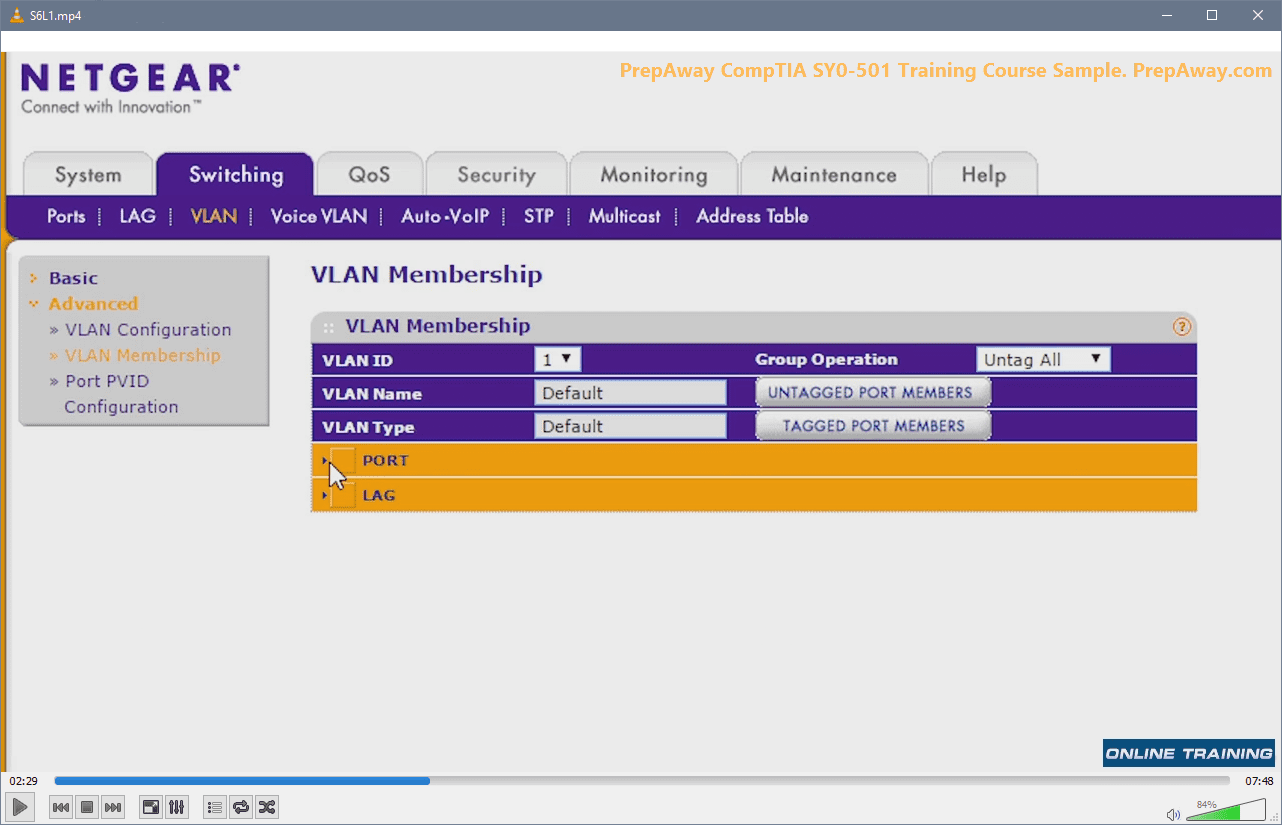
Do not turn that adjacency into unfocused study. For SK0-005, networking should be learned to the point where a server technician can validate addressing, routing reachability, ports, DNS, VLAN assumptions, and link state. Security should support hardening and recovery decisions. Linux knowledge should support administration and troubleshooting. The exam remains server-centered even when it borrows concepts from neighboring domains.
Use adjacent certifications selectively. If subnetting or VLAN behavior is causing repeated Server+ mistakes, a short focused Network+ review can fix that gap; if the problem is Linux services, use Linux+ material. Avoid broad detours that consume study time without improving the specific server task you are trying to perform.
Final preparation should reproduce a maintenance window, not a flashcard session
In the final phase, build mixed operational scenarios. A host needs a firmware update but runs a critical VM; a failed disk requires replacement while backups are stale; a remote server cannot authenticate users after a network change; a restore works but misses the required recovery point. For each scenario, state the evidence you would gather, the risk of the proposed change, the rollback, and the verification step.
Use the live SK0-005 objectives as the checklist and treat every missed practice question as a signal about a real task. The additional Server+ preparation discussion can help organize review, but hands-on repetition is what converts familiarity into dependable judgment. A candidate who can diagnose, change, recover, and document a server safely is preparing at the level the exam is designed to measure.
Before exam day, rehearse change windows from start to finish: prechecks, backup verification, implementation, service validation, monitoring, documentation, and rollback if validation fails. This sequence integrates hardware, administration, security, and troubleshooting into one realistic workflow and is more representative of production work than isolated flashcards.
CompTIA Server+ SK0-005 practice test questions and answers, training course, study guide are uploaded in ETE Files format by real users. Study and Pass SK0-005 CompTIA Server+ Certification Exam certification exam dumps & practice test questions and answers are to help students.



 83% students found the test questions almost same