- Home
- Google Certifications
- Professional Cloud Security Engineer Professional Cloud Security Engineer Dumps
Pass Google Professional Cloud Security Engineer Exam in First Attempt Guaranteed!
Get 100% Latest Exam Questions, Accurate & Verified Answers to Pass the Actual Exam!
30 Days Free Updates, Instant Download!

Professional Cloud Security Engineer Premium Bundle
- Premium File 361 Questions & Answers. Last update: Dec 07, 2025
- Training Course 89 Video Lectures
- Study Guide 335 Pages
Last Week Results!

Includes question types found on the actual exam such as drag and drop, simulation, type-in and fill-in-the-blank.

Based on real-life scenarios similar to those encountered in the exam, allowing you to learn by working with real equipment.

Developed by IT experts who have passed the exam in the past. Covers in-depth knowledge required for exam preparation.
All Google Professional Cloud Security Engineer certification exam dumps, study guide, training courses are Prepared by industry experts. PrepAway's ETE files povide the Professional Cloud Security Engineer Professional Cloud Security Engineer practice test questions and answers & exam dumps, study guide and training courses help you study and pass hassle-free!
Google Cloud Security Engineer Certification Review: Cost, Value, and Career Impact
Cloud computing has transformed the architecture of modern IT systems, enabling organizations to scale operations, optimize performance, and reduce infrastructure costs. As this transformation continues, the demand for professionals who can secure these complex environments has increased dramatically. Among the various specialized roles that have emerged in this space, the Google Professional Cloud Security Engineer represents a pinnacle of expertise focused on safeguarding cloud-based infrastructures within the Google Cloud ecosystem. To understand the significance of this certification and its conceptual foundation, it is necessary to begin with the fundamental nature of cloud security and how it is structured within Google Cloud’s architecture. The Google Cloud environment is designed to handle immense computational demands across distributed systems while ensuring data integrity, confidentiality, and availability. Security in such an environment requires an intricate understanding of both theoretical frameworks and practical configurations. The Professional Cloud Security Engineer certification embodies this dual nature by assessing both knowledge and applied skill. At its core, the certification validates an engineer’s ability to design and implement secure workloads and infrastructure within Google Cloud, ensuring compliance with regulatory standards and organizational security requirements. The concept is not merely about protecting virtual machines or managing user permissions but about creating an end-to-end ecosystem where trust, identity, and encryption interlock seamlessly. Google’s approach to security is rooted in a layered model that extends from physical data centers to software-defined networking and policy management. The security engineer’s task is to translate these foundational principles into operational practices that align with an organization’s unique requirements. For instance, Google Cloud’s identity and access management (IAM) system forms the basis of access control, determining how users, groups, and service accounts interact with resources. The security engineer must master the architecture of IAM roles, custom permissions, and organizational hierarchies to ensure that access is both granular and secure. But beyond identity management, the certification emphasizes an engineer’s capacity to configure secure network architectures. This includes designing virtual private cloud (VPC) networks that segregate resources effectively, establishing private connectivity options to reduce exposure to the public internet, and applying firewall rules, security policies, and service controls in ways that minimize risk without hindering performance. These capabilities illustrate how deeply the certification intertwines theoretical understanding with practical skill. The role of the Professional Cloud Security Engineer is not isolated to configuration but extends into governance, monitoring, and compliance. The Google Cloud platform provides numerous tools for security operations, such as Security Command Center, Cloud Audit Logs, and Chronicle, which offer visibility into potential vulnerabilities and real-time threat detection. To earn the certification, a candidate must demonstrate proficiency not only in using these tools but in architecting security frameworks where data is continuously protected through automation and policy enforcement. Understanding data protection in Google Cloud requires delving into encryption principles. Google Cloud automatically encrypts data at rest and in transit, but engineers must know how to configure encryption key management for advanced use cases, such as customer-managed encryption keys (CMEK) and customer-supplied encryption keys (CSEK). This distinction becomes vital when dealing with organizations that must adhere to specific compliance regulations or wish to retain full control over encryption lifecycle management. The certification expects engineers to know when and how to apply these options, ensuring the confidentiality of sensitive data under varying operational conditions. The Google Professional Cloud Security Engineer certification is not an entry-level credential. It is situated near the top of Google’s certification hierarchy, requiring significant prior experience and understanding of the platform. While Google does not impose formal prerequisites, the exam blueprint assumes familiarity with complex deployment scenarios and security operations. This makes the certification both aspirational and practical—it represents mastery rather than initiation. The conceptual foundation of the certification lies in the integration of five essential domains: access configuration, network security, data protection, operations management, and compliance assurance. Each domain corresponds to a key layer of security in the Google Cloud model, collectively forming a comprehensive security lifecycle. These domains are not arbitrary but reflect how Google itself structures its security infrastructure across billions of user transactions daily. The first domain, configuring access, focuses on identity and authorization management. Google Cloud’s IAM system operates through a combination of predefined roles, custom roles, and service accounts, each with associated permissions. The Professional Cloud Security Engineer must understand how to design and implement policies that enforce the principle of least privilege, ensuring that users and applications have only the access necessary for their roles. Additionally, this domain requires a grasp of multi-factor authentication, federation with external identity providers, and service account key rotation. Security engineers must know how to balance usability and security, maintaining compliance without impeding development or operations teams. The second domain, configuring network security, delves into segmentation, firewalls, and secure connectivity. Google Cloud allows engineers to define VPC networks that are isolated or shared, each with subnets, routes, and gateways. The security engineer’s role involves establishing private interconnects, configuring Cloud VPNs, and enabling network service tiers that reduce latency while ensuring encrypted communication between systems. Network security also extends to the application layer, where engineers may implement policies through load balancers, proxy configurations, and identity-aware proxies (IAP) that restrict access to web applications based on authenticated identities. The third domain, ensuring data protection, encompasses encryption, access monitoring, and lifecycle management. Engineers are expected to understand how to apply encryption uniformly across storage systems, databases, and virtual machines, as well as how to use key management services (KMS) to generate, rotate, and audit encryption keys. Beyond encryption, this domain includes data classification, audit logging, and securing backups against unauthorized recovery. The fourth domain, managing operations in a cloud environment, introduces the operational side of security. Engineers must monitor systems, detect anomalies, and respond to incidents using native tools. Cloud Logging and Cloud Monitoring are central to this domain, enabling continuous visibility across resources. The engineer must know how to automate alerting mechanisms, configure dashboards, and establish security baselines. This operational awareness is complemented by disaster recovery strategies that ensure resilience in the face of system compromise or hardware failure. The fifth and final domain, ensuring compliance, addresses governance, policy enforcement, and regulatory alignment. Engineers must know how to map security controls to frameworks such as ISO 27001, SOC 2, or HIPAA, ensuring that organizational data management aligns with external obligations. The Professional Cloud Security Engineer certification tests not only awareness of compliance but also the ability to operationalize it through automation—by using tools like Organization Policy Service to enforce constraints at the organizational level. These five domains together define the conceptual and practical foundation of the certification. The candidate who pursues it must internalize Google’s shared responsibility model, which divides security obligations between Google and the customer. Google secures the infrastructure, but the engineer must secure what runs on it. Understanding this boundary is vital, as misconfigurations often arise from assumptions about which party is responsible for a given control. For instance, Google ensures that its data centers are physically secure and that communication between them is encrypted, but it is the engineer’s responsibility to configure IAM permissions, manage keys, and maintain network segmentation. The security engineer becomes a bridge between Google’s built-in protections and an organization’s operational realities. The certification’s conceptual value lies in the synthesis of all these skills into a unified professional capability: the ability to architect and maintain a secure, compliant, and efficient Google Cloud environment that meets organizational goals while resisting evolving threats. Beyond technical configurations, the certification embodies a mindset—security as an ongoing process rather than a static achievement. The professional cloud security engineer learns to see risk not as an obstacle but as an inherent aspect of design, requiring constant adaptation. To appreciate the conceptual depth of this certification, one must understand Google Cloud’s internal design philosophy. Unlike traditional network security paradigms that rely on perimeter-based defense, Google adopts a zero-trust approach, famously embodied in its BeyondCorp architecture. This model eliminates the assumption that internal networks are inherently trustworthy. Instead, every access request—internal or external—is verified based on identity, device state, and contextual factors. The Professional Cloud Security Engineer must understand how to apply zero-trust principles in practice using Google’s tools. This involves configuring Identity-Aware Proxy, managing context-aware access policies, and ensuring that applications and APIs adhere to the same stringent verification processes as public endpoints. In effect, the certification teaches engineers to secure distributed systems under the assumption of continuous exposure, a necessary stance in the modern threat landscape. Data security in Google Cloud also demands a deeper comprehension of encryption infrastructure. Engineers must not only implement encryption but understand its architecture. Google’s encryption system uses a hierarchy of keys, where data encryption keys (DEKs) encrypt user data, and key encryption keys (KEKs) protect the DEKs. These keys are further managed through the Cloud Key Management Service, which integrates with hardware security modules (HSMs). Mastery of these components ensures that an engineer can implement strong cryptographic controls while maintaining operational efficiency. Another essential aspect of the certification’s conceptual framework is automation. Google Cloud promotes the use of Infrastructure as Code (IaC) to enforce consistency and repeatability in deployments. Security engineers can use tools like Deployment Manager or Terraform to codify IAM policies, firewall rules, and network configurations, thereby reducing human error. Automation extends into monitoring and compliance as well, with security engineers expected to design workflows that detect misconfigurations and automatically remediate them. This shift from manual administration to automated governance represents a fundamental evolution in how security is practiced in the cloud. The certification’s value extends beyond individual achievement; it contributes to organizational maturity. Companies that employ certified engineers gain assurance that their cloud infrastructure adheres to recognized security standards. The engineer, in turn, acts as a security architect capable of translating technical detail into policy language and vice versa. This dual fluency—between engineering and governance—defines the professional standard that Google aims to establish through this certification. The Professional Cloud Security Engineer must also be conversant with incident response frameworks tailored for cloud environments. Incident response in Google Cloud involves detecting, investigating, and mitigating threats using tools like Cloud Logging, Cloud Monitoring, and Security Command Center. Engineers are trained to create playbooks that define how incidents are categorized, escalated, and resolved. A critical concept here is that cloud-native environments generate vast amounts of telemetry data, which must be interpreted efficiently to distinguish between normal fluctuations and genuine indicators of compromise. The certification’s conceptual emphasis on monitoring and response ensures that engineers can maintain security as an active, continuous discipline. The broader philosophical foundation of this certification reflects Google’s perspective on security as a shared journey between provider and user. It expects professionals not only to configure systems correctly but to cultivate an understanding of security culture within their organizations. A certified security engineer should be capable of influencing policy, advising on architecture, and integrating security early in the development lifecycle. This alignment with DevSecOps principles marks a departure from traditional post-deployment security models. The professional is not a gatekeeper but an enabler of secure innovation. In summary, the first conceptual layer of the Google Professional Cloud Security Engineer certification is about understanding the interplay between identity, data, and network within Google Cloud’s architecture, while embracing automation, compliance, and continuous monitoring as integral components of security. It reflects a broader vision of modern cloud security—distributed, automated, and adaptive. The certification is a testament to mastery over a vast ecosystem where every configuration has security implications. It signifies a shift from reactive defense to proactive design, where engineers create systems that are resilient by architecture rather than by patching. The Google Professional Cloud Security Engineer certification, therefore, stands not only as a technical benchmark but as a representation of a new era in cybersecurity, where expertise is measured by one’s ability to weave security into the fabric of digital infrastructure from the ground up.
The Architecture of Cloud Security in Google Cloud
The architecture of cloud security within Google Cloud represents one of the most comprehensive and technically advanced frameworks in the computing world. Understanding this architecture is essential for anyone pursuing the Google Professional Cloud Security Engineer certification because the exam measures not only technical proficiency but also conceptual understanding of how security operates across the entire ecosystem. At its core, Google Cloud’s security architecture is designed to balance scalability and protection through a layered defense strategy. Each layer addresses a specific risk domain, creating a unified system that minimizes vulnerabilities while maintaining high performance and accessibility. The foundational concept that drives this architecture is the principle of defense in depth. This principle dictates that no single control or security mechanism should be solely responsible for protecting critical assets. Instead, multiple layers of security are applied at different levels of the system—physical infrastructure, network communication, identity management, data storage, and operational governance. The result is a redundant security framework that ensures that even if one control fails, others continue to enforce protection. Google Cloud’s physical layer begins in its data centers, which are distributed globally and designed with rigorous physical and environmental controls. From biometric access systems to hardware disposal protocols, every aspect of the physical infrastructure is secured. But for the cloud security engineer, the physical layer is mostly abstracted. What matters conceptually is understanding how the physical trust boundaries influence digital security. The hardware is custom-built and tightly integrated with Google’s proprietary chips and boot systems that validate the integrity of the firmware. These hardware-based roots of trust form the base of Google’s secure boot process, ensuring that servers start in a known good state. Once the hardware foundation is secured, the next layer of Google Cloud’s security architecture is its software stack, which includes the operating systems and hypervisors that run virtualized workloads. Google employs a hardened version of Linux, combined with a custom hypervisor layer that isolates virtual machines. Security engineers must understand how this isolation works because it forms the logical boundary between tenants in a multi-tenant cloud environment. The hypervisor ensures that processes from one customer cannot access or interfere with another’s workloads, providing an essential layer of confidentiality. Beyond isolation, Google continuously updates and patches its underlying infrastructure, a process that occurs seamlessly for users. This means that vulnerabilities in the base layer are addressed proactively, reducing the attack surface without user intervention. For a Professional Cloud Security Engineer, understanding this automatic maintenance is vital when designing compliance architectures or explaining shared responsibility to stakeholders. The network layer of Google Cloud’s security architecture represents one of its most sophisticated aspects. Google operates one of the largest and most secure private networks in the world, with end-to-end encryption for all inter-service communications. However, when workloads are deployed on the cloud, engineers must still define virtual network configurations that determine how data flows within and between environments. Google’s Virtual Private Cloud (VPC) is the primary construct for creating isolated network environments. Each VPC can span multiple regions and contain subnets that define IP ranges for resources. Engineers must design these VPCs carefully, using network segmentation and private connectivity to control communication paths. Subnetting is more than a structural concept; it’s a security mechanism that limits exposure and enforces trust boundaries. Within a VPC, firewall rules serve as packet filters that define allowed and denied traffic based on source, destination, and protocol. The security engineer’s role is to craft these rules with precision, avoiding overly permissive access while maintaining service availability. Firewall misconfigurations are among the most common sources of vulnerabilities in cloud networks, which is why the certification emphasizes understanding rule evaluation order, priority, and scope. Network security in Google Cloud extends beyond traditional firewalls. Engineers use advanced constructs like Private Google Access, which allows resources in private networks to access Google services securely without using public IP addresses. This is crucial in maintaining network integrity by avoiding exposure to the public internet. Similarly, VPC Service Controls provide an additional perimeter around sensitive data services like Cloud Storage and BigQuery, preventing data exfiltration even if credentials are compromised. These mechanisms embody Google’s zero-trust philosophy, where access to data is governed not by location but by identity and policy. At a higher level, engineers must understand how to establish secure connectivity between on-premises networks and Google Cloud environments. This is achieved through Cloud VPN and Cloud Interconnect. Both options encrypt traffic in transit but differ in performance and design complexity. Cloud VPN provides IPsec-based encryption suitable for smaller-scale or temporary connections, while Cloud Interconnect offers dedicated physical links that deliver higher bandwidth and lower latency. In either case, security engineers must plan redundancy, route filtering, and network policy enforcement to maintain confidentiality and availability. Encryption in transit is a fundamental component of network security in Google Cloud. All traffic between Google’s data centers is encrypted by default, but engineers are expected to understand how to manage TLS certificates and secure communication for workloads they deploy. Certificate management can be automated using Google’s Certificate Authority Service, but manual oversight remains essential for compliance-sensitive applications. The architecture of data protection in Google Cloud builds upon these network foundations. Google’s approach to data security combines automatic encryption with customizable key management. All customer data is encrypted at rest by default, using keys that are themselves encrypted with master keys stored in secure key management systems. The security engineer’s task is to decide how these keys are generated, stored, and rotated. Google’s Cloud Key Management Service (KMS) provides a centralized platform for managing cryptographic keys. Engineers can choose between Google-managed keys, customer-managed encryption keys (CMEK), or customer-supplied encryption keys (CSEK). Each model represents a different level of control and responsibility. For example, using CMEK allows organizations to define key rotation schedules and revoke access independently of Google, a crucial feature for industries bound by strict compliance mandates. Implementing key hierarchies effectively requires an understanding of how data encryption keys and key encryption keys interact. A professional cloud security engineer must design policies that balance operational convenience with stringent security controls. Improper key management can lead to catastrophic data loss or compliance violations. Engineers must also consider encryption performance overhead and key lifecycle management to ensure that protection mechanisms do not disrupt normal operations. Data protection in Google Cloud is also tied to access monitoring. Every interaction with storage resources generates audit logs that can be analyzed for suspicious patterns. Cloud Audit Logs and Cloud Logging enable centralized visibility, while Cloud Monitoring provides performance insights that can signal potential breaches. The integration between logging and monitoring tools is a critical part of Google Cloud’s architecture because it facilitates automated detection and response. Security engineers can configure alerting policies to trigger remediation workflows, ensuring rapid containment of incidents. The concept of operational security forms another integral layer of Google’s security architecture. Operational security refers to the continuous processes that maintain the integrity of the cloud environment. This includes patch management, system hardening, monitoring, and incident response. In traditional data centers, these tasks were handled manually, but in Google Cloud, automation plays a central role. Engineers must understand how to leverage automation for security, using Infrastructure as Code (IaC) to maintain consistent configurations. Tools like Deployment Manager and Terraform can be used to define IAM policies, firewall rules, and network architectures in code form. This not only increases repeatability but also provides version control and auditing capabilities. By automating deployments, engineers reduce the likelihood of human error, which remains one of the most common causes of security incidents. Monitoring and auditing are equally important in operational security. Google Cloud provides centralized logging capabilities that capture every administrative and user action. Engineers must design log retention policies, configure log sinks, and establish access restrictions to prevent tampering. Effective log management ensures traceability, a key requirement in both incident investigation and compliance auditing. The Security Command Center (SCC) integrates these capabilities into a single interface, offering real-time visibility into vulnerabilities, misconfigurations, and potential threats. Professional Cloud Security Engineers are expected to know how to configure and interpret SCC findings, prioritizing remediation based on risk severity. They must also understand how to integrate SCC with other tools such as Cloud Armor for application-level defense and Chronicle for extended threat analysis. Compliance forms the top layer of Google’s cloud security architecture. It translates technical controls into adherence with external standards and internal governance policies. The shared responsibility model dictates that while Google ensures compliance for its infrastructure, customers must ensure compliance for their own configurations and data usage. Security engineers are responsible for mapping Google Cloud controls to industry frameworks such as ISO, PCI DSS, or HIPAA, depending on the organization’s sector. To enforce compliance, Google Cloud provides organizational policy constraints that allow administrators to define what can or cannot be deployed. For instance, an engineer can restrict resource locations to specific regions, enforce mandatory CMEK usage, or prevent the creation of external IP addresses. These policies act as automated guardrails that prevent configuration drift and maintain compliance continuously. Understanding how to apply and customize these constraints is a central part of the certification’s learning objectives. Beyond these defined layers, the architecture of Google Cloud’s security also incorporates advanced features for identity management and zero-trust implementation. Identity and Access Management (IAM) is the foundation for authentication and authorization, but Google extends this with tools like Cloud Identity and Context-Aware Access. These services allow policies to be enforced based on device posture, user location, or risk level. For example, access to a sensitive dataset can be restricted to users connecting from corporate-managed devices within a certain geography. Such context-driven controls embody the zero-trust philosophy at the operational level. Another architectural concept deeply embedded in Google Cloud’s design is service isolation. Microservices architectures have become dominant in cloud deployments, and securing them requires controls that go beyond traditional network segmentation. Engineers must understand how to use service accounts, workload identity federation, and mutual TLS (mTLS) to ensure that services communicate securely without relying on implicit network trust. The architecture promotes identity-based authentication between services, reinforcing the principle that every interaction must be authenticated and authorized. From an architectural standpoint, resiliency is also a component of security. Google Cloud is built to maintain availability even in the presence of hardware or software failures. However, the responsibility of designing resilient workloads falls on the engineer. A security engineer must integrate resilience planning with security design, ensuring that redundancy mechanisms do not introduce vulnerabilities. For instance, data replication across regions must be encrypted, and failover configurations should not inadvertently expose data paths. The Professional Cloud Security Engineer must therefore understand how disaster recovery and business continuity strategies align with the broader security framework. Google Cloud’s architecture also emphasizes transparency and auditability. Every security control is accompanied by logging and verification capabilities, allowing engineers to prove compliance and detect anomalies. This transparency aligns with modern governance models that prioritize evidence-based auditing. Security engineers must be able to trace every configuration change, access request, and data transfer back to an accountable source. Understanding the architecture of Google Cloud security requires appreciating its philosophical underpinnings. Unlike traditional IT systems that treated security as a boundary defense, Google’s model treats it as a pervasive property of every component. Security is not something added after deployment but something built into every layer. The certification aims to ensure that professionals internalize this mindset, enabling them to architect systems that are secure by design rather than secured through reactive measures. At a deeper conceptual level, the architecture demonstrates how trust is mathematically and operationally distributed across systems. Hardware-based encryption, service identity, cryptographic signatures, and automated verification together create a system where human error or malicious intent is less likely to cause catastrophic failure. The cloud security engineer’s role is to maintain this trust chain, ensuring that every new service, workload, or policy adheres to the same principles. Google’s architectural approach to security also reflects the evolution of computing itself. As workloads shift from static virtual machines to containers and serverless architectures, the concept of security must evolve. Engineers preparing for the Professional Cloud Security Engineer certification must understand how to secure these newer paradigms. In containerized environments using Google Kubernetes Engine (GKE), for example, security involves controlling cluster access, enforcing pod-level network policies, and managing secrets. In serverless environments like Cloud Functions or Cloud Run, the emphasis shifts toward securing service invocation and integrating IAM roles properly. This architectural versatility defines Google Cloud’s strength but also its complexity. The Professional Cloud Security Engineer must understand how to apply consistent security principles across diverse architectures. Whether securing a virtual machine or a containerized microservice, the same foundational goals—confidentiality, integrity, and availability—must guide every decision. Each component in Google Cloud contributes to this unified objective, and the certification ensures that professionals can orchestrate them effectively. Ultimately, the architecture of Google Cloud security represents a living system—dynamic, adaptive, and resilient. The Professional Cloud Security Engineer must not only master its current design but also anticipate how it will evolve. As threats become more sophisticated, security engineers will increasingly rely on automation, artificial intelligence, and continuous verification. The certification is a recognition of one’s ability to think beyond configurations and tools, to grasp the underlying architecture as a manifestation of principles that define secure computing in the modern era.
Mastering Identity, Access, and Governance in Google Cloud
The discipline of identity and access management represents the backbone of every secure system, and within Google Cloud, it takes on an even greater significance due to the platform’s distributed, service-oriented nature. For a Professional Cloud Security Engineer, mastering this area is essential because identity forms the foundation upon which all other security mechanisms depend. In Google Cloud, identity is not a single concept; it is a dynamic representation of users, services, and processes that interact with resources. Each identity can be a human user, a service account, or even an external workload, and each must be authenticated and authorized correctly to prevent unauthorized access. Governance complements identity management by defining the policies and boundaries within which these identities operate. Together, identity and governance create the trust fabric of Google Cloud’s ecosystem, ensuring that every action, transaction, and access request is verifiable and accountable. Google Cloud’s identity system is built on the principle of least privilege, meaning that no user or service should have more permissions than necessary to perform its tasks. The architecture for enforcing this principle is centered around the Identity and Access Management (IAM) framework. IAM is the policy engine that controls access to nearly all resources within Google Cloud, and it allows fine-grained control through roles and permissions. Each permission corresponds to a specific action that can be taken on a resource, such as reading a storage object or deploying a compute instance. Permissions are grouped into roles, and roles are assigned to members, which may include users, groups, or service accounts. Understanding this structure is fundamental to the certification because it allows security engineers to design scalable and auditable access models. The default roles in IAM fall into three categories: primitive, predefined, and custom roles. Primitive roles—such as Viewer, Editor, and Owner—apply broad permissions that can be convenient but dangerous if misused. They were designed for simplicity in small projects but are unsuitable for complex environments because they violate the principle of least privilege. Predefined roles are more granular and specific to individual services, offering a safer alternative. Custom roles allow engineers to craft permissions tailored to organizational requirements, combining flexibility with security. A skilled cloud security engineer knows how to balance these role types, using predefined roles for common functions while crafting custom ones to enforce strict privilege boundaries. Governance in this context means setting rules for how IAM policies are created, applied, and monitored. Google Cloud provides the concept of organization-level policies, which extend governance beyond individual projects. These policies allow administrators to define constraints that affect all resources within an organization’s hierarchy. For instance, an organization policy can restrict which identities can act as service account users or prevent the creation of external IP addresses for compute instances. Governance through organizational policies is essential for maintaining consistent security across large, distributed environments. It ensures that even when teams operate independently, they remain within the guardrails established by security leadership. Identity management in Google Cloud extends beyond human users to include service accounts. Service accounts represent non-human identities used by applications, virtual machines, or services to interact with other resources. They are crucial for automation and system integration, but they also represent potential attack vectors if not managed properly. Engineers must understand how to create, assign, and secure service accounts. Each service account can possess its own IAM policy and can be granted permissions directly or through roles. The recommended practice is to follow the principle of one service account per application or function, minimizing the blast radius if credentials are compromised. Credential management for service accounts is another vital topic. Historically, service accounts used long-lived private keys to authenticate, but these keys posed security risks if leaked or mishandled. Google has since promoted keyless authentication methods using Workload Identity Federation and short-lived credentials. These approaches align with modern zero-trust principles by reducing the reliance on static secrets. A Professional Cloud Security Engineer must be fluent in configuring Workload Identity Federation, which allows workloads running outside of Google Cloud—such as in on-premises systems or other clouds—to securely access Google Cloud resources without storing credentials. This system uses token exchange protocols and attribute mapping to verify identities dynamically. In addition to service accounts, federated identity is a growing area of governance in cloud environments. Many organizations use external identity providers (IdPs) to manage user authentication centrally, often through standards like SAML or OpenID Connect. Google Cloud integrates with these providers through Cloud Identity, enabling single sign-on (SSO) across services. Security engineers must ensure that identity federation is configured securely, verifying metadata signatures, enforcing multi-factor authentication (MFA), and limiting token lifetimes. By doing so, they create a cohesive authentication experience while maintaining strong security guarantees. Another layer of identity control comes from context-aware access, an advanced feature of Google Cloud that combines user identity with environmental conditions such as device state, IP address, or geographic location. This capability allows engineers to create adaptive access policies that respond to changing risk levels. For example, a user accessing sensitive data from a managed corporate device might be granted full access, while the same user accessing from an unknown device might receive read-only permissions or be denied entirely. Context-aware access reflects the evolution of cloud security from static policy enforcement to dynamic, risk-based governance. Governance in cloud environments is not just about setting rules but also about ensuring accountability. Auditability is a crucial aspect of governance, and Google Cloud provides comprehensive logging systems that record all IAM changes and access events. Every time a role is assigned, revoked, or modified, an audit log entry is created. These logs can be integrated into Security Command Center or external SIEM platforms for analysis. For a Professional Cloud Security Engineer, it is essential to understand how to use these logs to detect policy drift, privilege escalation, or unauthorized access attempts. Proper governance also requires lifecycle management of identities and roles. This includes periodic reviews of access permissions, rotation of credentials, and deactivation of inactive accounts. Engineers can automate these processes through scripts or by using policy automation tools that enforce time-based access controls. Implementing governance as code is an emerging practice in cloud security, where policy definitions are version-controlled and deployed programmatically, ensuring that governance remains consistent across environments. Beyond IAM, governance extends into resource organization. Google Cloud uses a hierarchical structure consisting of organizations, folders, and projects. Each level can have its own IAM policies, which inherit downward through the hierarchy. Understanding how inheritance works is critical to preventing privilege escalation. For instance, assigning an overly permissive role at the organization level inadvertently grants it to all underlying resources. Security engineers must design organizational hierarchies carefully, grouping projects by business unit, environment, or compliance level to align access controls with functional boundaries. The certification expects candidates to be proficient in mapping governance structures to operational realities. Governance in the Google Cloud ecosystem is also closely linked to compliance. Security engineers must translate compliance requirements into enforceable policies. This may involve implementing organizational policy constraints that mandate CMEK for all storage buckets, restrict API enablement, or enforce regional resource placement. Engineers must document and monitor these constraints to demonstrate compliance to auditors. Governance thus becomes the bridge between regulatory frameworks and technical configurations, transforming abstract compliance requirements into concrete security practices. Another crucial component of identity and governance is privilege delegation. In large organizations, it is impractical for a single administrator to manage all IAM configurations. Delegation allows responsibilities to be distributed while maintaining control. Engineers must know how to assign administrative roles safely, such as granting project IAM admin privileges to specific teams while reserving organization-level roles for core security staff. The key is to separate duties in a way that minimizes conflict of interest and reduces the likelihood of insider threats. Governance is also deeply connected to automation. Google Cloud’s IAM API allows engineers to script role assignments, audit policy changes, and integrate governance with CI/CD pipelines. For example, when a new environment is deployed, an automation script can apply predefined IAM policies, create service accounts, and enforce organizational constraints. Automation ensures that governance is consistent and reduces the risk of human error. However, automation must itself be secured. Service accounts used in automation pipelines must follow least-privilege principles, and change approvals should be integrated into the workflow to prevent unauthorized modifications. A mature governance framework includes continuous validation. Engineers can use tools like Policy Analyzer or Forseti Security to detect deviations from policy baselines. These tools analyze IAM policies, organizational constraints, and resource configurations to identify risks such as overly broad permissions or conflicting roles. Governance validation transforms governance from a static configuration into a living process that evolves with the organization. The concept of trust boundaries is another advanced area within identity and governance. Trust boundaries define where one system’s security assumptions end and another’s begin. In Google Cloud, trust boundaries can exist between projects, between VPC networks, or between on-premises and cloud environments. Engineers must design governance models that minimize the crossing of trust boundaries or enforce strict controls when they are crossed. For example, service accounts shared between environments with different sensitivity levels can create implicit trust that may be exploited. Segregating identities and applying strict resource policies ensures that breaches in one environment do not cascade into others. Governance also encompasses policy versioning and rollback strategies. As organizations grow, their access models become increasingly complex. Changes to IAM or organizational policies can have unintended consequences, such as locking out legitimate users or exposing sensitive data. Implementing version control and rollback mechanisms allows engineers to revert to known safe configurations quickly. This operational safeguard is especially important in regulated industries where downtime or misconfiguration could result in compliance violations. Within the Google Cloud ecosystem, governance maturity often reflects organizational maturity. Early-stage environments may rely on ad hoc IAM configurations and manual reviews, but as environments scale, formal governance models become indispensable. A Professional Cloud Security Engineer must be capable of guiding organizations through this maturity process, designing frameworks that evolve from basic control to automated, policy-driven governance. This evolution parallels the broader movement toward policy-as-code and compliance automation in cloud computing. Another critical concept tied to identity and governance is the management of external access. Many organizations collaborate with third-party partners or contractors who require temporary access to specific resources. Engineers must design access models that accommodate these scenarios without compromising security. This can be achieved through temporary IAM bindings, just-in-time access, or identity federation with external providers. Each approach requires careful auditing and monitoring to prevent privilege abuse. Temporary access mechanisms can also be automated to revoke permissions after a defined period, aligning with zero-standing access principles. The interplay between identity, access, and governance reflects the holistic philosophy of cloud security. Governance does not merely enforce compliance; it provides the structure that enables innovation without sacrificing safety. When engineers design systems where identities are well-defined, permissions are least-privileged, and policies are enforced automatically, they create environments that are secure by default. This principle of secure-by-design is at the heart of the Professional Cloud Security Engineer’s mindset. In practice, identity and governance also intersect with data security. IAM policies determine who can access or modify data, while governance ensures that these permissions align with data classification and retention policies. Engineers must coordinate identity management with encryption and access logging to maintain end-to-end accountability. Every data transaction must be traceable to an identity, and every identity must operate within governed boundaries. The certification tests this integration through scenario-based questions that require understanding of both conceptual and practical applications. Mastery of identity and governance also requires awareness of human factors. Misconfigured IAM roles, neglected service accounts, or weak governance frameworks often arise from misunderstandings rather than technical limitations. A Professional Cloud Security Engineer must act as an educator, helping teams understand the importance of least privilege, role hygiene, and policy enforcement. Security is not a single team’s responsibility but a shared organizational function. Governance becomes effective only when it is embedded in the culture of development and operations. The broader purpose of mastering identity, access, and governance within Google Cloud is to build systems of trust that can scale. Trust in cloud systems cannot rely on personal relationships or manual oversight; it must be encoded in policy, enforced by automation, and verified continuously. Every new identity, service, or project becomes a test of this trust model. When governance is strong, organizations can innovate confidently, knowing that every layer of their infrastructure is protected by policies that reflect both best practices and organizational values. In conclusion, the mastery of identity, access, and governance within Google Cloud defines the professional competence of a cloud security engineer. It is not simply about controlling access but about constructing an ecosystem where trust, accountability, and compliance coexist seamlessly. By understanding the relationships between users, resources, and policies, and by automating their enforcement, the security engineer ensures that every operation in the cloud occurs within an auditable, governed, and secure framework. This integration of principle and practice is what distinguishes the Professional Cloud Security Engineer as not only a technician but also an architect of digital trust.
Data Protection, Encryption, and Secure Operations in Google Cloud
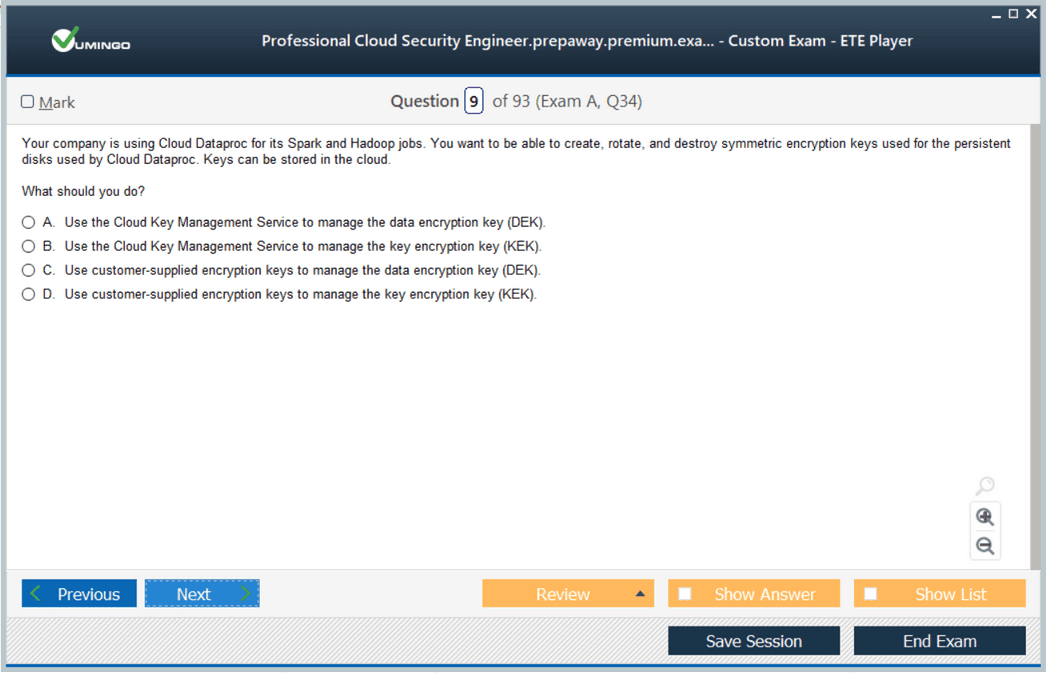
Data protection in Google Cloud represents one of the most essential domains of a Professional Cloud Security Engineer’s expertise. Everything that runs in the cloud—whether virtual machines, databases, or containerized workloads—ultimately produces, stores, or transmits data. This data carries intrinsic value, both to the organization and to potential adversaries. Protecting it requires a multi-layered defense strategy that extends from physical security to cryptographic enforcement. In Google Cloud, the responsibility for data protection is shared between the provider and the customer. Google ensures the underlying infrastructure is secure, while the customer is accountable for securing their data through proper configuration, key management, and operational practices. Understanding this division of responsibility is critical because many data breaches stem from misconfiguration rather than technical failure. The first principle of data protection in the cloud is classification. Data cannot be protected effectively if it is not understood. Classification involves identifying the sensitivity level of each dataset—whether public, internal, confidential, or restricted—and applying controls that align with its classification. Google Cloud provides tools such as Data Loss Prevention (DLP) to automate classification by scanning structured and unstructured data for sensitive patterns such as credit card numbers or personally identifiable information. Once classified, data can be tagged and governed through labels, policies, and encryption standards that reflect organizational data-handling obligations. The architecture of data protection in Google Cloud is built upon a foundation of encryption. Encryption ensures that even if data is intercepted or accessed without authorization, it remains unreadable. There are two primary states of data to consider: data at rest and data in transit. Data at rest refers to information stored on persistent disks, databases, or cloud storage, while data in transit refers to information moving across networks between systems or services. Google Cloud encrypts all data at rest by default, using AES-256 or equivalent algorithms, without requiring user intervention. This default encryption is managed by Google, which handles key generation, storage, and rotation. However, organizations with higher security requirements often prefer to manage encryption keys themselves, leading to the concept of Customer-Managed Encryption Keys (CMEK). CMEK allows organizations to generate and control encryption keys through Cloud Key Management Service (KMS), providing greater oversight over how and when data is decrypted. The Professional Cloud Security Engineer must understand the nuances between default encryption, CMEK, and Customer-Supplied Encryption Keys (CSEK). CSEK provides an even higher degree of control, where customers supply their own keys directly to encrypt data, but this also imposes operational challenges since the loss of a key results in permanent data loss. KMS lies at the heart of encryption management in Google Cloud. It acts as the secure vault where cryptographic keys are generated, stored, and accessed. Keys within KMS are organized into key rings and key versions, allowing for lifecycle management and rotation. Rotation is essential for limiting the exposure of keys over time, reducing the impact of compromise. Engineers must design rotation schedules that align with compliance requirements while minimizing service disruption. KMS also supports asymmetric keys for digital signing and encryption, which are often used in identity verification and integrity protection scenarios. A mature encryption strategy extends beyond the simple act of encrypting data. It encompasses key hierarchy, separation of duties, and access control to the KMS itself. Only authorized identities should be able to use or manage keys, and this access should be logged for auditability. Engineers should design IAM policies for KMS that differentiate between key users, key managers, and key viewers, ensuring that administrative access to key metadata does not equate to the ability to decrypt data. This segregation of duties mirrors traditional physical security principles, where possession of a key does not automatically grant permission to open every lock. Encryption in transit is equally critical, particularly in distributed systems where data flows between services, networks, and regions. Google Cloud uses Transport Layer Security (TLS) to encrypt all communications between its internal services, and it requires the same for customer-managed endpoints. Engineers must ensure that APIs, load balancers, and service-to-service communications enforce TLS 1.2 or higher, ideally combined with certificate pinning or mutual TLS (mTLS) for high-trust environments. In mTLS, both the client and the server authenticate each other, preventing impersonation attacks. This is particularly relevant for microservice architectures or hybrid cloud deployments where multiple systems interact dynamically. Beyond encryption, data protection depends on data governance and access control policies that define who can view or modify specific datasets. Google Cloud provides fine-grained access control mechanisms through IAM policies for resources like BigQuery, Cloud Storage, and Spanner. For example, BigQuery supports column-level security, allowing engineers to restrict access to specific fields within a dataset. This feature is valuable when dealing with mixed-sensitivity data, where some columns contain public information while others store personal identifiers. Similarly, Cloud Storage allows object-level permissions, enabling distinct access policies within the same bucket. Implementing such granularity ensures that even authorized users cannot access more data than necessary for their roles. Data residency and sovereignty have become central to modern cloud governance due to legal and compliance obligations. Many industries require data to remain within specific geographical regions. Google Cloud addresses this need through regional resource placement and organizational policy constraints. Engineers can enforce policies that restrict storage buckets or databases to particular regions, ensuring compliance with regulations such as GDPR or HIPAA. Furthermore, replication strategies should be designed to maintain compliance while providing high availability. Engineers must understand the trade-offs between resilience and data locality, as cross-region replication can introduce compliance complexity if not managed carefully. Another pillar of data protection is backup and recovery. Backups provide a safety net against data corruption, accidental deletion, or ransomware. Google Cloud offers automated backup solutions across its services—such as automated backups in Cloud SQL, snapshot features in Compute Engine, and archival storage classes in Cloud Storage. However, effective backup strategies go beyond enabling these features. Engineers must define retention policies, test restoration procedures, and ensure encryption consistency between primary and backup data. Regular testing of recovery processes validates not only the backups themselves but also the operational readiness of the organization. Immutable backups, often stored in coldline or archive storage, add a layer of defense against tampering and ransomware attacks. Data protection in cloud environments also involves minimizing data exposure through tokenization, anonymization, and masking. These techniques allow organizations to use or share data without revealing sensitive details. Google’s DLP API can automatically mask or tokenize sensitive fields before data is stored or processed. Tokenization replaces sensitive values with randomly generated tokens that can only be mapped back through secure lookup tables, while anonymization removes identifiers altogether. For engineers, integrating these techniques into data pipelines ensures that privacy-by-design principles are upheld, especially when processing large datasets for analytics or machine learning. Secure operations represent the continuous component of cloud security, ensuring that data protection mechanisms remain effective over time. Secure operations encompass monitoring, incident response, and continuous improvement. Google Cloud’s Security Command Center (SCC) serves as the unified platform for visibility across assets, vulnerabilities, and threats. It aggregates findings from services such as Cloud Armor, Web Security Scanner, and DLP, providing engineers with a centralized view of their security posture. However, the true measure of secure operations lies not in detection alone but in response. A Professional Cloud Security Engineer must design incident response playbooks that define roles, communication channels, and escalation paths. When an anomaly is detected, such as unauthorized data access or key misuse, the organization must react swiftly to contain the incident, preserve evidence, and remediate the cause. Automation plays a significant role in secure operations. Engineers can integrate Cloud Functions or Cloud Run with SCC to trigger automated responses to certain security events. For instance, if a storage bucket is made public unintentionally, an automated workflow can revert its permissions and alert administrators. Similarly, key rotation can be triggered automatically when anomalous access patterns are detected. These practices embody the concept of security orchestration, where predefined logic ensures rapid containment of threats without human delay. Logging and monitoring are indispensable for secure operations. Google Cloud’s Cloud Audit Logs, VPC Flow Logs, and Cloud Logging services provide detailed records of actions taken within the environment. Engineers must ensure that all relevant logs are collected, retained, and protected against tampering. Centralizing logs in systems such as Cloud Logging or exporting them to BigQuery for analysis enables advanced threat detection through correlation and pattern recognition. Engineers should also implement alerting based on thresholds and anomalies rather than static conditions, as modern threats often evolve dynamically. Continuous monitoring extends to system performance and configuration integrity. Google Cloud provides services such as Cloud Monitoring and Config Validator, which can compare current configurations against known baselines. This approach, often referred to as configuration drift detection, ensures that systems remain compliant with intended security standards. For example, if an encryption policy is disabled or a firewall rule is modified, the system can automatically generate an alert. Maintaining secure configurations over time is one of the greatest challenges in cloud operations, particularly in dynamic environments driven by continuous deployment pipelines. Therefore, integrating security controls into DevOps practices—commonly known as DevSecOps—is essential. DevSecOps ensures that security checks are embedded into the software delivery lifecycle, preventing misconfigurations before deployment. Engineers can use tools such as Policy Controller with Anthos Config Management to enforce policies across Kubernetes clusters or Terraform Validator to check infrastructure-as-code templates before provisioning. This shift-left approach allows organizations to detect and resolve security issues early, reducing operational risk and cost. Encryption and data protection also intersect with application-level security. Applications must be designed to handle sensitive data responsibly, using secure APIs and storage mechanisms. For example, rather than storing encryption keys within application code, applications should call Cloud KMS to decrypt data dynamically. Similarly, application-level encryption may be applied on top of Google Cloud’s native encryption for additional assurance. Engineers must assess the need for such layered encryption based on risk, compliance, and data sensitivity. Data lifecycle management represents another dimension of secure operations. Every dataset has a lifecycle—from creation to storage, usage, archival, and deletion. Engineers must define policies that control data retention and ensure secure deletion at the end of its lifecycle. Google Cloud provides lifecycle management policies for storage buckets, allowing automated deletion or archival after a defined period. Secure deletion ensures that data remnants are unrecoverable even from underlying storage media, aligning with compliance standards such as NIST 800-88. Ensuring data integrity is equally important as ensuring confidentiality. Integrity guarantees that data has not been altered without authorization. Google Cloud supports integrity mechanisms such as checksums, digital signatures, and object versioning. Object versioning in Cloud Storage allows engineers to preserve previous versions of objects, enabling rollback in case of corruption or accidental modification. At the application level, digital signatures verify that data originates from trusted sources and has not been tampered with. Together, these mechanisms uphold trust in data authenticity. Security engineers must also address insider threats, which represent one of the most difficult risks to mitigate. While encryption and IAM can restrict external threats, insiders often have legitimate access. The key to mitigating insider threats lies in monitoring behavioral patterns and enforcing just-in-time access. Just-in-time access grants temporary permissions only when necessary, automatically revoking them afterward. Combining this with audit logging and anomaly detection allows organizations to identify misuse without impeding productivity. Secure operations also extend into compliance management. Engineers must ensure that controls are mapped to regulatory requirements. Google Cloud’s Assured Workloads and compliance blueprints simplify this process by providing preconfigured environments aligned with standards such as FedRAMP, HIPAA, and ISO 27001. However, engineers must still validate and document their implementations to demonstrate compliance during audits. Automating compliance reporting through policy validation tools and security dashboards transforms compliance from a periodic burden into an ongoing process. Another emerging aspect of secure operations is data observability, which provides visibility into how data moves and transforms across systems. Engineers use data lineage tools to track data from ingestion to output, ensuring that sensitive information does not flow into unauthorized locations. Google’s Data Catalog integrates with DLP to support metadata tagging and lineage tracking. This observability helps detect policy violations, such as sensitive data being copied into unclassified datasets. Data observability complements data protection by adding transparency to operations, reinforcing accountability across teams. The future of data protection and secure operations in cloud environments is shaped by automation, intelligence, and resilience. Machine learning-driven anomaly detection can identify unusual access patterns or configuration changes in real time. Resilience is built through redundancy, regional diversity, and automated recovery. A Professional Cloud Security Engineer must not only deploy these systems but also design them to fail gracefully. Failure is inevitable in complex systems, but insecurity should not be. A well-architected cloud environment anticipates failure and ensures that security remains intact even when components degrade or are replaced. In essence, data protection, encryption, and secure operations in Google Cloud form a continuous cycle rather than isolated functions. Data must be classified, protected, monitored, and eventually destroyed according to policy. Keys must be generated, rotated, and retired. Operations must be observed, analyzed, and improved. Each element feeds into the next, creating an adaptive security posture that evolves with the threat landscape. The Professional Cloud Security Engineer’s role is to maintain this cycle, ensuring that every byte of data—whether at rest, in motion, or in use—remains under the control of the organization’s security fabric. Mastery in this domain is not achieved through memorization but through understanding the interconnectedness of protection mechanisms, operational processes, and organizational goals. In the end, data protection in the cloud is not just about preventing loss; it is about preserving trust. Trust that the system behaves predictably under duress. Trust that privacy is maintained even under scrutiny. Trust that every security control, from encryption to monitoring, operates not in isolation but as part of a cohesive defense architecture. For the Professional Cloud Security Engineer, this trust is both the objective and the measure of success.
Network Security Architecture, Threat Mitigation, and Resilience in Google Cloud
Network security in Google Cloud represents the foundation upon which all other layers of security are built. Every data exchange, service invocation, and workload interaction in a cloud environment depends on a well-defined network architecture that both enables connectivity and limits exposure. For a Professional Cloud Security Engineer, designing secure network architecture means creating an environment where trust boundaries are explicit, communication channels are protected, and every packet of data traverses a controlled pathway. The balance between accessibility and restriction defines the art of network security. A system that is too open invites intrusion, while a system that is too restrictive stifles innovation and operational efficiency. Achieving equilibrium requires a deep understanding of Google Cloud’s Virtual Private Cloud (VPC) framework and the security mechanisms that govern it.
Google’s VPC acts as a logically isolated section of the cloud where resources are deployed and connected. It mirrors the concept of a traditional on-premises network but operates with far greater flexibility. Within a VPC, subnets can span multiple availability zones within a region, providing fault tolerance and redundancy. Each subnet defines an IP address range and functions as a segment of the broader network environment. The key to designing secure networks lies in how these subnets are segmented and interconnected. Security engineers apply network segmentation to separate workloads based on their sensitivity and exposure. For instance, public-facing web applications reside in one subnet with access to the internet through controlled ingress, while internal databases exist in another subnet with no external exposure. This isolation reduces the blast radius of a potential breach. If a web application is compromised, the attacker cannot easily pivot to the database layer without traversing multiple security barriers.
Firewalls form the first line of defense within this architecture. Google Cloud provides VPC firewalls that operate at the instance level rather than the subnet level, allowing precise control over inbound and outbound traffic. Engineers define firewall rules based on IP ranges, ports, and protocols, determining which entities can communicate with which services. By default, all ingress traffic is denied except for specific allowances. Outbound traffic, on the other hand, is typically allowed but should be restricted whenever possible. Outbound restrictions prevent compromised instances from exfiltrating data or communicating with command-and-control servers. Firewall rules should follow the principle of least privilege, where only the necessary ports and protocols are open, and every other path is implicitly denied.
Beyond basic firewalls, Google Cloud offers hierarchical firewall policies that can be applied at the organization or folder level. This enables centralized management of network controls across multiple projects. For large enterprises, where dozens or hundreds of projects may exist, hierarchical policies ensure consistency and reduce misconfiguration risk. For example, a rule denying public SSH access can be enforced globally, while project-specific exceptions can be added only through approved processes. Centralized control is a hallmark of mature cloud governance, and network security engineers must design policies that scale across the organization without introducing operational friction.
Perimeter security in cloud environments extends beyond simple firewalling. In traditional data centers, perimeter defense relied heavily on a clear demarcation between trusted internal networks and untrusted external ones. However, in the cloud, this perimeter is blurred. Services may run across multiple clouds, users may connect from anywhere, and workloads may move dynamically. This reality gives rise to the concept of the zero-trust model. Zero trust assumes that no network segment, user, or device should be inherently trusted, even if it exists within the corporate boundary. Instead, every access request must be authenticated, authorized, and continuously validated.
Google Cloud embodies this philosophy through its BeyondCorp Enterprise framework. BeyondCorp replaces traditional VPN-based access models with context-aware access control. In this model, user identity, device health, and environmental context determine access decisions. A Professional Cloud Security Engineer must design network architectures that align with zero-trust principles, ensuring that internal applications and APIs are protected through identity-aware proxies and service accounts rather than static network rules. Identity becomes the new perimeter. Network policies then serve as enforcement mechanisms for those identities, ensuring that traffic flows only between verified and authorized entities.
Another essential component of secure network design is load balancing and traffic management. Google Cloud provides global and regional load balancers that distribute traffic across backends while providing integrated security features. Engineers can integrate Cloud Armor with load balancers to provide DDoS protection and layer-7 filtering. Cloud Armor uses rules based on the Web Application Firewall (WAF) standard to block malicious requests such as SQL injection, cross-site scripting, and application-layer DDoS attacks. Proper configuration of load balancers and WAF rules allows legitimate traffic to flow unimpeded while filtering out threats before they reach application servers.
Securing communication between services within the VPC requires additional layers of control. Private Google Access allows resources without public IPs to communicate with Google services securely over the internal network, eliminating the need for internet exposure. Similarly, Private Service Connect and VPC Service Controls provide mechanisms to define service perimeters around sensitive resources. VPC Service Controls, in particular, create a logical boundary that prevents data exfiltration from managed services such as BigQuery, Cloud Storage, and Pub/Sub. When configured correctly, even if credentials are compromised, attackers cannot move data outside the perimeter. This represents one of the most powerful tools available for cloud data protection.
Network Address Translation (NAT) plays a crucial role in controlling outbound traffic. Cloud NAT allows instances without public IP addresses to initiate outbound connections while keeping their identities hidden from external systems. This design reduces attack surface and simplifies IP management. For environments that require more granular control, engineers can pair Cloud NAT with egress firewall rules or routing policies. By defining explicit routes and next-hop gateways, network architects can dictate how traffic exits the network, whether through secure tunnels, on-premises gateways, or cloud security partners.
Hybrid connectivity introduces another layer of complexity. Many organizations operate hybrid or multi-cloud environments, connecting on-premises networks to Google Cloud via Cloud VPN or Dedicated Interconnect. Securing these connections requires careful planning around encryption, routing, and redundancy. Cloud VPN uses IPsec tunnels to secure data in transit between environments, while Dedicated Interconnect provides physical links with higher bandwidth and lower latency. Engineers must ensure that routing configurations prevent accidental exposure of private subnets to the internet and that redundant tunnels or interconnects are configured for high availability. Hybrid environments must also enforce consistent security policies on both ends of the connection, as a weakness in the on-premises network can become an entry point to the cloud.
Threat mitigation in Google Cloud is not limited to reactive defense; it involves proactive detection and continuous adaptation. Threats evolve constantly, and static defenses are insufficient. Google’s cloud infrastructure benefits from global-scale threat intelligence, but each organization must implement its own layered defense strategy tailored to its workloads. Security engineers use tools such as Cloud IDS and Packet Mirroring to monitor network traffic for anomalies. Cloud IDS provides managed intrusion detection capabilities, scanning for known attack signatures and suspicious behaviors. Packet Mirroring allows engineers to capture and analyze live traffic, which can be fed into security analytics platforms for deeper investigation. The ability to see into the network’s activity is essential for identifying stealthy threats that bypass traditional firewalls.
DDoS attacks remain one of the most disruptive threats in cloud environments. These attacks attempt to overwhelm applications or networks with excessive traffic, rendering services unavailable. Google Cloud’s global edge network and Cloud Armor provide inherent resilience against volumetric attacks by absorbing and dispersing traffic across its distributed infrastructure. Engineers must still configure rate limiting, caching, and auto-scaling to complement these protections. Caching static content through Cloud CDN, for example, offloads traffic from backend systems and reduces exposure. Auto-scaling allows applications to handle traffic spikes gracefully, ensuring availability even under sustained attack. Resilience against DDoS is as much about architecture as it is about tools.
Another category of network threat involves lateral movement, where an attacker who gains access to one system attempts to move horizontally through the network. Segmentation, micro-segmentation, and strict IAM enforcement are the primary defenses. Micro-segmentation, implemented through VPC firewall rules or service meshes like Anthos Service Mesh, isolates workloads at the smallest practical level. Each service communicates only with explicitly defined peers, and mutual TLS ensures that communication is encrypted and authenticated. Engineers should design network policies that limit east-west traffic, ensuring that even if one workload is compromised, the breach remains contained.
Resilience in cloud network architecture goes beyond security; it encompasses the ability of systems to continue functioning despite disruptions, misconfigurations, or attacks. A resilient architecture anticipates failure and isolates it. Engineers must design redundant network paths using multiple subnets, regions, or even clouds. Global Load Balancing allows traffic to fail over automatically between regions if one becomes unavailable. Health checks and monitoring ensure that only healthy instances receive traffic. Network resilience also requires careful management of dependencies. Critical services such as authentication, logging, and DNS must be replicated and protected. Outages in these foundational components can have cascading effects, so redundancy must be built from the ground up.
Disaster recovery planning forms an integral part of network resilience. In Google Cloud, engineers can design architectures that replicate workloads across regions or maintain hot standby environments. The networking layer must support seamless failover between primary and secondary environments. This includes synchronizing firewall rules, routes, and DNS configurations. Infrastructure as code tools, such as Deployment Manager or Terraform, enable rapid recreation of environments in case of catastrophic failure. However, recovery is not only about automation but also about validation. Regular failover drills ensure that both technology and personnel are prepared to execute recovery procedures under pressure.
Security engineers must also consider the human factor in network resilience. Configuration errors, credential leaks, and privilege misuse remain among the leading causes of security incidents. Implementing guardrails through organization policies and policy validation tools prevents dangerous configurations from being deployed. Engineers can enforce constraints such as disallowing external IP addresses, requiring SSL for all communications, or restricting certain regions for resource deployment. These policies act as automated governance layers, ensuring that the network remains compliant and secure even as it evolves.
Threat intelligence integration strengthens network defense by aligning real-time awareness with configuration. Engineers can ingest threat feeds into security monitoring systems to detect communications with known malicious IPs or domains. Google’s Chronicle Security Operations platform, for example, aggregates global telemetry and applies machine learning to identify emerging threats. While such advanced systems may operate at scale, every security engineer should understand the importance of correlating network data with external intelligence. Attack patterns often repeat across industries, and recognizing indicators early can prevent exploitation.
Another evolving dimension of network security is the rise of service mesh architectures. In cloud-native environments built on microservices, traditional perimeter defenses lose effectiveness. A service mesh such as Anthos Service Mesh or Istio introduces security at the application layer, managing authentication, authorization, and encryption between services. Engineers define policies that specify which services can talk to each other, how traffic is encrypted, and what telemetry is collected. The service mesh abstracts these controls away from application code, ensuring consistency and reducing developer burden. From a network security perspective, service meshes represent a major advancement because they unify observability, policy enforcement, and encryption across distributed systems.
When designing network resilience, engineers must also plan for scalability and elasticity. Security controls that cannot scale with workload demand can become bottlenecks or single points of failure. Load balancers, firewalls, and monitoring systems must be designed with elasticity in mind. Autoscaling firewall appliances or using distributed firewalling through VPC rules ensures that protection grows with demand. Similarly, monitoring systems must handle increased telemetry without dropping logs or delaying alerts. Scalability ensures that resilience is not sacrificed during peak usage or attacks.
Compliance considerations also shape network architecture. Many regulations require segregation of sensitive environments, encrypted communication channels, and auditable network activity. Engineers must ensure that every aspect of network design supports these requirements without compromising agility. Implementing private connectivity for regulated data flows, ensuring that traffic does not traverse the public internet, and maintaining audit trails of configuration changes are essential practices. In some cases, engineers may implement network policy engines that continuously evaluate compliance posture, flagging deviations before they result in violations.
Resilience also implies adaptability. The threat landscape changes constantly, and static configurations quickly become outdated. Continuous improvement is vital. Engineers must regularly review firewall rules, routing policies, and peering connections to ensure relevance. Network baselining provides a reference point for detecting deviations. Automated policy audits can verify that network configurations align with security benchmarks such as the Center for Internet Security guidelines. Over time, this continuous feedback loop ensures that the network evolves securely alongside business requirements.
Ultimately, the Professional Cloud Security Engineer must view network security and resilience not as isolated disciplines but as interdependent forces. Security provides protection, while resilience ensures continuity. Together they form the backbone of trust in cloud environments. Every control—from firewall rules to encryption—contributes to a broader strategy where defense and durability coexist. The goal is not to eliminate risk entirely, which is impossible, but to ensure that risk is predictable, manageable, and recoverable.
In practice, the most effective network security architectures in Google Cloud are those that embrace simplicity. Complexity is the enemy of security because it introduces hidden dependencies and misconfigurations. Simple, modular designs that clearly define boundaries are easier to secure, monitor, and recover. Engineers should document network topology, maintain version-controlled infrastructure definitions, and automate deployments to eliminate human error. Clarity, automation, and consistency are the cornerstones of resilient network security.
The Future of Governance, Compliance, and the Evolving Role of the Professional Cloud Security Engineer
In the modern digital ecosystem, governance and compliance have transformed from being secondary considerations into primary pillars that define the maturity and reliability of cloud infrastructures. For professionals operating within Google Cloud, these aspects are not limited to policy enforcement or documentation—they embody a continuous process of alignment between organizational intent, technological capacity, and the evolving regulatory environment. The Professional Cloud Security Engineer stands at this intersection, functioning not merely as a guardian of access or data integrity but as a strategic architect ensuring that every layer of Google Cloud’s infrastructure adheres to governance principles, enforces compliance obligations, and supports sustainable operational security. Understanding governance within the Google Cloud environment begins with recognizing it as a framework of accountability and visibility rather than restriction. Governance ensures that resources are utilized efficiently and securely while aligning technical operations with corporate strategy and legal requirements. The engineer’s responsibility extends into ensuring that project hierarchies, billing structures, permissions, and workloads reflect a well-organized and compliant architecture. This involves designing a cloud environment where identity and access management practices are traceable and enforceable, where logs and audit trails are not only collected but also contextualized to form a continuous narrative of operational activity. Governance in this context is deeply connected to the design of resource hierarchies within Google Cloud—organizations, folders, projects, and resources. A misaligned hierarchy can create blind spots in compliance monitoring or allow privilege escalations that undermine accountability. The Professional Cloud Security Engineer must therefore establish inheritance models and role assignments that ensure that every administrative action and API call is governed by a principle of least privilege while maintaining operational agility. Compliance within Google Cloud introduces another layer of complexity, primarily because cloud environments must adhere to a multitude of overlapping standards that vary by industry, geography, and data type. These include but are not limited to GDPR, HIPAA, FedRAMP, ISO 27001, and PCI DSS. The Professional Cloud Security Engineer must navigate these frameworks not as isolated checklists but as interdependent systems of control that influence how encryption is applied, how access is logged, how workloads are segregated, and how data is transmitted across global regions. The process of compliance management within Google Cloud is dynamic. It does not conclude once a certification or attestation is achieved; rather, it demands continuous validation of configurations and real-time enforcement of policies. Tools such as Policy Intelligence, Cloud Asset Inventory, and Security Command Center play critical roles in providing visibility into policy adherence, misconfiguration detection, and risk assessment. A skilled engineer integrates these tools into operational workflows to create automated governance loops—systems that detect deviation and self-correct based on pre-established compliance baselines. In large-scale enterprises, governance also involves delegation and trust management across multiple teams and departments. The engineer must balance centralization of control with decentralization of responsibility. This is achieved through well-defined IAM roles, service accounts, and organizational policies that allow local administrators to perform their duties without violating global compliance mandates. For example, while an application development team might require access to certain storage buckets for testing, the governance model ensures that such access is automatically revoked when the project transitions to production. Such precision in access lifecycle management is crucial in maintaining an auditable and compliant environment. Governance and compliance extend beyond the boundaries of the Google Cloud platform. The Professional Cloud Security Engineer must consider the hybrid and multi-cloud nature of most organizations today. Data may traverse between Google Cloud, on-premises systems, and third-party services, each governed by different regulatory domains. The engineer must design architectures that maintain consistent security controls across these environments. This includes enforcing encryption in transit using Cloud Key Management Service, maintaining consistent data classification through labels and policies, and ensuring that API communications between services remain authenticated and logged. The evolution of compliance has also introduced the concept of continuous compliance—a paradigm where compliance status is continuously assessed and reported in near real-time. The Professional Cloud Security Engineer utilizes automation frameworks, often integrating Infrastructure as Code with compliance templates, to enforce governance rules at the deployment level. For instance, Terraform configurations or Deployment Manager templates can embed compliance controls directly into resource provisioning logic. This approach transforms compliance from a reactive activity into a proactive and preventative mechanism embedded in the development lifecycle. From a strategic standpoint, governance and compliance in Google Cloud are not only about meeting external regulatory demands but also about cultivating internal resilience and trust. When governance is mature, organizations can respond swiftly to audits, security incidents, or changes in legislation without disrupting operations. The Professional Cloud Security Engineer contributes by maintaining comprehensive audit readiness, documenting control mappings, and integrating compliance reporting into the organization’s continuous monitoring systems. This level of preparedness enhances business continuity and builds credibility with partners and customers alike. The evolving regulatory environment means that the role of the engineer must also evolve. New laws governing data residency, sovereignty, and privacy are emerging in multiple jurisdictions, and organizations must adapt without losing operational flexibility. The engineer’s challenge lies in implementing technical safeguards—like regionalized storage, restricted VPC egress, and automated data deletion policies—that respect these legal boundaries. The modern Professional Cloud Security Engineer must therefore not only understand Google Cloud technologies but also maintain awareness of global data governance trends. Governance maturity within the Google Cloud ecosystem can be measured by the organization’s ability to map controls to outcomes. A control may define that all sensitive data must be encrypted at rest, but governance maturity is achieved when the engineer can prove that encryption keys are rotated periodically, stored securely, and managed under clear ownership. The ability to demonstrate this linkage between control and verification transforms compliance from an abstract requirement into a measurable outcome. For this reason, metrics and dashboards become essential governance instruments. Engineers implement monitoring pipelines that collect data from Cloud Logging, Security Command Center findings, and IAM activity logs, synthesizing them into compliance scorecards that guide decision-making. The convergence of governance and automation represents the future direction of cloud compliance. Machine learning algorithms and AI-driven analytics are increasingly used to detect anomalous configurations or non-compliant behaviors before they result in breaches. The Professional Cloud Security Engineer integrates these capabilities through Google Cloud’s native tools or custom-built detection logic. Such intelligent governance systems can identify emerging threats, predict policy violations, and recommend remediation actions automatically. However, as automation increases, so does the need for oversight. The engineer must define clear escalation protocols and manual review processes to ensure that automated decisions align with business context and ethical considerations. Governance also intersects with organizational culture. A secure cloud environment cannot be sustained solely by technical controls; it requires a culture of accountability and shared responsibility. The engineer plays an influential role in promoting this culture by designing transparent systems, educating stakeholders on the rationale behind governance decisions, and ensuring that compliance processes are understood as enablers rather than obstacles. Training and communication are subtle yet powerful tools in maintaining long-term compliance posture. One of the lesser-known aspects of governance in Google Cloud is the management of metadata and labeling systems. Proper labeling of resources based on sensitivity, ownership, and environment is essential for cost tracking, policy application, and compliance reporting. Mislabeling or inconsistent labeling can cause gaps in audit readiness or lead to policy mismatches. The engineer must establish tagging strategies that integrate seamlessly with organizational taxonomies, ensuring that automation tools can interpret and enforce policies consistently across regions and services. Another important dimension is third-party risk management. Many organizations rely on external vendors for analytics, storage, or processing capabilities within Google Cloud. Each external integration introduces potential compliance exposure. The Professional Cloud Security Engineer must evaluate third-party services based on their adherence to compliance standards, contractually enforce security obligations, and monitor ongoing performance through continuous assessment mechanisms. This level of diligence is vital for maintaining end-to-end compliance coverage. In addition to external compliance, internal governance frameworks must also evolve to reflect organizational priorities. Engineers often develop custom governance policies that go beyond regulatory requirements—such as data retention limits, service-level segregation, or proprietary encryption standards. These internal controls represent an organization’s security philosophy and often become competitive differentiators. Implementing them requires a balance between strict enforcement and operational flexibility. The engineer ensures that policies are technically enforceable yet adaptable enough to accommodate innovation and experimentation. The Professional Cloud Security Engineer’s influence extends into incident response governance as well. Post-incident evaluations often reveal that compliance lapses or misaligned governance structures contributed to the breach. By integrating incident management with compliance tracking, engineers ensure that every incident produces actionable insights for improving governance. This continuous improvement loop strengthens resilience and reduces the probability of recurrence. The convergence of governance and DevSecOps practices has also redefined how compliance is implemented. Security engineers embed governance rules directly into CI/CD pipelines, ensuring that any infrastructure changes automatically undergo compliance validation before deployment. This approach eliminates the historical tension between innovation speed and compliance enforcement. The engineer’s role in this paradigm is to develop policies as code, continuously monitor compliance drift, and enable teams to build securely by default. Over time, the concept of governance in Google Cloud evolves into an ecosystem of accountability where every action, resource, and decision is traceable, measurable, and justifiable. The Professional Cloud Security Engineer becomes the orchestrator of this ecosystem—designing the infrastructure, maintaining the tools, and guiding the organization’s security narrative. Their work ensures that governance and compliance are not viewed as burdens but as vital instruments that enhance operational clarity and strategic confidence. As digital transformation accelerates, the responsibilities of these engineers will expand even further. They will increasingly engage in policy design at the organizational level, advising legal and compliance teams on technical feasibility, and collaborating with auditors to define new metrics of cloud governance effectiveness. They will also play a pivotal role in sustainability governance, ensuring that cloud operations align with environmental and ethical standards as organizations move toward carbon neutrality. In essence, the Professional Cloud Security Engineer’s role is evolving from a technical specialist into a governance strategist. Their expertise bridges the gap between technology and accountability, enabling organizations to navigate the complexities of the digital landscape with confidence. In the coming years, this role will define not only how secure cloud environments are built but also how trust is maintained in a world where compliance, governance, and innovation must coexist seamlessly within the Google Cloud ecosystem.
Final Thoughts
The journey to understanding the significance of the Professional Cloud Security Engineer within the Google Cloud ecosystem reveals that this role is far more than a technical position—it is a synthesis of architecture, governance, and foresight. As cloud infrastructures grow in scale and complexity, the engineer’s responsibility evolves beyond ensuring operational security to embodying the organization’s philosophy toward resilience, accountability, and technological integrity. The certification itself serves as a formal recognition of one’s capability to align technical mastery with strategic intent, representing a level of fluency that allows the engineer to secure data, manage compliance, and influence policy from the command line to the boardroom.
The cloud has fundamentally redefined how organizations manage data and operations, creating environments that are dynamic, scalable, and globally distributed. Yet, with that freedom comes a vast expansion of the security surface. The Professional Cloud Security Engineer acts as the counterbalance to this expansion, ensuring that speed and scalability do not come at the cost of control or compliance. Their expertise allows businesses to innovate confidently within the boundaries of regulation, ethical responsibility, and risk management. Through deliberate design, consistent monitoring, and adaptive policy enforcement, these professionals create infrastructures that not only resist intrusion but also adapt to the shifting nature of threat landscapes.
The value of this certification also lies in its philosophy of continuous improvement. Unlike static credentials that measure one’s knowledge at a moment in time, the Professional Cloud Security Engineer represents a living discipline. The knowledge it encompasses must evolve in tandem with Google Cloud’s technological progression, regulatory updates, and new paradigms of digital identity and encryption. Engineers who hold this certification embrace a mindset of lifelong learning, understanding that maintaining cloud security is not about fortifying a single boundary but about sustaining a living system that is constantly re-evaluated, reinforced, and redefined.
One of the most critical realizations for those pursuing or holding this certification is that cloud security cannot be achieved through isolation. Collaboration across departments—development, legal, compliance, operations—is essential for a resilient security posture. The engineer becomes the interpreter between these domains, translating technical realities into business implications and legal requirements into practical controls. This cross-functional capability is what makes the Professional Cloud Security Engineer indispensable to modern enterprises. They are the individuals who ensure that security is not a barrier to progress but a framework through which progress can occur safely and sustainably.
As governance and compliance gain prominence in the cloud era, engineers are increasingly involved in shaping organizational policy and strategy. They are no longer simply executors of predefined standards but contributors to their creation. By aligning security controls with organizational priorities and regulatory mandates, they ensure that cloud operations reflect both ethical responsibility and business agility. This alignment transforms security from a defensive mechanism into a competitive advantage—organizations that demonstrate trustworthiness, audit readiness, and regulatory alignment gain stronger reputations and greater stakeholder confidence.
The Professional Cloud Security Engineer also represents the growing importance of accountability in technology. Every configuration, every permission, and every data flow tells a story of trust—trust between users and systems, between companies and clients, and between technologies and regulators. The engineer’s craft lies in preserving that trust through visibility, documentation, and control. They operate within a continuous cycle of verification, ensuring that what is declared as secure is demonstrably so, and that every deviation triggers a measured, informed response.
In a broader sense, this certification symbolizes the convergence of technology and ethics. The cloud has made it possible to store, process, and analyze data at an unprecedented scale, but it has also introduced new ethical considerations around privacy, data sovereignty, and surveillance. The Professional Cloud Security Engineer’s responsibility includes understanding these dimensions and embedding ethical design into security architecture. This means implementing privacy by design, enforcing minimal data exposure, and ensuring transparency in how information is handled. These responsibilities highlight the engineer’s evolving role not only as a technologist but also as a custodian of digital rights.
As artificial intelligence, automation, and quantum computing emerge, the role of cloud security engineers will expand into new dimensions. Security principles will need to adapt to models that make autonomous decisions, store information across decentralized networks, and operate at speeds beyond human comprehension. The foundational knowledge that underpins the Professional Cloud Security Engineer today will evolve into frameworks for securing intelligent systems and ensuring their accountability. Yet, the principles remain the same: control, visibility, and integrity. Regardless of technological evolution, the engineer’s purpose—to protect systems and the people who depend on them—remains constant.
The future of cloud security depends on professionals who understand that compliance is not about restriction but about assurance; that governance is not bureaucracy but clarity; and that security is not isolation but empowerment. The Professional Cloud Security Engineer embodies these principles through every configuration and every policy they design. Their influence extends beyond the cloud console—they shape organizational culture, influence digital ethics, and define how technology integrates with trust.
In reflecting on the value of this certification, it becomes evident that its worth cannot be measured solely by the cost of the exam or the credentials it grants. Its true value lies in the transformation it initiates within the professional who earns it. It cultivates analytical precision, strategic vision, and ethical awareness. It demands both technical depth and adaptive intelligence, qualities that define the leaders of tomorrow’s digital world. The certification’s rigor ensures that those who hold it have not only mastered the tools of Google Cloud but also understand the principles that sustain secure digital environments.
Ultimately, the Professional Cloud Security Engineer represents the embodiment of modern cybersecurity philosophy—security as an enabler of innovation, compliance as a pillar of trust, and governance as the architecture of accountability. As cloud ecosystems continue to shape the global economy, professionals who possess this blend of expertise will define the next era of digital resilience. They will not only secure data but also safeguard the integrity of information ecosystems that underpin human progress. In that sense, the journey to becoming a Professional Cloud Security Engineer is not just a career milestone but a commitment to advancing the discipline of security itself—a discipline that continues to evolve, adapt, and serve as the invisible foundation of every secure connection, every protected transaction, and every trusted innovation in the cloud-driven future.
Google Professional Cloud Security Engineer practice test questions and answers, training course, study guide are uploaded in ETE Files format by real users. Study and Pass Professional Cloud Security Engineer Professional Cloud Security Engineer certification exam dumps & practice test questions and answers are to help students.
Exam Comments * The most recent comment are on top
- Professional Cloud Architect - Google Cloud Certified - Professional Cloud Architect
- Generative AI Leader
- Professional Machine Learning Engineer
- Associate Cloud Engineer
- Professional Data Engineer - Professional Data Engineer on Google Cloud Platform
- Professional Cloud Security Engineer
- Professional Cloud Network Engineer
- Professional Security Operations Engineer
- Cloud Digital Leader
- Professional Cloud DevOps Engineer
- Professional Cloud Developer
- Associate Google Workspace Administrator
- Professional Cloud Database Engineer
- Associate Data Practitioner - Google Cloud Certified - Associate Data Practitioner
- Professional ChromeOS Administrator
- Professional Chrome Enterprise Administrator
- Professional Google Workspace Administrator
Purchase Professional Cloud Security Engineer Exam Training Products Individually


Why customers love us?
What do our customers say?
The resources provided for the Google certification exam were exceptional. The exam dumps and video courses offered clear and concise explanations of each topic. I felt thoroughly prepared for the Professional Cloud Security Engineer test and passed with ease.
Studying for the Google certification exam was a breeze with the comprehensive materials from this site. The detailed study guides and accurate exam dumps helped me understand every concept. I aced the Professional Cloud Security Engineer exam on my first try!
I was impressed with the quality of the Professional Cloud Security Engineer preparation materials for the Google certification exam. The video courses were engaging, and the study guides covered all the essential topics. These resources made a significant difference in my study routine and overall performance. I went into the exam feeling confident and well-prepared.
The Professional Cloud Security Engineer materials for the Google certification exam were invaluable. They provided detailed, concise explanations for each topic, helping me grasp the entire syllabus. After studying with these resources, I was able to tackle the final test questions confidently and successfully.
Thanks to the comprehensive study guides and video courses, I aced the Professional Cloud Security Engineer exam. The exam dumps were spot on and helped me understand the types of questions to expect. The certification exam was much less intimidating thanks to their excellent prep materials. So, I highly recommend their services for anyone preparing for this certification exam.
Achieving my Google certification was a seamless experience. The detailed study guide and practice questions ensured I was fully prepared for Professional Cloud Security Engineer. The customer support was responsive and helpful throughout my journey. Highly recommend their services for anyone preparing for their certification test.
I couldn't be happier with my certification results! The study materials were comprehensive and easy to understand, making my preparation for the Professional Cloud Security Engineer stress-free. Using these resources, I was able to pass my exam on the first attempt. They are a must-have for anyone serious about advancing their career.
The practice exams were incredibly helpful in familiarizing me with the actual test format. I felt confident and well-prepared going into my Professional Cloud Security Engineer certification exam. The support and guidance provided were top-notch. I couldn't have obtained my Google certification without these amazing tools!
The materials provided for the Professional Cloud Security Engineer were comprehensive and very well-structured. The practice tests were particularly useful in building my confidence and understanding the exam format. After using these materials, I felt well-prepared and was able to solve all the questions on the final test with ease. Passing the certification exam was a huge relief! I feel much more competent in my role. Thank you!
The certification prep was excellent. The content was up-to-date and aligned perfectly with the exam requirements. I appreciated the clear explanations and real-world examples that made complex topics easier to grasp. I passed Professional Cloud Security Engineer successfully. It was a game-changer for my career in IT!