
- Home
- HP Certifications
- HPE0-J82 HPE Storage Architect Dumps
Pass HP HPE0-J82 Exam in First Attempt Guaranteed!
Get 100% Latest Exam Questions, Accurate & Verified Answers to Pass the Actual Exam!
30 Days Free Updates, Instant Download!


HPE0-J82 Premium Bundle
- Premium File 60 Questions & Answers. Last update: Oct 15, 2026
- Study Guide 652 Pages




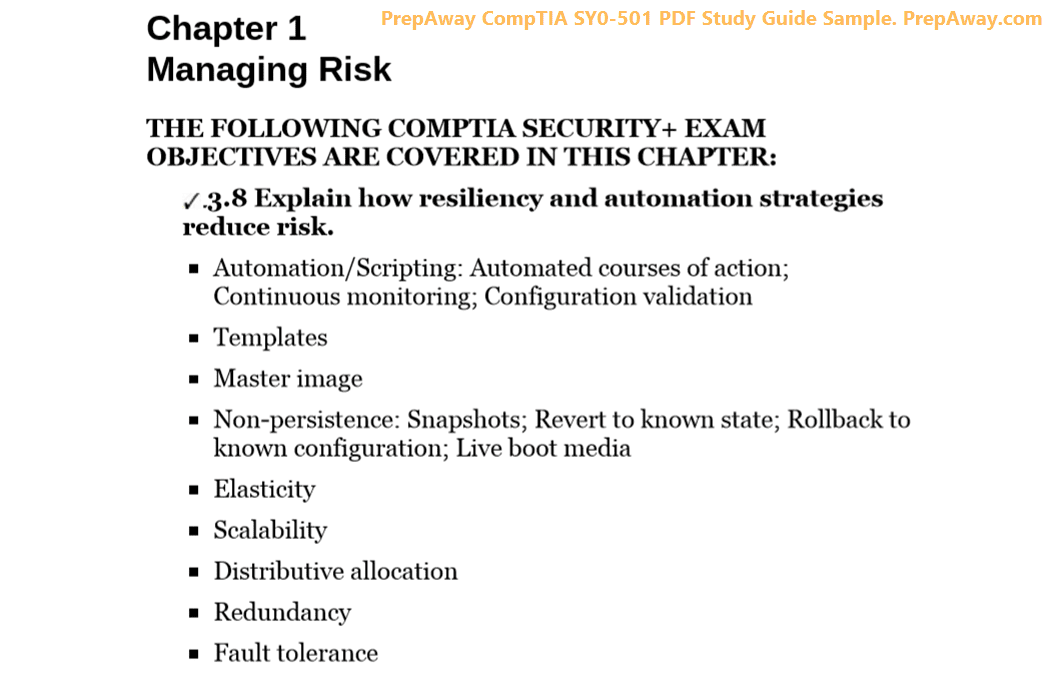
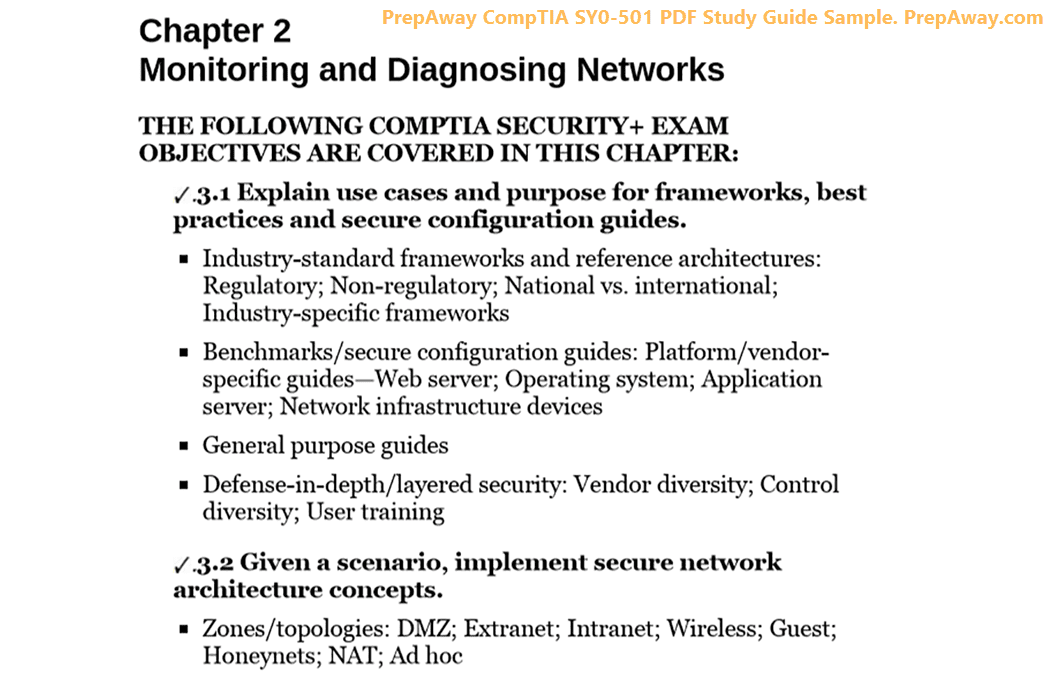
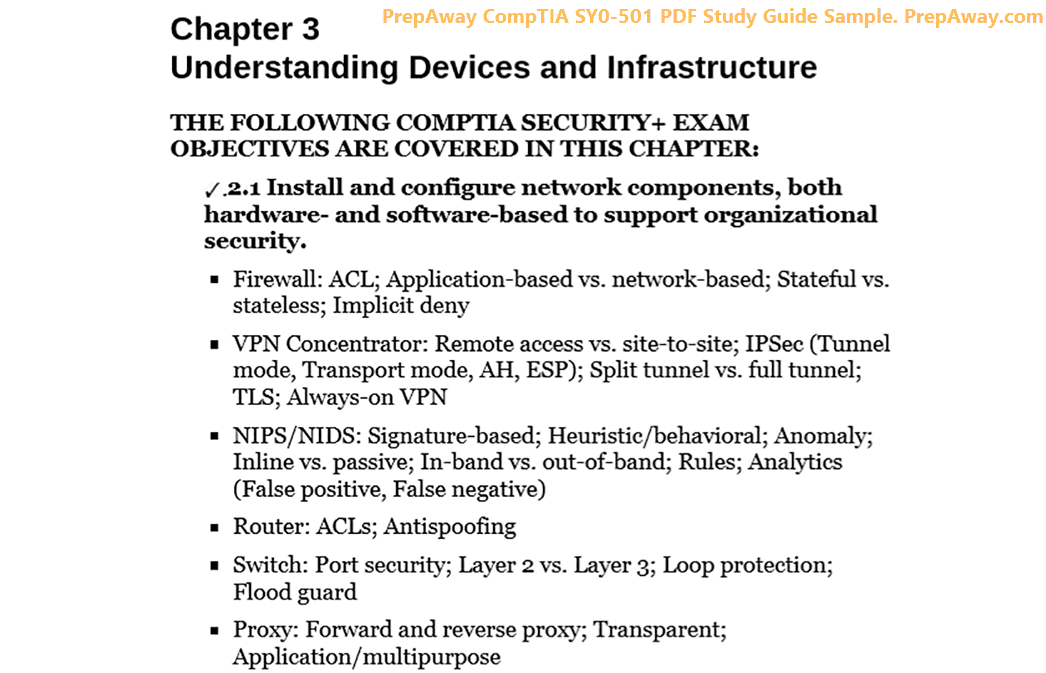
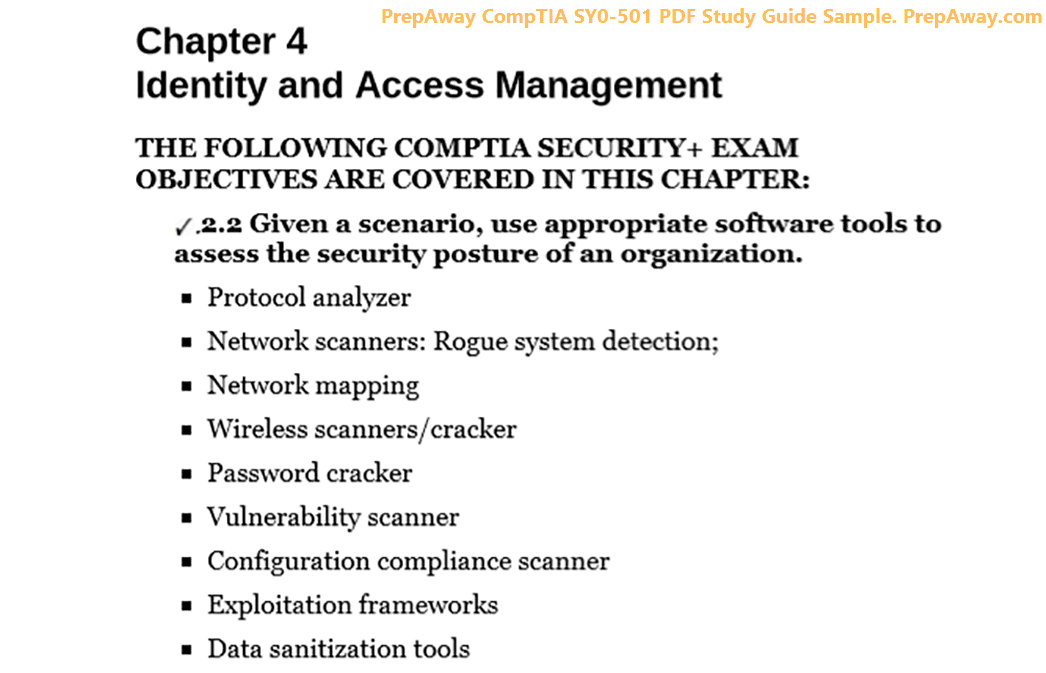
Last Week Results!
 83% students found the test questions almost same

Includes question types found on the actual exam such as drag and drop, simulation, type-in and fill-in-the-blank.

Developed by IT experts who have passed the exam in the past. Covers in-depth knowledge required for exam preparation.
All HP HPE0-J82 certification exam dumps, study guide, training courses are Prepared by industry experts. PrepAway's ETE files povide the HPE0-J82 HPE Storage Architect practice test questions and answers & exam dumps, study guide and training courses help you study and pass hassle-free!
HPE0-J82 Storage Architect: Designing Current HPE Data Solutions
HPE0-J82 is the current HPE Storage Architect exam. HPE describes it as validating the ability to size, configure, optimize, and upgrade HPE storage solutions while interpreting customer requirements and designing an architecture that meets business needs. The current exam is proctored, lasts 90 minutes, contains 60 questions, and requires a 63 percent passing score.
The credential belongs to HPE’s current storage-architecture path and represents a different role from HPE0-J83 Storage Integrator Solutions. The architect owns the design logic and trade-offs; the integrator carries more of the installation, configuration, management, and troubleshooting depth. Both belong to the broader set of HPE certifications.
HPE’s candidate profile expects substantial architecture experience. That should shape preparation. Product familiarity is necessary, but the exam is fundamentally about choosing and defending a solution under constraints such as performance, availability, recovery, cost, growth, manageability, and workload fit.
Architecture starts by converting business language into technical requirements
A customer may say that a database is “slow,” a file estate is “growing fast,” or an application “cannot go down.” The architect must turn those statements into measurable requirements. That means capacity and growth, latency, IOPS, throughput, data type, concurrency, availability targets, RPO, RTO, security, compliance, and operational ownership.
Good discovery also identifies constraints. Existing fabrics, virtualization platforms, backup software, data-center space, staff skills, maintenance windows, cloud strategy, and budget can all limit the valid solution set. Ignoring constraints produces elegant designs that customers cannot operate.
Document assumptions. If growth, performance, or recovery requirements are uncertain, state what was assumed and how sensitive the design is to that assumption. Architecture is partly the discipline of making hidden risk visible.
Workload classification determines the right data platform
Structured transactional workloads, unstructured files, object data, backup, analytics, virtual machines, AI pipelines, and archives have different access patterns. The architect should know when low-latency block storage is appropriate and when a file, object, hyperconverged, or data-protection platform better matches the requirement.
Current HPE certification separates supporting domains explicitly. HPE3-CL05 Unstructured Data Solutions addresses the unstructured-data side of the portfolio, while HPE3-CL06 Data Protection addresses protection. Those domains are part of the wider knowledge an architect uses when a customer environment includes more than primary block storage.
Avoid choosing a platform because it is familiar. Start with workload behavior and service objectives, then narrow to the platform whose architecture best fits those needs.
Performance sizing needs peak behavior and operational margin
Capacity alone is not sizing. Architects should understand latency, IOPS, throughput, block size, read/write ratio, sequential versus random access, cache behavior, and concurrency. Peak and percentile behavior is more useful than a single average because applications often fail service levels during short bursts.
Performance models should include growth and failure states. Can the design still meet requirements during a drive rebuild, controller failover, maintenance event, replication resynchronization, or seasonal peak? A system that meets the target only in ideal conditions has no engineering margin.
Validate sizing with supported tools and current product guidance. Generic formulas can help reason about the workload, but platform-specific behavior determines the final supported configuration.
Availability is an end-to-end property
Storage arrays can provide redundant controllers, power, and media, but application availability also depends on fabrics, host adapters, multipathing, virtualization, networks, identity, and application design. An architect should trace every critical path and identify shared failure domains.
High availability and disaster recovery are related but different. Local redundancy protects against component failure; multi-site protection addresses larger failures. The architecture should specify what happens during each scenario and which operations are automatic or manual.
Disaster-recovery planning extends those storage-specific design questions into recovery ownership, testing, business priorities, and the procedures required to restore service after a disruption.
Data protection should be matched to the failure being protected against
Snapshots, backups, replication, immutable copies, and recovery orchestration provide different forms of protection. A snapshot on the primary system may provide fast recovery from a logical mistake but does not protect against total system loss. Replication can protect against site failure but can also replicate unwanted changes. Independent backup adds another recovery layer.
Design protection around recovery objectives and threat models. Ask what happens after accidental deletion, ransomware, application corruption, array failure, site loss, and administrator error. The answer may require several protection mechanisms rather than one feature.
Architects should also consider restore performance. A backup that retains the required data but cannot restore it within the RTO does not satisfy the service requirement.
Connectivity and fabric design influence both performance and resilience
The data path includes host adapters, switches, storage ports, cabling, zoning or network policy, protocol settings, and multipathing. Port counts and link speeds matter, but topology, oversubscription, redundancy, and workload distribution are equally important.
Design paths so that maintenance and single-component failures do not remove all access. Confirm that host configurations and supported multipathing policies align with the storage architecture. Avoid hidden shared dependencies such as both fabrics traversing the same physical device.
Performance troubleshooting becomes easier when the architecture clearly separates paths and provides monitoring at each layer.
Hybrid cloud changes where data services are consumed
Modern HPE architecture exists within a hybrid-cloud model. Customers may consume infrastructure and data services on premises while using cloud-like operational models, or combine local storage with public-cloud applications and protection targets. Placement decisions should consider latency, data gravity, sovereignty, connectivity, cost, and operational responsibility.
The HPE ATP Hybrid Cloud credential can serve as a prerequisite option in current HPE storage paths, underscoring the importance of broader hybrid-cloud literacy for storage architects.
Study how data movement changes the design. A workload that spans sites or clouds needs dependable network bandwidth, identity, protection, observability, and cost governance in addition to storage capacity.
Manageability and lifecycle are architecture requirements
A storage design lives for years. It will be monitored, expanded, upgraded, patched, audited, and eventually migrated. Architects should consider management platforms, role-based access, telemetry, support integration, non-disruptive maintenance capabilities, and the skills of the team that will operate the environment.
Lifecycle planning includes support dates, firmware compatibility, capacity headroom, expansion paths, and technology refresh. A platform that meets today’s workload but cannot grow into the expected business demand may be the wrong architecture.
Operational simplicity has value. If two designs meet the service requirement, the one that is easier to manage consistently may reduce long-term risk even if the hardware specifications look similar.
Architect and integrator evidence should meet at a clear handoff
Architecture documentation should be detailed enough for an integrator to build the intended solution. It should define topology, component choices, capacity, protection, connectivity, service levels, assumptions, and validation criteria without dictating unnecessary implementation detail.
The integrator should be able to return evidence that the deployed system matches the architecture. That includes configuration, health, path validation, performance checks, protection tests, and documented exceptions.
This relationship is why HPE0-J82 and HPE0-J83 are complementary rather than competing exams. The architect creates the defensible design; the integrator proves it works in the customer environment.
Architects should also design for data migration and technology refresh. The initial platform is not permanent, so the solution should provide a realistic way to move data, preserve application access, and retire older infrastructure without accepting excessive outage or risk. Migration bandwidth and temporary capacity can become design requirements years before the refresh occurs.
Security architecture should cover management access, data-at-rest protection, data-in-flight protection where required, auditability, and integration with enterprise identity. Storage administrators often hold powerful privileges, so least privilege and separation of duties reduce the impact of credential misuse or operational mistakes.
Multi-tenancy and organizational boundaries matter in shared platforms. Capacity, performance, permissions, protection policies, and reporting should make ownership visible. A technically efficient shared array can become difficult to operate if teams cannot tell which resources belong to which service.
Architects should consider supportability and skills as explicit constraints. A feature-rich design can be a poor choice if the customer cannot operate it safely or if it depends on processes that are not available around the clock. Training, runbooks, and escalation models can be as important as hardware redundancy.
Proof-of-concept testing is useful when workload behavior is uncertain or a new technology carries material risk. The test should reproduce the relevant data pattern and success criteria rather than use a generic benchmark that proves only peak laboratory throughput.
Architecture reviews should include failure and maintenance scenarios before approval. Walk through controller loss, fabric loss, site loss, capacity exhaustion, failed backup, certificate expiry, and planned upgrade. If the design cannot explain expected behavior and recovery for those events, the diagram is not yet a complete operating architecture.
Architecture decisions should be traceable. A reviewer should be able to connect a controller count, network topology, protection policy, capacity reserve, or site choice back to a stated requirement. Traceability makes later changes safer because teams can see which business assumption a technical component was intended to satisfy.
Design reviews should also confirm that monitoring ownership is explicit, so alerts reach the team capable of acting on them.
Preparation should revolve around scenario decisions
Use the current HPE objectives and modular curriculum as the factual baseline, then practice with customer scenarios. For each scenario, write the requirements first, list constraints, compare platform choices, select a topology, define protection, and identify the evidence needed for acceptance.
When reviewing a wrong answer, identify the violated requirement instead of simply memorizing the correct product. The exam becomes much easier when you can explain why an option fails on latency, availability, capacity, recovery, protocol, or operational constraints.
HPE0-J82 validates architecture judgment. The strongest preparation develops the habit of connecting every component choice to a customer requirement and every resilience claim to a failure scenario that can actually be tested.
HP HPE0-J82 practice test questions and answers, training course, study guide are uploaded in ETE Files format by real users. Study and Pass HPE0-J82 HPE Storage Architect certification exam dumps & practice test questions and answers are to help students.
- HPE7-A01 - HPE Network Campus Access Professional
- HPE7-A08 - HPE Network Switching Professional
- HPE6-A85 - HPE Network Campus Access Associate
- HPE6-A86 - HPE Network Switching Associate
- HPE7-A11 - HPE Network Campus Access Professional Architect
- HPE0-V27 - HPE Edge-to-Cloud Solutions
- HPE0-J83 - HPE Storage Integrator Solutions
- HPE7-J02 - Advanced HPE Storage Integrator Solutions
- HPE6-A90 - HPE Networking Central
- HPE0-J82 - HPE Storage Architect
- HPE0-S59 - HPE Compute Solutions
- HPE7-A02 - Aruba Certified Network Security Professional
- HPE6-A88 - HPE Networking ClearPass
- HPE7-V01 - Advanced HPE Edge-to-Cloud Solutions
- HPE7-A10 - HPE Network Security Expert
- HPE7-S01 - Advanced HPE Compute Architect
- HPE7-A12 - HPE Network Data Center Professional Architect
- HPE7-A06 - HPE Aruba Networking Certified Expert - Campus Access Switching
- HPE7-S02 - Advanced HPE Compute Integrator Solutions
- HPE7-A07 - HPE Campus Access Mobility Expert
- HPE6-A68 - Aruba Certified ClearPass Professional (ACCP) V6.7
- HPE2-T37 - Using HPE OneView
- HPE0-V25 - HPE Hybrid Cloud Solutions
- HPE6-A78 - HPE Network Security Associate
Purchase HP HPE0-J82 Exam Training Products Individually
Why customers love us?
What do our customers say?
The resources provided for the HP certification exam were exceptional. The exam dumps and video courses offered clear and concise explanations of each topic. I felt thoroughly prepared for the HPE0-J82 test and passed with ease.
Studying for the HP certification exam was a breeze with the comprehensive materials from this site. The detailed study guides and accurate exam dumps helped me understand every concept. I aced the HPE0-J82 exam on my first try!
I was impressed with the quality of the HPE0-J82 preparation materials for the HP certification exam. The video courses were engaging, and the study guides covered all the essential topics. These resources made a significant difference in my study routine and overall performance. I went into the exam feeling confident and well-prepared.
The HPE0-J82 materials for the HP certification exam were invaluable. They provided detailed, concise explanations for each topic, helping me grasp the entire syllabus. After studying with these resources, I was able to tackle the final test questions confidently and successfully.
Thanks to the comprehensive study guides and video courses, I aced the HPE0-J82 exam. The exam dumps were spot on and helped me understand the types of questions to expect. The certification exam was much less intimidating thanks to their excellent prep materials. So, I highly recommend their services for anyone preparing for this certification exam.
Achieving my HP certification was a seamless experience. The detailed study guide and practice questions ensured I was fully prepared for HPE0-J82. The customer support was responsive and helpful throughout my journey. Highly recommend their services for anyone preparing for their certification test.
I couldn't be happier with my certification results! The study materials were comprehensive and easy to understand, making my preparation for the HPE0-J82 stress-free. Using these resources, I was able to pass my exam on the first attempt. They are a must-have for anyone serious about advancing their career.
The practice exams were incredibly helpful in familiarizing me with the actual test format. I felt confident and well-prepared going into my HPE0-J82 certification exam. The support and guidance provided were top-notch. I couldn't have obtained my HP certification without these amazing tools!
The materials provided for the HPE0-J82 were comprehensive and very well-structured. The practice tests were particularly useful in building my confidence and understanding the exam format. After using these materials, I felt well-prepared and was able to solve all the questions on the final test with ease. Passing the certification exam was a huge relief! I feel much more competent in my role. Thank you!
The certification prep was excellent. The content was up-to-date and aligned perfectly with the exam requirements. I appreciated the clear explanations and real-world examples that made complex topics easier to grasp. I passed HPE0-J82 successfully. It was a game-changer for my career in IT!


