
- Home
- HP Certifications
- HPE7-A11 HPE Network Campus Access Professional Architect Dumps
Pass HP HPE7-A11 Exam in First Attempt Guaranteed!
Get 100% Latest Exam Questions, Accurate & Verified Answers to Pass the Actual Exam!
30 Days Free Updates, Instant Download!


HPE7-A11 Premium Bundle
- Premium File 94 Questions & Answers. Last update: Oct 01, 2026
- Study Guide 489 Pages
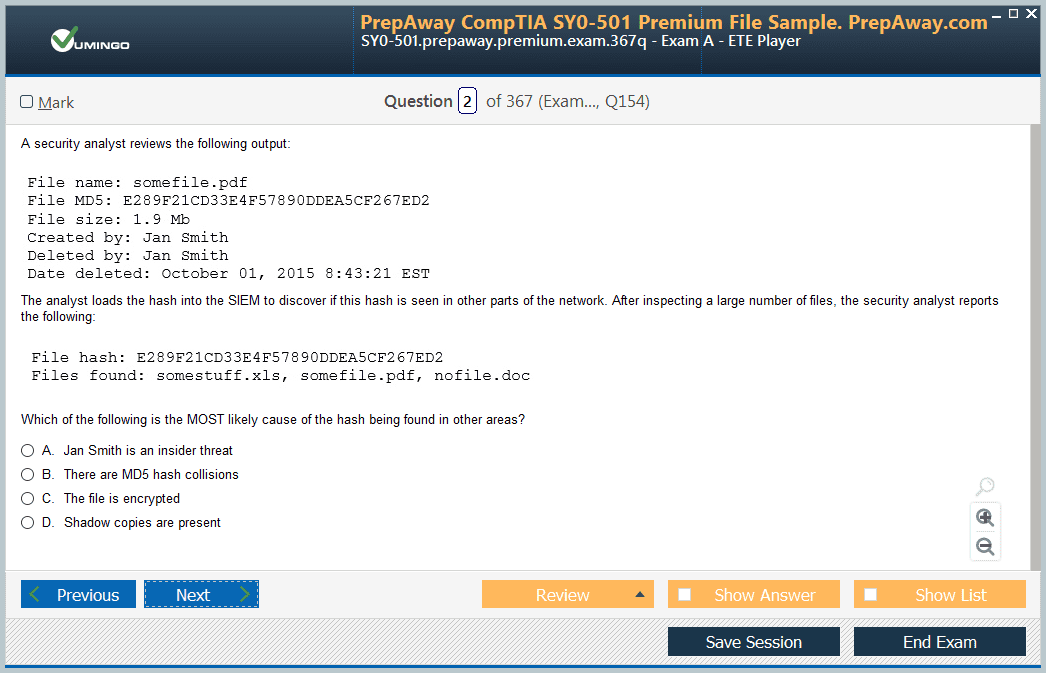
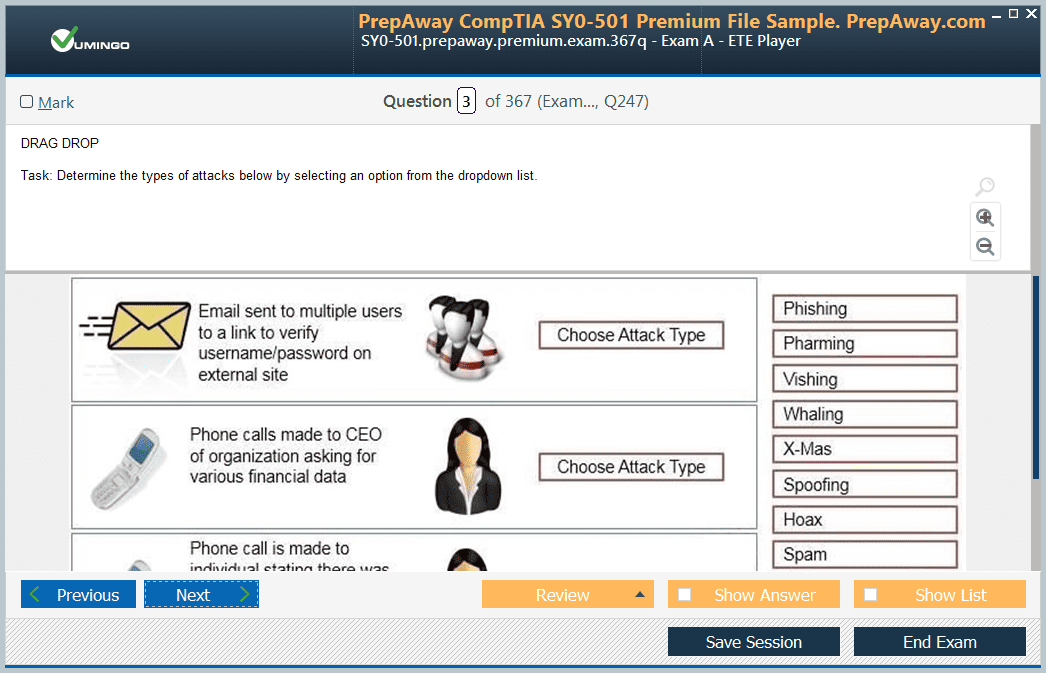
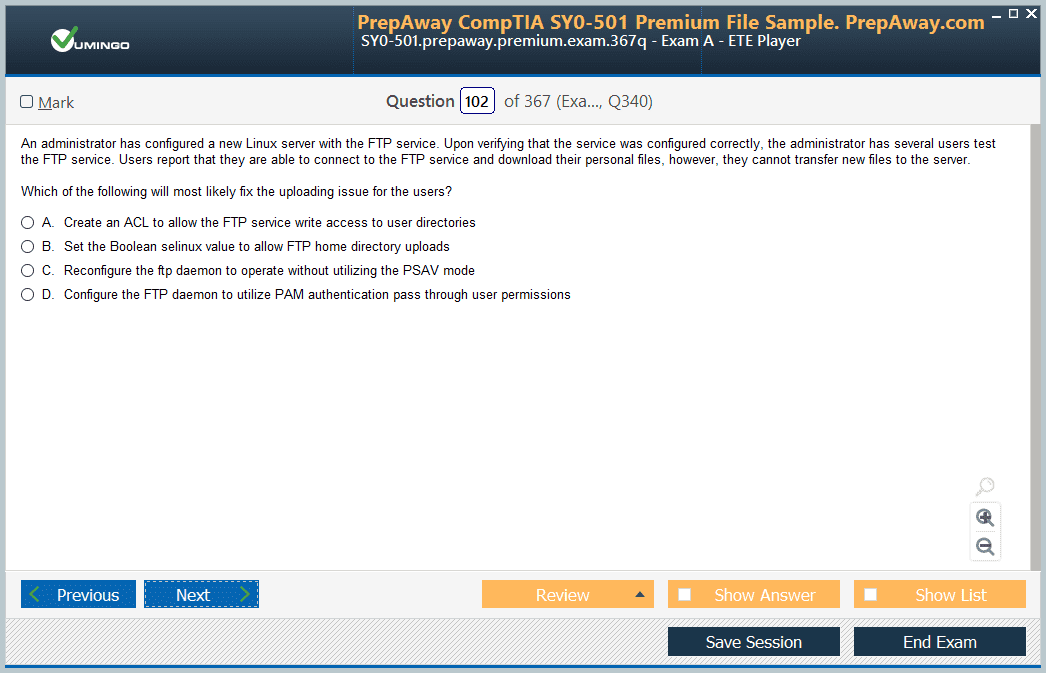
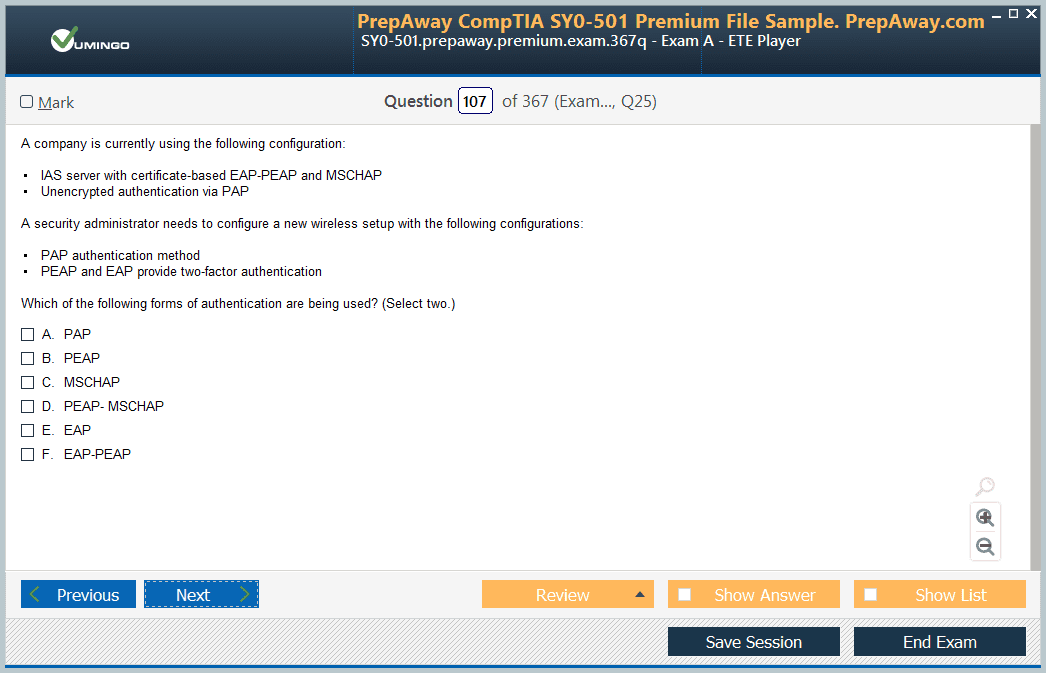
Last Week Results!
 83% students found the test questions almost same

Includes question types found on the actual exam such as drag and drop, simulation, type-in and fill-in-the-blank.

Developed by IT experts who have passed the exam in the past. Covers in-depth knowledge required for exam preparation.
All HP HPE7-A11 certification exam dumps, study guide, training courses are Prepared by industry experts. PrepAway's ETE files povide the HPE7-A11 HPE Network Campus Access Professional Architect practice test questions and answers & exam dumps, study guide and training courses help you study and pass hassle-free!
HPE7-A11 Campus Access Architect: Turning Requirements into Deployable Design
HPE7-A11 is the current HPE Network Campus Access Professional Architect exam. Unlike implementation-focused exams, it begins before hardware is selected or configurations are written. Candidates are expected to discover customer requirements, document the existing environment, interpret constraints, build wired and wireless topology, develop a bill of materials, produce migration guidance, and defend a proposed solution. The core skill is turning incomplete business and technical information into an architecture that can actually be implemented and operated.
That makes HPE7-A11 a direct successor in subject matter to the inactive HPE7-A03 Campus Access Architect, but candidates should use current HPE7-A11 objectives rather than treating the old exam as current. The surrounding technology has also evolved: centralized management, modern AOS-CX switching, identity-driven segmentation, and new wireless requirements change the assumptions an architect must test during discovery.
The exam also depends on professional campus knowledge. Engineers familiar with HPE7-A01 Campus Access Professional already understand how enterprise wired and wireless networks are deployed and troubleshot. HPE7-A11 asks them to move one step earlier in the lifecycle and decide what should be deployed, why it fits the requirement, and how the design can survive implementation without expensive surprises.
Discovery must identify decision makers as well as technical facts
A campus architecture project usually has more than one stakeholder. Network teams care about operations and standards, security teams care about identity and enforcement, facilities teams influence cabling and power, application owners care about performance, finance teams constrain cost, and business leaders care about timelines and user impact. The architect must identify who owns each requirement and where stakeholder priorities conflict.
Technical discovery should capture more than device inventory. Existing VLANs, routing boundaries, WAN connections, address plans, authentication systems, cabling classes, switch closets, PoE requirements, wireless coverage, client populations, management tooling, and support processes can all constrain the new design. A topology diagram without these operational facts may look complete while hiding the reasons a migration will fail.
Good discovery also distinguishes stated requirements from assumptions. A customer may say “high availability” without defining acceptable downtime, or “secure wireless” without specifying authentication and guest behavior. HPE7-A11 objectives explicitly include documenting assumptions because architecture becomes defensible only when ambiguous language is converted into measurable design criteria.
Requirements analysis converts needs into technologies and topology
After discovery, the architect must map requirements to technical capabilities. Capacity needs influence uplink and access-switch selection. Device density and mobility influence wireless design. Security requirements influence authentication, segmentation, and policy. Operational expectations influence management and telemetry. The design should show these relationships instead of presenting a product list that happens to fit the budget.
A functional diagram is useful because it shows how services interact before the final physical topology is frozen. Identity sources, ClearPass, Central, gateways, access switches, wireless infrastructure, Internet or WAN connections, and shared services can be placed according to function and trust boundary. This exposes missing dependencies early and gives stakeholders a common language for reviewing the design.
The current HPE6-A85 Campus Access scope is a useful reminder that wired and wireless access are one system from the user’s perspective. An architect should not size the wired edge without accounting for access-point power and uplink demand, or design wireless roles without confirming that the wired enforcement and routing path support them.
The bill of materials is the numerical expression of the architecture
A preliminary bill of materials should emerge from the topology and requirements, not the other way around. Port counts, PoE budgets, transceiver types, uplink capacity, redundancy, wireless density, controller or gateway requirements, licensing, subscriptions, and support must all trace back to design decisions. If a quantity cannot be explained, the BoM is not yet architecture evidence.
Capacity planning should include growth and failure conditions. A design that has adequate throughput only when every uplink is healthy may violate the availability requirement during maintenance or failure. Likewise, access-switch port capacity should account for realistic spare capacity, device growth, and specialized endpoints rather than matching today’s active port count exactly.
The same discipline applies to wireless. Coverage is not the same as capacity. High-density collaboration spaces, classrooms, open offices, and warehouses have different client behavior and RF constraints. The architect should identify where survey evidence is needed, where assumptions remain, and how the proposed design will be validated after installation.
Switching and mobility expertise influence architecture quality
Architects do not need to perform every advanced configuration during the design stage, but they must understand the implications of expert switching and wireless choices. The HPE7-A06 Campus Switching Expert domain provides depth around resilient wired design, while HPE7-A07 Campus Mobility Expert represents deeper wireless design and troubleshooting. Those specialties help expose risks that a high-level block diagram can hide.
For example, a redundancy requirement can affect switch-pair architecture, uplink topology, gateway placement, spanning-tree boundaries, and routing protocol choices. A mobility requirement can affect SSID design, roaming behavior, RF coverage, gateway services, and the wired underlay. HPE7-A11 candidates should be able to ask the right expert questions even when the final implementation is delegated.
The architect also needs to protect simplicity. Advanced features should solve explicit requirements. Using a more complex topology because it is technically impressive can increase deployment time, troubleshooting cost, and the number of failure states. Professional architecture balances capability with the customer’s ability to operate what is delivered.
Identity and segmentation must be designed across connection types
Campus policy is most effective when users and devices receive consistent treatment whether they connect by Ethernet or Wi-Fi. That requires the architecture to define authentication methods, identity sources, role mapping, guest access, device onboarding, and exceptions. It also requires deciding where policy is enforced and how the network behaves when identity dependencies are unavailable.
Segmentation should follow business and security intent rather than mirror organizational charts mechanically. Employees, contractors, guests, IoT devices, operational technology, voice endpoints, and shared infrastructure may need different trust levels, but too many unique policies can become difficult to support. The design should make role decisions understandable and provide a clear path for troubleshooting unexpected access.
Security requirements also shape logging and monitoring. If compliance depends on knowing who accessed a sensitive segment, the architecture must ensure that identity, authorization, and network events can be correlated. That requirement belongs in the design stage, not as an afterthought after deployment.
Centralized management is part of the operational architecture
Modern campus design must consider how the environment will be configured, monitored, upgraded, and supported after handoff. HPE Networking Central can provide centralized management and visibility, but the architect still has to define groups, sites, configuration ownership, software lifecycle, administrative roles, and the network dependencies required for managed devices to remain reachable.
Operations teams also need actionable telemetry. A design can include rich monitoring yet still be hard to support if alerts are noisy or there is no agreement on normal baselines. The architecture should identify which health indicators matter for wired access, wireless performance, authentication, uplinks, and critical services, and who is responsible for responding to them.
Management-plane resilience deserves the same attention as data-plane resilience. During an Internet or service interruption, local forwarding may continue while centralized visibility is reduced. The customer should understand which capabilities degrade, which continue, and what operational procedures apply until management connectivity returns.
Migration guidance must describe intermediate states, not just the destination
Many architecture failures happen during migration because the final design is valid but the transition steps are not. HPE7-A11 explicitly expects implementation and migration guidance. That means identifying dependencies, sequencing site or closet changes, maintaining authentication and routing continuity, defining rollback points, and explaining how old and new systems coexist during the transition.
A phased campus migration may require temporary gateways, parallel SSIDs, mixed switch generations, or staged policy changes. Each intermediate state should be assessed for security and supportability. If a phase introduces a temporary bypass or reduced redundancy, the design should make that risk visible and time-bound rather than allowing temporary exceptions to become permanent.
Acceptance criteria close the loop. After each phase, validate connectivity, redundancy, policy, RF behavior, management visibility, and critical application flows. Migration is complete only when the new environment produces the expected evidence, not merely when the equipment is installed.
A professional architect must be able to defend the design
The final HPE7-A11 skill is communication. Technical proposals and executive briefs serve different audiences but must describe the same architecture consistently. Engineers need enough detail to implement the solution; decision makers need the business rationale, major risks, cost drivers, and expected outcomes. Contradictions between those documents usually reveal unresolved design assumptions.
Defending a solution does not mean resisting all criticism. A strong architect can explain why a particular topology was chosen, what alternatives were considered, how the design meets requirements, and which assumptions would change the recommendation. When a stakeholder challenges cost or complexity, the architect should be able to identify the requirement that drives it and discuss the consequence of removing it.
HPE7-A11 preparation is therefore strongest when candidates practice creating and reviewing artifacts, not only answering architecture questions. Build a requirements table, functional diagram, preliminary topology, BoM rationale, migration sequence, and acceptance plan for the same scenario. If those artifacts agree with one another, the architecture is becoming coherent; if they do not, the gap is exactly what the exam is designed to expose.
Physical validation deserves equal attention. Wireless survey assumptions, switch-closet power, uplink fiber availability, PoE budgets, cable pathways, rack capacity, and environmental limits can change the architecture after discovery. A professional architect should identify which facts can be verified from records and which require an on-site survey. Treating uncertain physical conditions as explicit validation tasks prevents a clean logical design from failing when deployment reaches the building.
HP HPE7-A11 practice test questions and answers, training course, study guide are uploaded in ETE Files format by real users. Study and Pass HPE7-A11 HPE Network Campus Access Professional Architect certification exam dumps & practice test questions and answers are to help students.
- HPE7-A01 - HPE Network Campus Access Professional
- HPE7-A08 - HPE Network Switching Professional
- HPE6-A85 - HPE Network Campus Access Associate
- HPE6-A86 - HPE Network Switching Associate
- HPE7-A11 - HPE Network Campus Access Professional Architect
- HPE6-A90 - HPE Networking Central
- HPE0-V27 - HPE Edge-to-Cloud Solutions
- HPE0-J83 - HPE Storage Integrator Solutions
- HPE0-S59 - HPE Compute Solutions
- HPE7-J02 - Advanced HPE Storage Integrator Solutions
- HPE7-A02 - Aruba Certified Network Security Professional
- HPE0-J82 - HPE Storage Architect
- HPE7-V01 - Advanced HPE Edge-to-Cloud Solutions
- HPE6-A88 - HPE Networking ClearPass
- HPE7-A12 - HPE Network Data Center Professional Architect
- HPE7-A10 - HPE Network Security Expert
- HPE7-S01 - Advanced HPE Compute Architect
- HPE7-A06 - HPE Aruba Networking Certified Expert - Campus Access Switching
- HPE2-T37 - Using HPE OneView
- HPE7-S02 - Advanced HPE Compute Integrator Solutions
- HPE0-V25 - HPE Hybrid Cloud Solutions
- HPE6-A68 - Aruba Certified ClearPass Professional (ACCP) V6.7
- HPE7-A07 - HPE Campus Access Mobility Expert
- HPE6-A78 - HPE Network Security Associate
Purchase HP HPE7-A11 Exam Training Products Individually
Why customers love us?
What do our customers say?
The resources provided for the HP certification exam were exceptional. The exam dumps and video courses offered clear and concise explanations of each topic. I felt thoroughly prepared for the HPE7-A11 test and passed with ease.
Studying for the HP certification exam was a breeze with the comprehensive materials from this site. The detailed study guides and accurate exam dumps helped me understand every concept. I aced the HPE7-A11 exam on my first try!
I was impressed with the quality of the HPE7-A11 preparation materials for the HP certification exam. The video courses were engaging, and the study guides covered all the essential topics. These resources made a significant difference in my study routine and overall performance. I went into the exam feeling confident and well-prepared.
The HPE7-A11 materials for the HP certification exam were invaluable. They provided detailed, concise explanations for each topic, helping me grasp the entire syllabus. After studying with these resources, I was able to tackle the final test questions confidently and successfully.
Thanks to the comprehensive study guides and video courses, I aced the HPE7-A11 exam. The exam dumps were spot on and helped me understand the types of questions to expect. The certification exam was much less intimidating thanks to their excellent prep materials. So, I highly recommend their services for anyone preparing for this certification exam.
Achieving my HP certification was a seamless experience. The detailed study guide and practice questions ensured I was fully prepared for HPE7-A11. The customer support was responsive and helpful throughout my journey. Highly recommend their services for anyone preparing for their certification test.
I couldn't be happier with my certification results! The study materials were comprehensive and easy to understand, making my preparation for the HPE7-A11 stress-free. Using these resources, I was able to pass my exam on the first attempt. They are a must-have for anyone serious about advancing their career.
The practice exams were incredibly helpful in familiarizing me with the actual test format. I felt confident and well-prepared going into my HPE7-A11 certification exam. The support and guidance provided were top-notch. I couldn't have obtained my HP certification without these amazing tools!
The materials provided for the HPE7-A11 were comprehensive and very well-structured. The practice tests were particularly useful in building my confidence and understanding the exam format. After using these materials, I felt well-prepared and was able to solve all the questions on the final test with ease. Passing the certification exam was a huge relief! I feel much more competent in my role. Thank you!
The certification prep was excellent. The content was up-to-date and aligned perfectly with the exam requirements. I appreciated the clear explanations and real-world examples that made complex topics easier to grasp. I passed HPE7-A11 successfully. It was a game-changer for my career in IT!