
- Home
- LPI Certifications
- 303-200 Security Dumps
Pass LPI 303-200 Exam in First Attempt Guaranteed!
Get 100% Latest Exam Questions, Accurate & Verified Answers to Pass the Actual Exam!
30 Days Free Updates, Instant Download!


303-200 Premium File
- Premium File 60 Questions & Answers. Last Update: Oct 12, 2026
Whats Included:
- Latest Questions
- 100% Accurate Answers
- Fast Exam Updates
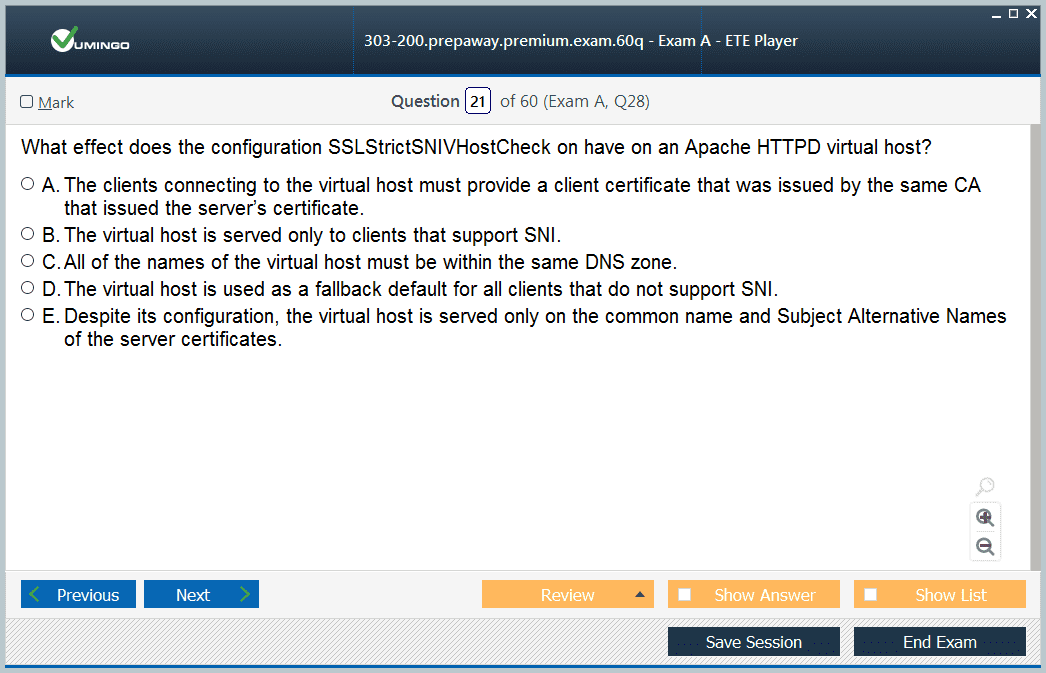
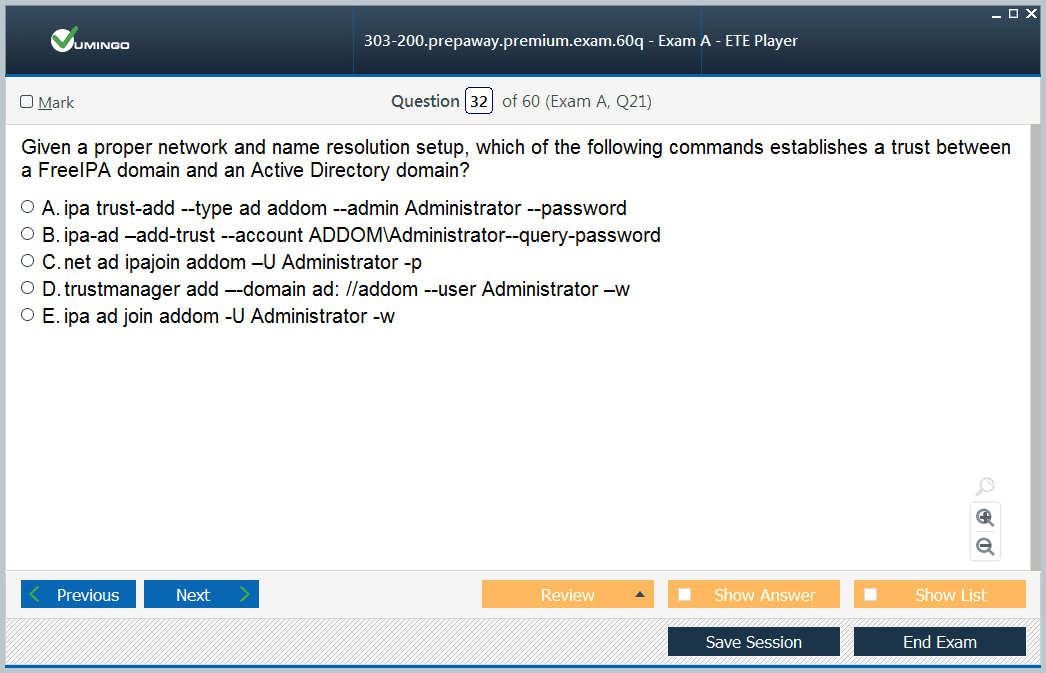
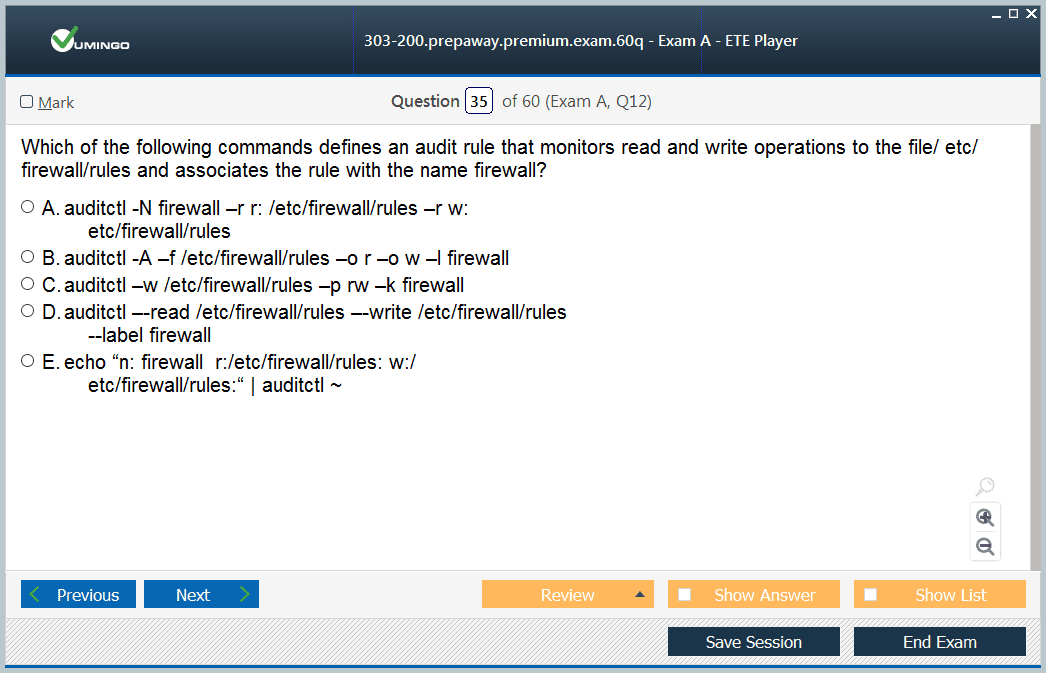
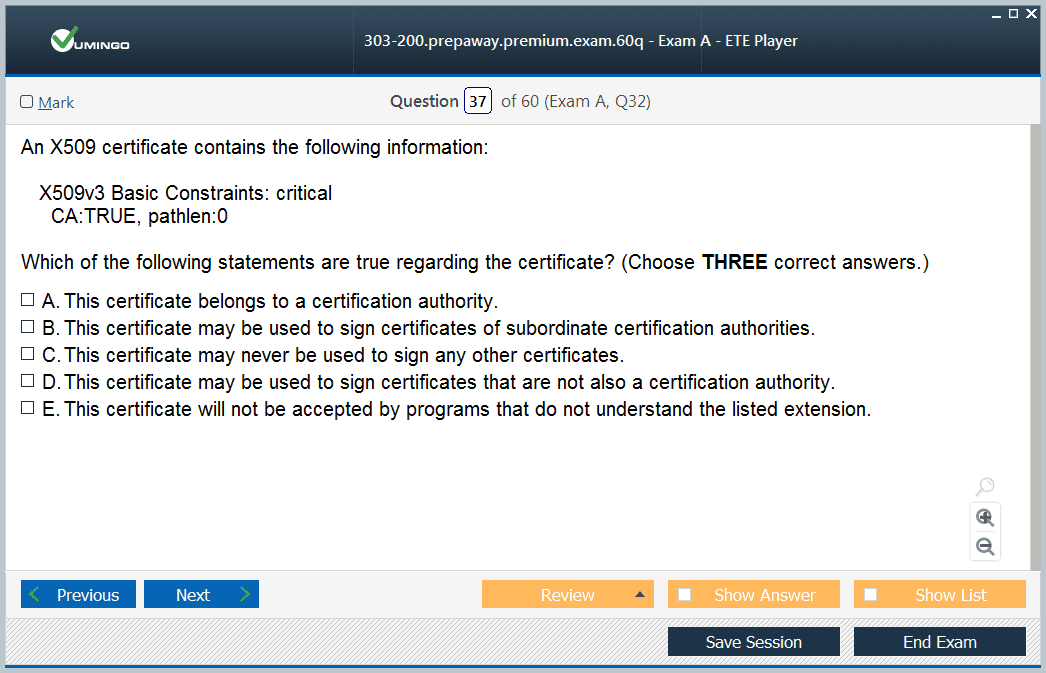
Last Week Results!
 83% students found the test questions almost same
All LPI 303-200 certification exam dumps, study guide, training courses are Prepared by industry experts. PrepAway's ETE files povide the 303-200 Security practice test questions and answers & exam dumps, study guide and training courses help you study and pass hassle-free!
303-200 LPIC-3 Security: Legacy Enterprise Linux Security Objectives
303-200 is the retired version 2.0 exam for LPIC-3 Security. Linux Professional Institute lists it as the previous version, available until April 4, 2022, with 303-300 now serving as the current version 3.0 exam. Historical 303-200 material remains useful because it captures a mature enterprise Linux security curriculum, but current candidates should not use its old objective weighting or version-specific tools as their final checklist.
At this level, security is not a collection of hardening tips. The older exam connected cryptography, host security, access control, application security, network protection, monitoring, and incident-oriented thinking. The expectation matched the broader LPIC-3 philosophy: a candidate should be able to administer and troubleshoot security controls on real systems, not merely identify security vocabulary.
The best way to use 303-200 today is to separate enduring security principles from historical implementation details. Concepts such as public-key infrastructure, least privilege, mandatory access control, secure network services, logging, and vulnerability management remain relevant. The current LPI certification program simply tests them with an updated blueprint and newer platform assumptions.
Cryptography should be learned through trust decisions rather than algorithm lists
Enterprise administrators use cryptography to protect confidentiality, integrity, identity, and trust. A legacy 303-200 learner should understand the roles of symmetric encryption, public-key cryptography, hashes, certificates, certificate authorities, and key management. The practical question is always what property a mechanism provides and what happens if the associated key, trust anchor, or validation step is mishandled.
Build a small certificate authority in a lab, issue a certificate, inspect its subject and extensions, and verify it from another trust store. Then revoke or replace a certificate and observe the operational implications. This turns PKI into a lifecycle rather than a command sequence. The same mindset transfers directly to the current 303-300 objectives, which continue to emphasize X.509 and public-key infrastructure.
Host hardening begins by reducing what the machine is allowed to do
Baseline configuration is useful because hardening is easier to manage when deviations are visible. Record which packages, services, local accounts, kernel settings, and listening ports are expected on a system class. A change-control process can then ask why a new component appeared and whether it is justified. This approach also improves incident response: when investigators know the normal state, unexpected binaries, services, privileges, or network listeners become easier to recognize.
Hardening is the systematic reduction of attack surface. Disable unused services, restrict administrative access, protect boot paths, apply updates, separate privileges, and ensure configuration files and secrets are not broadly readable. Historical tools can change, but the reasoning remains stable: every enabled service, privileged binary, open port, or unnecessary account creates a capability that must be justified.
Use a fresh Linux installation as a baseline and inventory running services, listening sockets, scheduled tasks, privileged files, local users, and loaded functionality. Remove one unnecessary component at a time and verify that required applications still work. This teaches candidates to harden deliberately instead of copying a checklist whose assumptions may not match the system they are protecting.
Access control requires knowing which layer makes the authorization decision
Linux security combines discretionary permissions, extended ACLs, privilege delegation, capabilities, and mandatory access-control systems. When access fails, the administrator needs to know whether the decision came from Unix mode bits, an ACL, sudo policy, a MAC profile, an application, or a network service. The exam’s advanced level comes from reasoning across those layers rather than knowing one mechanism in isolation.
Create controlled denials in a lab. Allow a user through one layer and block the same operation in another, then inspect logs and effective permissions. This is especially useful for SELinux- or AppArmor-style controls, where a process can be denied despite apparently permissive Unix ownership. The exercise develops the habit of asking “which policy engine denied this?” before changing permissions broadly.
Application security depends on confinement, patching, and careful service configuration
Patch management should be tied to service exposure and change control. A security update can be urgent, but applying it blindly to a critical service without understanding dependencies can create a different availability incident. Build a lab routine that identifies the vulnerable package, reads the advisory, determines whether the affected component is actually enabled, applies the update, and verifies both the software version and service behavior afterward. The same disciplined sequence applies to modern enterprise Linux security work.
Services expose the host to untrusted input, so their runtime privileges and configuration matter. Historical 303-200 material included securing common applications and understanding chroot-style isolation, service accounts, TLS, and safe defaults. The enduring principle is to give a service the minimum filesystem, network, and privilege access needed for its role, then monitor what it actually does.
Choose one network service and document its attack surface: listening interfaces, authentication mechanism, configuration files, writable paths, secrets, child processes, and external dependencies. Then decide which controls reduce risk without breaking the service. This method is more transferable than memorizing a specific configuration directive because software versions and defaults change over time.
Network security should connect packet paths to policy and evidence
A secure host participates in networks, so candidates need to understand packet filtering, secure remote access, service exposure, and the difference between protecting a host and protecting an entire segment. Firewall rules should be read as policy: source, destination, protocol, state, and action. SSH should be viewed as an authentication and encrypted-transport system whose keys, agents, configuration, and trust decisions require management.
Practice tracing a failed connection from both ends. Confirm routing, determine whether the service is listening, test the firewall policy, inspect authentication logs, and distinguish a transport failure from an application rejection. This sequence is valuable because security controls often make failures intentionally opaque; administrators must still identify the correct layer without weakening protection merely to make troubleshooting easier.
Monitoring and logging turn security controls into an operational capability
Log integrity matters as much as collection. If an attacker can alter local evidence after gaining privilege, a purely local log trail may be incomplete. Historical security practice therefore emphasized remote logging, protected audit records, synchronized clocks, and separation between the system producing events and the system retaining them. Even when tooling changes, the design principle remains: important evidence should survive compromise of the host that generated it.
A control that blocks an event without leaving useful evidence can still create an operational blind spot. Administrators should know where security-relevant logs originate, how timestamps and host identities affect correlation, and how to centralize or protect logs from tampering. File integrity monitoring, audit trails, and process/network observations help establish what changed before and after an incident.
Create a small incident timeline from real lab events: failed logins, a privilege escalation, a service restart, and a configuration change. Correlate entries from authentication, system, and application logs. The point is not to build a full SIEM; it is to learn how multiple sources can confirm or contradict a hypothesis. That evidence-driven approach remains central in the current security specialty.
Security assessments should distinguish vulnerability discovery from exploitation
Document the remediation result as carefully as the finding. After patching or reconfiguring a service, repeat the original test and confirm that the exposure is gone without breaking required functionality. This closes the loop between assessment and operations and prevents reports from accumulating as unresolved paperwork.
Legacy LPIC-3 Security material introduced vulnerability assessment and security testing because administrators need to know how weaknesses are discovered and prioritized. Scanning is not the same as exploitation, and a finding is not automatically a critical incident. Context matters: software version, exposure, compensating controls, exploitability, and business impact all influence remediation urgency.
Use a deliberately vulnerable lab or a scanner against systems you own. For each finding, verify whether the condition is real, identify the affected component, and decide what remediation would remove the root cause. Avoid treating scanner output as unquestionable truth. Security professionals earn credibility by validating evidence and explaining risk precisely rather than by producing the largest possible list of warnings.
LPIC-2 administration skills remain the platform underneath LPIC-3 security
An advanced security administrator still needs dependable system skills. Network configuration, service management, storage, shell work, logging, and troubleshooting from LPIC-2 are prerequisites in practice as well as in the certification program. Security controls operate on those systems; if the administrator cannot distinguish a broken service from a blocked service, hardening becomes guesswork.
Review 201-450 and 202-450 topics selectively if operational fundamentals are weak. Focus on areas that directly support security work: kernel and boot behavior, networking, DNS, web and file services, logging, and recovery. The goal is not to retake LPIC-2 mentally but to ensure the foundation is automatic enough that security reasoning gets your full attention.
Move from 303-200 to the current exam by rebuilding the checklist, not renaming the code
Use the retirement boundary as an opportunity to clean up study material. Old screenshots, command flags, daemon names, and service defaults can remain in notes for historical systems, but they should be labeled clearly so they are not mistaken for current exam facts. Maintain a second column with the current 303-300 equivalent or note that the topic disappeared. This creates a migration map instead of a mixed pile of old and new security guidance.
The current 303-300 blueprint retains familiar domains but modernizes the details and tools. Do not assume every old objective maps one-to-one. Instead, compare the published current objectives with your 303-200 notes, preserve explanations that still describe the technology accurately, and replace obsolete commands, service versions, or weighting assumptions.
This approach protects the historical value of 303-200 without misleading current candidates. Legacy certification material should explain what a retired exam represented and how its skills relate to today’s program. Registration, current requirements, and final preparation decisions should always be based on the current LPI source rather than on material written for an exam that ended in 2022.
LPI 303-200 practice test questions and answers, training course, study guide are uploaded in ETE Files format by real users. Study and Pass 303-200 Security certification exam dumps & practice test questions and answers are to help students.
Exam Comments * The most recent comment are on top
- 010-160 - Linux Essentials Certificate Exam, version 1.6
- 101-500 - LPIC-1 Exam 101
- 102-500 - LPI Level 1
- 202-450 - LPIC-2 Exam 202
- 201-450 - LPIC-2 Exam 201
- 305-300 - Linux Professional Institute LPIC-3 Virtualization and Containerization
- 300-300 - LPIC-3 Mixed Environments
- 303-200 - Security
- 300-100 - LPIC-3 Exam 300: Mixed Environments
- 303-300 - LPIC-3 Security Exam 303
Why customers love us?
What do our customers say?
The resources provided for the LPI certification exam were exceptional. The exam dumps and video courses offered clear and concise explanations of each topic. I felt thoroughly prepared for the 303-200 test and passed with ease.
Studying for the LPI certification exam was a breeze with the comprehensive materials from this site. The detailed study guides and accurate exam dumps helped me understand every concept. I aced the 303-200 exam on my first try!
I was impressed with the quality of the 303-200 preparation materials for the LPI certification exam. The video courses were engaging, and the study guides covered all the essential topics. These resources made a significant difference in my study routine and overall performance. I went into the exam feeling confident and well-prepared.
The 303-200 materials for the LPI certification exam were invaluable. They provided detailed, concise explanations for each topic, helping me grasp the entire syllabus. After studying with these resources, I was able to tackle the final test questions confidently and successfully.
Thanks to the comprehensive study guides and video courses, I aced the 303-200 exam. The exam dumps were spot on and helped me understand the types of questions to expect. The certification exam was much less intimidating thanks to their excellent prep materials. So, I highly recommend their services for anyone preparing for this certification exam.
Achieving my LPI certification was a seamless experience. The detailed study guide and practice questions ensured I was fully prepared for 303-200. The customer support was responsive and helpful throughout my journey. Highly recommend their services for anyone preparing for their certification test.
I couldn't be happier with my certification results! The study materials were comprehensive and easy to understand, making my preparation for the 303-200 stress-free. Using these resources, I was able to pass my exam on the first attempt. They are a must-have for anyone serious about advancing their career.
The practice exams were incredibly helpful in familiarizing me with the actual test format. I felt confident and well-prepared going into my 303-200 certification exam. The support and guidance provided were top-notch. I couldn't have obtained my LPI certification without these amazing tools!
The materials provided for the 303-200 were comprehensive and very well-structured. The practice tests were particularly useful in building my confidence and understanding the exam format. After using these materials, I felt well-prepared and was able to solve all the questions on the final test with ease. Passing the certification exam was a huge relief! I feel much more competent in my role. Thank you!
The certification prep was excellent. The content was up-to-date and aligned perfectly with the exam requirements. I appreciated the clear explanations and real-world examples that made complex topics easier to grasp. I passed 303-200 successfully. It was a game-changer for my career in IT!


