MB-700 Dynamics 365 Solution Architect: Strategy, Governance, and Implementation
MB-700, Microsoft Dynamics 365: Finance and Operations Apps Solution Architect, retired on June 30, 2026. The exam represented an expert-level role responsible for translating complex business requirements into secure, scalable, supportable Dynamics 365 solutions and for guiding implementation teams through architecture, governance, testing, data, integration, and operational readiness.
Its retirement is important because MB-700 should no longer be described as a current expert exam. Microsoft now offers the broader AB-100 Agentic AI Business Solutions Architect credential, and current associate certifications such as MB-310, MB-330, MB-500, MB-800, and MB-820 can contribute to that expert pathway. AB-100 is not a direct one-for-one replacement for MB-700; the newer credential reflects a broader AI-enabled business-solutions architecture role.
Historical MB-700 content remains useful because the central architecture problems have not disappeared. Organizations still need to decide what belongs in standard Dynamics configuration, what should be extended, how systems exchange data, how environments are managed, how security boundaries are designed, how performance is protected, and how a solution moves from discovery to stable operations.
Architecture begins by defining the business problem and system boundaries
A solution architect needs to understand business objectives before selecting technology. Requirements should identify users, processes, volumes, regulatory constraints, integration dependencies, reporting needs, availability expectations, and organizational change. Vague goals such as “automate finance” or “improve supply chain” must be translated into processes and measurable outcomes.
System boundaries clarify which platform owns which capability. Finance and operations apps may own financial postings, procurement, production, or inventory, while Dataverse may support customer-engagement data and Power Platform apps. External systems may own payroll, banking, tax, ecommerce, logistics, or specialized industry functions. Clear ownership prevents duplicate masters and conflicting business logic.
Architects should also identify nonfunctional requirements early. Performance, security, localization, data residency, accessibility, disaster recovery, and supportability can eliminate design options that appear workable from a functional perspective.
Fit-to-standard protects the implementation from unnecessary customization
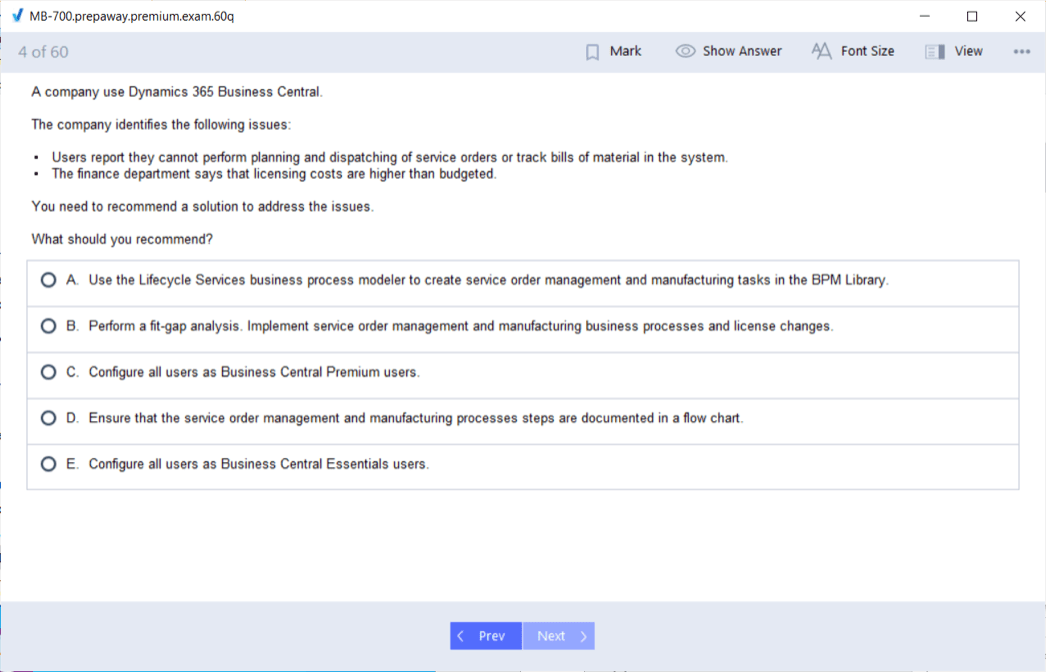
Dynamics 365 provides substantial standard capability. Architecture work should compare business requirements with standard processes and decide whether the business can adopt the product, configure it, extend it, or integrate another system. Custom development is justified when it provides real value that standard configuration cannot deliver cleanly.
Every customization creates a lifecycle obligation. It must be designed, secured, tested, documented, deployed, monitored, and maintained through Microsoft updates. Architects should therefore consider total ownership cost, not only initial development effort.
Fit-to-standard workshops are also change-management tools. They expose differences between current processes and platform practices, helping stakeholders decide which legacy procedures are essential and which exist only because an older system required them.
Data architecture needs ownership, quality, migration, and lifecycle rules
Master data such as customers, vendors, products, financial dimensions, and organizational structures may be used across several systems. Architecture should define a system of record, synchronization direction, identifiers, stewardship, and conflict handling. Without ownership, integrations can create circular updates and inconsistent values.
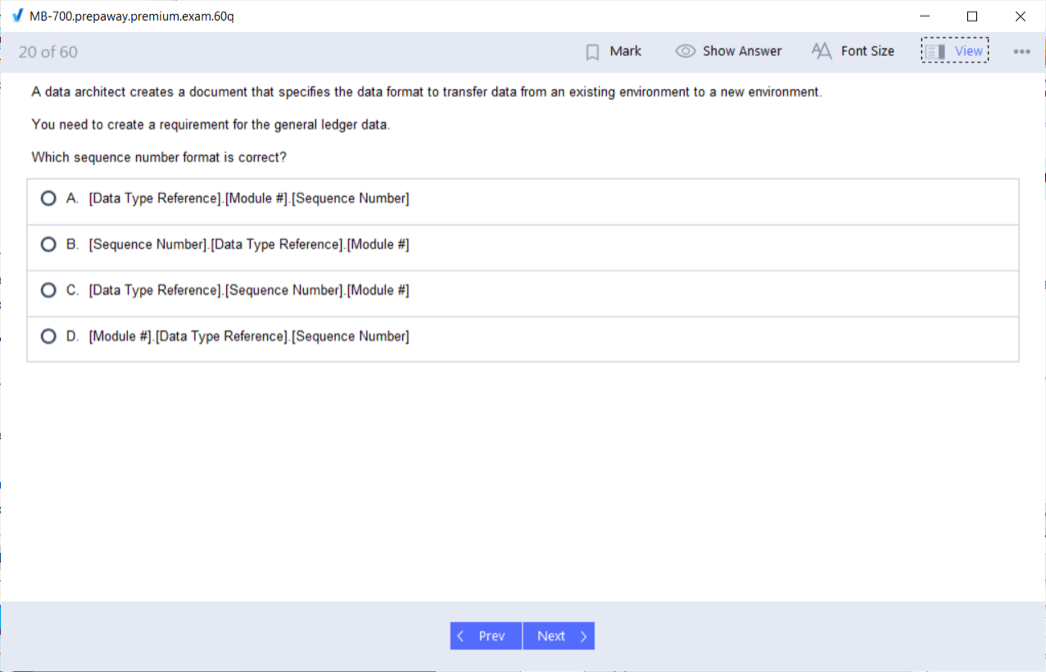
Migration needs a separate strategy from ongoing integration. Legacy data may require cleansing, transformation, reconciliation, and selective history. Bringing every historical record into the new system can increase cost without improving operations; bringing too little can leave users without necessary context.
Reconciliation is essential. Migrated opening balances, inventory, open transactions, and master records should be provably consistent with approved source totals. A technically successful import is not a successful migration until business owners trust the result.
Integration architecture should match volume, latency, and failure behavior
Solution architects choose between synchronous APIs, asynchronous messaging, data entities, Dataverse integration, batch exchange, files, and other patterns based on business needs. A user waiting for an immediate validation has different requirements from a nightly data warehouse load or a high-volume order feed.
Reliability requires more than connectivity. Integrations need retries, duplicate protection, monitoring, alerting, dead-letter handling, and reconciliation. Architects should define what happens when the target system is unavailable and how operations continue during an outage.
Security boundaries also cross integrations. Service principals, managed identities, certificates, secrets, network controls, and least-privilege permissions need lifecycle ownership. A powerful integration identity can become a major risk if it is poorly governed.
Environment and deployment strategy shape implementation velocity
Development, build, test, user-acceptance, training, and production environments serve different purposes. Architects should define how code, configuration, data packages, and integrations move through them. Environment strategy should support parallel development without allowing uncontrolled changes to bypass testing.
Application lifecycle management includes source control, branching, automated builds, release approval, regression testing, and deployment planning. The current MB-500 developer role carries much of the implementation detail, but the architect needs enough technical understanding to set standards and evaluate risk.
Platform updates also require planning. Organizations should know how they validate Microsoft updates, test critical processes, respond to deprecations, and coordinate partner extensions. Evergreen cloud software changes the architect’s job from one-time design to continuous governance.
Security architecture should reflect roles, segregation, and data sensitivity
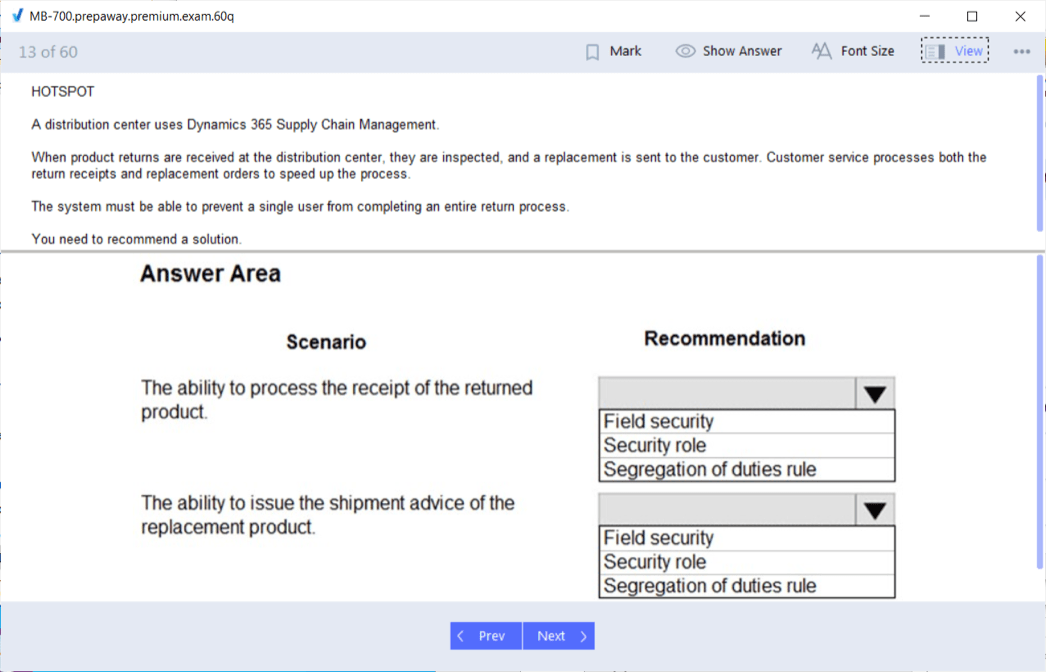
Security begins with business responsibilities. Roles, duties, privileges, and organization access should map to what users need to accomplish. Broad access is easy to configure but difficult to defend. Segregation of duties is especially important in finance, procurement, inventory, and administrative functions where one user should not control an entire high-risk transaction lifecycle.
Data sensitivity can require additional controls around personal information, financial data, exports, attachments, and integrations. Auditability matters because organizations need to know who changed configuration or business records and when.
Architecture should also consider the support model. Administrators and partners need enough access to resolve incidents, but permanent elevated permissions can create unnecessary risk. Time-bound or controlled elevation is often preferable to broad standing access.
Performance and scale need realistic workload assumptions
Architecture decisions should be based on transaction volumes, user concurrency, batch windows, integration rates, reporting demand, and seasonal peaks. A design that performs well during a pilot may fail during month-end, warehouse waves, or high-volume order periods if test data is unrealistic.
Batch jobs, indexes, query patterns, integrations, custom code, and reporting can all compete for resources. Architects should define performance tests for critical scenarios and make telemetry part of production operations. Capacity problems are easier to solve when the team can identify where time is actually spent.
Scalability is also organizational. Support teams need runbooks, alert ownership, and escalation paths. A technically scalable solution can still fail operationally if no one knows how to respond to integration backlog or batch failure.
Testing should prove business continuity, not only feature correctness
Unit and component tests verify pieces of the solution, but architecture-level testing must cover end-to-end processes. Order-to-cash, procure-to-pay, production, inventory close, period close, integrations, security, and reporting should be tested across the systems and teams that participate in them.
Regression testing protects stable processes as changes are introduced. User-acceptance testing confirms that business requirements are met, while performance, security, and disaster-recovery tests address nonfunctional risk. Test data should include exceptions and volume, not only ideal transactions.
Cutover planning is part of testing because the organization needs evidence that migration, final synchronization, environment changes, and opening transactions can be completed within the available window.
MB-700’s durable lesson is architectural accountability
Dynamics 365 solution architecture is most useful when it reinforces the idea that architecture is a chain of decisions with operational consequences. Requirements, data, integration, security, customization, deployment, and support all influence one another.
The retired MB-700 credential once provided a formal destination for that role. Today practitioners may enter architecture from current functional or developer certifications and then move toward newer expert credentials, but historical MB-700 material should be labeled accurately rather than presented as current certification guidance.
A good solution architect can explain why a design choice exists, what tradeoff it makes, how it will be tested, who will own it after go-live, and how it can evolve. That discipline remains relevant even as Microsoft’s credential names and AI capabilities continue to change.
Architecture decisions also require explicit governance after go-live. Organizations need a process for evaluating new requirements, approving integrations, managing technical debt, reviewing security, and deciding when customizations should be retired. Without architecture governance, a clean initial design can accumulate overlapping flows, duplicate data stores, one-off reports, and integrations that no team fully owns.
Business continuity should be part of that governance. Architects need to identify critical processes, acceptable recovery times, dependencies on external services, and manual fallback procedures. Cloud availability features reduce infrastructure risk, but they do not automatically provide a business response when a payment provider, tax service, warehouse interface, or identity dependency is unavailable.
The historical Finance and Operations application context helps explain why MB-700 required breadth. An architect needed enough understanding of finance, supply chain, development, Power Platform, Azure, and implementation governance to recognize when a local design decision would create enterprise-wide consequences.
For practitioners moving from current MB-310, MB-330, MB-500, MB-800, or MB-820 credentials toward newer architecture roles, the most transferable MB-700 habit is structured tradeoff analysis. Document the alternatives, constraints, risks, ownership, and evidence behind a decision so the design remains understandable when products, teams, and business priorities change.
MB-700 also emphasized stakeholder communication because architecture only works when business owners, functional consultants, developers, data teams, security teams, and operations share the same assumptions. Decision records, diagrams, integration contracts, environment plans, and nonfunctional requirements make architecture visible enough to challenge before expensive implementation work begins.
The retired exam also sat above current functional disciplines such as Dynamics 365 Finance and Dynamics 365 Supply Chain Management. An architect did not need to perform every configuration task, but needed enough domain depth to recognize when a proposed cross-module design contradicted finance, inventory, planning, or security controls.
That breadth remains relevant in the Microsoft certifications portfolio even though MB-700 is retired. Architecture maturity is shown by the quality of decisions and governance, not by continuing to use an old exam code as if it were current.







 83% students found the test questions almost same




