cert
cert-1
cert-2

Pass Juniper JN0-348 Exam in First Attempt Guaranteed!

Get 100% Latest Exam Questions, Accurate & Verified Answers to Pass the Actual Exam!
30 Days Free Updates, Instant Download!


cert-5
cert-6
JN0-348 Exam - Verified By Experts
JN0-348 Premium Bundle
$19.99

JN0-348 Premium Bundle

$64.99
$84.98
  • Premium File 93 Questions & Answers. Last update: Dec 18, 2025
  • Training Course 19 Video Lectures
 
$84.98
$64.99
accept 10 downloads in last 7 days
block-screenshots
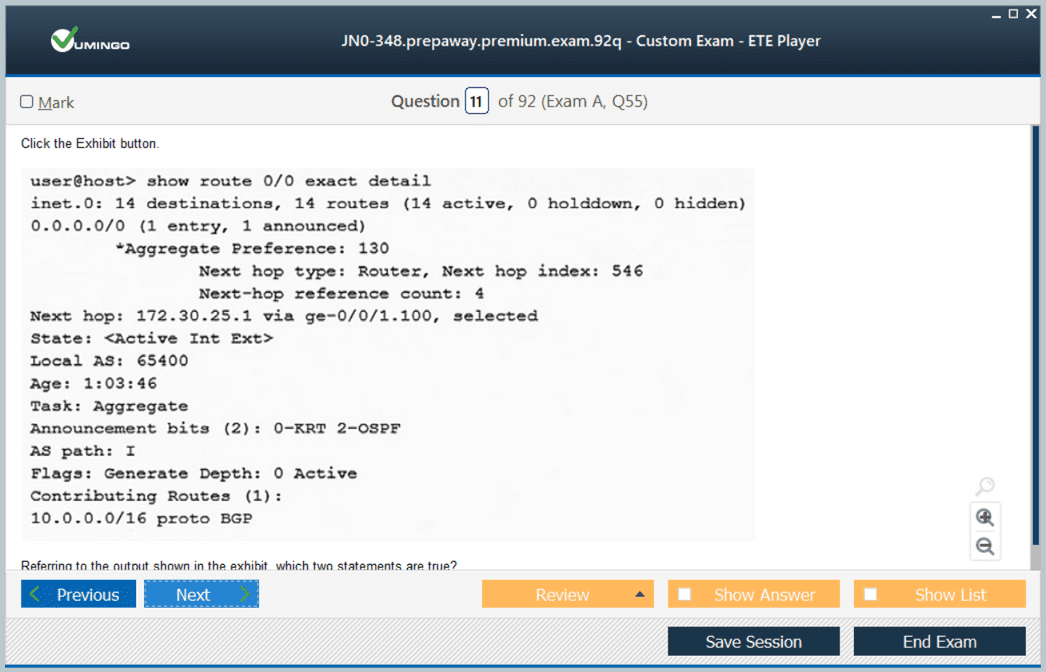
JN0-348 Exam Screenshot #1
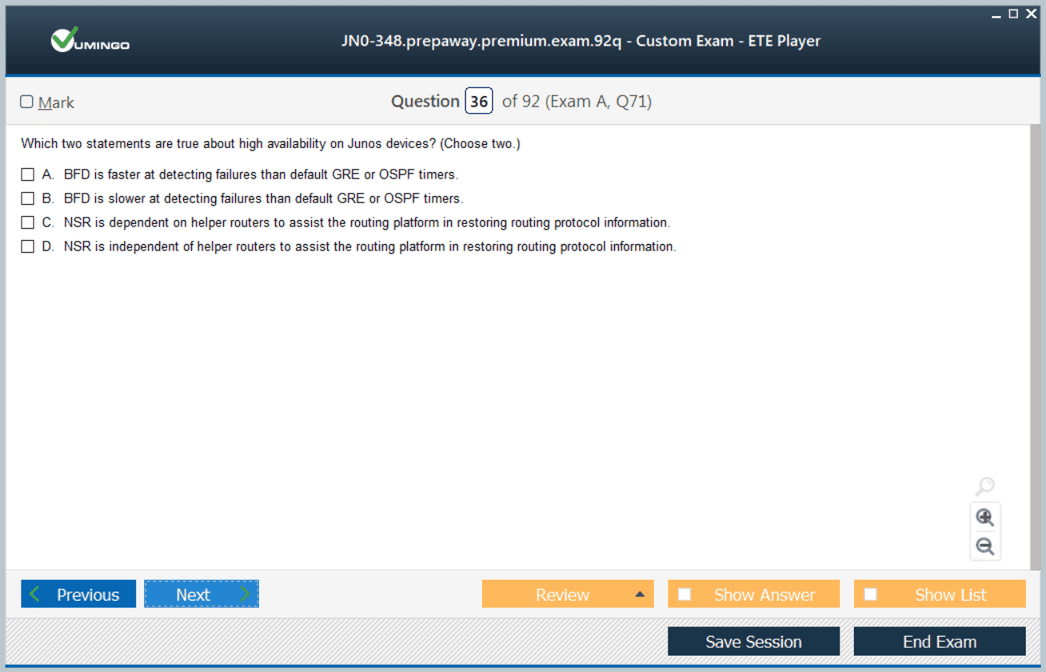
JN0-348 Exam Screenshot #2
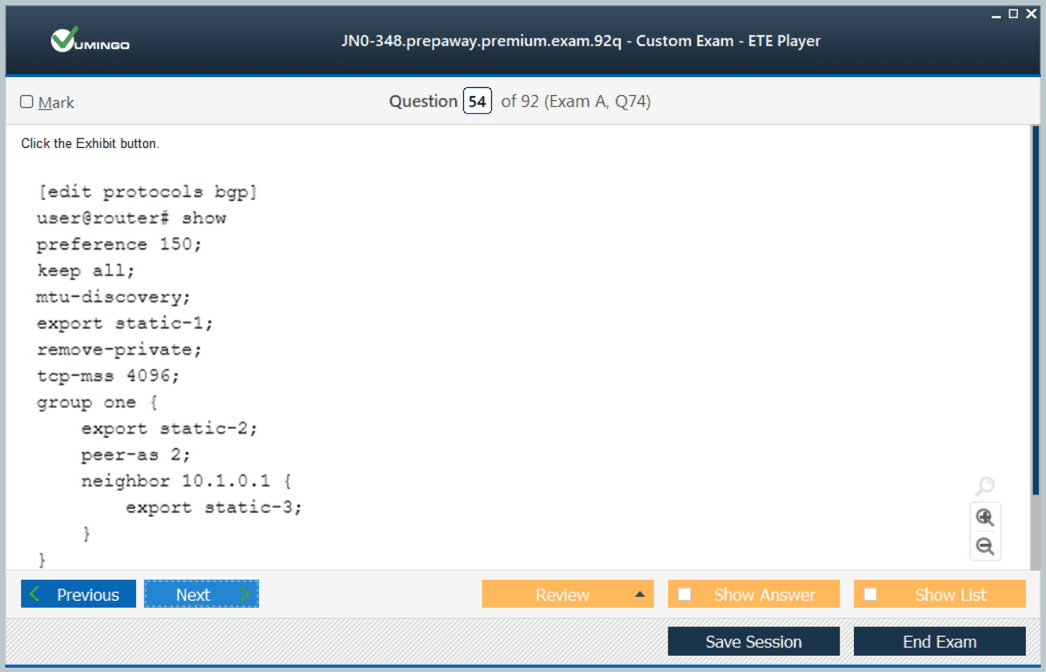
JN0-348 Exam Screenshot #3
JN0-348 Exam Screenshot #4
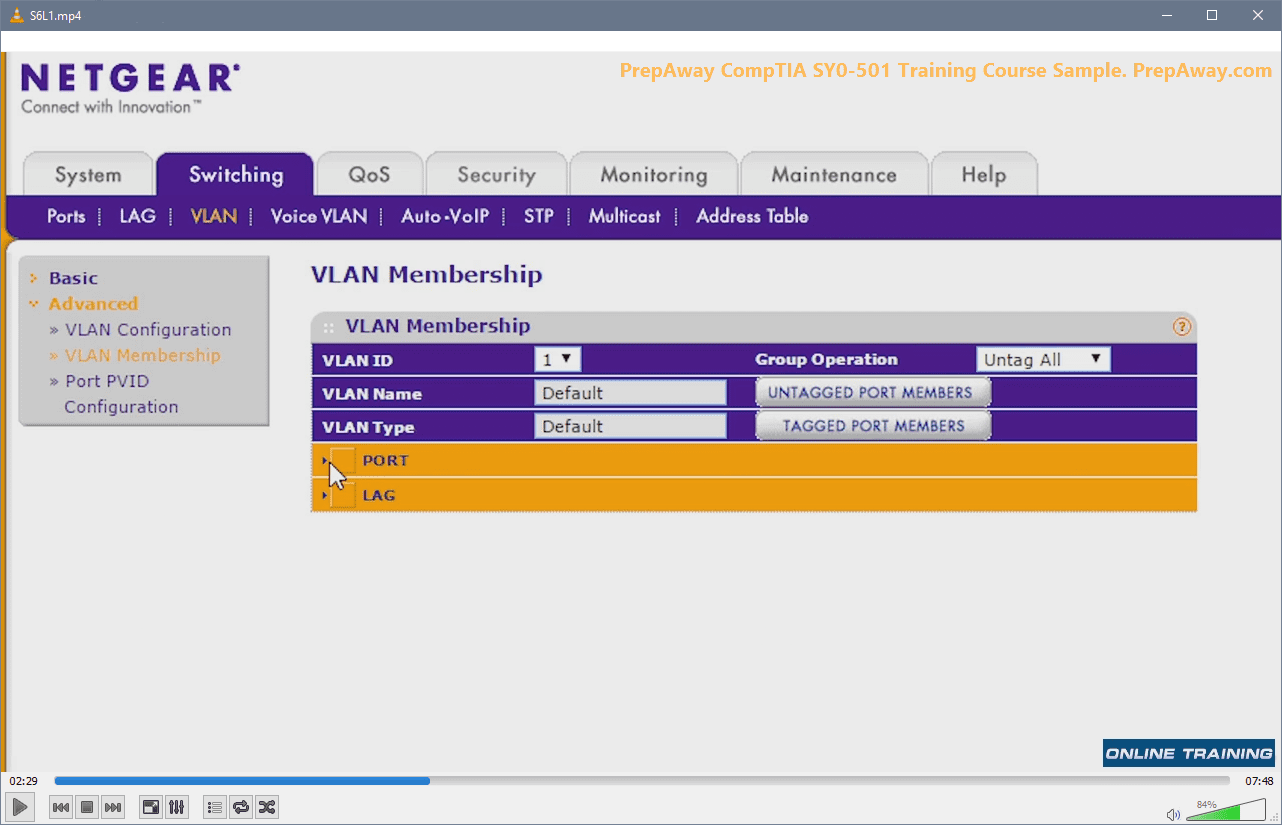
PrepAway JN0-348 Training Course Screenshot #1
PrepAway JN0-348 Training Course Screenshot #2
PrepAway JN0-348 Training Course Screenshot #3
PrepAway JN0-348 Training Course Screenshot #4

Last Week Results!

students 83% students found the test questions almost same

10 Customers Passed Juniper JN0-348 Exam
Average Score In Actual Exam At Testing Centre
Questions came word for word from this dump
Premium Bundle
Free ETE Files
Exam Info
Related Exams
JN0-348 Premium File
JN0-348 Premium File 93 Questions & Answers

Includes question types found on the actual exam such as drag and drop, simulation, type-in and fill-in-the-blank.

JN0-348 Video Training Course
JN0-348 Training Course 19 Lectures Duration: 9h 32m

Based on real-life scenarios similar to those encountered in the exam, allowing you to learn by working with real equipment.

Total Cost:
$84.98
Bundle Price:
$64.99
accept 10 downloads in last 7 days
Download Free Juniper JN0-348 Exam Dumps, Practice Test
Juniper JN0-348 Practice Test Questions, Juniper JN0-348 Exam dumps

All Juniper JN0-348 certification exam dumps, study guide, training courses are Prepared by industry experts. PrepAway's ETE files povide the JN0-348 Enterprise Routing and Switching, Specialist practice test questions and answers & exam dumps, study guide and training courses help you study and pass hassle-free!

Juniper Networks JN0-348: Enterprise Routing and Switching Expertise

The JN0-348 exam is an integral part of the Juniper Networks Certification Program focused on enterprise routing and switching. It serves as a formal evaluation for professionals aiming to demonstrate their ability to implement, manage, and troubleshoot Juniper Networks routing and switching solutions within enterprise networks. The exam is designed to test both conceptual understanding of networking technologies and practical skills in working with Junos devices, providing a benchmark for technical proficiency in this domain.

Scope of the Exam

The JN0-348 exam covers a broad range of topics essential for enterprise network operations. Candidates are expected to understand core networking concepts, including the design and implementation of Layer 2 and Layer 3 networks. The exam emphasizes operational knowledge and hands-on skills, ensuring that participants can configure devices, optimize network performance, and resolve operational issues efficiently. The focus extends to protocols, routing principles, switching mechanisms, network security, and high availability strategies.

Layer 2 Switching Concepts

A significant portion of the exam is dedicated to Layer 2 switching concepts. Candidates are tested on their understanding of VLANs, trunking, and the role of switches in maintaining network segmentation and traffic flow. Knowledge of spanning tree protocols, including how they prevent loops and provide network stability, is critical. Understanding redundancy mechanisms at the Layer 2 level and the methods used to secure switched networks are also important aspects of the exam.

Routing Fundamentals

Routing forms the backbone of enterprise networking, and the JN0-348 exam evaluates candidates on both theoretical and practical aspects of routing. Participants must demonstrate an understanding of protocol-independent routing, which provides the flexibility to define routing decisions regardless of the underlying protocol. Interior gateway protocols, including OSPF and IS-IS, are core topics, and candidates are expected to configure, monitor, and troubleshoot these protocols in different network scenarios.

Border Gateway Protocol

The exam also emphasizes the configuration and operation of BGP within enterprise networks. BGP is essential for interconnecting different network segments and ensuring scalable routing between autonomous systems. Candidates are assessed on their ability to establish BGP sessions, configure routing policies, and troubleshoot common issues related to path selection, route advertisement, and filtering. Proficiency in BGP is necessary to maintain network stability and ensure efficient communication across complex network infrastructures.

Tunneling and Layer 3 VPNs

Tunneling technologies are a critical component of the exam, enabling secure and efficient communication across networks. Candidates are expected to understand the mechanisms of various tunneling protocols and their configuration within Junos devices. Knowledge of Layer 3 VPNs and the ability to implement them correctly ensures that traffic can be securely routed across multiple sites while maintaining isolation and proper routing behavior.

High Availability Strategies

Maintaining continuous network operations is a key requirement for enterprise environments. The exam evaluates candidates on their understanding of high availability techniques, including redundancy configurations, failover processes, and backup systems. Knowledge of how to design resilient networks that minimize downtime and maintain service continuity is a critical skill for professionals working with Juniper routing and switching platforms.

Network Security and Access Control

Layer 2 and Layer 3 security mechanisms are part of the exam objectives. Candidates need to demonstrate the ability to implement access control, secure VLANs, and protect the network from unauthorized access or attacks. Understanding the application of firewall filters, port security, and other security features within Junos devices ensures that enterprise networks remain protected while maintaining operational efficiency.

Configuration and Troubleshooting Skills

Practical configuration and troubleshooting form a significant component of the exam. Candidates are expected to perform device configuration, validate network connectivity, and diagnose common issues. Troubleshooting skills include identifying misconfigurations, resolving routing loops, correcting protocol inconsistencies, and analyzing device logs for performance optimization. Hands-on experience with Junos command-line interface and configuration workflows is critical for success in this area.

Protocol Independent Routing and Metrics

Protocol independent routing allows for dynamic decision-making based on multiple routing sources. Candidates must understand route preference, metrics, and administrative distances and how these factors influence the selection of optimal paths. The ability to interpret and manipulate these parameters ensures that routing decisions align with network design objectives and operational policies.

Interior Gateway Protocols

OSPF and IS-IS are widely used interior gateway protocols in enterprise environments. Candidates are tested on their ability to configure area structures, define link-state advertisements, and manage routing updates. Understanding hierarchical routing designs and the impact of protocol parameters on network performance is essential for ensuring efficient data forwarding and minimizing convergence times in complex networks.

BGP Configuration and Policy Control

BGP configuration goes beyond basic neighbor setup. Candidates are expected to manage route advertisements, filter prefixes, and apply policy control to influence path selection. Knowledge of attributes such as local preference, AS path, and communities allows for granular control over routing behavior. These skills are necessary to integrate enterprise networks with external peers and maintain consistent and predictable routing.

Tunneling Technologies

Tunneling techniques provide mechanisms for encapsulating traffic to traverse intermediary networks securely. Candidates are evaluated on their understanding of different tunneling protocols, configuration methods, and use cases. Implementing tunnels correctly ensures traffic isolation, supports VPN connectivity, and enhances network flexibility without compromising security or performance.

Network Redundancy and Failover

High availability requires the deployment of redundant links, devices, and protocols. Candidates must demonstrate the ability to configure redundancy mechanisms such as virtual chassis, redundant interfaces, and protocol-level failover. Understanding convergence behavior and failover timing is essential to minimize service interruptions and maintain continuous network availability.

Integration and Operations in Enterprise Networks

The JN0-348 exam emphasizes real-world network operations, requiring candidates to integrate multiple protocols and features effectively. This includes combining routing, switching, tunneling, security, and high availability features to create cohesive, operationally sound network environments. Candidates must understand best practices for device deployment, configuration consistency, and network monitoring to ensure reliable performance across all network segments.

Practical Skills and Workflow Management

Hands-on experience is a core component of demonstrating competence. Candidates should be familiar with Junos CLI navigation, configuration management, and operational monitoring. Skills include managing device configurations, applying updates, performing rollback operations, and using diagnostic commands to assess network health. Workflow efficiency ensures that network operations can be maintained with minimal errors and downtime.

Exam Preparation and Skill Assessment

Preparing for the JN0-348 exam requires a combination of conceptual study and practical experience. Candidates should focus on understanding the operational behavior of protocols, implementing configuration scenarios, and troubleshooting common network issues. Practice with Junos devices in a lab or virtual environment allows candidates to reinforce knowledge and develop the confidence to apply skills under exam conditions.

Network Design Principles

The exam also evaluates the understanding of network design principles. Candidates should be able to analyze network requirements, select appropriate protocols, and implement configurations that meet organizational goals. This includes designing scalable, resilient, and secure networks while maintaining efficient traffic flow and operational manageability.

Traffic Management and Optimization

Optimizing network performance is another critical aspect. Candidates are expected to understand traffic engineering techniques, load balancing, and path selection strategies. Implementing these concepts ensures that data traverses the network efficiently, avoiding congestion and minimizing latency, while maintaining reliability across all network segments.

Monitoring and Troubleshooting Techniques

Effective network management requires continuous monitoring and proactive troubleshooting. Candidates should be able to interpret device logs, analyze protocol behavior, and respond to network events. Skills include identifying potential bottlenecks, resolving misconfigurations, and ensuring consistent service delivery. These capabilities are essential for maintaining operational stability in enterprise networks.

Comprehensive Understanding of Junos Platform

Success in the JN0-348 exam requires a thorough understanding of the Junos operating system and platform capabilities. Candidates must know how to leverage Junos features for routing, switching, security, and high availability. Understanding device architecture, command structures, and configuration methodologies is critical for implementing best practices and maintaining efficient network operations.

Operational Scenarios and Case Studies

The exam assesses candidates’ ability to apply knowledge to realistic operational scenarios. This includes integrating multiple network technologies, configuring complex routing and switching solutions, and addressing troubleshooting challenges. Candidates must demonstrate critical thinking, problem-solving skills, and the ability to maintain service continuity under various operational conditions.

The JN0-348 exam provides a comprehensive assessment of enterprise routing and switching skills with Juniper Networks technology. Candidates who succeed demonstrate not only knowledge of networking concepts and protocols but also the practical ability to configure, monitor, and troubleshoot enterprise networks using Junos. Mastery of the topics covered ensures readiness to handle real-world networking environments, manage complex network operations, and maintain secure, reliable, and high-performing networks.

Advanced Routing Concepts

The JN0-348 exam evaluates candidates on advanced routing concepts that extend beyond basic protocol configuration. Understanding route redistribution between protocols is essential for environments where multiple routing protocols coexist. Candidates must demonstrate the ability to control route injection, manage route maps, and apply policies that influence routing decisions. Knowledge of equal-cost multi-path routing and how traffic can be distributed across multiple links is critical for optimizing network performance and ensuring redundancy.

Layer 2 Protocols and Network Segmentation

Layer 2 protocols form the foundation of local area network design. Candidates are assessed on their understanding of VLAN design, trunking configurations, and inter-VLAN routing. The exam also covers spanning tree enhancements, including rapid spanning tree and multiple spanning tree, which improve convergence times and network stability. Understanding how to isolate broadcast domains while maintaining connectivity and redundancy is a core skill tested in the exam.

High Availability Mechanisms

High availability is a key focus area for enterprise networks. Candidates must demonstrate the ability to implement redundant links, failover protocols, and virtual chassis configurations. Knowledge of link aggregation groups and their impact on throughput and redundancy is essential. The exam tests the ability to design networks that minimize downtime and provide continuous service availability even in the event of device or link failures.

BGP Advanced Features

Beyond basic neighbor configuration, BGP in the exam context requires understanding advanced attributes and policy mechanisms. Candidates should know how to manipulate local preference, MED, and AS path attributes to influence route selection. Implementing prefix filtering, route dampening, and communities allows for granular control over traffic flow between networks. Proficiency in BGP ensures that enterprise networks can maintain scalable and predictable inter-domain routing.

Interior Routing Protocol Optimization

Optimizing interior routing protocols is another critical aspect of the exam. Candidates are evaluated on their ability to implement OSPF and IS-IS efficiently, including the use of areas and levels to control routing updates and reduce overhead. Configuring route summarization, managing link metrics, and understanding convergence behavior are essential for maintaining high-performance networks. The exam tests the ability to troubleshoot routing anomalies and optimize protocol parameters for large-scale deployments.

Layer 3 VPN Implementation

Layer 3 VPNs allow enterprises to extend connectivity across multiple sites securely. Candidates are expected to understand VPN topologies, routing segregation, and tunnel mechanisms. Implementing MPLS-based or IPsec-based VPNs within Junos devices requires knowledge of route targets, route distinguishers, and associated routing policies. Mastery of these concepts ensures that traffic remains isolated between sites while enabling secure communication across shared infrastructure.

Network Security Implementation

Security is a critical component of the JN0-348 exam. Candidates must understand access control lists, firewall filters, and policies that protect network infrastructure. Implementing port security, MAC limiting, and secure VLAN design is necessary for defending against unauthorized access. The exam also assesses the ability to apply security best practices without disrupting legitimate traffic or compromising network performance.

Troubleshooting and Operational Analysis

Troubleshooting is a central focus in the exam, requiring candidates to identify and resolve issues related to routing, switching, and protocol behavior. Knowledge of diagnostic commands, log interpretation, and error identification is essential. Candidates must demonstrate the ability to analyze network performance, isolate faults, and implement corrective measures to restore normal operation. Effective troubleshooting skills are critical for maintaining enterprise network reliability.

Traffic Engineering and Load Balancing

Efficient traffic management ensures that network resources are used optimally. Candidates are expected to understand techniques for load balancing, path selection, and traffic prioritization. Implementing route maps and policy-based routing allows for directing traffic according to performance requirements and network design. Knowledge of how traffic engineering impacts network latency, bandwidth utilization, and resilience is essential for managing complex enterprise networks.

Network Monitoring and Performance Analysis

Continuous monitoring of network performance is critical for operational success. Candidates should be familiar with tools and commands for monitoring interface statistics, protocol states, and system health. Understanding how to interpret metrics such as latency, packet loss, and throughput enables proactive network management. The exam tests the ability to correlate monitoring data with operational issues and implement solutions that maintain service quality.

Device Configuration Best Practices

Proper configuration management ensures network stability and consistency. Candidates are evaluated on their ability to implement best practices for device configuration, including hierarchical configuration structures, template usage, and configuration validation. Understanding rollback procedures and backup strategies ensures that changes can be applied safely and reverted if necessary. Adherence to configuration standards is essential for large-scale network management.

Junos CLI and Operational Commands

Proficiency with Junos command-line interface is a critical component of the exam. Candidates must navigate CLI modes, apply configurations, and verify operational states efficiently. Knowledge of operational commands for viewing routing tables, interface status, protocol states, and system logs is tested. The ability to interpret command output and correlate it with network behavior is essential for successful network operations and exam performance.

Integration of Network Protocols

The JN0-348 exam assesses the ability to integrate multiple protocols in cohesive network environments. Candidates should be able to design and implement solutions that combine Layer 2 switching, Layer 3 routing, tunneling, and security features. Understanding protocol interactions and potential conflicts ensures that networks operate reliably and efficiently. Integration skills are critical for building scalable and resilient enterprise networks.

Scenario-Based Problem Solving

Candidates are presented with scenarios that simulate real-world network challenges. These scenarios require applying knowledge of protocols, configuration, and troubleshooting to solve problems effectively. The ability to assess requirements, design solutions, implement configurations, and verify outcomes demonstrates readiness for operational roles. Scenario-based evaluation ensures that candidates can think critically and make informed decisions under complex conditions.

Advanced VLAN and Switching Strategies

Advanced VLAN strategies include designing overlapping or extended VLAN topologies while maintaining isolation and efficiency. Candidates are tested on inter-VLAN routing, spanning tree enhancements, and switch port security mechanisms. Understanding how to implement virtual chassis, link aggregation, and redundancy at the switching layer ensures network resilience and simplified management.

Dynamic Routing and Policy Control

Dynamic routing protocols require careful policy control to ensure proper network operation. Candidates must understand how to apply routing policies, control route advertisements, and manage redistribution between protocols. Knowledge of route filtering, preference manipulation, and attribute-based routing allows for precise traffic management. These skills are essential for maintaining network stability and enforcing organizational policies.

Network Resiliency and Redundancy Design

Designing resilient networks requires implementing redundancy at multiple layers, including links, devices, and protocols. Candidates are expected to configure failover mechanisms, monitor redundancy status, and optimize convergence behavior. Understanding how redundancy impacts performance and how to troubleshoot failover scenarios ensures continuous availability and minimizes downtime.

Exam Skill Reinforcement

Preparation for the JN0-348 exam involves reinforcing both theoretical knowledge and practical skills. Candidates should practice configuration scenarios, protocol tuning, and troubleshooting exercises. Familiarity with operational workflows, device behavior, and best practices is critical for applying knowledge effectively during the exam and in real-world environments.

Enterprise Network Optimization

Optimizing enterprise networks includes implementing routing efficiencies, reducing protocol overhead, and balancing traffic loads. Candidates should be able to analyze network topology, identify performance bottlenecks, and apply configuration changes to improve throughput and reliability. Optimization ensures that enterprise networks can scale effectively while maintaining service quality and operational stability.

Integration of Security and High Availability

The exam emphasizes the integration of security and high availability to create robust network solutions. Candidates must demonstrate the ability to configure secure routing and switching environments while implementing redundant paths and failover mechanisms. Understanding how these elements interact ensures networks are both secure and resilient, meeting organizational requirements for performance and reliability.

Final Assessment and Readiness

The JN0-348 exam provides a comprehensive evaluation of enterprise routing and switching skills. Candidates who succeed demonstrate proficiency in routing, switching, tunneling, security, high availability, and operational troubleshooting. Mastery of these areas indicates readiness to manage complex network environments using Junos technology, ensuring efficient, reliable, and secure enterprise network operations

Network Topology and Design Considerations

A key focus of the JN0-348 exam is the ability to understand and design enterprise network topologies. Candidates must analyze network requirements, identify optimal device placements, and determine appropriate protocol deployment. Proper topology planning ensures efficient routing, reduced congestion, and simplified troubleshooting. Design considerations include redundancy planning, link utilization, traffic segmentation, and hierarchical network structures to support scalable and maintainable environments.

Layer 2 and Layer 3 Integration

The exam evaluates the ability to integrate Layer 2 switching with Layer 3 routing for seamless network operations. Candidates need to understand how VLANs, trunks, and spanning tree interact with routed interfaces. Inter-VLAN routing and the use of virtual routing instances are critical for providing connectivity between segmented networks while maintaining isolation and security. Effective Layer 2 and Layer 3 integration ensures smooth communication and supports advanced enterprise network functions.

Protocol Behavior and Convergence

Understanding the behavior of routing protocols under different network conditions is essential for the exam. Candidates are expected to analyze convergence times, identify potential routing loops, and apply mechanisms to prevent network instability. Knowledge of how OSPF, IS-IS, and BGP handle topology changes, recalculation, and path selection allows candidates to optimize network performance and reliability. Evaluating protocol convergence in various scenarios ensures readiness for operational challenges.

Advanced BGP Operations

Advanced BGP operations form an important part of the JN0-348 exam objectives. Candidates must demonstrate the ability to configure route reflection, manage route aggregation, and implement advanced policies using BGP attributes. Understanding how to manipulate path selection through local preference, AS path, and communities allows for precise control over traffic flow. Skills in handling BGP for enterprise edge and interconnection with multiple autonomous systems are critical for large-scale network design.

MPLS and VPN Implementation

MPLS and VPN deployment is a significant topic within the exam. Candidates are expected to configure label-switched paths, understand label distribution, and implement Layer 3 VPNs for site-to-site connectivity. Knowledge of MPLS-based traffic engineering, route targets, and route distinguishers is tested to ensure secure and efficient transport across complex enterprise networks. Correct implementation guarantees reliable communication and network isolation between different business units or sites.

Traffic Management and Quality of Service

Traffic management techniques are essential for maintaining predictable network performance. Candidates must understand how to prioritize traffic, configure quality of service policies, and implement congestion avoidance mechanisms. The ability to apply rate-limiting, traffic shaping, and scheduling strategies ensures critical applications receive necessary bandwidth while preventing network overload. Mastery of traffic management supports service-level agreements and operational efficiency.

Layer 2 Security Mechanisms

Layer 2 security is a critical focus area. Candidates are expected to implement port security, MAC address limiting, and VLAN-based security policies. Understanding spanning tree protection mechanisms and mitigation techniques for common Layer 2 attacks such as loops or broadcast storms is necessary. Applying these security measures ensures network stability and protects enterprise infrastructure from potential threats.

Device Monitoring and Operational Analysis

Effective monitoring is required to maintain operational excellence. Candidates should be proficient in using operational commands to check interface states, routing tables, protocol health, and system logs. Interpreting monitoring data allows for early detection of anomalies and proactive troubleshooting. Monitoring skills are necessary to ensure consistent performance and to diagnose issues before they impact network users.

Troubleshooting Complex Network Scenarios

Troubleshooting is tested through scenarios that replicate real-world network challenges. Candidates must identify misconfigurations, protocol misbehavior, and connectivity issues. Skills include isolating network faults, correcting configuration errors, and verifying operational restoration. Proficiency in step-by-step problem solving demonstrates the ability to maintain enterprise network reliability under dynamic conditions.

Redundancy Protocols and Failover

Redundancy protocols and failover mechanisms are emphasized in the exam. Candidates should configure link aggregation, device clustering, and virtual chassis to provide uninterrupted network services. Understanding the behavior of redundancy protocols during failures, including failover timing and convergence, ensures that enterprise networks remain resilient and maintain high availability.

Routing Policy and Control

Routing policy and control allow candidates to influence how traffic is directed within the network. The exam tests knowledge of route maps, filters, and attributes that determine route selection. Candidates should demonstrate the ability to control advertisement, manipulate paths, and enforce organizational routing policies. Proper routing policy implementation enhances network predictability and performance.

High Availability Design

High availability design is crucial for enterprise networks. Candidates must demonstrate the ability to design networks that minimize downtime and maintain continuous service delivery. Techniques include redundant links, device clustering, and automatic failover. Knowledge of how to test, monitor, and optimize high availability configurations ensures that network services remain operational under various failure conditions.

Comprehensive Junos Platform Knowledge

The exam requires an in-depth understanding of the Junos operating system and device features. Candidates should be familiar with configuration modes, operational commands, and best practices for managing devices. Knowledge of the underlying architecture, configuration hierarchy, and rollback capabilities allows for efficient network management and troubleshooting. Mastery of the Junos platform is critical for implementing and maintaining complex network solutions.

Network Optimization Techniques

Optimizing enterprise networks involves analyzing traffic patterns, reducing latency, and ensuring efficient resource usage. Candidates must understand load balancing, route optimization, and traffic engineering techniques. Implementing these practices ensures that networks operate efficiently, maintain high performance, and support the demands of critical applications. Network optimization also contributes to energy efficiency and operational cost reduction.

Scenario-Based Application of Skills

Scenario-based questions test the ability to apply knowledge to practical situations. Candidates must integrate routing, switching, security, and high availability concepts to solve complex problems. These scenarios demonstrate the ability to make informed decisions, implement configurations, and validate network performance under realistic conditions. Effective scenario-based problem solving reflects readiness for operational network roles.

Integration of Security and Traffic Control

The JN0-348 exam emphasizes combining security measures with traffic control. Candidates should apply access control, VLAN segmentation, and firewall policies while managing traffic flows. Understanding the interaction between security policies and routing behavior ensures network integrity without compromising performance. Proper integration supports secure and efficient enterprise network operations.

Advanced Troubleshooting and Performance Analysis

Advanced troubleshooting skills are required to identify and resolve multi-layer network issues. Candidates must be able to correlate symptoms across protocols, interfaces, and devices to determine root causes. Analyzing performance metrics and logs enables proactive adjustments to prevent recurring problems. Proficiency in advanced troubleshooting ensures enterprise networks remain stable, resilient, and high performing.

Enterprise Network Lifecycle Management

Managing the lifecycle of enterprise networks is part of the exam focus. Candidates should understand planning, implementation, monitoring, maintenance, and optimization phases. Effective lifecycle management ensures consistent performance, simplifies upgrades, and minimizes disruptions during changes. Knowledge of device and network lifecycle practices supports operational continuity and long-term network health.

Operational Readiness and Best Practices

Operational readiness involves ensuring that all network devices, protocols, and policies are properly configured and functional. Candidates must demonstrate the ability to follow best practices for device configuration, security, routing, and switching. Applying these practices ensures consistent network behavior, simplifies troubleshooting, and supports enterprise objectives. Operational excellence is a critical skill assessed in the exam.

Integration of Redundancy and Security Features

The exam emphasizes the interplay between redundancy mechanisms and security policies. Candidates should design networks that maintain high availability while enforcing access control and protection measures. Understanding how redundancy affects security configurations and vice versa ensures that enterprise networks are resilient, secure, and efficient. Proper integration reduces risks of service interruptions or security breaches.

Preparing for Exam Scenarios

Preparation for the JN0-348 exam requires a combination of theoretical understanding and practical experience. Candidates should focus on mastering protocol behaviors, configuration procedures, troubleshooting techniques, and operational workflows. Simulating real-world scenarios in lab environments allows candidates to refine skills, identify knowledge gaps, and develop confidence in applying concepts under exam conditions.

Operational Efficiency and Scalability

Efficiency and scalability are essential considerations for enterprise networks. Candidates are expected to design and implement solutions that maximize performance while supporting growth. This includes optimizing routing paths, implementing hierarchical network designs, and ensuring that redundancy and security measures do not impede scalability. Maintaining operational efficiency ensures long-term network reliability and adaptability to evolving business requirements.

End-to-End Network Management

End-to-end network management covers monitoring, configuration, troubleshooting, optimization, and policy enforcement. Candidates must demonstrate the ability to manage multiple devices, protocols, and services in an integrated manner. Proficiency in end-to-end management ensures that enterprise networks are stable, secure, and capable of supporting critical applications. Effective management practices are a cornerstone of the skills assessed by the exam.

Real-World Application of Knowledge

The JN0-348 exam emphasizes applying theoretical knowledge to practical network scenarios. Candidates are expected to implement configurations, troubleshoot issues, and optimize network performance in environments that mimic enterprise operations. This real-world application ensures that certified professionals can handle complex network challenges and maintain reliable, high-performance networks.

The JN0-348 exam is a comprehensive assessment of enterprise routing and switching expertise using Junos technology. It evaluates knowledge of routing protocols, switching mechanisms, high availability, security, troubleshooting, and network optimization. Candidates who succeed demonstrate the ability to design, implement, and maintain complex enterprise networks while ensuring performance, reliability, and security. Mastery of these skills reflects readiness to operate and manage enterprise network environments effectively

.Enterprise Routing Strategies

The JN0-348 exam requires a deep understanding of enterprise routing strategies to ensure efficient and reliable network operations. Candidates are expected to analyze traffic flows, design optimal routing paths, and implement protocol configurations that meet organizational requirements. Knowledge of hierarchical routing structures, route summarization, and route redistribution is essential for controlling network traffic and reducing protocol overhead. Understanding these strategies enables professionals to design networks that scale efficiently while maintaining stability and performance.

Layer 2 Switching Architecture

Candidates must demonstrate expertise in Layer 2 switching architecture, including VLAN segmentation, trunking, and switch interconnections. The exam tests understanding of spanning tree protocol variations and enhancements for loop prevention and faster convergence. Layer 2 switching also involves configuring redundancy mechanisms and ensuring secure communication within broadcast domains. Effective Layer 2 implementation provides a foundation for higher-level network services and ensures network reliability and segmentation.

Interior Routing Protocol Management

Interior routing protocol management is central to enterprise network design. Candidates are evaluated on their ability to configure, optimize, and troubleshoot OSPF and IS-IS implementations. This includes designing areas or levels to control link-state advertisements, reduce routing table size, and improve convergence. Skills in managing protocol metrics, route filtering, and redistribution are essential for maintaining operational efficiency and stability in dynamic network environments.

Border Gateway Protocol Design

The exam requires comprehensive knowledge of BGP for enterprise edge and inter-domain routing. Candidates should understand advanced features such as route reflection, route aggregation, and policy enforcement. Effective BGP design allows for predictable path selection, traffic control, and scalable connectivity between autonomous systems. Mastery of BGP ensures that networks can handle complex routing scenarios and maintain stable, efficient interconnections.

Tunneling and Layer 3 Connectivity

Tunneling technologies and Layer 3 connectivity are key topics for JN0-348 candidates. Understanding the implementation of MPLS, GRE, or IPsec tunnels allows for secure and efficient communication across distributed networks. Candidates must configure tunneling mechanisms to provide isolation, redundancy, and performance optimization. Layer 3 connectivity with tunnels enables scalable network design while maintaining traffic segregation and operational flexibility.

High Availability and Redundancy Planning

High availability planning is essential for enterprise network resilience. Candidates should design redundant topologies, implement failover protocols, and configure virtual chassis or clustered devices. Knowledge of convergence behavior, failover timing, and redundancy monitoring ensures networks remain operational during link or device failures. Proper planning for high availability reduces downtime, maintains service continuity, and supports mission-critical applications.

Security Integration and Network Protection

Network security is a critical focus of the JN0-348 exam. Candidates must implement security policies at both Layer 2 and Layer 3, including access control, firewall filtering, and port security. Understanding the interaction between security measures and routing or switching behaviors ensures that networks are protected without compromising performance. Security integration provides a balanced approach to protecting enterprise infrastructure while maintaining operational efficiency.

Configuration and Operational Skills

Candidates are expected to demonstrate proficiency in configuring and managing Junos devices. This includes understanding the hierarchical configuration model, applying changes safely, and validating operational states. Skills in operational commands, configuration rollback, and device monitoring are critical for maintaining network stability. Effective configuration and operational management ensure that networks remain reliable and can be adapted quickly to changing requirements.

Traffic Engineering and Optimization

Traffic engineering is essential for maintaining performance in complex enterprise networks. Candidates must understand techniques for load balancing, path optimization, and bandwidth allocation. Implementing policies for prioritizing critical traffic and minimizing congestion ensures high service quality. Knowledge of traffic engineering principles allows professionals to optimize resource utilization and maintain predictable network behavior under varying conditions.

Layer 2 and Layer 3 Troubleshooting

Troubleshooting is a key skill assessed by the exam. Candidates must identify misconfigurations, protocol anomalies, and connectivity issues across both Layer 2 and Layer 3. Proficiency in diagnostic commands, log interpretation, and systematic problem-solving ensures rapid resolution of network issues. Advanced troubleshooting skills are essential for maintaining service continuity and operational reliability in enterprise networks.

Routing Policy Implementation

Routing policies are used to influence network behavior and optimize traffic flows. Candidates are tested on their ability to apply route maps, filters, and attributes to control path selection and route advertisement. Understanding how routing policies affect protocol interactions and overall network performance is essential for designing efficient and predictable enterprise networks. Proper policy implementation enhances operational control and aligns traffic flows with organizational objectives.

Monitoring and Network Analysis

Effective monitoring and network analysis are required for operational excellence. Candidates should be able to interpret interface statistics, protocol states, and system logs to detect anomalies and performance issues. Continuous monitoring supports proactive troubleshooting and informed decision-making. Analytical skills enable network operators to maintain optimal performance, identify potential bottlenecks, and prevent service degradation.

Network Lifecycle Management

The exam emphasizes the importance of managing the network lifecycle, from planning and deployment to monitoring, maintenance, and optimization. Candidates should demonstrate understanding of change management, device upgrades, and configuration consistency. Effective lifecycle management ensures network reliability, simplifies troubleshooting, and supports ongoing performance improvements. Lifecycle awareness is essential for long-term network sustainability.

Scenario-Based Application

Candidates are evaluated through scenario-based questions that simulate real-world enterprise challenges. These scenarios require applying knowledge of routing, switching, security, and high availability to solve complex problems. Successful candidates demonstrate critical thinking, problem-solving, and the ability to implement solutions that meet operational objectives. Scenario-based evaluation ensures readiness for practical network management tasks.

Integration of Redundancy and Performance

The exam requires knowledge of integrating redundancy features with performance optimization. Candidates must design networks that maintain high availability while maximizing throughput and minimizing latency. Understanding how redundancy mechanisms interact with traffic flows and protocol behavior allows for efficient and resilient network design. Integration of redundancy and performance ensures networks can support mission-critical operations.

Junos Platform Mastery

Proficiency in the Junos platform is fundamental for the exam. Candidates must understand configuration syntax, operational commands, and system architecture. Knowledge of device capabilities, hierarchical configuration structures, and rollback procedures enables efficient network management. Mastery of Junos ensures that configurations are implemented correctly, operational issues are resolved promptly, and networks perform reliably under varying conditions.

Enterprise Network Optimization Techniques

Optimizing enterprise networks involves analyzing traffic patterns, identifying bottlenecks, and applying routing or switching improvements. Candidates must implement strategies for load balancing, route optimization, and resource allocation. Optimization enhances network performance, supports scalability, and ensures that critical applications receive priority treatment. Knowledge of optimization techniques allows for efficient use of infrastructure and operational resources.

Operational Workflow and Best Practices

Understanding operational workflows and adhering to best practices is critical for the JN0-348 exam. Candidates must demonstrate the ability to follow structured procedures for configuration, monitoring, and troubleshooting. Applying best practices reduces errors, enhances consistency, and ensures predictable network behavior. Operational discipline supports network reliability, security, and long-term maintainability.

End-to-End Network Management Skills

The exam emphasizes comprehensive end-to-end network management. Candidates must integrate routing, switching, security, high availability, and optimization techniques to maintain enterprise networks effectively. Proficiency in managing multi-device environments, interpreting performance data, and troubleshooting complex issues ensures that networks operate efficiently and meet organizational goals. End-to-end management reflects the ability to oversee entire network ecosystems.

Advanced Layer 2 and Layer 3 Integration

Advanced integration of Layer 2 and Layer 3 components is required for seamless network operations. Candidates should demonstrate the ability to combine VLAN segmentation, trunking, and spanning tree with routed interfaces and dynamic routing protocols. Effective integration allows for scalable network designs that maintain security, performance, and operational efficiency. Mastery of integration techniques ensures smooth communication across all network segments.

High Availability and Resilient Design

Designing resilient enterprise networks involves implementing redundancy, failover, and clustering techniques. Candidates are expected to understand virtual chassis, link aggregation, and protocol-based redundancy. Properly designed high availability networks minimize downtime and maintain service continuity during link or device failures. Knowledge of resiliency planning ensures enterprise networks can support critical business operations without interruption.

Traffic Engineering and Network Efficiency

Traffic engineering focuses on optimizing data flows across the network. Candidates must implement techniques for load balancing, congestion management, and path selection. Policies for prioritizing traffic, shaping bandwidth, and reducing latency contribute to predictable and efficient network performance. Traffic engineering ensures networks can support growing demands while maintaining operational stability.

Real-World Network Application

The JN0-348 exam emphasizes applying theoretical knowledge to practical network environments. Candidates must configure, monitor, troubleshoot, and optimize networks in scenarios reflecting operational challenges. Demonstrating the ability to handle real-world network conditions validates readiness for professional network management roles. Practical application ensures that certified individuals can maintain performance, reliability, and security in enterprise networks.

The JN0-348 exam provides a comprehensive assessment of enterprise routing and switching expertise with Junos technology. Candidates are evaluated on routing protocols, switching mechanisms, high availability, security, troubleshooting, traffic optimization, and network lifecycle management. Mastery of these topics ensures readiness to design, implement, and maintain complex enterprise networks, supporting operational efficiency, resilience, and security

Advanced Enterprise Routing Techniques

The JN0-348 exam assesses advanced enterprise routing techniques to ensure candidates can design and maintain scalable networks. Candidates should understand route redistribution between different protocols and how to control the flow of routing information using filters and attributes. Skills in configuring equal-cost multi-path routing, adjusting administrative distances, and implementing hierarchical routing strategies are critical. Knowledge of these techniques allows professionals to optimize traffic flows, minimize congestion, and maintain predictable network behavior across complex enterprise environments.

Layer 2 Switching Enhancements

Candidates must demonstrate expertise in advanced Layer 2 switching enhancements. This includes configuring multiple VLANs, implementing trunking protocols, and designing redundant switch topologies. Understanding rapid spanning tree, multiple spanning tree, and other convergence optimization methods ensures network stability. Layer 2 security mechanisms such as MAC limiting, port security, and protection against broadcast storms are also tested. Mastery of Layer 2 enhancements supports high-performance, secure, and reliable network infrastructure.

Interior Gateway Protocol Optimization

Interior gateway protocols such as OSPF and IS-IS are central to the exam. Candidates are expected to implement area or level segmentation, configure route summarization, and optimize protocol metrics. Understanding link-state advertisement behavior, convergence times, and the impact of network changes allows for efficient and stable routing. Troubleshooting protocol-specific issues and adjusting parameters to improve network performance are key skills for enterprise environments.

Border Gateway Protocol Implementation

The exam evaluates the ability to implement BGP for enterprise routing and inter-domain connectivity. Candidates should understand route aggregation, route reflection, and policy enforcement to influence path selection. Advanced BGP attributes such as local preference, AS path, MED, and communities are used to control traffic flow. Skills in configuring BGP peering, troubleshooting route advertisement issues, and maintaining stable interconnections are critical for supporting enterprise-wide and multi-domain routing.

MPLS and VPN Strategies

Candidates must demonstrate knowledge of MPLS and VPN deployment within enterprise networks. This includes configuring label-switched paths, understanding label distribution, and implementing Layer 3 VPNs. Knowledge of MPLS-based traffic engineering, route distinguishers, and route targets is essential for secure, isolated, and efficient communication between sites. Proper configuration ensures that enterprise traffic remains segmented, resilient, and optimized for performance.

High Availability Planning

High availability is a critical component of enterprise network design. Candidates are tested on their ability to configure redundant links, device clustering, and virtual chassis setups. Knowledge of failover mechanisms, redundancy protocols, and convergence behavior ensures that networks maintain service continuity during link or device failures. Effective high availability planning minimizes downtime, supports critical business applications, and ensures operational reliability.

Security Policy and Enforcement

The exam emphasizes implementing network security policies to protect enterprise infrastructure. Candidates should configure access controls, firewall filters, VLAN security, and port-level protections. Understanding how security measures interact with routing and switching ensures that protection does not compromise network performance. Security policy enforcement contributes to operational stability, regulatory compliance, and protection against internal and external threats.

Configuration Management Skills

Proficiency in configuration management is essential for success in the exam. Candidates must navigate Junos configuration hierarchy, apply changes, validate configurations, and use rollback capabilities. Knowledge of safe configuration practices, structured templates, and operational commands ensures that devices remain consistent and operational. Effective configuration management supports reliable, repeatable, and scalable network operations.

Traffic Engineering and Optimization

Traffic engineering techniques are required to optimize network utilization and performance. Candidates should understand load balancing, congestion avoidance, and path selection strategies. Implementing policy-based routing, bandwidth prioritization, and scheduling ensures that critical applications receive sufficient resources. Mastery of traffic engineering enables efficient and predictable operation across complex enterprise networks.

Layer 2 and Layer 3 Troubleshooting

Candidates must demonstrate the ability to troubleshoot issues at both Layer 2 and Layer 3 levels. Skills include identifying misconfigurations, protocol inconsistencies, and connectivity problems. Proficiency in using operational commands, log analysis, and systematic troubleshooting ensures rapid resolution of network issues. Advanced troubleshooting capabilities maintain operational continuity and network reliability.

Routing Policy Implementation

Routing policies allow control over traffic direction, path selection, and protocol behavior. Candidates must apply route maps, filters, and attributes to enforce desired routing outcomes. Understanding how policy affects protocol interactions and network performance is critical. Proper routing policy implementation ensures predictable traffic flows, reduces routing conflicts, and aligns network behavior with organizational goals.

Network Monitoring and Analysis

Monitoring and analysis are essential for maintaining optimal network performance. Candidates should interpret interface statistics, protocol status, and system logs to detect performance issues. Continuous monitoring enables proactive adjustments, identifies potential bottlenecks, and supports troubleshooting efforts. Analytical skills ensure networks operate efficiently, reliably, and in accordance with expected service levels.

Lifecycle Management and Operational Readiness

Managing the lifecycle of enterprise networks is a key aspect of the exam. Candidates should understand planning, deployment, monitoring, maintenance, and optimization processes. Knowledge of change management, configuration consistency, and device lifecycle practices ensures network reliability and simplifies operational management. Operational readiness supports long-term network stability and efficient adaptation to evolving business requirements.

Scenario-Based Application Skills

Candidates are evaluated using realistic network scenarios that require integration of multiple concepts. These scenarios test the ability to apply routing, switching, security, and high availability knowledge to solve complex problems. Effective scenario-based problem-solving demonstrates practical readiness for managing enterprise networks and ensures the ability to handle real-world operational challenges.

Integration of Redundancy and Security

The exam emphasizes integrating redundancy mechanisms with security measures. Candidates must design networks that maintain high availability while enforcing access controls and protection policies. Understanding the interaction between redundancy protocols and security ensures networks are resilient, secure, and efficient. Integration reduces risks of outages, data loss, and unauthorized access while maintaining performance.

Junos Platform Expertise

Deep knowledge of the Junos platform is required. Candidates should be proficient in configuration syntax, operational commands, device hierarchy, and rollback procedures. Understanding platform architecture and features allows efficient configuration, troubleshooting, and management of enterprise networks. Expertise in Junos ensures stable, optimized, and predictable network operations.

Optimization of Enterprise Networks

Candidates must demonstrate the ability to optimize network performance, efficiency, and scalability. Techniques include route optimization, traffic shaping, load balancing, and resource allocation. Optimization ensures that critical applications receive required resources and that networks can adapt to growth without degradation. Applying optimization strategies supports operational excellence and long-term network reliability.

Operational Best Practices

Understanding and implementing operational best practices is critical. Candidates must demonstrate structured approaches to configuration, monitoring, troubleshooting, and maintenance. Following best practices ensures consistent network behavior, reduces errors, and supports maintainable network operations. Adherence to best practices enhances reliability, efficiency, and scalability of enterprise networks.

Comprehensive End-to-End Network Management

End-to-end network management is a key skill assessed in the exam. Candidates must integrate routing, switching, high availability, security, and optimization to maintain complete enterprise network operations. Proficiency in multi-device management, monitoring, troubleshooting, and performance analysis ensures networks operate efficiently and reliably. End-to-end management reflects the ability to oversee complex network infrastructures.

Advanced Layer 2 and Layer 3 Integration

Advanced integration of Layer 2 and Layer 3 components is required for seamless operations. Candidates must combine VLAN segmentation, trunking, and spanning tree with dynamic routing and inter-VLAN connectivity. Effective integration ensures scalability, security, and operational efficiency across the enterprise network. Mastery of integration techniques allows smooth communication across all segments.

High Availability and Network Resiliency

Candidates must design networks with redundancy, failover, and clustering to ensure resiliency. Knowledge of virtual chassis, link aggregation, and redundancy protocols supports continuous service delivery. Properly implemented high availability designs reduce downtime and maintain operational continuity, ensuring critical business processes remain uninterrupted.

Traffic Engineering and Network Performance

Traffic engineering techniques ensure optimized utilization of network resources. Candidates must implement load balancing, congestion management, and path selection strategies. Policy-based routing, bandwidth allocation, and prioritization of critical traffic maintain predictable performance. Effective traffic management supports enterprise requirements for reliability, scalability, and performance.

Real-World Application and Practical Skills

The exam emphasizes applying theoretical knowledge to practical enterprise network scenarios. Candidates must configure, monitor, troubleshoot, and optimize networks in simulated operational environments. Practical skills demonstrate readiness to manage complex enterprise networks and maintain performance, reliability, and security under realistic conditions.

Conclusion

The JN0-348 exam is a comprehensive assessment that validates the skills and knowledge required to operate and manage enterprise routing and switching environments using Junos technology. Unlike basic networking certifications, this exam focuses on both conceptual understanding and practical proficiency, ensuring that candidates are prepared to handle complex, real-world network scenarios. Mastery of this exam demonstrates that a professional can confidently design, implement, and troubleshoot enterprise networks while maintaining high performance, security, and availability.

A key aspect of the exam is its emphasis on routing protocols, including OSPF, IS-IS, and BGP. Candidates are expected to understand not only the configuration of these protocols but also their operational behavior under dynamic network conditions. Knowledge of protocol metrics, convergence, redistribution, and route selection is crucial for optimizing traffic flows and maintaining predictable network performance. BGP, in particular, requires advanced understanding of route policies, attributes, and inter-domain connectivity, which ensures that enterprise networks can scale efficiently and maintain robust external connections.

Layer 2 switching and segmentation are also central to the JN0-348 objectives. Candidates must demonstrate the ability to configure VLANs, trunking, and spanning tree enhancements while implementing security mechanisms to protect the network. Effective Layer 2 design ensures that traffic is segmented appropriately, loops are avoided, and redundant paths are available for failover scenarios. These skills are critical for maintaining a stable and resilient network infrastructure that supports enterprise operations.

High availability and redundancy planning form another critical component of the exam. Professionals must be able to design networks that minimize downtime, implement failover mechanisms, and monitor redundancy effectively. Understanding convergence behavior and the interaction between redundancy protocols and routing is essential for ensuring continuous network service. Coupled with traffic engineering and optimization strategies, these skills enable efficient utilization of network resources while maintaining reliable performance across multiple devices and locations.

Security integration is another fundamental area tested in the JN0-348 exam. Candidates are expected to apply firewall filters, access control lists, and port security measures without compromising network efficiency. Ensuring the interaction between security policies and routing or switching functions is harmonious is essential for maintaining both protection and operational effectiveness.

In addition to theoretical knowledge, the exam emphasizes hands-on skills and scenario-based problem-solving. Candidates are required to configure devices, monitor operational states, and troubleshoot complex network problems. This practical focus ensures that certified professionals can address real-world challenges efficiently and maintain enterprise network reliability.

Overall, success in the JN0-348 exam reflects a holistic understanding of enterprise networking concepts and the ability to implement them in a Junos environment. It demonstrates readiness to manage intricate network infrastructures, optimize performance, ensure high availability, and maintain robust security. Professionals who achieve this certification are equipped to support mission-critical network operations and contribute to the stability, efficiency, and scalability of enterprise networks.


Juniper JN0-348 practice test questions and answers, training course, study guide are uploaded in ETE Files format by real users. Study and Pass JN0-348 Enterprise Routing and Switching, Specialist certification exam dumps & practice test questions and answers are to help students.

Get Unlimited Access to All Premium Files Details
Purchase JN0-348 Exam Training Products Individually
 JN0-348 Premium File
Premium File 93 Q&A
$65.99$59.99
 JN0-348 Video Training Course
Training Course 19 Lectures
$27.49 $24.99
Why customers love us?
93% Career Advancement Reports
92% experienced career promotions, with an average salary increase of 53%
93% mentioned that the mock exams were as beneficial as the real tests
97% would recommend PrepAway to their colleagues
What do our customers say?

The resources provided for the Juniper certification exam were exceptional. The exam dumps and video courses offered clear and concise explanations of each topic. I felt thoroughly prepared for the JN0-348 test and passed with ease.

Studying for the Juniper certification exam was a breeze with the comprehensive materials from this site. The detailed study guides and accurate exam dumps helped me understand every concept. I aced the JN0-348 exam on my first try!

I was impressed with the quality of the JN0-348 preparation materials for the Juniper certification exam. The video courses were engaging, and the study guides covered all the essential topics. These resources made a significant difference in my study routine and overall performance. I went into the exam feeling confident and well-prepared.

The JN0-348 materials for the Juniper certification exam were invaluable. They provided detailed, concise explanations for each topic, helping me grasp the entire syllabus. After studying with these resources, I was able to tackle the final test questions confidently and successfully.

Thanks to the comprehensive study guides and video courses, I aced the JN0-348 exam. The exam dumps were spot on and helped me understand the types of questions to expect. The certification exam was much less intimidating thanks to their excellent prep materials. So, I highly recommend their services for anyone preparing for this certification exam.

Achieving my Juniper certification was a seamless experience. The detailed study guide and practice questions ensured I was fully prepared for JN0-348. The customer support was responsive and helpful throughout my journey. Highly recommend their services for anyone preparing for their certification test.

I couldn't be happier with my certification results! The study materials were comprehensive and easy to understand, making my preparation for the JN0-348 stress-free. Using these resources, I was able to pass my exam on the first attempt. They are a must-have for anyone serious about advancing their career.

The practice exams were incredibly helpful in familiarizing me with the actual test format. I felt confident and well-prepared going into my JN0-348 certification exam. The support and guidance provided were top-notch. I couldn't have obtained my Juniper certification without these amazing tools!

The materials provided for the JN0-348 were comprehensive and very well-structured. The practice tests were particularly useful in building my confidence and understanding the exam format. After using these materials, I felt well-prepared and was able to solve all the questions on the final test with ease. Passing the certification exam was a huge relief! I feel much more competent in my role. Thank you!

The certification prep was excellent. The content was up-to-date and aligned perfectly with the exam requirements. I appreciated the clear explanations and real-world examples that made complex topics easier to grasp. I passed JN0-348 successfully. It was a game-changer for my career in IT!