
Pass Google Professional Data Engineer Certification Exam in First Attempt Guaranteed!
Get 100% Latest Exam Questions, Accurate & Verified Answers to Pass the Actual Exam!
30 Days Free Updates, Instant Download!


Professional Data Engineer Premium Bundle
- Premium File 349 Questions & Answers. Last update: Nov 02, 2026
- Training Course 201 Video Lectures
- Study Guide 543 Pages
Professional Data Engineer Premium Bundle
- Premium File 349 Questions & Answers
Last update: Nov 02, 2026 - Training Course 201 Video Lectures
- Study Guide 543 Pages
Purchase Individually

Premium File
Training Course

Study Guide
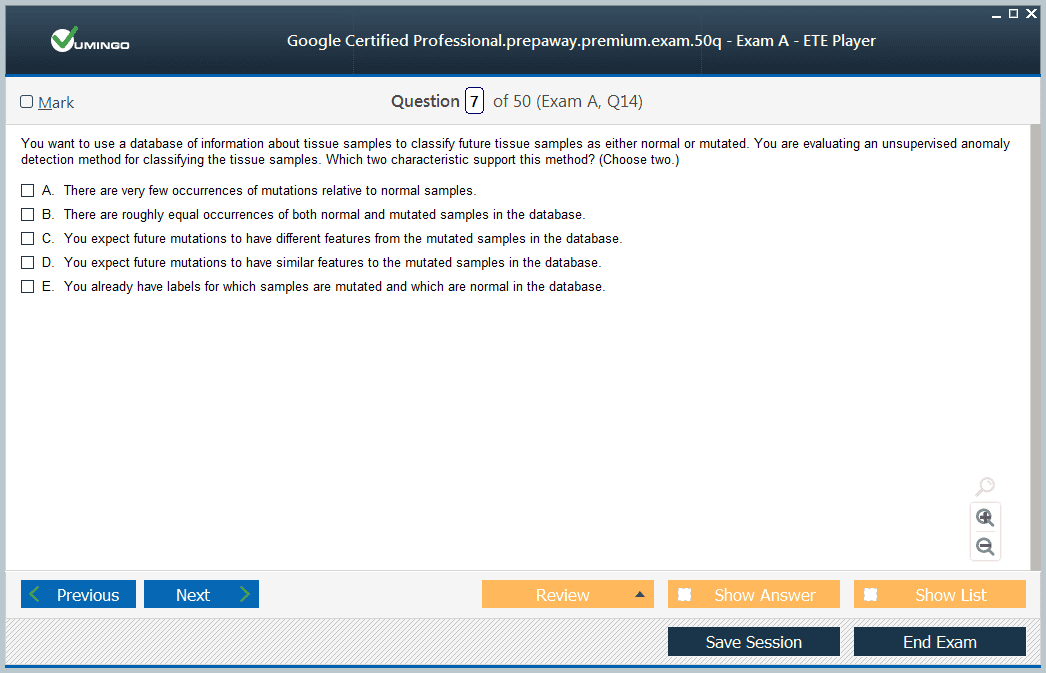




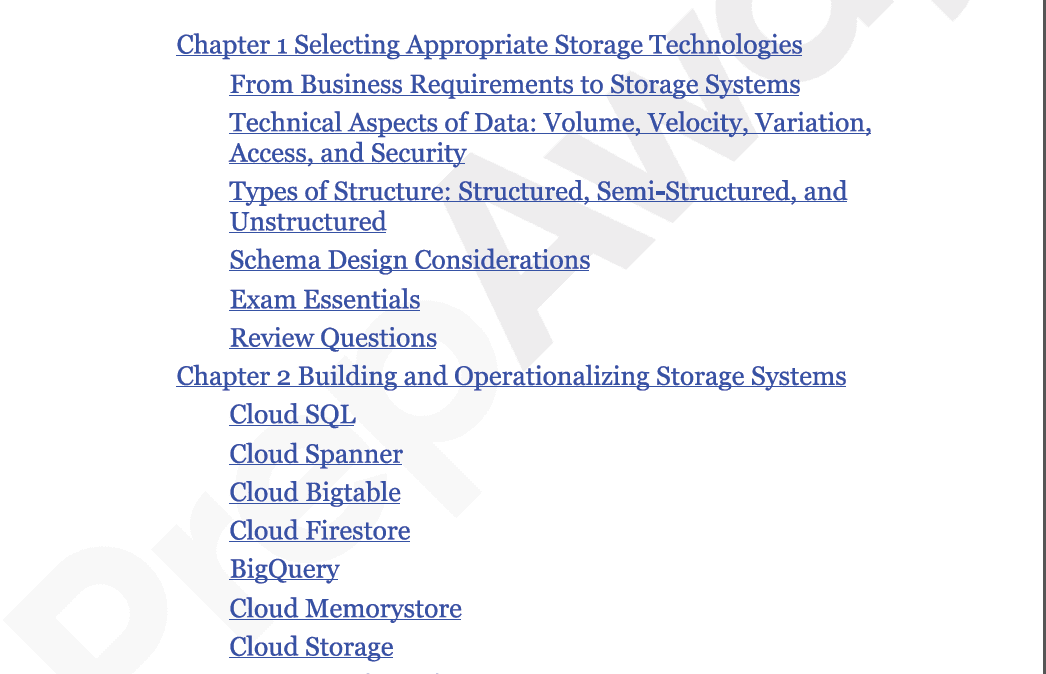
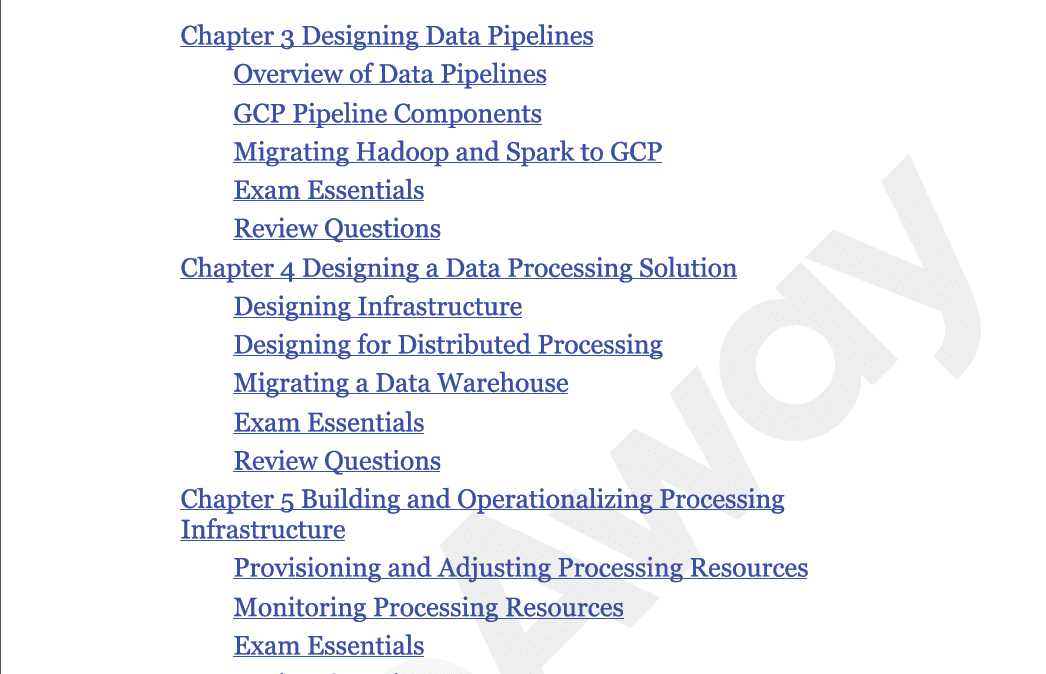
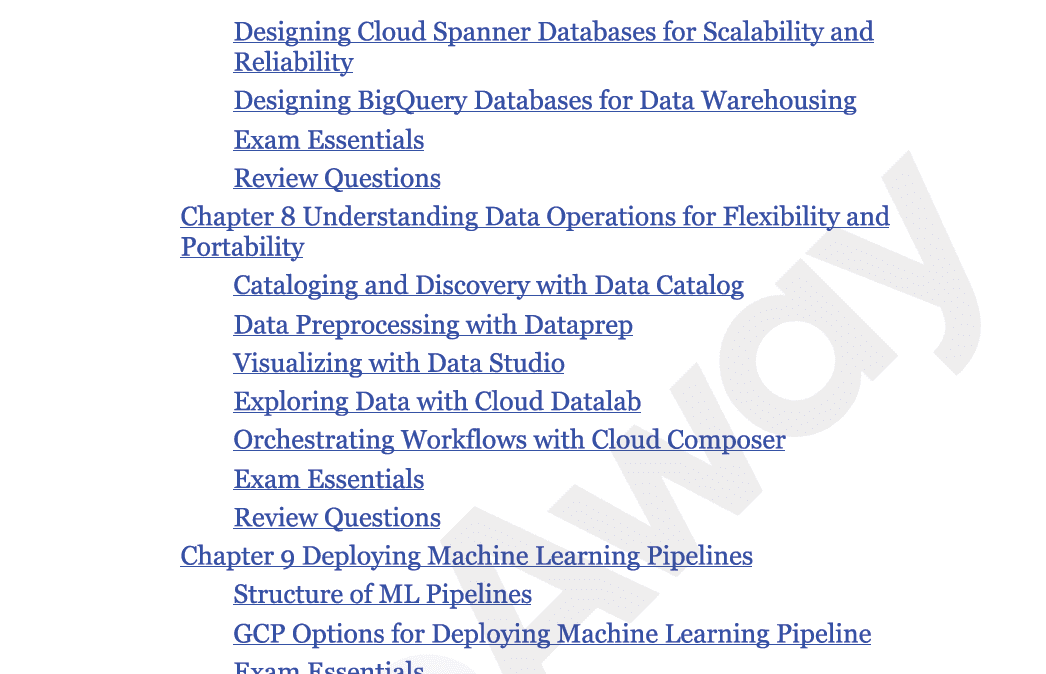
Professional Data Engineer Exam - Professional Data Engineer on Google Cloud Platform
| Download Free Professional Data Engineer Exam Questions |
|---|
Google Professional Data Engineer Certification Practice Test Questions and Answers, Google Professional Data Engineer Certification Exam Dumps
All Google Professional Data Engineer certification exam dumps, study guide, training courses are prepared by industry experts. Google Professional Data Engineer certification practice test questions and answers, exam dumps, study guide and training courses help candidates to study and pass hassle-free!
Google Professional Data Engineer: Current 2026 Certification and Production Data Strategy
Google Professional Data Engineer validates the ability to design, build, operationalize, secure, and monitor data-processing systems on Google Cloud. The current standard Professional Data Engineer exam is two hours, costs US$200 before tax, contains 40–50 multiple-choice and multiple-select questions, has no formal prerequisite, and is valid for two years. Google recommends three or more years of industry experience including at least one year designing and managing Google Cloud data solutions.
Use the approved PrepAway Professional Data Engineer destination for certification context and the PrepAway discussion of Google Cloud data engineering for supplemental perspective. The exam is broad because production data engineering combines ingestion, storage, transformation, analytics, reliability, governance, cost, and security rather than one pipeline tool.
Start With the Data Requirement, Not the Product
Identify sources, consumers, latency, volume, schema, history, quality, regulatory requirements, and service expectations before selecting BigQuery, Cloud Storage, Pub/Sub, Dataflow, Dataproc, databases, or orchestration tools. A platform decision should follow the data contract.
Practise classifying use cases: batch analytics, real-time events, operational data, long-term archives, machine-learning features, and reporting. The correct system depends on how the data is produced and used.
Ingestion Must Be Reliable and Idempotent
Build ingestion patterns that can retry safely and preserve provenance. Understand batch and streaming sources, event delivery, duplicate handling, ordering, late data, schema evolution, and how failures are surfaced.
Document source ownership and expected behaviour. When a pipeline fails, the engineer should know whether the source stopped, data changed, permissions changed, or the processing layer broke.
Warehouses, Lakes, and Databases Serve Different Workloads
The PrepAway explanation of data warehouses can reinforce why analytical platforms and operational databases optimize for different query and transaction patterns. Google Cloud data engineering often combines object storage, BigQuery, databases, and processing services.
Design for lifecycle and cost. Frequently queried curated data may belong in an analytical warehouse, while raw immutable files may remain in object storage. Avoid duplicating data between systems without a defined reason.
Transformations Need Maintainable Models
Use SQL, Beam/Dataflow concepts, Spark/Dataproc where appropriate, and orchestration to turn raw input into trustworthy datasets. The PrepAway guide to data modeling can help with dimensional thinking, history, keys, and downstream usability.
Separate business rules from ingestion plumbing. Reusable, testable transformations make it easier to change data sources or processing engines without redefining business logic everywhere.
Data Quality Must Be Observable
Define expectations for schema, nulls, ranges, uniqueness, referential relationships, freshness, and volume. The PrepAway overview of data quality provides useful concepts for deciding what “good data†means.
When a check fails, decide whether to stop, quarantine, alert, or continue with an explicit exception. Silent corruption is usually more damaging than a visible failed pipeline because downstream users trust incorrect results.
Streaming Requires State and Time Reasoning
Streaming systems add event time, processing time, windows, watermarks, late data, ordering, and persistent state. Understand why the same business logic can behave differently in an unbounded stream than in a nightly batch.
Test restart and replay. A pipeline should recover without uncontrolled duplicates or losing events. Monitor lag and backlog so the team can distinguish a healthy stream from one that is technically running but falling behind.
Security and Governance Span the Data Lifecycle
Use IAM, service accounts, encryption, data classification, access policy, audit logs, and governance tools according to least privilege. Sensitive data should remain protected in raw, transformed, development, backup, and exported forms.
Ownership is critical. Each important dataset needs a team responsible for schema, quality, retention, and access. Governance fails when no one knows who can approve a change.
Operations Include Cost and Reliability
Monitor pipeline success, latency, freshness, throughput, quality, storage growth, query cost, and resource utilization. Data systems should have service expectations just like applications.
The PrepAway article on the data-engineering role can help connect exam concepts with production responsibilities. Build runbooks for common failures and plan backfills before a data-quality incident forces one.
Data platforms often feed ML systems and business applications. Professional Machine Learning Engineer goes deeper into model development and MLOps, while Professional Cloud Architect integrates data choices into broader solution architecture.
Good data engineers understand those consumers without overstepping role boundaries. Define stable data interfaces, security, quality, and cost so downstream teams can depend on the platform.
Data orchestration should make dependencies and recovery explicit. Workflows may include ingestion, validation, transformation, quality checks, publication, and downstream triggers. Design tasks so failures can be retried or repaired without unnecessarily repeating expensive successful stages.
Schema evolution needs governance. Adding a nullable field may be simple, while changing a type, key, or semantic definition can break many consumers. Maintain data contracts and communicate breaking changes. Data engineering is partly an interface-design discipline because downstream teams depend on stable meaning.
Privacy requirements should follow the data through every copy and transformation. Raw data may contain identifiers that should be masked or excluded from development environments. Backups, exports, temporary tables, and ML feature sets need the same governance thinking as primary curated tables.
Cost optimization should be workload aware. Partitioning, clustering, query design, storage lifecycle, autoscaling, streaming frequency, and managed-service choices can all affect spend. Measure cost by pipeline or dataset owner so optimization has accountability rather than becoming a generic platform goal.
For final practice, design a system that ingests transactional events and batch reference data, creates a governed analytical model, serves dashboards, and feeds an ML use case. Define schema changes, late events, quality checks, permissions, retention, monitoring, recovery, and backfill. If you can defend those choices, you are thinking like a Professional Data Engineer rather than a service catalog reader.
Data lineage and discoverability should be part of platform design. Analysts and engineers need to know where a field originated, which transformation changed it, and which dashboards or models depend on it. Lineage reduces the time needed to assess impact when a schema or business rule changes.
Access patterns should guide physical design. Frequently filtered columns, partitioning, clustering, materialization, and query design can change both performance and cost. Measure representative workloads instead of optimizing for one query that does not reflect production use.
Data platform incidents often involve external dependencies. A source API may throttle, a database may change schema, or a SaaS export may arrive late. Build source-level monitoring and contracts so the pipeline can distinguish upstream failure from its own processing error.
In final review, document one dataset from source to consumer: owner, schema, quality rules, transformations, storage, access, retention, cost, dashboards, ML consumers, alerts, and recovery. This forces governance, engineering, and operations into one picture—the level of thinking expected from a professional data engineer.
Metadata management deserves explicit attention. Schema, ownership, description, sensitivity, update cadence, and quality status make datasets discoverable and reduce duplicated work. A technically excellent table that nobody understands or trusts creates little organizational value.
Data retention and deletion should be designed before the platform accumulates years of history. Define legal and business requirements, storage classes, partition expiration, archival, and deletion workflows. Retention choices affect cost, privacy, and the feasibility of rebuilding historical analytics.
Version business logic as carefully as code. If a revenue definition changes, record when the new rule became active and whether historical data was recomputed. This prevents teams from seeing a metric shift without knowing whether customer behaviour or transformation logic changed.
Data sharing and access patterns should be designed for both internal and external consumers. Decide whether teams need direct table access, authorized views, APIs, extracts, or published datasets. The access method affects governance, performance, and how quickly schema changes can break consumers.
Testing should include both transformation logic and pipeline integration. Unit tests can validate business rules, while integration tests confirm source access, schema, permissions, orchestration, and target writes. Production incidents often occur in the boundaries between components rather than in a single SQL statement.
Build a cost-and-quality tradeoff exercise. Compare a low-latency streaming design with a less expensive batch design and state which business requirement justifies the extra complexity. Professional engineers should be able to reject real-time architecture when the business only needs hourly data.
Before the exam, practise reading one complex data scenario and writing the pipeline on paper: source, ingestion, storage, transformation, orchestration, quality, access, monitoring, recovery, and cost. If each component has a reason, the architecture is easier to evaluate than a memorized list of services.
Keep one concise architecture decision record for every major platform choice so future engineers understand why the service, schema, or latency model was selected. Data platforms evolve for years; documented tradeoffs make future redesign safer.
Final Readiness Check
- Use the current Professional Data Engineer standard exam guide.
- Practise batch and streaming ingestion, processing, storage, modeling, quality, security, and operations.
- Reason from data requirements before choosing Google Cloud products.
- Design retry, replay, monitoring, and backfill behaviour before failures occur.
- Use current Google renewal options during the two-year credential lifecycle.
Professional Data Engineer is about production data systems. A strong candidate can explain where data comes from, how it is processed, why it is trustworthy, who may use it, what it costs, and how the system recovers when part of the pipeline fails.
Professional Data Engineer certification practice test questions and answers, training course, study guide are uploaded in ETE files format by real users. Study and pass Google Professional Data Engineer certification exam dumps & practice test questions and answers are the best available resource to help students pass at the first attempt.



