
- Home
- ISA Certifications
- ISA-IEC 62443 Cybersecurity Maintenance Specialist ISA-IEC 62443 Cybersecurity Maintenance Specialist Dumps
Pass ISA ISA-IEC 62443 Cybersecurity Maintenance Specialist Exam in First Attempt Guaranteed!
Get 100% Latest Exam Questions, Accurate & Verified Answers to Pass the Actual Exam!
30 Days Free Updates, Instant Download!


ISA-IEC 62443 Cybersecurity Maintenance Specialist Premium File
- Premium File 100 Questions & Answers. Last Update: Oct 03, 2026
Whats Included:
- Latest Questions
- 100% Accurate Answers
- Fast Exam Updates
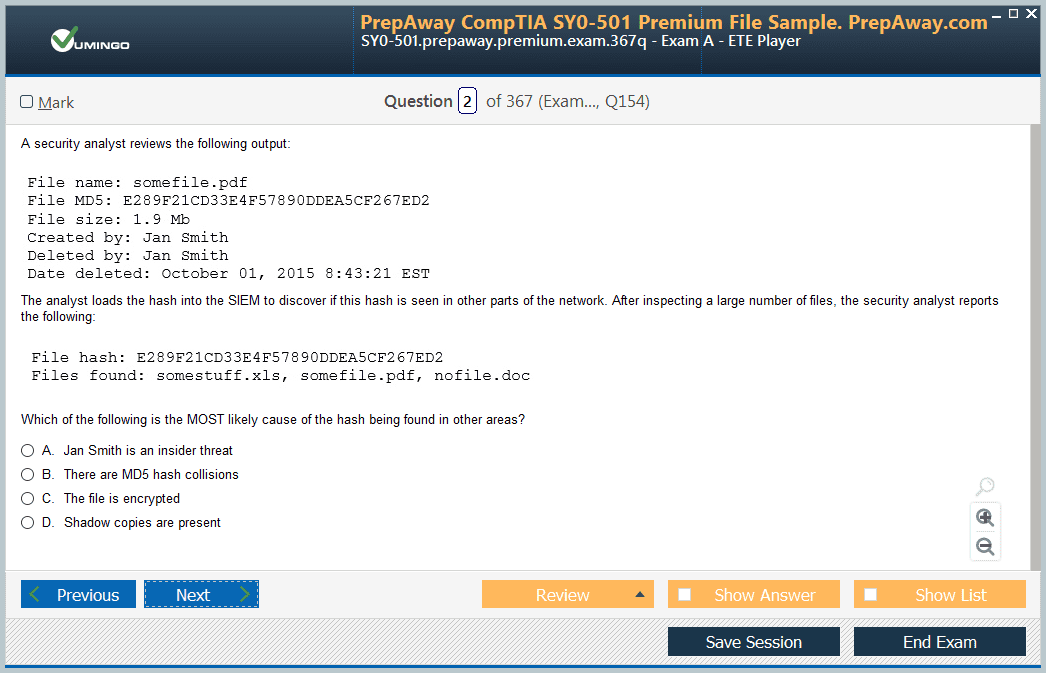
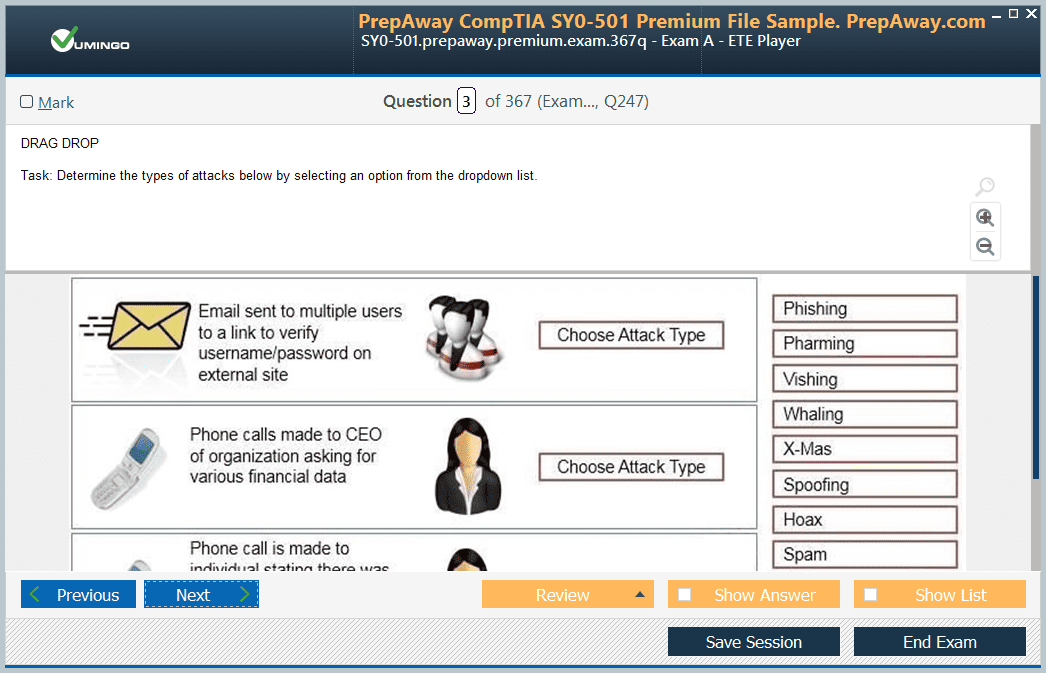
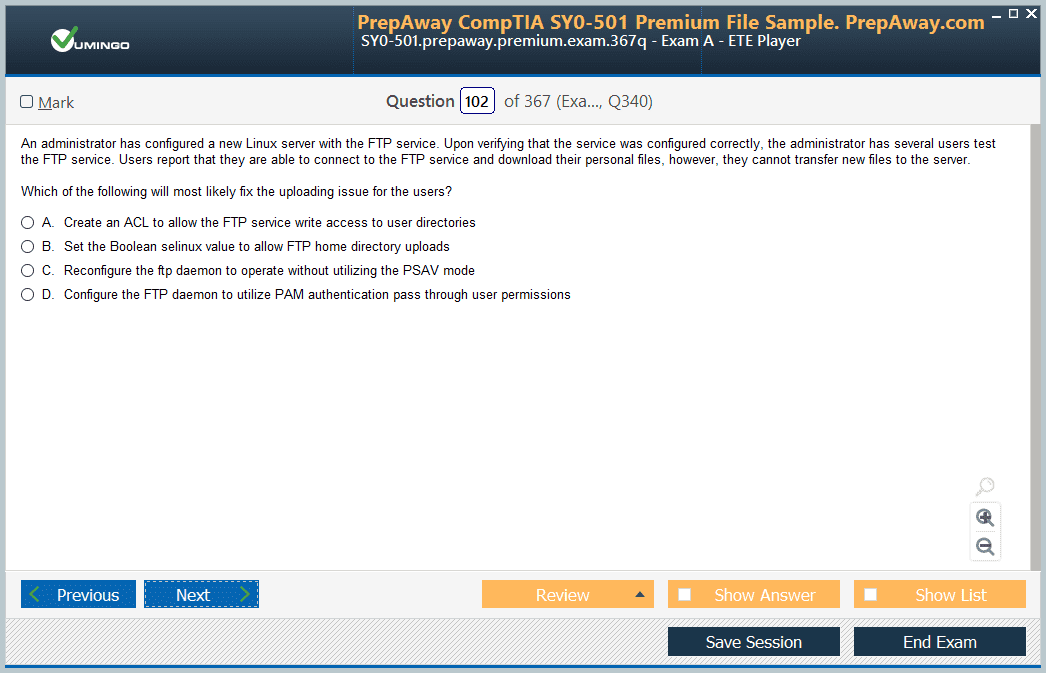
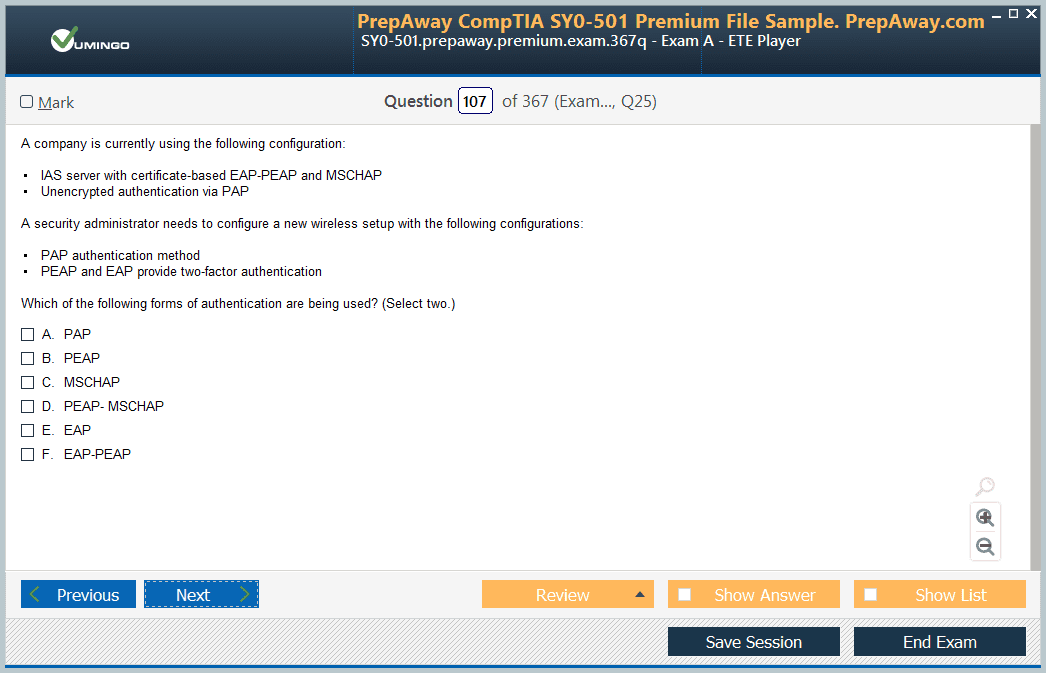
Last Week Results!
 83% students found the test questions almost same
All ISA ISA-IEC 62443 Cybersecurity Maintenance Specialist certification exam dumps, study guide, training courses are Prepared by industry experts. PrepAway's ETE files povide the ISA-IEC 62443 Cybersecurity Maintenance Specialist ISA-IEC 62443 Cybersecurity Maintenance Specialist practice test questions and answers & exam dumps, study guide and training courses help you study and pass hassle-free!
ISA/IEC 62443 Cybersecurity Maintenance Specialist
IC37 covers the operate-and-sustain phase of the ISA/IEC 62443 program and leads to Certificate 4, Cybersecurity Maintenance Specialist. The route begins with the mandatory Fundamentals Specialist credential before IC37 training and assessment. Under ISA’s current rules, the maintenance examination contains 100 multiple-choice questions and is completed closed-book within two hours. The course centers on operating and sustaining cybersecurity controls after an industrial automation and control system has been placed into service.
Maintenance is where security designs prove whether they are sustainable. Within ISA certifications, IC37 covers activities such as network diagnostics, security monitoring, incident response, patch and vulnerability management, backups, change management, audit readiness, and recovery. Candidates should already have the 62443 Fundamentals foundation, because operations decisions depend on zones, conduits, security levels, and the management-system concepts introduced there.
Cybersecurity maintenance protects the achieved design from operational drift
A system can be secure at commissioning and become weaker months later as accounts accumulate, firewall rules expand, software ages, vendors add connections, or emergency changes remain in place. Maintenance therefore includes checking that the implemented controls still match the approved architecture and security requirements. Configuration drift is an operational risk even when no attacker is present.
Teams need baselines and review processes that make drift visible. Network diagrams, asset inventories, access lists, software versions, configuration records, and approved exceptions should be updated as the plant changes. Candidates should understand that documentation is not separate from cybersecurity maintenance; it is the evidence needed to detect when the live system no longer matches the design.
Asset and vulnerability management must account for industrial support constraints
Vulnerability management begins with knowing which assets and versions exist. Advisories then need to be evaluated for applicability, exploitability, consequence, and available mitigations. Industrial equipment can remain in service for many years, and vendors may restrict which patches or software combinations are supported. A high severity score does not automatically mean “patch tonight.”
The maintenance team evaluates risk, tests changes where possible, schedules outages, applies compensating controls when immediate patching is unsafe, and records accepted risk. This process should be repeatable. The objective is not to postpone patches indefinitely but to manage them in a way that reduces cyber risk without creating unplanned process or safety failures.
Patch management is a controlled change process, not a software update button
Before patching an industrial asset, teams should know the current version, dependency relationships, vendor guidance, rollback method, backup state, expected downtime, and validation tests. Patches can affect drivers, communications, timing, applications, or hardware interfaces in ways that standard office systems do not. Testing and scheduling are therefore part of security, not bureaucratic delay.
After installation, verify both security and process function. A system that boots successfully may still fail to communicate with a controller or historian. Capture evidence that required services, alarms, control functions, and interfaces still work. If a patch cannot be applied, document the reason, compensating protections, owner, and review date so the exception remains visible.
Backups only provide resilience when restoration is understood and tested
Industrial recovery can require more than file backups. Controller programs, HMI configurations, historian settings, server images, licenses, certificates, firewall configurations, network-device settings, engineering projects, and supporting documentation may all be necessary. The team should know which artifacts are critical, where they are stored, and how quickly they can be restored.
Test restoration under controlled conditions. A backup that has never been restored is an assumption, not a recovery capability. Protect backup repositories from the same compromise that affects production, maintain appropriate offline or separated copies, and ensure recovery procedures account for dependencies and sequencing. These practices support both cyber resilience and ordinary equipment failure recovery.
Security monitoring should detect meaningful changes in an industrial baseline
Logs and network telemetry are useful when teams know what normal operation looks like. Unexpected engineering access, configuration changes, new protocols, repeated authentication failures, unusual remote sessions, disabled security tools, or altered communication patterns can all justify investigation. Monitoring should prioritize signals that connect to plausible industrial attack paths rather than generating unmanageable alert volume.
Integration with SIEM or other monitoring platforms can help, but the maintenance specialist also needs process context. A maintenance outage can explain a burst of engineering activity; a production phase can change normal traffic. The ICS and SCADA security perspective helps analysts distinguish industrial behavior from generic enterprise assumptions.
Incident response must preserve safety and control while containing threats
Industrial response plans should define who leads cyber containment, who owns process safety, who can stop production, how vendors are engaged, what evidence is preserved, and how communication occurs. A conventional instruction to “disconnect the affected system” may be dangerous if that system provides critical view, control, or safety-supporting functions. Response actions require coordination with operations.
Practice scenario decisions in advance. If an engineering workstation is suspected of compromise, can it be isolated without losing necessary control? Is a clean replacement available? Which credentials should be changed? What logs must be preserved? Which network pathways should be restricted? Rehearsal turns policy into executable action and exposes dependencies before a real incident creates time pressure.
Change management prevents legitimate work from silently weakening controls
Most changes to industrial systems are not malicious. New equipment, production modifications, vendor upgrades, troubleshooting, and capacity projects can alter communications and access. Without formal review, temporary firewall rules, shared accounts, test laptops, or remote tunnels can become permanent. Cybersecurity must therefore participate in the same change discipline that protects process reliability.
A change record should identify purpose, affected assets, cyber impact, test plan, rollback plan, approvals, and documentation updates. Higher-risk changes may require reassessment or verification against the original security requirements. The relationship to the IC34 Design Specialist work is direct: operations must preserve the intent of the architecture while adapting it to legitimate business change.
Periodic reassessment checks whether assumptions still hold
Threat capability, external connectivity, asset criticality, regulations, and business processes evolve. The risk picture used to justify the original design can therefore become stale. Maintenance programs should trigger reassessment after significant changes and at defined intervals, comparing current conditions with the assumptions made during design and commissioning.
The IC33 risk assessment discipline provides the method for revisiting consequence, threat, vulnerability, and target security needs. Candidates should see reassessment as a feedback loop: operations produces evidence, assessment evaluates changed risk, design updates controls, and maintenance sustains the new baseline.
Preparation should follow the life of a control after commissioning
For each major control—segmentation firewall, remote-access gateway, authentication service, endpoint protection, backup system, monitoring sensor—write down how it is operated, updated, monitored, tested, and recovered. Identify who owns it, which logs demonstrate health, what failure looks like, and what emergency workaround is allowed. This turns broad maintenance topics into concrete operational responsibilities.
The 100-question exam requires both conceptual coverage and practical sequencing. Review mistakes by asking whether the problem belonged to vulnerability management, change control, backup and recovery, monitoring, incident response, reassessment, or another lifecycle process. IC37 is not about maintaining one security product; it validates the discipline required to keep an industrial cybersecurity program effective over time.
Audit readiness and operational metrics show whether the program is actually working
Maintenance teams need evidence that controls remain effective. Useful records can include patch decisions, vulnerability reviews, access recertification, firewall changes, remote sessions, backup tests, incident exercises, exception reviews, and configuration verification. The purpose is not to generate paperwork for its own sake. Evidence allows management and auditors to determine whether the cybersecurity management system is operating as designed.
Metrics should support decisions rather than reward activity. Counting patches applied says little if critical unsupported assets are excluded; counting alerts is meaningless if nobody investigates them. Better measures connect work to risk: time to evaluate critical vulnerabilities, percentage of high-risk exceptions past review date, restoration-test success, unauthorized change rate, mean time to contain industrial incidents, or percentage of remote-access paths with current owners.
Periodic audits and management reviews can reveal recurring weaknesses that individual incidents do not. If emergency changes repeatedly bypass review, the issue may be the change process rather than employee behavior. If patch exceptions accumulate, architecture or procurement choices may need attention. Maintenance closes the lifecycle loop by turning operational evidence into improvements in risk assessment, design, and governance.
Lifecycle support status deserves continuous attention. Industrial assets can remain operational long after operating systems, firmware, or vendor support have ended. Maintenance teams should track support dates and build replacement or isolation plans before an asset becomes an emergency. Unsupported does not always mean immediate removal is possible, but it should trigger explicit risk treatment, stronger compensating controls, and management visibility.
Access reviews are another recurring task. Employees move roles, contractors finish projects, vendors change personnel, and service accounts outlive the systems that created them. Periodic recertification checks whether accounts, group memberships, certificates, and remote-access permissions still have an owner and a valid purpose. Removing unused access reduces opportunity for both accidental misuse and compromise.
Exercise programs can test several maintenance capabilities together. A tabletop or controlled technical drill can reveal whether monitoring detects an event, whether contacts are current, whether operations and security agree on containment, whether backups are usable, and whether documentation matches the live architecture. Findings should become tracked improvements rather than observations that disappear after the exercise.
Decommissioning is also a maintenance responsibility. Retired controllers, servers, engineering laptops, removable media, and backup devices can retain credentials, configuration, intellectual property, or sensitive operational data. Disposal and reuse procedures should remove access, sanitize data appropriately, update inventories, revoke certificates or accounts, and close network paths that existed only for the retired asset.
Closing these residual paths is essential because abandoned access can otherwise survive long after the equipment it once supported.
ISA ISA-IEC 62443 Cybersecurity Maintenance Specialist practice test questions and answers, training course, study guide are uploaded in ETE Files format by real users. Study and Pass ISA-IEC 62443 Cybersecurity Maintenance Specialist ISA-IEC 62443 Cybersecurity Maintenance Specialist certification exam dumps & practice test questions and answers are to help students.
Why customers love us?
What do our customers say?
The resources provided for the ISA certification exam were exceptional. The exam dumps and video courses offered clear and concise explanations of each topic. I felt thoroughly prepared for the ISA-IEC 62443 Cybersecurity Maintenance Specialist test and passed with ease.
Studying for the ISA certification exam was a breeze with the comprehensive materials from this site. The detailed study guides and accurate exam dumps helped me understand every concept. I aced the ISA-IEC 62443 Cybersecurity Maintenance Specialist exam on my first try!
I was impressed with the quality of the ISA-IEC 62443 Cybersecurity Maintenance Specialist preparation materials for the ISA certification exam. The video courses were engaging, and the study guides covered all the essential topics. These resources made a significant difference in my study routine and overall performance. I went into the exam feeling confident and well-prepared.
The ISA-IEC 62443 Cybersecurity Maintenance Specialist materials for the ISA certification exam were invaluable. They provided detailed, concise explanations for each topic, helping me grasp the entire syllabus. After studying with these resources, I was able to tackle the final test questions confidently and successfully.
Thanks to the comprehensive study guides and video courses, I aced the ISA-IEC 62443 Cybersecurity Maintenance Specialist exam. The exam dumps were spot on and helped me understand the types of questions to expect. The certification exam was much less intimidating thanks to their excellent prep materials. So, I highly recommend their services for anyone preparing for this certification exam.
Achieving my ISA certification was a seamless experience. The detailed study guide and practice questions ensured I was fully prepared for ISA-IEC 62443 Cybersecurity Maintenance Specialist. The customer support was responsive and helpful throughout my journey. Highly recommend their services for anyone preparing for their certification test.
I couldn't be happier with my certification results! The study materials were comprehensive and easy to understand, making my preparation for the ISA-IEC 62443 Cybersecurity Maintenance Specialist stress-free. Using these resources, I was able to pass my exam on the first attempt. They are a must-have for anyone serious about advancing their career.
The practice exams were incredibly helpful in familiarizing me with the actual test format. I felt confident and well-prepared going into my ISA-IEC 62443 Cybersecurity Maintenance Specialist certification exam. The support and guidance provided were top-notch. I couldn't have obtained my ISA certification without these amazing tools!
The materials provided for the ISA-IEC 62443 Cybersecurity Maintenance Specialist were comprehensive and very well-structured. The practice tests were particularly useful in building my confidence and understanding the exam format. After using these materials, I felt well-prepared and was able to solve all the questions on the final test with ease. Passing the certification exam was a huge relief! I feel much more competent in my role. Thank you!
The certification prep was excellent. The content was up-to-date and aligned perfectly with the exam requirements. I appreciated the clear explanations and real-world examples that made complex topics easier to grasp. I passed ISA-IEC 62443 Cybersecurity Maintenance Specialist successfully. It was a game-changer for my career in IT!