
- Home
- ServiceNow Certifications
- CIS-DF Certified Implementation Specialist - Data Foundations (CMDB and CSDM) Dumps
Pass ServiceNow CIS-DF Exam in First Attempt Guaranteed!
Get 100% Latest Exam Questions, Accurate & Verified Answers to Pass the Actual Exam!
30 Days Free Updates, Instant Download!


CIS-DF Premium File
- Premium File 250 Questions & Answers. Last Update: Sep 29, 2026
Whats Included:
- Latest Questions
- 100% Accurate Answers
- Fast Exam Updates
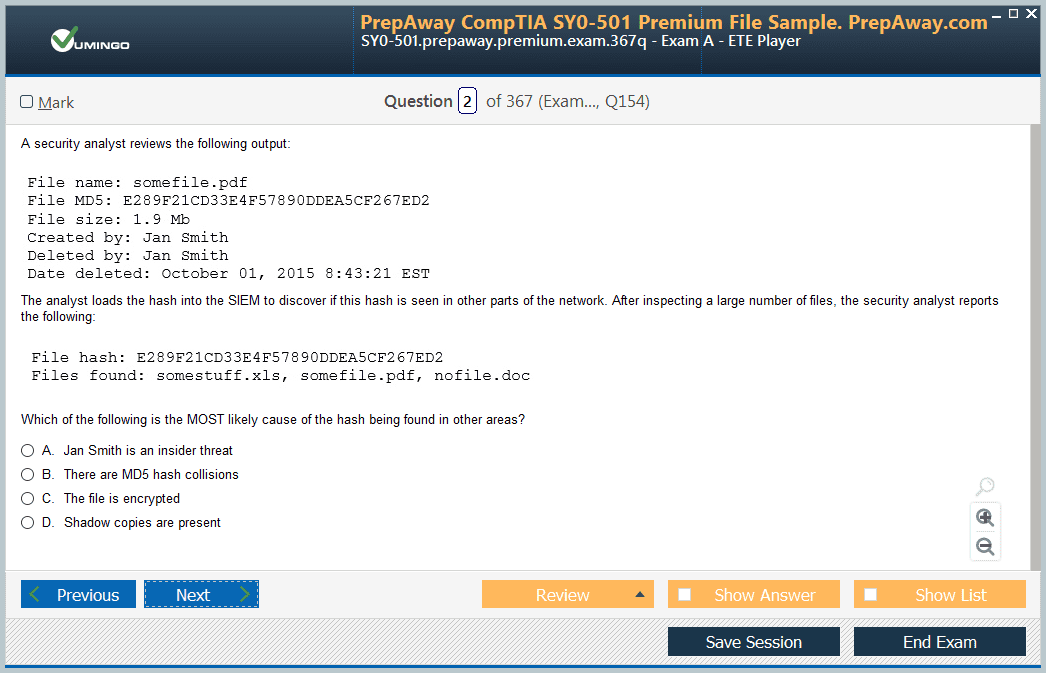
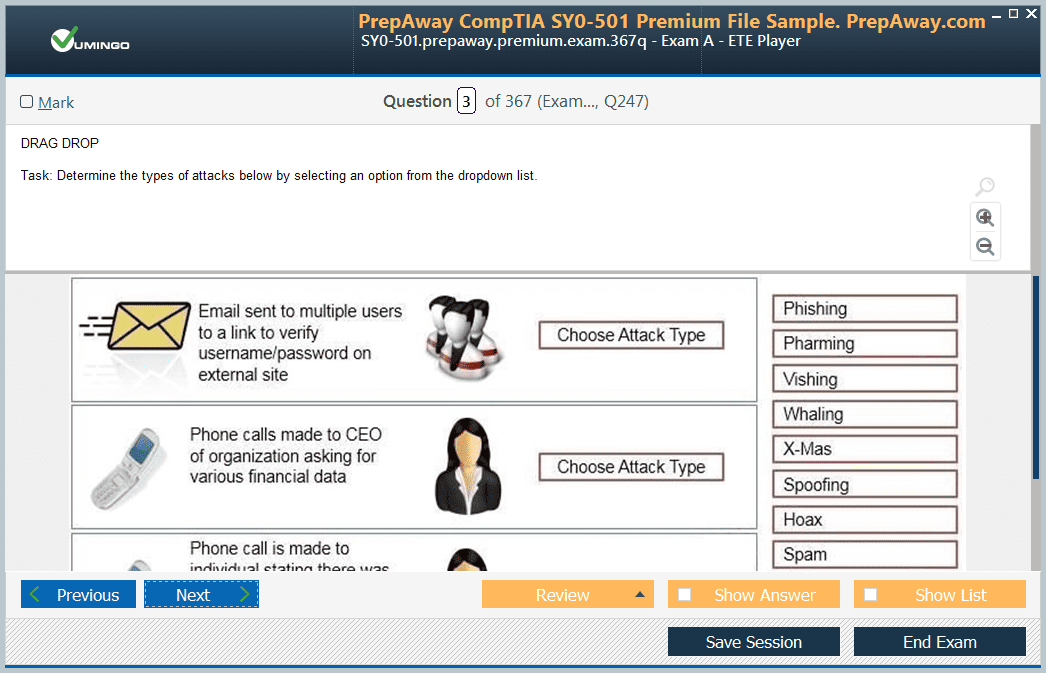
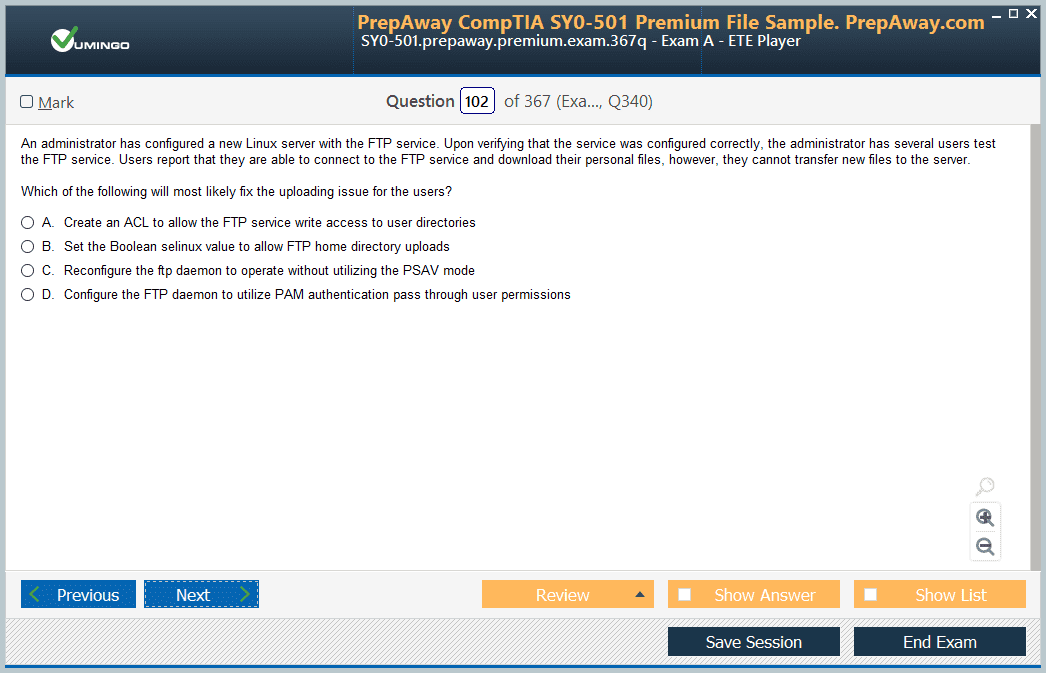
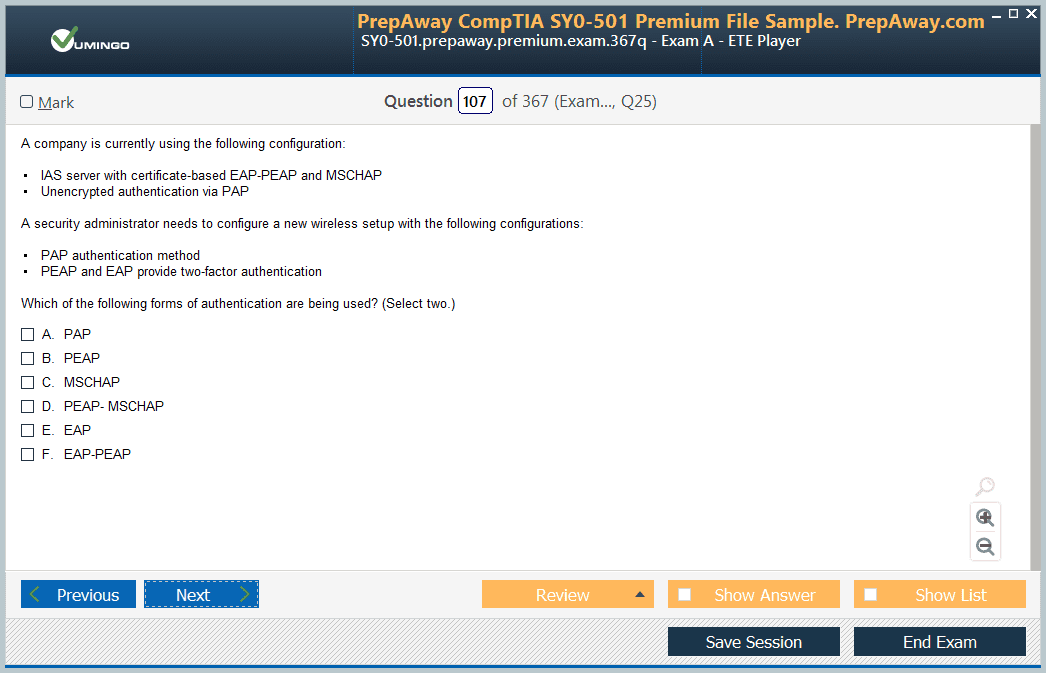
Last Week Results!
 91.8% students found the test questions almost same
All ServiceNow CIS-DF certification exam dumps, study guide, training courses are Prepared by industry experts. PrepAway's ETE files povide the CIS-DF Certified Implementation Specialist - Data Foundations (CMDB and CSDM) practice test questions and answers & exam dumps, study guide and training courses help you study and pass hassle-free!
ServiceNow CIS-DF: Building Trusted CMDB and CSDM Data Foundations
The ServiceNow Certified Implementation Specialist – Data Foundations (CMDB and CSDM), commonly shortened to CIS-DF, is a current mainline certification launched in 2025. ServiceNow’s current blueprint describes the purpose as validating the knowledge and skills needed to design, implement, and operationalize a CMDB that supports the Common Service Data Model (CSDM).
CIS-DF has also become strategically important in the certification program. ServiceNow made it a prerequisite for several implementation specialist credentials in ITAM, ITOM, ITSM, and SecOps, including Discovery, Hardware Asset Management, IT Service Management, Service Mapping, Security Incident Response, Software Asset Management, and Vulnerability Response. Existing holders of affected certifications have a 2026 compliance deadline under the current policy.
The Data Foundations (CMDB and CSDM) and the ServiceNow certifications provide useful certification context. The certification is not simply a database exam; it is about creating trustworthy operational data that other platform capabilities can rely on.
A CMDB is valuable only when configuration items represent real operational objects
A Configuration Management Database stores configuration items and relationships that describe the environment. The difficult part is not creating tables; it is deciding what should be represented, how records are identified, who owns the data, and which relationships are meaningful for operations. Poor modeling creates a large database that looks complete but cannot support impact analysis or service management.
The operating principle in CMDB quality is therefore more important than raw record count. Completeness, correctness, compliance, freshness, ownership, and relationship accuracy need continuous attention.
Class selection is one of the first controls on meaning. A device, application service, business application, cloud resource, database, and network component should not be modeled as interchangeable records merely because they share a name or owner. The class determines inherited attributes, relationships, identification behavior, and reporting expectations. Teams should prefer the most appropriate supported class and extend the model only when the business meaning cannot be represented cleanly. Unnecessary custom classes increase maintenance and make integrations, upgrades, and shared reporting harder.
CSDM provides a shared language across business, application, and technology views
CSDM helps organizations model services and related entities consistently so different teams can discuss the same environment without inventing incompatible structures. CSDM as a shared language is especially important when service-management, architecture, operations, and portfolio teams all depend on the same data.
Candidates should understand that CSDM is not a requirement to fill every possible class immediately. Adoption should be driven by use cases. A service model that is small but governed and actively used is usually more valuable than a massive hierarchy populated without ownership.
CSDM adoption works best as an incremental modeling program rather than a demand to perfect the entire enterprise map before anyone receives value. Teams can begin with the services and applications that matter most, establish ownership and naming rules, then expand coverage as operational use cases require it. Incident routing, change impact, service reporting, vulnerability response, and portfolio planning each create reasons to improve particular relationships. When modeling is driven by concrete outcomes, stakeholders are more likely to maintain the data because they can see what depends on it.
Data ingestion needs identification and reconciliation before scale
CMDB data can arrive from Discovery, Service Graph Connectors, imports, APIs, integrations, and manual processes. If each source is allowed to create records independently, duplicates and attribute conflicts appear quickly. Identification and Reconciliation Engine behavior determines how incoming payloads match existing CIs and which source is allowed to update specific attributes.
Implementers should design identifiers and reconciliation rules according to the real reliability of each source. An authoritative discovery source for operating-system details may not be authoritative for business ownership. Data governance becomes more accurate when authority is defined at the attribute level rather than assuming one source knows everything.
Source precedence should be defined at attribute level where necessary. Discovery may be authoritative for operating-system facts, an asset system for purchase information, an application registry for business ownership, and a cloud API for provider identifiers. Declaring one source authoritative for the entire CI can erase useful data from another trusted system. Reconciliation rules should reflect how each attribute is actually governed, while identification rules answer a different question: whether an incoming record represents an existing CI. Keeping those concerns separate prevents many duplicate and overwrite problems.
Import design should prevent duplicate chaos before production loads begin
Import Sets and Transform Maps remain relevant when data is brought into ServiceNow from files or external systems. Transform design should define coalescing, normalization, reference resolution, rejection, and error handling before thousands of rows are processed.
A successful import job is not evidence of good data if it creates duplicate companies, users, locations, models, or CIs. Candidates should think about what makes a record unique and how the organization will handle conflicting values over time.
Staging is valuable because it creates a controlled place to validate and normalize incoming data before it affects operational records. Teams can reject malformed rows, standardize identifiers, resolve references, and measure error rates before a transform runs at scale. That boundary also makes a failed load easier to diagnose and repeat without manually repairing partially updated CIs.
Governance assigns accountability for definitions, quality, and exceptions
Data Foundations is partly a human operating model. Data owners and stewards clarify who defines an attribute, who maintains it, who can approve exceptions, and who is accountable when quality degrades. Without ownership, dashboards identify defects but no one fixes them.
Governance should also keep scope realistic. Different teams may want to add custom fields or classes for local needs. Those changes should be reviewed against existing models, reporting requirements, and integration behavior so the shared data foundation does not fragment into departmental variations.
Governance also needs an exception process. Real environments contain acquisitions, temporary migrations, unsupported devices, incomplete integrations, and ownership changes that do not fit the normal model immediately. Teams should record why an exception exists, who accepts the risk, and when it will be reviewed. Otherwise temporary data defects become permanent and health reports lose credibility. A small number of transparent exceptions is healthier than forcing bad data to look compliant simply to improve a dashboard score.
Health and coverage are different questions
CMDB health asks whether known records meet quality expectations; coverage asks whether the environment that should be represented is actually visible. A CMDB can have clean records and still miss critical infrastructure. Conversely, discovery can produce broad coverage with poor identification or stale relationships.
Operational teams need both perspectives. ServiceNow data-quality measurement helps turn abstract concerns into observable rules and trends. The objective is to find the quality dimension that blocks a real use case and improve it systematically.
Quality measures should be tied to use cases. Completeness asks whether required attributes are populated, correctness asks whether values reflect reality, compliance checks whether records follow defined rules, and coverage asks whether the expected population is represented at all. A CMDB can score well on completeness while missing an entire environment. Conversely, broad discovery coverage can still produce low-value records if relationships and ownership are absent. CIS-DF preparation should train candidates to ask which quality dimension is failing and what operational decision that failure affects.
Trusted data is a prerequisite for automation and AI, not an optional cleanup project
Automation can act faster than humans, which makes bad data more dangerous. If ownership, relationships, or service context are wrong, an automated remediation can target the wrong object or escalate to the wrong team. ServiceNow data foundations for AI and automation therefore begins with trustworthy models and governed data.
The same principle applies to generative and predictive features. AI can summarize or infer from the data it receives, but it cannot reliably compensate for missing or contradictory source records. Data quality determines the ceiling of many downstream platform capabilities.
Automation magnifies both good and bad CMDB decisions. A workflow that routes incidents by service ownership, a security process that prioritizes vulnerabilities by business criticality, or an AI assistant that summarizes impact can only be as reliable as the relationships and attributes it consumes. That raises the standard for provenance and explainability: teams should know which source supplied an important value and why one source was allowed to override another. When a downstream decision is wrong, the organization needs to trace the error back to collection, identification, reconciliation, stewardship, or modeling instead of treating the CMDB as an opaque database. This operational feedback is how data foundations improve over time.
Preparation should connect modeling choices to operational outcomes
CIS-DF candidates should practice with a small but realistic model: ingest records, inspect identification behavior, create relationships, apply CSDM concepts, measure health, correct data, and explain who owns the result. That is more useful than memorizing class names without understanding how the records support service operations.
The certification’s prerequisite role also changes how candidates should think about it. Discovery, ITSM, asset, and security implementations all depend on shared configuration context. CIS-DF is meant to establish that baseline so downstream specialists can work from data they can trust.
ServiceNow CIS-DF practice test questions and answers, training course, study guide are uploaded in ETE Files format by real users. Study and Pass CIS-DF Certified Implementation Specialist - Data Foundations (CMDB and CSDM) certification exam dumps & practice test questions and answers are to help students.
- CIS-DF - Certified Implementation Specialist - Data Foundations (CMDB and CSDM)
- CSA - ServiceNow Certified System Administrator
- CAD - ServiceNow Certified Application Developer
- CIS-ITSM - Certified Implementation Specialist - IT Service Management
- CIS-CSM - Certified Implementation Specialist - Customer Service Management
- CIS-RC - Certified Implementation Specialist - Risk and Compliance
- CIS-HAM - Certified Implementation Specialist – Hardware Asset Management
- CIS-HR - Certified Implementation Specialist - Human Resources
- CIS-Discovery - Certified Implementation Specialist - Discovery
- CIS-SPM - Certified Implementation Specialist - Strategic Portfolio Management
- CIS-SM - Certified Implementation Specialist - Service Mapping
- CIS-SAM - Certified Implementation Specialist - Software Asset Management
- CIS-EM - Certified Implementation Specialist - Event Mangement
- CIS-FSM - Certified Implementation Specialist - Field Service Management
- CIS-VR - Certified Implementation Specialist - Vulnerability Response
- CIS-TPRM - Certified Implementation Specialist - Third-party Risk Management
- CIS-SIR - Certified Implementation Specialist - Security Incident Response
Why customers love us?
What do our customers say?
The resources provided for the ServiceNow certification exam were exceptional. The exam dumps and video courses offered clear and concise explanations of each topic. I felt thoroughly prepared for the CIS-DF test and passed with ease.
Studying for the ServiceNow certification exam was a breeze with the comprehensive materials from this site. The detailed study guides and accurate exam dumps helped me understand every concept. I aced the CIS-DF exam on my first try!
I was impressed with the quality of the CIS-DF preparation materials for the ServiceNow certification exam. The video courses were engaging, and the study guides covered all the essential topics. These resources made a significant difference in my study routine and overall performance. I went into the exam feeling confident and well-prepared.
The CIS-DF materials for the ServiceNow certification exam were invaluable. They provided detailed, concise explanations for each topic, helping me grasp the entire syllabus. After studying with these resources, I was able to tackle the final test questions confidently and successfully.
Thanks to the comprehensive study guides and video courses, I aced the CIS-DF exam. The exam dumps were spot on and helped me understand the types of questions to expect. The certification exam was much less intimidating thanks to their excellent prep materials. So, I highly recommend their services for anyone preparing for this certification exam.
Achieving my ServiceNow certification was a seamless experience. The detailed study guide and practice questions ensured I was fully prepared for CIS-DF. The customer support was responsive and helpful throughout my journey. Highly recommend their services for anyone preparing for their certification test.
I couldn't be happier with my certification results! The study materials were comprehensive and easy to understand, making my preparation for the CIS-DF stress-free. Using these resources, I was able to pass my exam on the first attempt. They are a must-have for anyone serious about advancing their career.
The practice exams were incredibly helpful in familiarizing me with the actual test format. I felt confident and well-prepared going into my CIS-DF certification exam. The support and guidance provided were top-notch. I couldn't have obtained my ServiceNow certification without these amazing tools!
The materials provided for the CIS-DF were comprehensive and very well-structured. The practice tests were particularly useful in building my confidence and understanding the exam format. After using these materials, I felt well-prepared and was able to solve all the questions on the final test with ease. Passing the certification exam was a huge relief! I feel much more competent in my role. Thank you!
The certification prep was excellent. The content was up-to-date and aligned perfectly with the exam requirements. I appreciated the clear explanations and real-world examples that made complex topics easier to grasp. I passed CIS-DF successfully. It was a game-changer for my career in IT!