Pass Microsoft Certified: Power Platform Solution Architect Expert Certification Exam in First Attempt Guaranteed!
Get 100% Latest Exam Questions, Accurate & Verified Answers to Pass the Actual Exam!
30 Days Free Updates, Instant Download!


PL-600 Premium Bundle
- Premium File 255 Questions & Answers. Last update: Oct 30, 2026
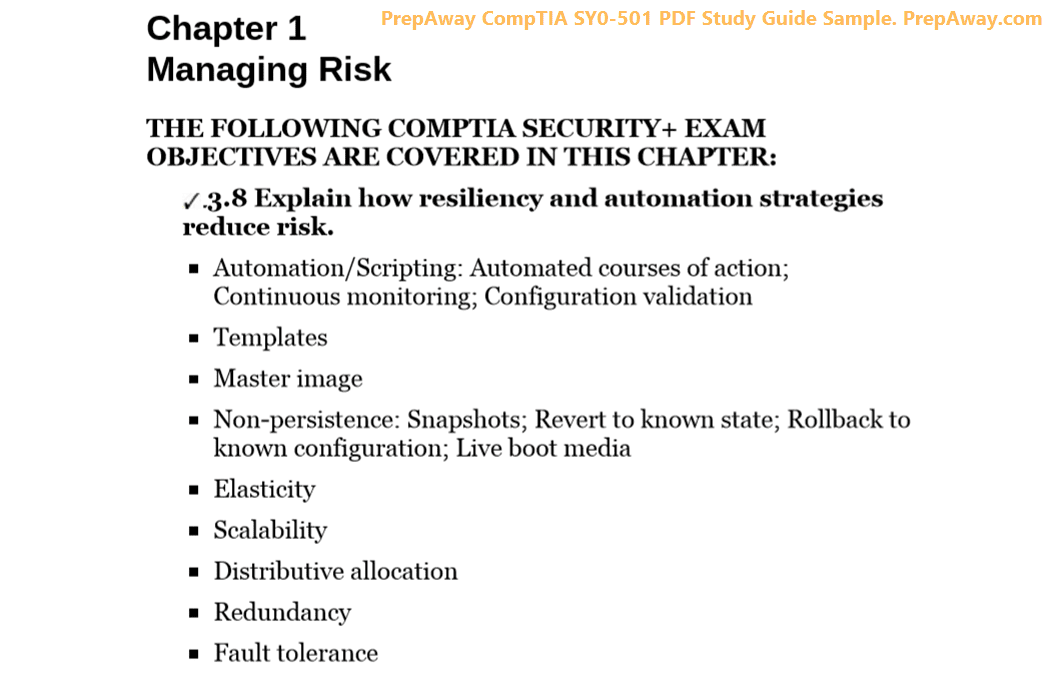
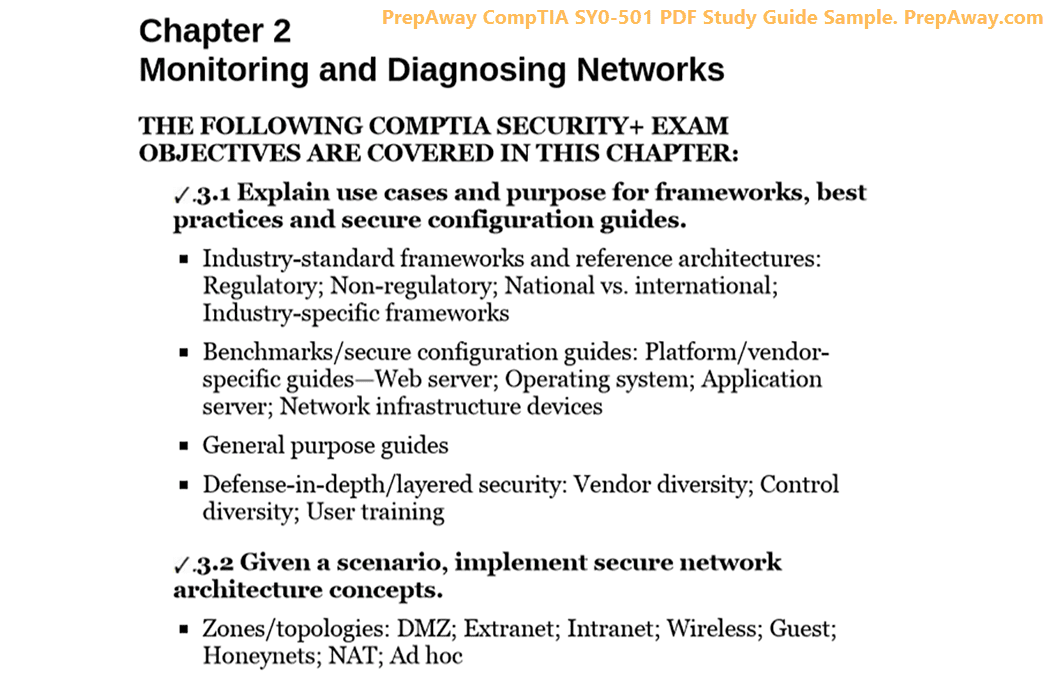
- Study Guide 481 Pages
PL-600 Premium Bundle
- Premium File 255 Questions & Answers
Last update: Oct 30, 2026 - Study Guide 481 Pages
Purchase Individually

Premium File
Study Guide




PL-600 Exam - Microsoft Power Platform Solution Architect
| Download Free PL-600 Exam Questions |
|---|
Microsoft Microsoft Certified: Power Platform Solution Architect Expert Certification Practice Test Questions and Answers, Microsoft Microsoft Certified: Power Platform Solution Architect Expert Certification Exam Dumps
All Microsoft Microsoft Certified: Power Platform Solution Architect Expert certification exam dumps, study guide, training courses are prepared by industry experts. Microsoft Microsoft Certified: Power Platform Solution Architect Expert certification practice test questions and answers, exam dumps, study guide and training courses help candidates to study and pass hassle-free!
Power Platform Solution Architect Expert Is Retired: PL-600 and the Partial AB-100 Transition
Microsoft Certified: Power Platform Solution Architect Expert is a retired credential in the broader Microsoft certification portfolio. Microsoft retired PL-600, the certification, and its renewal assessments on June 30, 2026. Partner Center guidance identifies Agentic AI Business Solutions Architect as a partial replacement in several business-application skilling paths, not as a one-for-one rename of PL-600.
This distinction is important. PL-600 validated solution envisioning, requirements analysis, architecture, data modeling, security, integration, ALM, testing, and go-live across Power Platform and Dynamics 365. The current Agentic AI Business Solutions Architect path adds cross-platform AI, agents, Copilot Studio, Microsoft Foundry, multi-agent orchestration, and one of several Associate prerequisites. Existing PL-600 knowledge remains valuable, but the current expert role is broader and more AI-centric.
PL-600 Ended on June 30, 2026
Microsoft’s retired-exam list and former renewal page confirm that Power Platform Solution Architect Expert and PL-600 are retired. New candidates cannot earn or renew the old credential.
PrepAway content such as PL-600 architecture preparation can still teach durable solution-architect practices when the retirement status is clear.
AB-100 Is Only a Partial Replacement
Microsoft Partner Center describes Agentic AI Business Solutions Architect as a partial replacement for the retiring Power Platform Solution Architect Expert in several skilling contexts. The current certification requires AB-100 plus at least one eligible Associate certification.
Do not tell a candidate that AB-100 is simply “the new PL-600.†The current role includes Power Platform and Dynamics 365 but also Foundry, generative AI, agentic-first solutions, and multi-agent architecture.
Requirements and Solution Envisioning Still Transfer
Solution architects need to discover business outcomes, users, processes, constraints, integrations, data, security, support, and success measures. The PrepAway article on solution envisioning and requirements analysis remains useful because good architecture begins before platform selection.
Distinguish hard requirements from preferences and assumptions. Record unresolved risks before committing to a design.
Dataverse and Application Architecture Remain Important
Design data ownership, tables, relationships, security, app boundaries, automation, integration, and reporting according to the business domain. Shared data should have authoritative ownership.
The current AI-era architecture adds agents and generative services to this foundation rather than replacing it.
Security and Identity Must Bound AI and Low-Code Solutions
PL-600-era security design around Dataverse, environments, apps, users, roles, and integrations still transfers. Current architects also need to design agent identities, tool permissions, AI data access, and human approval for high-impact actions.
The model should never be the final authorization layer. Deterministic security controls remain essential.
Integration Architecture Needs Failure and Ownership Models
Use APIs, events, connectors, workflows, Azure services, and external systems according to latency, coupling, reliability, and security requirements. Define source-of-truth ownership.
For every integration, decide what happens on timeout, duplicate delivery, schema change, or partial failure. Architecture should make recovery predictable.
ALM and Testing Still Define Production Quality
Environment strategy, source control, solution packaging, deployment pipelines, configuration, automated tests, performance validation, monitoring, and rollback remain core architecture concerns.
AI-enabled systems add model, prompt, retrieval, and agent versions to the lifecycle. Treat them as production artifacts rather than informal configuration.
Power Platform Developer and AB-410 Are Current Adjacent Paths
Power Platform Developer Associate remains active and is transitioning from PL-400 to AB-400. The retired Functional Consultant path was directly replaced by AB-410 Intelligent Applications Builder.
These current Associate roles can provide implementation depth before moving into the expert Agentic AI Business Solutions Architect path.
Architecture documentation should capture business outcomes, user groups, data domains, integrations, security, environments, deployment, operations, and known risks. A solution architect should leave behind an implementable model, not only a presentation that made sense during the design meeting.
Nonfunctional requirements remain critical. Performance, availability, accessibility, compliance, supportability, extensibility, localization, and data residency can determine architecture just as strongly as functional requirements. Capture measurable targets where possible.
Environment and tenant strategy should account for departments, legal entities, development teams, data boundaries, region, governance, and ALM. Avoid creating environments without ownership or lifecycle because they become long-term administration debt.
Dataverse architecture should include data ownership, security boundaries, integration, auditing, retention, volume, and analytics. In an AI-enabled solution, also consider which data can be retrieved or exposed to agents and generative services.
Integration design should include throttling, retry, idempotency, error queues, monitoring, and ownership. A connector or API working in a demo does not prove the architecture can handle production volume or failure.
Security should be modeled from personas and trust boundaries. Include makers, developers, admins, external users, service principals, agents, and connectors. Current agentic architectures add nonhuman identities that may need privileged access to business systems.
Testing strategy should cover unit or component validation, end-to-end process tests, security, performance, migration, user acceptance, and operational readiness. Go-live should have clear success criteria and rollback or remediation plans.
AB-100 architecture also adds model choice, Foundry, agent orchestration, AI evaluation, safety, and cost. Existing PL-600 holders should build these new skills rather than assuming their prior expertise automatically covers agentic AI.
For final transition practice, take one old Power Platform solution-architecture case and redesign it as an agentic AI business solution. Keep the original requirements, Dataverse, integration, security, ALM, and testing, then add agents only where they create value. This shows exactly what is durable and what the new expert credential adds.
Architects should distinguish configuration, customization, integration, and product gap. Solve requirements with the lowest-complexity supported approach that meets security and lifecycle needs. Unnecessary custom development can increase cost and upgrade risk without creating more business value.
Capacity and licensing architecture should be considered early. Dataverse storage, API requests, environments, premium connectors, AI services, and Copilot features can create cost and entitlement constraints. A design is incomplete if the organization cannot license or operate it at expected scale.
Data migration should include cleansing, mapping, deduplication, ownership, archival, cutover, reconciliation, and rollback. Architecture should define which historical data truly needs migration and which can remain in an accessible archive.
Operational support should be designed before go-live. Define monitoring, alerting, admin roles, support tiers, incident ownership, platform updates, and escalation to Microsoft or partners. A solution architect should leave behind an operable system, not only a successful deployment.
Agentic AI architecture adds model evaluation and safety. Define how agents are tested for groundedness, tool correctness, permission boundaries, latency, cost, and failure. Multi-agent orchestration creates more coordination risk than a single workflow and should be justified by the business need.
Before pursuing AB-100, review its current prerequisite list and October 14, 2026 update notice. The expert transition is dynamic, and the exact eligible Associate certification should be confirmed when you schedule.
Architecture should include adoption and change management. A solution can meet every technical requirement and still fail when users do not understand the new process, managers do not support it, or support teams are unprepared. Include training, communications, champion networks, and feedback in the rollout plan.
Data residency and compliance can constrain environment location, integration, backup, and AI services. Architects should identify those requirements before selecting a region or service pattern so late compliance discovery does not force redesign.
Cost should be modeled across licenses, capacity, API usage, AI services, Azure components, support, and custom development. A low-code solution can still become expensive when scale, premium features, and operational labor are ignored.
For final review, present the same solution architecture to executives and implementers. Executives need outcomes, risk, cost, and roadmap; implementers need data, integration, security, environments, ALM, and test requirements. This is strong preparation for the current expert direction.
Expert architects should also define decommissioning. When an app, integration, or agent is retired, decide how data is archived, identities and connectors are revoked, environments are cleaned up, and dependent processes are migrated. Lifecycle architecture includes an end state, not only go-live.
Keep the partial-replacement language explicit in career materials. AB-100 is a broader agentic AI architect credential and should not be presented as if Microsoft merely renamed PL-600.
Use final review to identify which PL-600 architecture skills remain universal and which new AB-100 skills involve AI models, agents, orchestration, Foundry, and cross-platform solution design. This distinction makes the transition much easier to explain professionally.
Architecture review should include ownership after launch. Name who maintains Dataverse, apps, integrations, environments, agents, monitoring, and support documentation. A design that depends indefinitely on the solution architect is not operationally complete.
Current expert candidates should also consider AI cost controls and model/service portability. Agentic designs can accumulate usage cost or vendor dependency quickly, so monitor consumption and document which components could be replaced if business requirements change.
Final Readiness Check
- Treat Power Platform Solution Architect Expert and PL-600 as retired from June 30, 2026.
- Use Agentic AI Business Solutions Architect only as a partial successor, not a one-for-one rename.
- Carry forward requirements, Dataverse architecture, integration, security, ALM, testing, and go-live skills.
- Add agents, Foundry, generative AI, multi-agent orchestration, and AI governance.
- Verify the current AB-100 prerequisite list before planning the new expert credential.
PL-600 retirement does not erase Power Platform architecture. It changes the certification target. The best transition preserves durable solution-architecture discipline while expanding it to the cross-platform, agentic AI systems Microsoft now expects expert architects to design.
Microsoft Certified: Power Platform Solution Architect Expert certification practice test questions and answers, training course, study guide are uploaded in ETE files format by real users. Study and pass Microsoft Microsoft Certified: Power Platform Solution Architect Expert certification exam dumps & practice test questions and answers are the best available resource to help students pass at the first attempt.