MCAT Practice Test


MCAT Test Premium Bundle
- Premium File 811 Questions & Answers. Last update: Oct 30, 2026
- Training Course 45 Video Lectures
- Study Guide 503 Pages
MCAT Test Premium Bundle
- Premium File 811 Questions & Answers
Last update: Oct 30, 2026 - Training Course 45 Video Lectures
- Study Guide 503 Pages
Purchase Individually

Premium File
Training Course
Study Guide




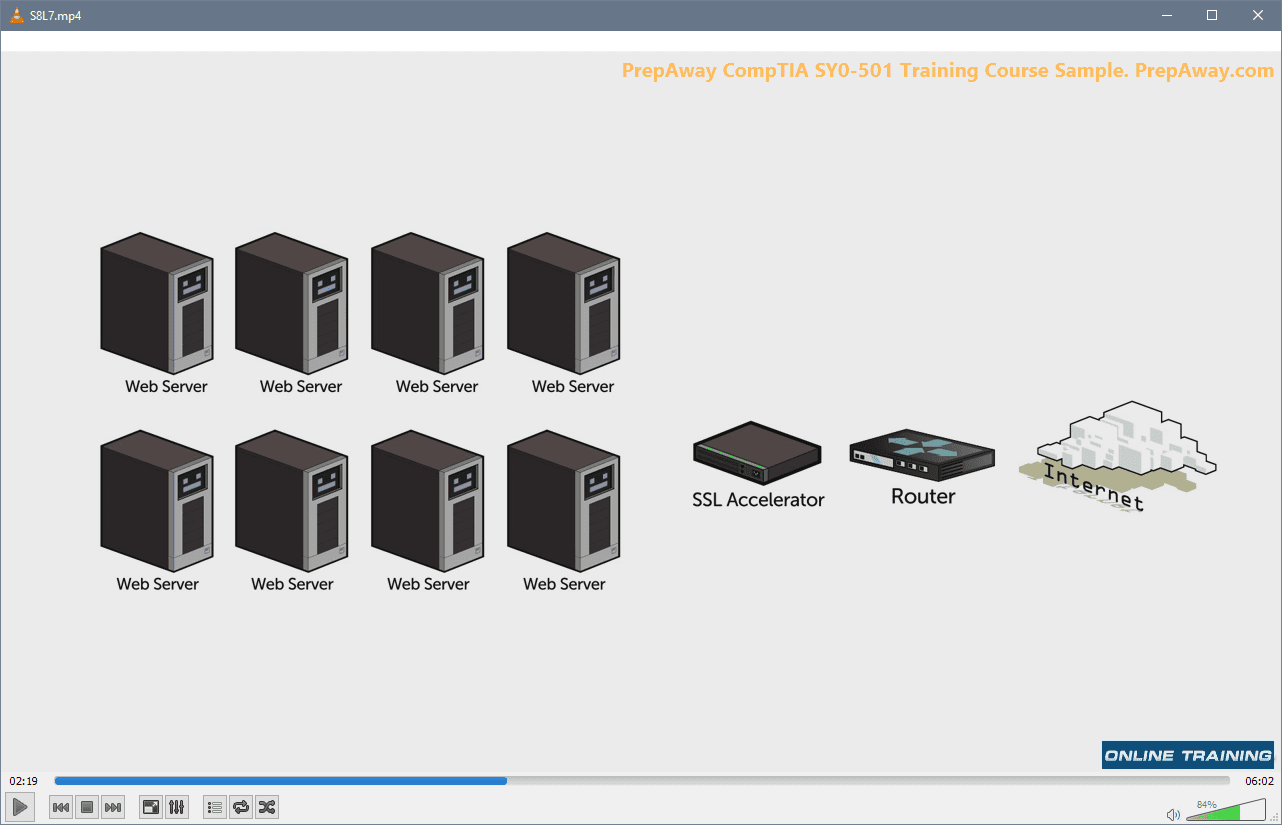
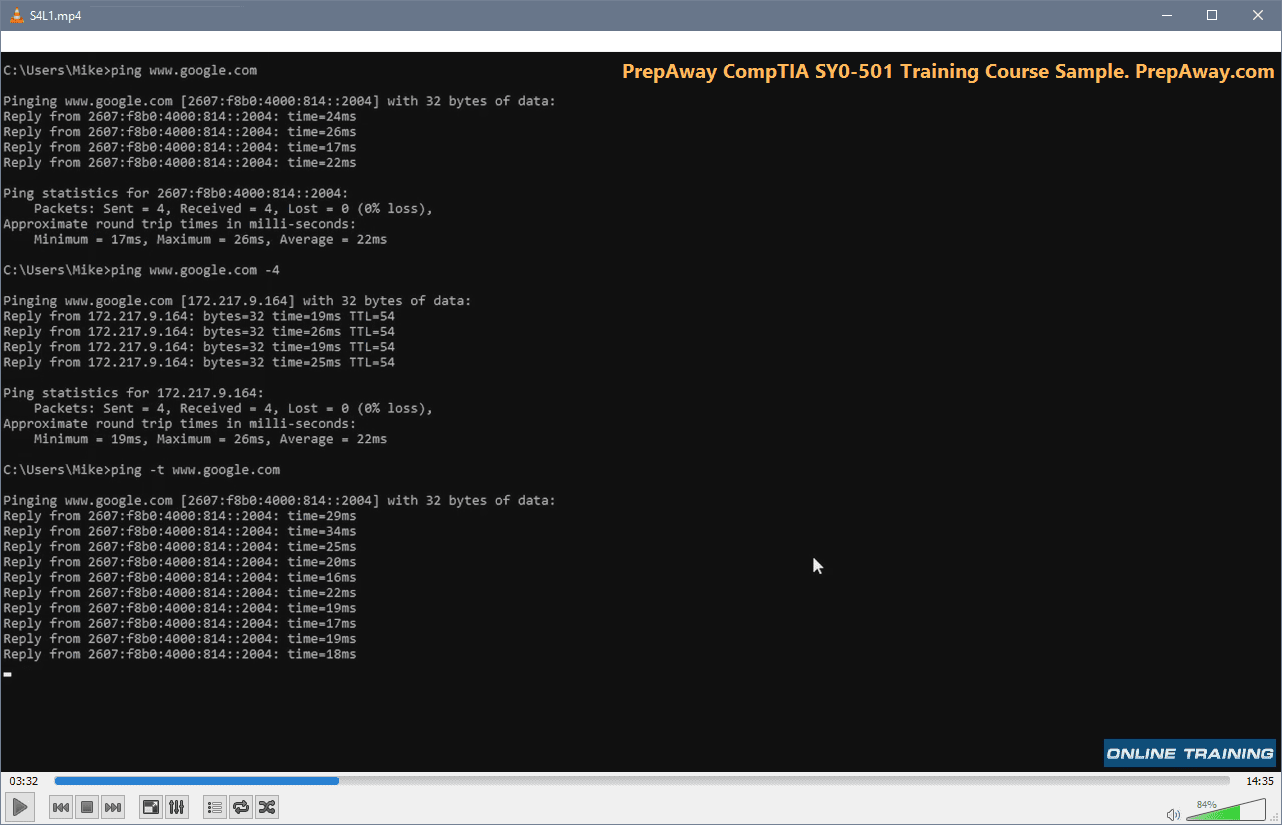
Test Prep MCAT Course Practice Test Questions and Answers, Test Prep MCAT Course Exam Dumps
All Test Prep MCAT certification exam dumps, study guide, training courses are prepared by industry experts. Test Prep MCAT certification practice test questions and answers, exam dumps, study guide and training courses help candidates to study and pass hassle-free!
MCAT certification practice test questions and answers, training course, study guide are uploaded in ETE files format by real users. Study and pass Test Prep MCAT certification exam dumps & practice test questions and answers are the best available resource to help students pass at the first attempt.
MCAT Test Exam - Medical College Admission Test: Verbal Reasoning, Biological Sciences, Physical Sciences, Writing Sample
| Download Free MCAT Test Exam Questions |
|---|
Test Prep MCAT Certification Practice Test Questions and Answers, Test Prep MCAT Certification Exam Dumps
All Test Prep MCAT certification exam dumps, study guide, training courses are prepared by industry experts. Test Prep MCAT certification practice test questions and answers, exam dumps, study guide and training courses help candidates to study and pass hassle-free!
MCAT: Master the Four Sections and Build an Evidence-Based Study Plan
The MCAT is a long, integrated reasoning exam rather than a sequence of independent science quizzes. Candidates need content knowledge from chemistry, physics, biology, biochemistry, psychology, and sociology, but they must also interpret experiments, read unfamiliar passages, connect disciplines, and maintain accuracy across more than six hours of scored content. A study plan that concentrates only on memorizing facts can therefore produce disappointing results even when the candidate has completed the prerequisite coursework.
The current MCAT contains four multiple-choice sections: Chemical and Physical Foundations of Biological Systems; Critical Analysis and Reasoning Skills; Biological and Biochemical Foundations of Living Systems; and Psychological, Social, and Biological Foundations of Behavior. AAMC administers the computer-based exam through Pearson VUE and publishes the official content outline, policies, and practice resources candidates should use as the primary basis for preparation.
The Test Day Is Long Enough to Make Endurance a Scoring Skill
AAMC lists 59 questions and 95 minutes for Chemical and Physical Foundations, 53 questions and 90 minutes for CARS, 59 questions and 95 minutes for Biological and Biochemical Foundations, and 59 questions and 95 minutes for Psychological, Social, and Biological Foundations. That is six hours and fifteen minutes of content time. With tutorial, breaks, and administrative steps, total seated time is about seven and a half hours.
Endurance should be trained gradually. Early in preparation, focused passage sets are better for learning. Later, candidates need full or near-full simulations that reproduce section timing and breaks. A person who can reason accurately for ninety minutes but loses concentration in the final section has a different preparation problem from someone whose errors appear consistently from the beginning.
Chemical and Physical Foundations Rewards Cross-Disciplinary Reasoning
The Chem/Phys section draws from general chemistry, organic chemistry, physics, biochemistry, and biological context. The challenge is often deciding which relationship applies to an unfamiliar experimental or physiological situation. A formula sheet memorized without units, assumptions, and variable relationships will not be enough.
Build a compact equation set and practice deriving or estimating when possible. Units can eliminate incorrect answers before calculation and can expose a setup error. For chemistry review, focus on concepts that repeatedly connect to biological systems, including acids and bases, equilibrium, thermodynamics, electrochemistry, solutions, and molecular interactions. PrepAway’s general chemistry on the MCAT can support that concept-level work, while organic chemistry on the MCAT is useful when reaction logic and functional groups are recurring weaknesses.
CARS Requires Passage Reasoning Without Outside Content Knowledge
Critical Analysis and Reasoning Skills contains 53 questions built around nine passage sets and does not require specialized subject knowledge. That makes it a pure test of how well the candidate can understand, evaluate, and use a passage under time pressure. Outside knowledge can actually become a liability when it tempts the reader to choose something true in the real world but unsupported by the text.
Practice identifying the author’s central claim, tone, paragraph functions, and the relationship between evidence and conclusion. For inference questions, prefer the answer that requires the smallest unsupported leap. Review should be passage-specific: identify the exact sentence or structural cue that should have controlled the decision. A focused MCAT CARS can help candidates turn those reasoning habits into repeatable timing.
Biology and Biochemistry Should Be Studied as Systems
The Bio/Biochem section combines molecular mechanisms with organism-level function. Memorizing pathways is useful only if the candidate also understands why they change, where they occur, how they are regulated, and what experimental evidence would reveal a disruption. Questions can move from enzyme kinetics to genetics to organ-system physiology within one passage.
Use concept maps that connect structure to function. Proteins, nucleic acids, membranes, metabolism, signaling, and organ systems should not live in separate study boxes. PrepAway’s MCAT biochemistry can reinforce biochemical relationships, while MCAT biology can help organize broader physiological review. In both cases, follow content work with passage-based application.
Psychology and Sociology Questions Mix Terminology with Research Interpretation
The Psych/Soc section tests behavioral and social-science concepts in the context of health, human behavior, identity, groups, inequality, culture, and research. Vocabulary is important because many choices differ by one theoretical distinction, but the section also asks candidates to interpret study designs, variables, graphs, and conclusions.
For each term, learn an example and a contrast. A definition without a scenario is difficult to retrieve under pressure. Then practice asking whether a study supports correlation or causation, whether a variable is confounded, and what a result actually demonstrates. PrepAway’s MCAT psychology and MCAT sociology can provide targeted reinforcement after the core framework is understood.
Physics Is Easier When Equations Carry Meaning
Many premedical students are uncomfortable with physics because formulas can feel disconnected from biological application. The MCAT repeatedly uses physical principles in contexts such as fluids, sound, circuits, optics, forces, energy, and pressure. Candidates should learn how changing one variable affects another before depending on exact numerical calculation.
Dimensional analysis and proportional reasoning are powerful because they remain useful when a passage introduces an unfamiliar apparatus. Draw a quick diagram, label known quantities, and identify the governing relationship. A set of MCAT physics can be particularly useful when the problem is not missing knowledge but slow translation from words to equations.
Experimental Design Appears Across the Science Sections
AAMC science passages frequently present research rather than textbook summaries. Candidates should be comfortable identifying independent and dependent variables, controls, hypotheses, experimental groups, trends, sources of error, and what a figure actually supports. A question may be answerable without knowing every molecular detail if the experimental design is understood correctly.
When reading a research passage, do not memorize all numbers. Note the question the researchers asked, what they manipulated, what they measured, and the direction of the important results. If a graph appears, read axes and units before interpreting the trend. This method reduces cognitive load and makes it easier to return to the right evidence when a question targets one part of the experiment.
Official AAMC Practice Should Anchor Score Calibration
AAMC provides official practice resources, including free planning materials and full-length practice products. Third-party questions can be valuable for volume and targeted review, but official materials are the best benchmark for how the test writer combines passage information, content knowledge, and answer-choice design. Save enough official material for the later stages of preparation so improvement can be measured against realistic questions.
After each full-length exam, spend substantial time reviewing. Separate content misses from reasoning misses, passage-navigation problems, timing mistakes, and avoidable calculation errors. A score report is a summary; the error log is the plan. If the same mistake appears in different subjects—such as answering beyond the evidence—that pattern deserves attention across the entire exam.
Build the Final Schedule Backward from the Testing Year
The MCAT has testing-year-specific registration policies, calendars, and required reading. AAMC’s 2026 Essentials is the governing policy reference for 2026 administrations and notes that the exam includes field-test questions that do not count toward the score. Candidates should use the calendar for their intended year rather than relying on a dated blog post for registration windows or score-release timing.
As the exam approaches, shift from expanding content to retrieving it under realistic conditions. Keep equations, amino acids, metabolic relationships, major behavioral theories, and recurring science concepts active, but devote increasing attention to passages and full sections. The final goal is not to feel that every possible fact has been reviewed. It is to execute a stable reasoning process across all four sections, manage a seven-hour testing day, and use evidence consistently even when the content is unfamiliar.
Content review should be scheduled according to forgetting as well as weakness. High-yield material such as amino acids, acid-base relationships, core equations, enzyme behavior, research methods, and major behavioral theories benefits from spaced retrieval throughout the entire study period. A topic that was mastered six weeks ago can still fail on test day if it has not been revisited. Short cumulative quizzes are useful because they force older material to compete with newer learning, just as it will on the real exam.
Candidates should also separate readiness from perfection. No realistic plan can eliminate every obscure detail across all of the disciplines represented on the MCAT. Readiness means that core concepts are retrievable, passage reasoning is stable, timing is controlled, and full-length scores have become reasonably consistent under official-like conditions. When one unfamiliar fact appears, the candidate can still use experimental design, units, relationships, and elimination to make progress. That flexibility is one of the exam’s central demands and a better final target than endlessly expanding a content notebook.
Full-length review should include correct answers that were guessed or reached with weak reasoning. A question marked correct can still reveal a vulnerability if the candidate could not explain why the other choices were wrong. Flag uncertain correct responses during review and reconstruct the reasoning from the passage or concept. This prevents lucky answers from hiding a weakness until a later exam presents the same idea in a less familiar form.
It is also useful to practice the break routine itself. Decide in advance what food and hydration strategy is practical, how to reset attention after a difficult section, and how to avoid mentally replaying earlier questions. The MCAT offers enough breaks to support performance, but only if candidates use them to recover rather than to analyze mistakes they can no longer change. A controlled reset before the next section protects the reasoning skills that months of study have built.
MCAT certification practice test questions and answers, training course, study guide are uploaded in ETE files format by real users. Study and pass Test Prep MCAT certification exam dumps & practice test questions and answers are the best available resource to help students pass at the first attempt.