cert
cert-1
cert-2

Pass Huawei H12-725_V4.0 Exam in First Attempt Guaranteed!

Get 100% Latest Exam Questions, Accurate & Verified Answers to Pass the Actual Exam!
30 Days Free Updates, Instant Download!


cert-5
cert-6
H12-725_V4.0 Exam - Verified By Experts
H12-725_V4.0 Premium File

H12-725_V4.0 Premium File

$79.99
$87.99
  • Premium File 115 Questions & Answers. Last Update: Jan 19, 2026

Whats Included:

  • Latest Questions
  • 100% Accurate Answers
  • Fast Exam Updates
 
$87.99
$79.99
accept 10 downloads in the last 7 days
block-screenshots
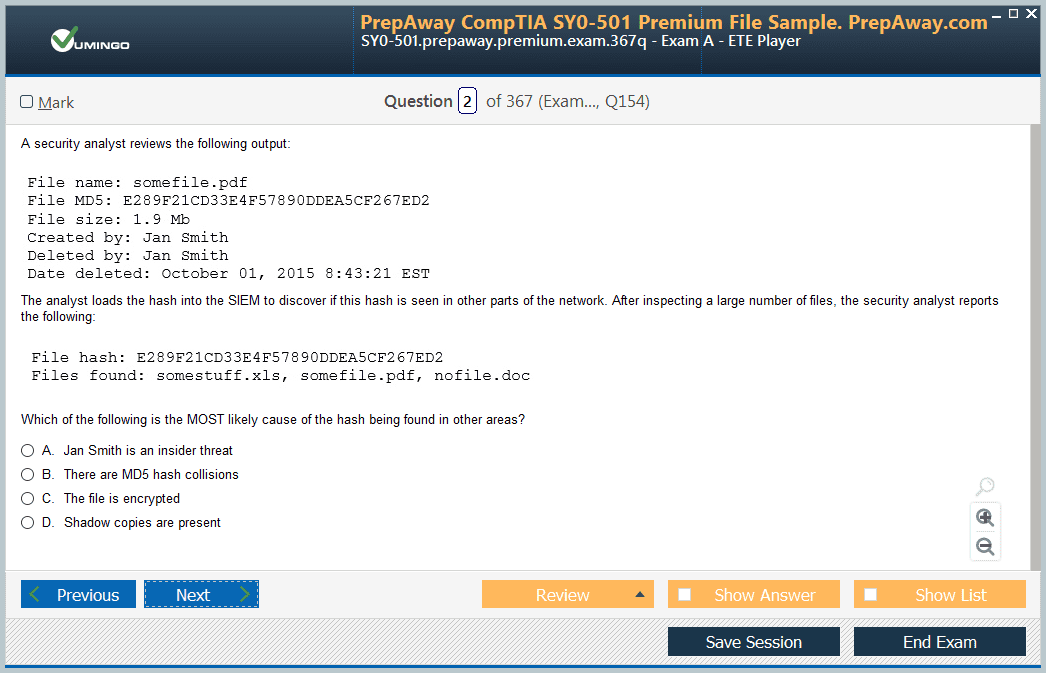
H12-725_V4.0 Exam Screenshot #1
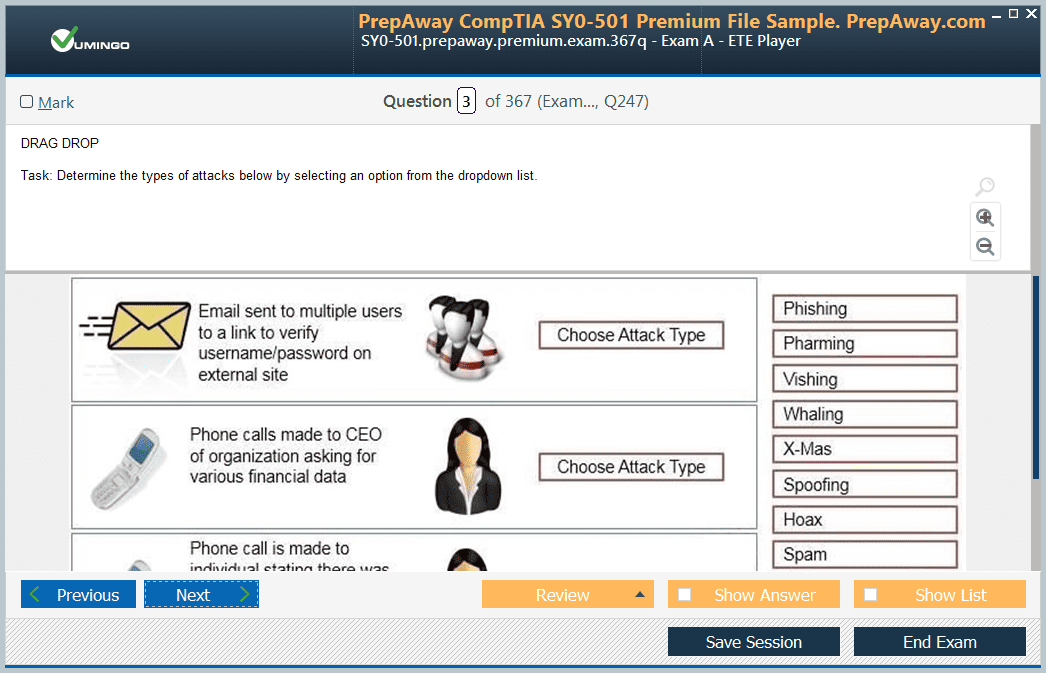
H12-725_V4.0 Exam Screenshot #2
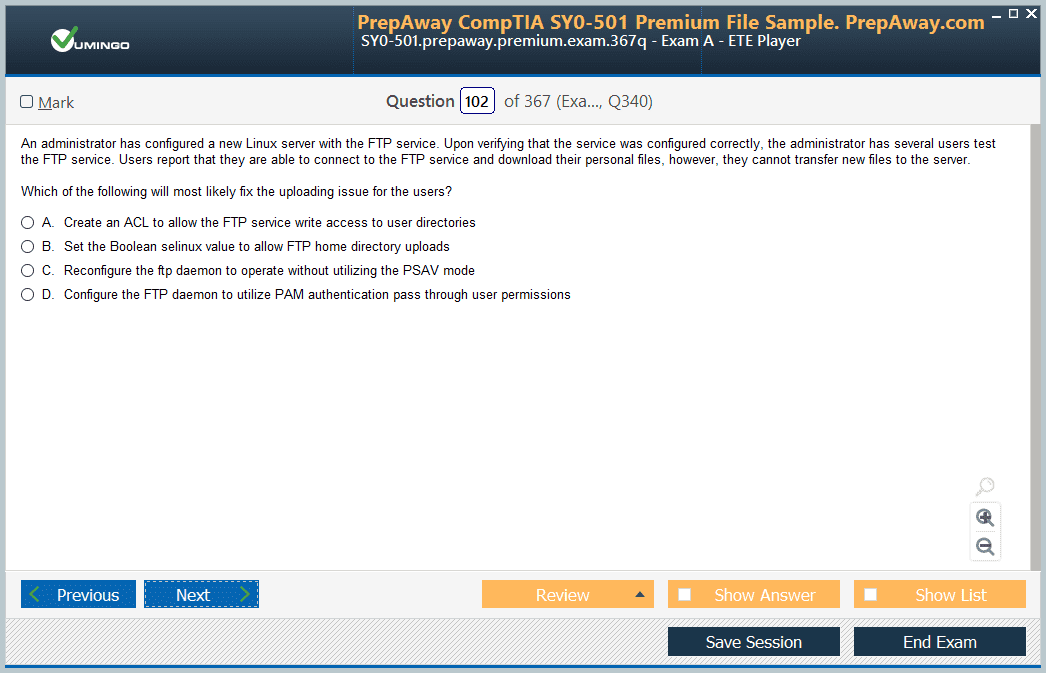
H12-725_V4.0 Exam Screenshot #3
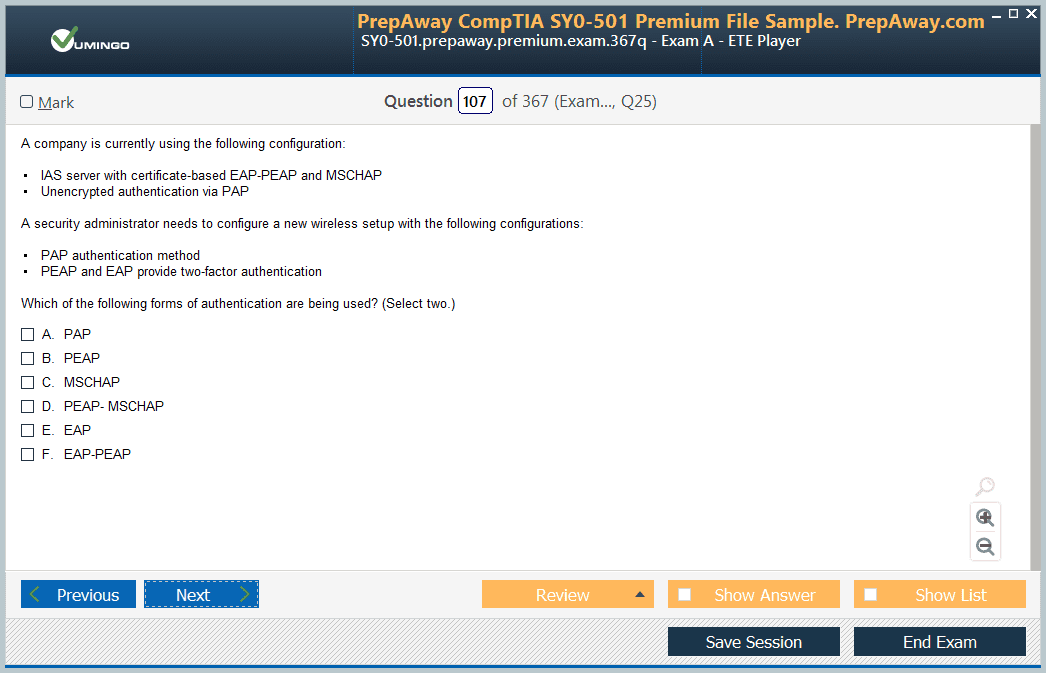
H12-725_V4.0 Exam Screenshot #4

Last Week Results!

students 83% students found the test questions almost same
10 Customers Passed Huawei H12-725_V4.0 Exam
Average Score In Actual Exam At Testing Centre
Questions came word for word from this dump
Free ETE Files
Exam Info
Related Exams
Download Free Huawei H12-725_V4.0 Exam Dumps, Practice Test
Huawei H12-725_V4.0 Practice Test Questions, Huawei H12-725_V4.0 Exam dumps

All Huawei H12-725_V4.0 certification exam dumps, study guide, training courses are Prepared by industry experts. PrepAway's ETE files povide the H12-725_V4.0 HCIP-Security V4.0 practice test questions and answers & exam dumps, study guide and training courses help you study and pass hassle-free!

Huawei H12-725_V4.0: HCIP-Security V4.0 Exam Certification

The Huawei HCIP-Security V4.0 certification represents an advanced level of professional competence in the design, configuration, and management of enterprise security infrastructures. It is structured around the integration of Huawei’s network and security solutions, reflecting both the theoretical and applied aspects of modern cybersecurity. The certification aims to bridge the gap between conceptual understanding and real-world implementation, focusing on practical technologies such as firewall systems, VPN deployment, content filtering, and network access control. The H12-725_V4.0 exam specifically evaluates the ability to plan and manage security systems that protect enterprise assets while maintaining operational efficiency and resilience.

In the broader context of cybersecurity certifications, HCIP-Security stands as an intermediate-to-advanced credential within Huawei’s certification framework. It follows the associate-level HCIA-Security and precedes the expert-level HCIE-Security. Professionals who pursue HCIP-Security are expected to possess a foundational grasp of network technologies and basic security mechanisms, upon which they can build a deeper understanding of enterprise-level defense architecture. The certification reflects Huawei’s holistic approach to network protection, emphasizing both prevention and adaptability. It does not focus solely on hardware or software but rather on the orchestration of multiple layers of defense that together form a cohesive security ecosystem.

In today’s enterprise environment, where cyber threats evolve faster than most organizations can adapt, the ability to implement reliable and responsive defense systems is a key differentiator. HCIP-Security V4.0 prepares candidates to respond to this challenge by focusing on critical areas such as reliability, scalability, and operational continuity. One of the core themes explored early in the certification is the concept of firewall high reliability technologies. These technologies form the backbone of network security infrastructure and ensure that even under conditions of hardware failure or abnormal traffic, the network remains stable, secure, and operational. Before exploring these mechanisms in depth, it is essential to understand how the HCIP-Security framework situates them within the larger design of enterprise cybersecurity.

Huawei’s security architecture is built on the principle of multi-layer defense. Each layer — from physical hardware protection to application-layer inspection — contributes to a unified defense mechanism that resists both external and internal threats. Firewalls, in this structure, act as the gatekeepers between trusted and untrusted zones, inspecting traffic and enforcing security policies. However, a single firewall, no matter how advanced, introduces a potential single point of failure. For enterprises that rely on continuous network connectivity, even a few seconds of downtime can translate into severe losses, both financial and reputational. To mitigate this risk, Huawei and other network vendors have developed high reliability technologies designed to maintain continuous security operations without interruption, even in the event of hardware or link failures.

At its core, firewall high reliability refers to a collection of techniques and mechanisms that ensure uninterrupted service availability. These include redundancy models, hot standby systems, link reliability, and dynamic failover strategies. Each of these elements plays a specific role in maintaining system continuity. Together, they represent one of the most mature and necessary aspects of enterprise network security.

The first concept central to high reliability is redundancy. Redundancy means having backup components or systems ready to take over automatically if the primary component fails. In the context of firewalls, redundancy can exist at the hardware level — such as dual power supplies, redundant network interfaces, or backup processors — as well as at the system level through hot standby configurations. Hot standby, one of the most important reliability mechanisms, allows two or more firewalls to operate in a synchronized pair, where one device actively manages network traffic while the other remains in standby mode. Should the active firewall experience failure, the standby firewall immediately assumes control, minimizing packet loss and downtime. This process is often referred to as failover, and in well-designed systems, it occurs so seamlessly that users and applications remain unaware that a transition has taken place.

The hot standby model used in Huawei firewall systems relies on real-time state synchronization between the active and standby units. This synchronization includes not only session tables and routing information but also the security policies and NAT mappings that define the firewall’s operational state. When stateful information is continuously replicated between the two units, the standby firewall maintains an identical view of ongoing traffic sessions. As a result, when a failover occurs, the new active unit can resume packet processing without interrupting established connections. This characteristic is vital in maintaining user experience and ensuring that mission-critical applications — such as banking systems, online transactions, or voice-over-IP communications — are not disrupted by hardware or software anomalies.

Achieving reliable hot standby requires a solid understanding of synchronization channels, heartbeat detection, and failure detection mechanisms. The heartbeat is a periodic signal exchanged between the active and standby firewalls to confirm their operational status. If the standby unit detects a missed heartbeat for a predefined number of intervals, it assumes that the active firewall has failed and initiates the failover procedure. The efficiency and accuracy of heartbeat detection determine the responsiveness of the failover process. Too short an interval could cause unnecessary failovers due to temporary network latency, while too long a delay could lead to service interruptions before failover occurs. Thus, careful calibration of these parameters is an essential part of configuring high reliability systems.

Another dimension of firewall reliability lies in link redundancy. Even if the firewall itself remains operational, a failure in an upstream or downstream network link could render the entire connection path unusable. Huawei’s firewall high reliability technologies address this by implementing link monitoring and intelligent route switching mechanisms. The firewall can detect link degradation or disconnection and automatically switch to an alternative link or routing path. This ensures that even if a primary ISP connection fails, the enterprise network remains reachable through secondary links. In modern enterprise networks where hybrid connectivity models — such as multi-WAN configurations — are common, link reliability mechanisms are critical for both uptime and load distribution.

Firewall high reliability also extends into the concept of virtual systems. In large organizations, multiple departments or business units often require isolated security domains, each with its own policies, resources, and monitoring requirements. Instead of deploying multiple physical firewalls, Huawei supports virtual firewalls within a single hardware unit. Each virtual system operates as an independent logical firewall, with its own routing and security configurations. The reliability challenge here involves ensuring that failures or resource constraints in one virtual system do not affect the performance of others. Therefore, Huawei’s virtual system architecture incorporates resource isolation and fault containment to maintain reliability at the virtualized level.

When discussing firewall reliability, one must also consider software reliability and upgrade continuity. In real-world scenarios, firewalls require firmware updates or configuration changes to address emerging threats or enhance functionality. The challenge is to perform such updates without disrupting ongoing network services. Huawei’s hot standby version upgrade feature enables administrators to update the firmware on standby firewalls first, synchronize configurations, and then switch roles between active and standby units. This method ensures that the upgrade process occurs with minimal downtime, as traffic can continue flowing through the alternate unit during the procedure. After both units are updated and synchronized, the pair resumes standard operation. Such upgrade techniques represent the evolution of high availability toward continuous operation models, where even maintenance tasks are designed for zero interruption.

From an operational standpoint, troubleshooting reliability issues requires deep understanding of system interactions. Common causes of high reliability failures include unsynchronized configurations, mismatched firmware versions, or unstable link connectivity. Diagnosing these problems involves analyzing heartbeat logs, synchronization statistics, and session state tables. A well-trained engineer must be able to identify whether a failover was triggered by an actual device fault or by a transient communication error. Proper log interpretation and performance monitoring help maintain the overall health of the firewall cluster and ensure that redundancy mechanisms perform as intended.

Beyond hardware and configuration mechanisms, the concept of reliability in firewalls also encompasses performance stability. A firewall under excessive load can behave unpredictably, leading to packet drops or delayed responses that mimic hardware failure. Huawei’s firewall systems incorporate bandwidth management, traffic prioritization, and quota control mechanisms that help balance processing loads and maintain predictable performance. While these features are covered in later sections of the certification, they complement the reliability framework by ensuring that performance remains stable even during periods of traffic surge or attack.

In the theoretical sense, reliability can be understood as a probability measure — the likelihood that a system will perform its intended function under stated conditions for a specified period. Translating this into cybersecurity terms means that a firewall system should not only be available but also capable of maintaining its security posture during operation. In other words, reliability and security are not separate goals; they reinforce each other. A reliable firewall is one that continues to enforce security policies consistently even when components fail or are under stress. Conversely, a secure system must also be reliable, since any lapse in availability can expose vulnerabilities and disrupt defense mechanisms.

From an architectural perspective, Huawei’s design philosophy aligns closely with the industry concept of defense in depth. Rather than relying on a single barrier, the network incorporates multiple layers of protection, each designed to detect, isolate, or mitigate potential threats. Firewalls form the boundary defense layer, but their reliability ensures that the entire structure remains intact. Without reliable boundary defenses, the inner layers — intrusion prevention systems, antivirus engines, or access control systems — would be overwhelmed by unfiltered or malicious traffic. Therefore, firewall reliability is not an isolated concern but a foundational requirement for overall network resilience.

Reliability also intersects with the domain of automation and intelligent management. Modern firewalls incorporate AI-assisted monitoring systems that can predict potential faults based on traffic patterns or device metrics. Predictive reliability models analyze logs, CPU utilization, temperature fluctuations, and packet processing statistics to identify anomalies before they lead to failures. These systems represent a new stage in network reliability, where prevention takes precedence over recovery. As organizations adopt automation in network operations, the ability to anticipate and correct faults autonomously becomes a significant advantage.

In large-scale deployments, firewalls are often part of a security cluster, where multiple devices operate in parallel to handle different segments of traffic or to provide load balancing. Cluster reliability involves not only individual device health but also cluster communication integrity. Packet distribution, session synchronization, and policy consistency must all be maintained across nodes. Huawei’s clustering technologies use distributed algorithms to manage session tables and maintain fairness in load allocation. If a cluster node fails, its session data can be redistributed to remaining nodes without affecting overall service availability. This distributed reliability architecture is essential for large enterprises and service providers that handle millions of concurrent sessions across geographically dispersed networks.

Another important aspect of firewall reliability concerns disaster recovery planning. While high availability mechanisms handle local device or link failures, disaster recovery focuses on large-scale contingencies such as data center outages or regional failures. In such cases, backup systems located in remote sites must be capable of assuming control with minimal delay. Synchronizing configurations and policies between primary and backup sites becomes critical. Huawei’s security management platforms allow centralized policy control and configuration replication, which simplifies disaster recovery implementation and ensures consistency across multiple sites. The principle behind this approach is that reliability extends beyond hardware—it encompasses data integrity, policy consistency, and operational readiness.

The implementation of firewall high reliability technologies requires not only technical configuration but also strategic planning. Engineers must assess network topology, traffic patterns, and business requirements before designing redundancy structures. Over-engineering can increase costs without corresponding benefits, while under-engineering can expose the organization to unnecessary risks. The balance between reliability, cost, and complexity defines the success of the deployment. Huawei’s modular design philosophy supports this balance by allowing scalability — organizations can start with simple active-standby configurations and later expand to more advanced clustering setups as their reliability requirements evolve.

Understanding the human factor is equally crucial in maintaining reliability. A significant percentage of network downtime incidents result from configuration errors rather than hardware faults. Thus, proper change management, documentation, and automation play an important role in sustaining high reliability. Huawei’s management interfaces, command-line tools, and centralized management platforms help reduce the potential for manual error by providing configuration templates and validation mechanisms. Still, ultimate reliability depends on disciplined operational practices and continuous training.

Continuity from Reliability to Firewall Traffic Management

In the previous discussion on firewall high reliability technologies, the central theme revolved around the continuity of security functions even under adverse network or device conditions. Reliability ensures that protective mechanisms remain available, whereas traffic management determines how effectively those mechanisms allocate and prioritize the finite resources of a network. In practice, reliability and traffic management are inseparable. A highly available firewall that cannot distribute or regulate traffic efficiently soon becomes a bottleneck that compromises performance, stability, and ultimately security itself. Thus, the study of firewall traffic management within the Huawei HCIP-Security V4.0 framework begins where reliability leaves off. It addresses the dynamic equilibrium between throughput, policy enforcement, and fairness among users and applications.

Traffic management represents a strategic layer in network security architecture. Its objective is to control, shape, and optimize the flow of data through the firewall in accordance with business priorities and technical constraints. Every packet that traverses a firewall consumes processing resources such as CPU cycles, memory allocation, and bandwidth capacity. When thousands or millions of flows compete simultaneously for these limited resources, congestion inevitably arises. Without intelligent management, critical services such as real-time voice, video conferencing, or financial transactions might experience latency or packet loss, while less important traffic could monopolize available bandwidth. Therefore, firewall traffic management is not merely about restricting or permitting traffic; it is about orchestrating the efficient coexistence of all traffic types while maintaining security integrity.

Huawei’s approach to traffic management integrates traditional quality-of-service concepts with security-aware mechanisms. The system operates on a multi-dimensional plane where packets are classified, marked, scheduled, and sometimes shaped according to predefined rules. Unlike pure routing devices, which handle traffic primarily based on IP addresses or port numbers, firewalls must also consider security contexts such as user identity, application signatures, and session states. This contextual awareness makes Huawei’s traffic management both adaptive and policy-driven, aligning bandwidth usage with the security posture of the organization.

The first pillar of this topic is bandwidth management. Bandwidth management refers to the allocation and regulation of data throughput to prevent network saturation and ensure fairness. The firewall can impose limits on either inbound or outbound traffic, or on specific flows defined by parameters such as source address, destination, protocol, or application type. By implementing bandwidth control, administrators can guarantee minimum bandwidth for critical services and cap non-essential or recreational usage. In an enterprise setting, this ensures that business-critical applications such as enterprise resource planning systems or remote access tunnels always receive sufficient resources, even when the network experiences heavy utilization.

Bandwidth management in Huawei firewalls operates through a hierarchical model. The firewall first identifies and classifies traffic into categories. These categories can represent user groups, VLANs, or applications. Each category is associated with a bandwidth policy specifying limits or guarantees. The system then applies queue scheduling algorithms that determine the order and rate at which packets are transmitted. Common scheduling mechanisms include weighted fair queuing, priority queuing, and round-robin distribution. The goal is to maintain predictable latency for prioritized traffic while ensuring that lower-priority flows still receive a fair share of bandwidth.

From an architectural standpoint, effective bandwidth management requires accurate traffic measurement. The firewall monitors packet rates, flow durations, and concurrent session counts to determine real-time utilization. Huawei’s monitoring framework integrates these statistics into a dynamic feedback loop where policy adjustments can occur automatically or through administrative intervention. For example, during peak usage periods, the system might lower the allowable bandwidth for streaming media while increasing allocation for VPN traffic. This adaptability is essential in maintaining optimal performance without manual reconfiguration.

The second major concept within firewall traffic management is quota control. While bandwidth management regulates instantaneous data rates, quota control manages cumulative data consumption over time. Quota policies define limits on the total volume of data a user, group, or application can transmit or receive within a given period. Once the quota is reached, the firewall can enforce specific actions such as throttling the speed, blocking further traffic, or generating alerts. This feature is particularly relevant in environments where users share limited network resources, such as campuses or branch offices connected via constrained WAN links.

Quota control extends the philosophy of fairness into the temporal domain. It prevents long-term monopolization of bandwidth by any single entity and encourages equitable distribution among multiple users. Huawei’s implementation allows flexible configuration based on authentication results, enabling differentiated services for various departments or user roles. For instance, system administrators may receive higher quotas than guest users. Integration with user authentication systems such as RADIUS or LDAP ensures that these policies follow individuals regardless of their connection point within the network.

The effectiveness of quota control depends on precise accounting of traffic flows. The firewall must track session data persistently and correlate it with user identities. This requires efficient session management to prevent performance degradation while maintaining accurate usage records. Huawei’s stateful inspection engine, which forms the basis of its firewall architecture, facilitates this correlation by linking packets to sessions and sessions to users. The result is a comprehensive understanding of who is using the network, what they are accessing, and how much bandwidth their activities consume.

Traffic management also involves a concept known as traffic shaping. Shaping is the deliberate regulation of packet transmission to conform to a desired rate profile. By buffering or pacing traffic, the firewall smooths out bursts that could overwhelm downstream links or devices. Unlike simple rate limiting, which drops excess packets, shaping delays them, preserving data integrity while maintaining consistent flow. This is particularly important for protocols sensitive to packet loss, such as TCP, where dropped packets trigger retransmissions that further congest the network. Huawei firewalls employ token bucket or leaky bucket algorithms to implement shaping, providing administrators with fine-grained control over burst tolerance and average rate.

An integral part of Huawei’s traffic management philosophy is the alignment of network resource allocation with business priorities. To achieve this, administrators must translate organizational objectives into technical parameters. The firewall’s policy engine allows the definition of service-level objectives through rule sets that combine conditions such as application type, user role, and time of day. For example, during working hours, a policy might guarantee minimum bandwidth for video conferencing platforms while limiting social media access. After hours, the same policy could relax restrictions to accommodate employee flexibility. This level of contextual adaptation exemplifies the synergy between security policy and network performance management.

In multi-branch or distributed enterprise networks, traffic management also serves a strategic role in optimizing the use of WAN resources. When multiple Internet links or service providers are available, intelligent traffic distribution across those links becomes essential. Although link selection mechanisms were introduced under the topic of reliability, their performance dimension falls within traffic management. Huawei’s intelligent uplink selection can route specific traffic types through different links based on latency, load, or cost considerations. By balancing utilization and avoiding congestion, the firewall not only maintains performance but also enhances reliability through diversity of paths. The intersection between traffic management and reliability thus becomes apparent: one safeguards continuity, the other optimizes utilization.

To implement efficient traffic management, administrators must understand the underlying mechanisms of classification and marking. Classification is the process of identifying traffic according to attributes such as IP address, protocol, application signature, or even content characteristics. Marking involves tagging packets with identifiers that indicate their priority or service class. These markings can be internal to the firewall or carried forward in packet headers as differentiated services code points (DSCP). By marking traffic, the firewall communicates its decisions to downstream devices, allowing end-to-end quality of service continuity across the network. Huawei’s firewalls integrate with routers and switches in this way, ensuring that QoS decisions made at the perimeter propagate consistently through the network core.

Traffic management policies depend heavily on measurement and analytics. Without visibility, no control mechanism can function effectively. Huawei’s devices incorporate comprehensive monitoring tools that record bandwidth usage per user, per application, or per interface. Administrators can visualize traffic distribution, detect anomalies, and adjust policies accordingly. For example, a sudden increase in outbound file transfer traffic might indicate data exfiltration attempts or misconfigured backup systems. By correlating such observations with security events, traffic management evolves from a performance function into an active defense component. In essence, controlling how data moves through the network also means controlling where potential threats can propagate.

Another dimension of firewall traffic management involves dealing with encrypted traffic. As more applications adopt encryption protocols such as HTTPS, SSL, or TLS, traditional methods of traffic classification become less effective. Huawei’s firewalls address this challenge through SSL decryption capabilities that allow inspection and classification of encrypted flows while maintaining user privacy policies. Once decrypted, the same bandwidth and quota control mechanisms apply, ensuring that encryption does not become a loophole for bypassing management rules. This feature highlights the convergence of security inspection and traffic optimization within a single platform.

Operationally, designing traffic management policies requires a careful balance between control and complexity. Overly restrictive or detailed rules can lead to administrative overhead and unintended interactions. Simplified yet meaningful categorization often yields better results. Huawei’s hierarchical policy structure supports this approach by allowing broad policies at the global level and more specific ones at subordinate levels such as interface or user group. The evaluation order of these rules ensures predictable outcomes and minimizes conflicts. Understanding how policy inheritance and precedence work is a key competency tested in the HCIP-Security V4.0 exam.

From a theoretical perspective, the study of traffic management intersects with network economics and behavioral modeling. Networks are shared resources where users act as competing agents seeking maximum benefit. Without regulation, this competition leads to congestion, analogous to the tragedy of the commons in resource theory. Traffic management introduces mechanisms of governance that impose fairness, efficiency, and predictability. In Huawei’s ecosystem, this governance is implemented through algorithms that translate administrative policies into quantitative limits on data flow. The firewall thus becomes not only a gatekeeper of security but also an arbiter of digital resource distribution.

The implementation of these concepts requires continuous testing and fine-tuning. Administrators must monitor the effects of policies on both network performance and user experience. For instance, aggressive bandwidth limiting may protect the network from congestion but degrade application responsiveness, leading to user dissatisfaction. Conversely, permissive policies may improve speed at the cost of control. The ideal configuration lies in dynamic equilibrium, where the firewall adapts to real-time conditions without compromising long-term objectives. Huawei’s management tools support this process by providing historical analytics, trend forecasting, and simulation capabilities. These allow decision-makers to anticipate the consequences of policy adjustments before deploying them.

In addition to technical design, governance and compliance considerations influence traffic management strategies. Many industries operate under regulations that require documentation of data flows and usage patterns. Firewalls that support detailed logging and reporting facilitate compliance with such standards. Huawei’s logging architecture records policy matches, bandwidth utilization, and quota consumption in formats suitable for audit analysis. This transforms traffic management from a purely operational function into a component of corporate accountability. Network administrators can demonstrate not only that the network performs efficiently but also that its resource distribution adheres to documented policy frameworks.

An important but often overlooked aspect of firewall traffic management is its relationship with energy efficiency. Networks consume power proportional to data throughput and device utilization. By optimizing traffic and preventing unnecessary retransmissions or congestion, bandwidth management indirectly contributes to energy conservation. In large enterprises and data centers, this translates to measurable reductions in operational cost and environmental footprint. The principle underscores how intelligent traffic management aligns with broader sustainability goals in modern IT infrastructure.

The human factor remains central to successful traffic management. The best algorithms and devices cannot compensate for poorly designed policies or inconsistent enforcement. Administrators must possess not only technical knowledge but also an understanding of organizational workflows and priorities. Effective communication between IT teams and business departments ensures that traffic management rules reflect real needs rather than arbitrary limits. Training programs within the HCIP-Security certification emphasize this interdisciplinary awareness, teaching candidates to translate policy objectives into network behavior through precise configuration.

Troubleshooting traffic management issues demands methodical analysis. Symptoms such as unexpected slowdowns, application timeouts, or quota miscalculations often stem from subtle configuration errors or misaligned rule order. Engineers must trace the packet path through the firewall’s decision chain, verifying classification, matching, scheduling, and enforcement at each stage. Huawei provides diagnostic commands and logging features that expose real-time queue states and bandwidth usage. Interpreting these outputs requires a deep understanding of how the firewall processes packets internally, knowledge that the certification aims to develop.

The evolution of network architectures toward cloud and hybrid environments adds new dimensions to traffic management. Virtual firewalls deployed in cloud environments operate within shared compute infrastructures, where resource contention extends beyond network bandwidth to CPU and memory utilization. Traffic management in such contexts must coordinate with hypervisor or orchestrator policies to maintain consistent performance. Huawei’s virtualized security platforms integrate with software-defined networking controllers to achieve unified policy enforcement across physical and virtual realms. The same principles of bandwidth management and quota control apply, but their implementation leverages virtual interfaces and distributed data paths.

Looking forward, the integration of artificial intelligence and machine learning into traffic management promises even greater adaptability. Predictive algorithms can anticipate congestion patterns based on historical data and adjust policies proactively. Huawei’s research in this area explores self-optimizing firewalls that continuously learn from traffic behavior, automatically tuning queue parameters and bandwidth allocations to align with evolving conditions. Such systems mark a transition from static configuration to autonomous operation, where human administrators define goals rather than specific numeric limits.

Firewall Virtual System and Intelligent Uplink Selection

The progression from reliability and traffic management to virtualization represents a natural evolution in the structure of enterprise network security. Reliability ensures continuity of operation, while traffic management maintains efficiency and fairness. Virtualization, however, transforms how resources are conceptualized and deployed. It allows the firewall to transcend the traditional limitations of physical architecture by dividing a single hardware platform into multiple, independently managed logical systems. Each virtual system operates as an autonomous firewall with its own configuration, policies, and administrative domains. Within the Huawei HCIP-Security V4.0 framework, understanding firewall virtual systems and intelligent uplink selection is fundamental to designing scalable and adaptable security infrastructures capable of serving diverse organizational needs.

A firewall virtual system (VSYS) can be understood as a logical partition that emulates a standalone firewall. It shares underlying hardware resources such as processing power, memory, and network interfaces with other virtual systems on the same device, yet it maintains isolation of control and data planes. This capability allows enterprises or service providers to consolidate multiple security functions on a single physical device while preserving separation between tenants, departments, or security zones. In a multi-tenant environment, such as an internet service provider hosting security services for several clients, virtualization prevents one tenant’s configuration or failure from affecting others. Each virtual system is configured independently, has its own administrators, and may even use distinct routing instances. Huawei’s implementation of virtual firewalls reflects this philosophy of compartmentalization and efficiency.

The architecture of a Huawei virtual firewall system is built upon several foundational components. At the top lies the root or public system, which controls the overall hardware platform and allocates resources to subordinate virtual systems. Each subordinate system operates as a logical instance with its own management interface, policy database, and routing table. Resource allocation is configurable, allowing administrators to assign bandwidth, session limits, or CPU shares according to each virtual system’s requirements. This ensures predictable performance across tenants and prevents resource contention from causing instability. The key to effective virtualization lies in maintaining the illusion of autonomy while managing shared hardware efficiently. The firewall achieves this through kernel-level isolation and intelligent scheduling, ensuring that one system’s activity does not compromise another’s performance or security.

Communication between virtual systems introduces another dimension of complexity. In certain designs, traffic must pass between different virtual systems for services such as inter-departmental communication or centralized logging. Huawei’s architecture supports secure inter-VSYS communication using virtual interfaces and routing policies that define permissible traffic paths. These communication links operate under strict control, ensuring that data crossing virtual boundaries remains subject to inspection and filtering. This capability illustrates how virtualization does not weaken security but rather enhances it by allowing fine-grained policy enforcement at every boundary, even within a single device.

The administrative structure of virtual firewalls provides flexibility in governance. Different administrators can be assigned to specific virtual systems, each with limited privileges confined to their domain. This delegation of authority simplifies management in large organizations where different teams handle separate security domains. For example, a university might allocate one virtual system to the academic network, another to administrative departments, and a third to guest access. Each team manages its policies and monitoring independently while the central IT department oversees hardware performance and high-level coordination. This model enhances both operational efficiency and accountability.

From an operational perspective, deploying virtual systems follows a logical sequence. The root administrator defines resource partitions, creates virtual systems, and assigns interface bindings. Once a virtual system is instantiated, it operates with its own configuration context. Administrators log in directly to their virtual systems and manage policies as though they were interacting with independent devices. Logs and statistics are similarly isolated, ensuring that each system maintains its own audit trail. The integrity of this separation is vital in regulated industries where data segmentation and compliance requirements prohibit cross-domain visibility.

Virtual systems play a crucial role in modern data centers and cloud infrastructures. As enterprises adopt multi-cloud or hybrid architectures, the need for logical segmentation within shared hardware becomes essential. Huawei’s firewalls integrate with cloud orchestration platforms, allowing automated creation and deletion of virtual systems in response to dynamic workloads. This adaptability aligns with the broader trends of network function virtualization and software-defined networking. Through API integration, virtual systems can be provisioned, scaled, or retired automatically, enabling agile service delivery while maintaining consistent security governance.

The benefits of virtualization extend beyond resource efficiency. By consolidating multiple security instances on a single device, organizations reduce hardware costs, power consumption, and rack space requirements. Moreover, centralized management simplifies updates and maintenance. A single firmware upgrade at the root system level can enhance the capabilities of all subordinate virtual systems simultaneously. However, this consolidation also introduces potential risks if not managed correctly. A vulnerability at the root system layer could theoretically affect all virtual instances. Hence, strict access control and regular system hardening remain essential practices in virtualized security environments.

Virtualization also impacts performance monitoring and troubleshooting. Since multiple virtual systems share the same physical hardware, identifying performance anomalies requires granular visibility. Huawei’s monitoring tools allow administrators to view resource utilization per virtual system, including session counts, throughput, and CPU consumption. This information supports capacity planning and ensures that service-level agreements are maintained. If one virtual system begins to consume disproportionate resources, administrators can adjust its quotas or redistribute load to restore balance. In essence, virtualization introduces both flexibility and responsibility, demanding a sophisticated understanding of resource dynamics.

Transitioning from virtual systems to intelligent uplink selection may at first appear to shift focus from internal segmentation to external connectivity, but conceptually both share the theme of optimization through intelligence. Where virtualization optimizes internal resource use, intelligent uplink selection optimizes outbound communication paths. It represents the firewall’s ability to choose the best available route for traffic based on defined metrics, such as link status, bandwidth utilization, latency, or service cost. In multi-homed networks—those connected to multiple Internet service providers or WAN links—this capability ensures both performance optimization and continuity. If one link becomes congested or fails, the firewall automatically redirects traffic through an alternative path without manual intervention.

Huawei’s intelligent uplink selection operates as part of the firewall’s routing and policy engine. It monitors the health and performance of each available link using probes and real-time statistics. Metrics such as packet loss, round-trip time, or jitter can be collected to assess link quality. Based on these measurements, the system dynamically adjusts routing decisions. This differs from static routing, where paths are predetermined and inflexible. Intelligent selection introduces adaptability, enabling the network to respond to changing conditions instantly. In this sense, it extends the reliability concepts discussed earlier into the realm of dynamic connectivity.

IPsec VPN and SSL VPN Technologies and Applications

Virtual private networks form one of the most significant pillars of enterprise security architecture. While the firewall enforces perimeter control and segmentation, it is the VPN mechanism that extends trusted communication beyond physical boundaries. In modern network infrastructures, virtualized firewalls, intelligent routing, and VPN connectivity merge into a coherent system that enables secure and adaptive enterprise interconnection. The Huawei HCIP-Security framework introduces two major VPN categories under its curriculum—IPsec VPN and SSL VPN. Each addresses distinct requirements and operates within different layers of the protocol stack, yet both share the same strategic purpose: ensuring data confidentiality, integrity, and authenticity across untrusted networks.

The concept of a VPN is rooted in the need to maintain private communications over a public medium such as the Internet. Organizations operating branch offices, mobile users, or cloud services require methods to protect information flows without the high cost of dedicated leased lines. VPNs achieve this by encapsulating and encrypting data so that it travels through public infrastructure as though it were transmitted through a secure tunnel. This logical tunneling isolates traffic between endpoints and guarantees that only authorized parties can access the transmitted data. Within Huawei’s ecosystem, both IPsec and SSL VPN technologies are implemented across the firewall and security gateways, integrating with reliability features, traffic management, and virtual systems introduced in earlier parts of this study.

IPsec VPN Technology and Application

IPsec, or Internet Protocol Security, operates at the network layer of the OSI model. It provides a standardized suite of protocols for securing IP packets between peers. IPsec can function in two principal modes: transport and tunnel. In transport mode, only the payload of the IP packet is encrypted and authenticated, while the original header remains visible. This mode is typically used for host-to-host communication. Tunnel mode, on the other hand, encapsulates the entire original IP packet within a new IP header, protecting both payload and addressing information. Tunnel mode is therefore used for site-to-site connections between gateways. The HCIP-Security curriculum emphasizes tunnel mode as it forms the foundation of inter-office connectivity and remote access scenarios.

The architecture of an IPsec connection involves several essential components: the Security Association (SA), the Internet Key Exchange (IKE) protocol, and the encapsulation mechanisms—Authentication Header (AH) and Encapsulating Security Payload (ESP). The SA defines the parameters under which communication between two entities is protected. These parameters include encryption algorithms, keys, lifetimes, and sequence numbers. Because each direction of communication requires its own SA, IPsec employs a pair of associations for bidirectional exchanges. The IKE protocol automates the establishment of these associations, replacing manual configuration with a secure negotiation process. IKE itself has evolved through two major versions, with IKEv2 being the preferred standard for its improved efficiency, resilience, and support for mobility.

During the negotiation phase, peers authenticate each other using pre-shared keys, digital certificates, or EAP-based credentials. They agree upon cryptographic algorithms and generate session keys through the Diffie-Hellman exchange. Once an SA is established, IPsec encapsulation begins. AH provides authentication and integrity by applying a hash-based message authentication code to each packet, ensuring that it has not been modified in transit. ESP adds confidentiality through encryption algorithms such as AES or 3DES, while also providing optional authentication. In practice, ESP is favored because it offers encryption and integrity simultaneously. Huawei’s firewalls implement hardware acceleration for IPsec encryption, enabling high throughput even in large-scale deployments.

The applications of IPsec VPNs extend across several enterprise scenarios. The classic example is the site-to-site VPN, where two or more branch offices connect through secure tunnels across the Internet. This configuration allows seamless routing between internal networks as though they were part of the same private infrastructure. Another application is remote access for teleworkers who require full network connectivity from outside the organization. Although SSL VPNs often dominate this domain today, IPsec remains valuable for systems requiring layer-3 integration or non-web-based application support. IPsec tunnels can also interconnect data centers, ensuring that replication and backup traffic between geographically dispersed facilities remain confidential.

Reliability, a theme discussed in earlier parts, plays a critical role in IPsec VPN design. Huawei integrates IPsec with firewall redundancy mechanisms such as hot standby and link reliability, ensuring that VPN sessions can fail over seamlessly between devices. Techniques like IKE peer redundancy and DPD (Dead Peer Detection) allow tunnels to re-establish automatically if connectivity is interrupted. Combined with intelligent uplink selection, the firewall can dynamically reroute encrypted traffic through alternate links when primary paths degrade. This integration transforms the VPN from a static tunnel into an adaptive service capable of maintaining continuity under fluctuating network conditions.

Configuration of IPsec VPNs follows a logical workflow. Administrators define IKE proposals that specify encryption, authentication, and key exchange parameters. They then create IPsec proposals that determine the encapsulation and lifetime properties of the data phase. Peers are identified by their IP addresses or domain names, and policies are established to specify which traffic should be encrypted. Once the configuration is applied, the firewall initiates negotiation and builds the tunnel. Troubleshooting focuses on verifying the negotiation sequence, ensuring that proposals match on both sides, and analyzing logs for authentication or phase mismatch errors. The ability to interpret these stages is crucial for network engineers pursuing HCIP-Security certification.

Beyond traditional configurations, Huawei supports advanced IPsec features such as GRE over IPsec, dynamic multipoint VPN (DMVPN), and virtual tunnel interfaces. These capabilities enable complex topologies where multiple spokes connect to a central hub without predefining individual tunnels. Such scalability is particularly useful for large enterprises or service providers that must deploy hundreds of branches. When combined with virtual systems, each branch or department can operate its own set of VPNs within an isolated context, while the underlying hardware remains shared. This layered design demonstrates how virtualization and encryption technologies complement one another to create flexible yet secure architectures.

Performance considerations are also central to IPsec implementation. Encryption and decryption consume CPU resources, so firewalls must balance security strength with processing capacity. Hardware acceleration modules mitigate this by offloading cryptographic operations to dedicated processors. Administrators monitor tunnel statistics to ensure that throughput, latency, and packet loss remain within acceptable limits. Adjustments such as modifying MTU values, selecting efficient algorithms, or enabling compression can optimize performance. Huawei’s diagnostic commands allow engineers to visualize tunnel health, identify negotiation failures, and analyze packet traces. These practical skills form an essential part of the hands-on knowledge assessed in the certification exam.

From a security governance perspective, IPsec supports granular control of trust relationships. By using digital certificates issued by an internal or external CA, organizations can establish hierarchical authentication systems. Revocation lists and expiration management ensure that only valid entities can form tunnels. When integrated with network access control and intrusion prevention, IPsec forms a defensive perimeter that extends beyond the physical firewall. Each tunnel becomes an authenticated extension of the enterprise’s secure zone, with policies regulating which applications and addresses are permitted. In this way, IPsec not only encrypts data but enforces organizational boundaries in cyberspace.

SSL VPN Technology and Application

Where IPsec operates at the network layer, SSL VPN functions at the transport layer, using the Secure Sockets Layer or its successor, Transport Layer Security (TLS). Its design reflects the growth of web-based applications and mobile computing, providing secure remote access without requiring specialized client software or full network integration. The SSL VPN focuses on accessibility, allowing users to connect securely through standard web browsers or lightweight clients while maintaining confidentiality and authentication.

SSL VPN technology establishes secure sessions using the same principles as HTTPS communication. When a user initiates a connection to the SSL VPN gateway, the server presents its digital certificate to prove its identity. The client verifies the certificate’s authenticity and negotiates encryption parameters. Through asymmetric cryptography, session keys are generated and exchanged, establishing an encrypted tunnel between the browser and the gateway. All subsequent data is transmitted within this secure channel. Because SSL/TLS is widely supported, the VPN can function through most firewalls and NAT devices, making it ideal for users operating from unpredictable environments such as hotels or mobile networks.

The HCIP-Security curriculum distinguishes between two main SSL VPN service types: web-based access and tunnel-based access. Web-based access provides a secure portal through which users interact with internal web applications, file shares, or remote desktops. The user logs into a web interface, and the firewall acts as an intermediary that fetches internal resources on behalf of the client. Tunnel-based access, in contrast, creates a virtual network interface on the client device, allowing non-web applications to function as though they were on the internal network. This mode requires a small client program but offers greater flexibility. Huawei’s SSL VPN implementation supports both modes, enabling enterprises to tailor solutions to their usage patterns.

In designing SSL VPN services, authentication is a crucial aspect. The firewall integrates with multiple identity sources, including local databases, RADIUS servers, LDAP directories, or third-party identity providers. Multi-factor authentication can be enforced using tokens or SMS codes, enhancing security for remote access. Once authenticated, users are assigned roles or groups that define the resources they can access. This role-based access control simplifies policy management by mapping permissions to business functions rather than individual accounts. Logging and auditing ensure accountability by recording login times, IP addresses, and resource usage.

A distinguishing feature of SSL VPN compared to IPsec is its ability to perform granular application control. The gateway can restrict users to specific URLs, file paths, or applications, providing visibility into user behavior and reducing the risk of lateral movement within the network. Content filtering and anti-virus scanning can be applied to traffic passing through the VPN, reinforcing defense in depth. In scenarios where employees use personal devices, SSL VPN helps mitigate the risk of untrusted endpoints by limiting access scope and applying posture checks before granting entry. These checks verify antivirus status, operating system versions, or security patches, ensuring that connecting devices meet organizational standards.

Performance optimization in SSL VPNs relies on session management and caching. Because SSL/TLS sessions involve computational overhead during handshake and encryption, reusing session keys and enabling hardware acceleration significantly improve throughput. The firewall may employ compression or data caching to accelerate file transfers. Administrators monitor concurrent session counts and allocate resources accordingly to prevent exhaustion. Like IPsec, SSL VPN can integrate with high-availability clusters so that active sessions are preserved during failover. This feature ensures that remote users experience minimal disruption even when maintenance or outages occur on one gateway node.

From a deployment perspective, SSL VPNs can be integrated into existing web security frameworks with minimal configuration. Portals can be customized with organizational branding and multi-language support. Administrators define resource lists and bookmarks corresponding to internal services such as intranets, email servers, or databases. Connection logs and reports provide visibility into usage trends, helping IT teams plan capacity and detect anomalies. Because SSL VPN operates over TCP and uses port 443 by default, it is rarely blocked by network policies, making it especially suitable for mobile and cross-border workers.

The relationship between IPsec and SSL VPN should be viewed not as competition but as complementarity. IPsec provides comprehensive network-level connectivity for fixed sites or devices requiring deep integration, while SSL VPN offers flexible, user-centric access for dynamic and remote environments. In a mature enterprise architecture, both coexist under a unified policy framework managed through the firewall. Virtual systems may host separate VPN services for different departments, while intelligent uplink selection ensures optimal routing for encrypted traffic. For example, high-volume data replication might use IPsec tunnels over dedicated broadband links, whereas occasional remote access sessions utilize SSL connections through the Internet. The choice of protocol depends on application context, security requirements, and operational convenience.

Troubleshooting SSL VPNs involves analyzing the stages of session establishment: certificate validation, authentication, and data transmission. Common issues include mismatched certificates, expired credentials, or incorrect access policies. Tools such as packet capture, system logs, and user feedback assist in isolating faults. Huawei’s management interface provides detailed logs of SSL handshake events, cipher suites, and client behavior. Understanding these elements enables engineers to diagnose and correct problems efficiently. As with IPsec, maintaining updated firmware and strong cryptographic parameters is essential to counter evolving threats such as downgrade attacks or certificate misuse.

From a strategic viewpoint, VPN technologies underpin the broader objectives of enterprise cybersecurity. They enable secure digital transformation by connecting distributed workforces, cloud environments, and partner ecosystems under a unified trust model. When integrated with intrusion prevention, threat detection, and security orchestration, VPNs become part of a coordinated defense mechanism that adapts to network dynamics. The HCIP-Security V4.0 certification emphasizes this holistic understanding rather than isolated configuration skills. Candidates are expected to grasp how IPsec and SSL VPNs interact with other firewall features, ensuring that connectivity always aligns with the principles of confidentiality, integrity, and availability.

As organizations transition toward zero-trust architectures, VPN technologies continue to evolve. The concept of zero trust challenges the assumption of inherent safety within internal networks, treating every connection as potentially hostile until verified. IPsec and SSL VPNs contribute to this model by enforcing strong authentication and encryption on every session, whether internal or external. Advanced deployments integrate VPN gateways with identity and access management systems, applying continuous evaluation of user behavior and device posture. Huawei’s security framework reflects these developments through modular design and policy automation, allowing enterprises to maintain agility without compromising protection.

Cyber Attacks, Defense Mechanisms, Vulnerability Defense, and Penetration Testing

The digital environment in which organizations operate today is defined by constant exposure to evolving threats. As networks expand and diversify through cloud adoption, remote access, and virtualization, the attack surface grows correspondingly. Firewalls and VPNs provide structured boundaries and encrypted pathways, but adversaries continuously develop new methods to bypass, exploit, or overwhelm these defenses. Within the HCIP-Security framework, the study of cyber attacks and defense mechanisms is not limited to theoretical taxonomy; it is anchored in practical understanding of how modern Huawei security devices detect, prevent, and respond to malicious activities. Equally important is the discipline of vulnerability defense and penetration testing, which forms the proactive counterpart to reactive defense, ensuring that weaknesses are identified and mitigated before attackers can exploit them.

Cyber attacks can be defined as deliberate actions intended to disrupt, damage, or gain unauthorized access to digital systems. They exploit flaws in software, misconfigurations in devices, weaknesses in protocols, or even predictable human behavior. In the context of Huawei security solutions, understanding these attacks at a technical level provides the foundation for implementing effective countermeasures. The firewall, intrusion prevention systems, and other security modules act as the first line of defense, analyzing network flows, enforcing access policies, and recognizing abnormal patterns that indicate intrusion attempts.

One of the fundamental categories of cyber attack is the reconnaissance phase, where adversaries seek to gather information about potential targets. Techniques such as scanning, enumeration, and fingerprinting are employed to map network structures, identify open ports, and determine software versions. These activities may appear benign in isolation, but collectively they provide the intelligence required for subsequent exploitation. The firewall’s role in this stage is to restrict unnecessary visibility, using security policies to limit inbound probing and suppress responses that reveal internal topology. By controlling ICMP traffic, disabling unused services, and enforcing strict access control lists, administrators reduce the information available to attackers. Huawei’s firewall systems include features that can detect and block scanning behaviors automatically, marking them as reconnaissance attempts and alerting operators through logs and alarms.

Beyond reconnaissance, attackers progress to the exploitation phase, targeting vulnerabilities in software or protocols. These vulnerabilities may exist in operating systems, applications, or network devices. Exploitation often involves injecting malicious code, executing unauthorized commands, or elevating privileges. Defensive mechanisms rely on signature-based detection, behavior analysis, and sandboxing to identify and block such activities. The firewall’s intrusion prevention module maintains an extensive database of attack signatures, each representing a known exploit pattern. When network traffic matches a signature, the system can drop the packet, reset the connection, or log the event for analysis. However, signature-based detection alone is insufficient against novel or polymorphic threats, which necessitates heuristic and anomaly-based methods. Huawei integrates these through intelligent algorithms that learn baseline traffic patterns and flag deviations as potential intrusions.

Denial-of-Service (DoS) and Distributed Denial-of-Service (DDoS) attacks represent another critical threat category. Instead of breaching confidentiality, these attacks aim to exhaust system resources, rendering services unavailable. A DoS attack may involve a single source overwhelming a target with traffic, whereas a DDoS attack coordinates thousands of compromised devices to achieve the same goal on a larger scale. Mitigating these attacks requires layered defense. At the firewall level, rate limiting, connection thresholds, and SYN flood protection are implemented to maintain service continuity. The system monitors session tables and dynamically drops packets that exceed acceptable thresholds. For DDoS mitigation, Huawei’s solutions employ traffic analysis combined with blackhole routing and cooperative filtering, where upstream routers participate in discarding malicious flows. The effectiveness of such defenses depends on continuous monitoring and tuning, as attackers constantly adapt their tactics to evade detection.

A subset of denial attacks known as single-packet attacks demonstrates the precision with which adversaries exploit protocol weaknesses. These attacks craft a single malformed packet capable of triggering crashes or misbehavior in target systems. Examples include ping-of-death, teardrop, and LAND attacks, all of which manipulate packet fragmentation or header fields. Although these specific techniques have become less common due to protocol hardening, their conceptual relevance persists. The firewall inspects packet structures and validates header integrity, discarding those that violate protocol standards. Huawei’s devices include mechanisms to perform deep packet inspection, ensuring that each packet adheres to expected syntax and semantics before allowing it through.

Attackers also exploit application-layer vulnerabilities, launching threats such as SQL injection, cross-site scripting, and command injection. These attacks exploit improper input validation within web applications to manipulate back-end databases or execute arbitrary code. While traditional firewalls operate at lower network layers, next-generation firewalls incorporate application awareness, enabling them to inspect HTTP payloads, recognize malicious patterns, and enforce application-specific policies. Huawei’s content security modules integrate with web filtering and intrusion prevention to detect these anomalies, ensuring that attacks targeting application logic are intercepted before they reach critical systems.

Effective cyber defense is not solely a matter of deploying technology; it requires a strategic framework combining prevention, detection, response, and recovery. Prevention encompasses all measures designed to reduce the probability of successful attacks, including patch management, secure configuration, and network segmentation. Detection involves real-time monitoring through logs, alerts, and anomaly analysis. Response dictates the procedures for isolating compromised systems, containing damage, and restoring operations. Recovery focuses on post-incident analysis and improvement. Within Huawei’s architecture, these functions are unified through the integration of firewalls, intrusion detection and prevention systems, and centralized management platforms. Logs generated by individual devices are aggregated into a security information and event management system, where correlations reveal patterns that may otherwise go unnoticed.

The human factor remains an indispensable component of cyber defense. Even the most advanced technologies depend on administrators to interpret alerts, respond to incidents, and maintain security posture. Training, procedural discipline, and continuous awareness form the intangible but critical layer of protection. The HCIP-Security certification reflects this philosophy by requiring not only knowledge of configuration syntax but also comprehension of attack methodology and defense strategy. Candidates are expected to analyze case studies, interpret log entries, and design response workflows that mirror real-world scenarios.

Transitioning from the immediate defense of attacks to the proactive management of vulnerabilities, we enter the domain of vulnerability defense and penetration testing. A vulnerability represents a flaw or weakness in a system that can be exploited to violate security policies. Vulnerabilities may arise from software bugs, design oversights, configuration errors, or inadequate authentication mechanisms. The process of vulnerability defense begins with identification. Regular scanning using automated tools and manual assessment techniques helps uncover potential weaknesses before attackers can exploit them. Huawei’s security solutions integrate with vulnerability scanners to provide contextual visibility into network assets and their exposure levels.

Once identified, vulnerabilities are classified according to severity, exploitability, and potential impact. The Common Vulnerability Scoring System (CVSS) provides a standardized framework for quantifying these factors. High-severity vulnerabilities demand immediate remediation, whereas lower-scoring issues may be addressed through scheduled maintenance. Remediation may take the form of software patching, configuration hardening, or access control adjustments. However, patching is not always straightforward; applying updates to mission-critical systems can risk operational disruption. Therefore, vulnerability management also includes compensating controls such as intrusion prevention signatures or segmentation policies that mitigate risk until permanent fixes can be applied.

Penetration testing complements vulnerability assessment by simulating real-world attacks in a controlled environment. Its objective is not merely to identify weaknesses but to demonstrate the practical feasibility of exploitation. Penetration testing follows a structured methodology encompassing reconnaissance, scanning, exploitation, privilege escalation, and reporting. In this process, ethical hackers adopt the mindset of adversaries, attempting to breach defenses while adhering to defined rules of engagement. The insights gained reveal not only technical flaws but also procedural weaknesses, such as inadequate monitoring or delayed response times.

Huawei’s network security environment supports penetration testing through detailed logging, traffic visualization, and controlled policy enforcement. During tests, administrators can observe how simulated attacks traverse the network, which rules trigger alerts, and how mitigation mechanisms respond. The outcome provides empirical data to fine-tune defense strategies. Penetration testing may target external interfaces, internal systems, or specific applications, depending on organizational priorities. It is typically conducted periodically or following major infrastructure changes to ensure that new configurations do not introduce unintended vulnerabilities.

Vulnerability defense extends beyond individual devices to encompass architectural design principles. Segmentation reduces the potential blast radius of successful attacks, while redundancy ensures that compromised systems do not disrupt entire services. Secure network design includes isolation of management interfaces, strict separation of user and control planes, and minimal exposure of public-facing services. Huawei’s security architecture incorporates these concepts by providing granular zoning, virtual systems, and hierarchical management structures that align with least-privilege principles.

Another aspect of vulnerability defense involves the continuous evaluation of software and firmware integrity. Supply-chain attacks have highlighted the risk of compromised updates and tampered components. To counter this, organizations must validate digital signatures, verify checksums, and obtain software only from trusted sources. Security devices should be configured to download updates over encrypted channels and authenticate them before installation. Huawei’s platforms facilitate this through secure boot mechanisms and signed update packages that ensure authenticity.

In parallel with defensive measures, threat intelligence plays an expanding role in modern vulnerability management. By analyzing data from global attack feeds, malware repositories, and research communities, organizations can anticipate which vulnerabilities are most likely to be exploited in the near term. Integrating threat intelligence into firewall and intrusion prevention systems allows dynamic adjustment of defense priorities. For instance, if a new exploit begins circulating for a specific service, the firewall can automatically enable or update relevant signatures. This proactive alignment of defenses with the evolving threat landscape exemplifies adaptive security management.

Penetration testing also contributes to organizational learning. The results are documented in detailed reports outlining vulnerabilities, exploitation steps, and recommendations for remediation. These reports serve as valuable references for both technical teams and management. They translate abstract risks into tangible impact assessments, facilitating informed decision-making regarding resource allocation and risk acceptance. Effective communication between testers and defenders transforms penetration testing from a compliance exercise into a catalyst for continuous improvement.

The relationship between cyber attacks, vulnerability defense, and penetration testing can be viewed as cyclical. Attacks reveal weaknesses, prompting defensive responses; vulnerability management anticipates and mitigates these weaknesses before they are exploited; penetration testing validates whether defenses are effective. This cycle embodies the principle of security as an ongoing process rather than a static state. Within the HCIP-Security V4.0 framework, mastering this cycle requires both technical competence and strategic insight. Candidates must understand not only how to configure defensive devices but also how to interpret vulnerabilities in context, prioritize remediation, and evaluate system resilience under simulated stress.

A holistic view of defense incorporates coordination among multiple layers and technologies. The firewall enforces perimeter protection and traffic filtering, intrusion prevention blocks known exploits, antivirus modules detect malicious payloads, and VPNs ensure secure transport. Above these layers, vulnerability management provides the intelligence necessary to maintain alignment between defense configuration and evolving risks. The integration of these components defines the maturity of an organization’s security posture. Huawei’s platforms exemplify this integration by allowing centralized policy orchestration, automated response to detected anomalies, and synchronized updates across distributed systems.


Content Security Filtering, Emergency Response, and Network Access Control

In the evolving digital environment, network security has expanded beyond protecting the perimeter or filtering packets based on static rules. With the proliferation of web applications, mobile devices, and cloud-based services, the sources and nature of threats have diversified. Attackers now exploit not only network-level vulnerabilities but also content transmitted across legitimate communication channels. Malicious payloads, phishing attempts, and sensitive data exfiltration can occur within normal traffic flows, often bypassing traditional firewalls that focus primarily on IP and port-level controls. To address this challenge, content security filtering technologies were developed as a sophisticated layer of defense that inspects, classifies, and controls the content itself.

Content security filtering technologies form the bridge between network-level protection and information security. They extend the capabilities of the firewall by examining packet payloads to identify potential threats or policy violations embedded within emails, web traffic, or file transfers. The objective is twofold: to prevent harmful content from entering or leaving the network and to enforce organizational policies regarding acceptable use and data confidentiality. In modern enterprises, content filtering is not limited to simple keyword blocking; it involves contextual analysis, pattern recognition, and integration with threat intelligence sources.

In the context of Huawei’s HCIP-Security framework, content security filtering technologies operate within the broader security architecture to deliver multi-dimensional protection. They rely on deep packet inspection (DPI) to examine traffic at the application layer. This allows the system to identify file types, detect malware signatures, block executable attachments, and analyze scripts within web pages. The filtering process is policy-driven: administrators define rules that specify which content categories are allowed, restricted, or blocked entirely. For instance, policies can prevent users from uploading confidential documents to external cloud storage platforms or from downloading files from unverified domains.

Another essential component of content security filtering is antivirus and antimalware scanning. These functions analyze files for known malicious code using signature databases and heuristic detection techniques. Signature-based scanning compares file hashes or patterns against a repository of known malware, while heuristic analysis attempts to detect previously unknown threats based on behavioral characteristics such as self-replication, encryption routines, or suspicious API calls. In practice, these technologies must operate in real time, inspecting content without introducing unacceptable latency. Huawei’s content security mechanisms achieve this by optimizing scanning efficiency through stream-based analysis, where data is processed as it flows rather than after complete file download.

Web content filtering represents another significant dimension. Web traffic often serves as the conduit for phishing attacks, drive-by downloads, and access to inappropriate or dangerous sites. By categorizing URLs into predefined classes such as business, social media, gambling, or malware, administrators can control access based on organizational policies. The filtering engine relies on continuously updated databases that classify millions of websites, often leveraging cloud-based intelligence to ensure accuracy. Beyond domain-level filtering, modern systems analyze actual web content, identifying hidden scripts or redirects that could compromise security.

Email security is equally critical in content filtering. Email remains the primary vector for targeted attacks, particularly those involving phishing or malicious attachments. Content security filters for email analyze message headers, body text, and attachments. They can detect spoofed addresses, embedded URLs leading to fraudulent sites, and attachments containing executable files or macros. In enterprise deployments, email filtering integrates with the mail server or gateway, scanning inbound and outbound messages to ensure both protection from external threats and compliance with data leakage prevention policies.

Data loss prevention (DLP) represents a higher-order application of content filtering. Its purpose is to prevent sensitive information from leaving the organization through unauthorized channels. DLP systems inspect outgoing traffic, searching for patterns that match predefined data types such as credit card numbers, personal identification data, or confidential documents. When a match is detected, the system can block the transmission, alert administrators, or apply encryption. The integration of DLP within Huawei’s security architecture ensures that organizations can enforce regulatory compliance while maintaining operational flexibility.

The efficiency of content security filtering depends on the balance between precision and performance. Excessive filtering may lead to false positives, disrupting legitimate business operations, while insufficient filtering exposes the organization to risk. Achieving this balance requires adaptive learning and contextual awareness. Modern systems utilize artificial intelligence to refine detection accuracy, learning from user behavior and evolving threat trends. This adaptability ensures that filtering remains effective against emerging threats while minimizing unnecessary interference with normal traffic.

While content security filtering provides proactive protection, no defense system is infallible. Inevitably, incidents occur, whether due to novel attack vectors, misconfigurations, or human error. The capacity of an organization to respond effectively to such incidents determines the overall resilience of its security posture. This leads to the discipline of emergency response, which encompasses the structured processes for detecting, analyzing, containing, and recovering from security incidents.

Emergency response is a critical phase in the cybersecurity lifecycle. It transforms isolated incidents into opportunities for improvement by ensuring that each event is properly managed and documented. Within Huawei’s HCIP-Security V4.0 curriculum, emergency response is treated as both a technical and procedural competency. It begins with the establishment of an incident response plan that defines roles, responsibilities, communication channels, and escalation procedures. Preparation involves not only creating documentation but also conducting regular drills and simulations to test readiness.

Detection is the first operational stage of emergency response. It involves identifying deviations from normal behavior that may indicate an incident. Detection mechanisms include intrusion detection systems, log monitoring, anomaly analysis, and alerts generated by content filtering or firewall modules. Once a potential incident is detected, the next step is analysis—determining the scope, origin, and nature of the event. Analysts must correlate information from multiple sources, such as firewall logs, system alerts, and endpoint data, to reconstruct the sequence of actions leading to the event.

Containment follows analysis and focuses on preventing further damage. Depending on the nature of the incident, containment measures may include isolating affected hosts, blocking malicious IP addresses, or disabling compromised accounts. Huawei’s security solutions support dynamic policy adjustments, allowing administrators to respond swiftly by applying targeted rules across the network infrastructure. For example, if an internal system is identified as communicating with a command-and-control server, the firewall can immediately block all connections to that destination.

Eradication and recovery are the subsequent stages. Eradication involves removing the root cause of the incident—whether it be malware, unauthorized accounts, or misconfigured systems. Recovery ensures that systems are restored to a secure operational state, validated through testing before reintroduction into production. A critical aspect of recovery is verifying that the same attack vector cannot be exploited again. This may involve applying patches, strengthening configurations, or improving monitoring coverage.

Post-incident analysis is an often-overlooked but vital component of emergency response. Every incident provides valuable insight into the effectiveness of existing defenses and response procedures. Through careful review, organizations identify lessons learned, adjust policies, and enhance training. In Huawei’s security framework, centralized management tools facilitate this process by aggregating logs, generating incident reports, and correlating events across multiple devices. This holistic visibility allows analysts to trace incidents end-to-end and derive actionable conclusions.

Communication plays a pivotal role throughout emergency response. Timely and accurate reporting ensures that stakeholders are informed without causing unnecessary alarm. Clear communication channels between technical teams, management, and external partners such as law enforcement or regulatory bodies are essential. Miscommunication during crises can exacerbate damage or delay containment. Therefore, incident response teams establish predefined templates and procedures for both internal and external communication.

Automation increasingly enhances emergency response efficiency. Machine learning-driven analytics can detect anomalies faster than manual observation, while automated playbooks execute predefined response actions. For example, upon detecting a ransomware infection, the system can automatically isolate the affected device, disable related credentials, and trigger a backup restoration workflow. Such automation reduces response time and minimizes human error, though human oversight remains necessary to interpret complex situations and make strategic decisions.

Emergency response must also account for legal and regulatory considerations. Data protection laws often require organizations to report breaches within specified timeframes. Failure to comply can result in penalties or reputational damage. Proper documentation of incident timelines, decisions, and corrective actions not only supports compliance but also provides transparency for future audits.

The effectiveness of emergency response directly depends on the integration of earlier security layers. Firewalls, intrusion prevention systems, content filters, and endpoint protection act as sensors that feed data into the incident detection pipeline. The centralized management platform consolidates these inputs, correlating them into actionable intelligence. In this interconnected environment, Huawei’s approach emphasizes orchestration—automating collaboration between devices and systems to ensure a unified defense and response strategy.

The final component of this security framework is Network Access Control, or NAC, which represents the enforcement mechanism that governs who and what can connect to the network. NAC ensures that only authorized and compliant devices gain access, thereby reducing the risk of internal threats and lateral movement within the network. While perimeter defenses guard against external intrusions, NAC addresses the reality that threats can originate from within, whether through compromised devices, unauthorized access, or insider misuse.

At its core, Network Access Control operates on the principle of authentication, authorization, and accounting. Authentication verifies the identity of a user or device attempting to connect; authorization determines the level of access granted; accounting records the activities performed. These functions are implemented through a combination of protocols such as 802.1X, RADIUS, and TACACS+. In Huawei’s security ecosystem, NAC integrates seamlessly with identity management systems and firewalls, allowing policies to be applied dynamically based on user roles, device posture, and location.

A key aspect of NAC is posture assessment, which evaluates the security status of a device before granting network access. This assessment can include checking for updated antivirus software, applied patches, or the presence of specific configurations. Devices that fail compliance checks can be quarantined, redirected to remediation networks, or denied access altogether. Such measures prevent potentially vulnerable endpoints from compromising network integrity.

NAC also supports guest management, providing temporary and restricted access for visitors or contractors. By assigning separate VLANs or virtual systems for guests, organizations maintain security boundaries without hindering legitimate collaboration. Advanced NAC systems extend visibility beyond wired networks to wireless and VPN connections, ensuring consistent policy enforcement across all access methods.

The integration of NAC with other security systems amplifies its effectiveness. When linked with firewalls and intrusion detection systems, NAC can react to detected threats by adjusting user privileges or disconnecting compromised endpoints. For example, if an endpoint begins exhibiting abnormal traffic patterns indicative of malware infection, NAC can automatically isolate it from the main network. This level of dynamic response transforms NAC from a static access gatekeeper into an active component of threat containment.

As networks evolve toward zero-trust architectures, NAC becomes foundational. Zero trust operates under the assumption that no device or user should be inherently trusted, even if located within the internal network. Every access attempt is verified continuously, and least-privilege principles are enforced. NAC provides the enforcement mechanism for these policies, continuously validating identities and monitoring session behavior. Huawei’s implementation of NAC aligns with this paradigm, supporting real-time policy updates based on changing context and risk levels.

The challenges in implementing NAC lie primarily in scalability and user experience. Large organizations with diverse device types must ensure that NAC policies do not impede productivity. Achieving this requires careful planning, phased deployment, and continuous tuning of authentication mechanisms. Integration with directory services and single sign-on solutions streamlines user access while maintaining security integrity.

From a strategic perspective, NAC closes the loop of comprehensive network defense. Content filtering controls what data flows through the network, emergency response manages what happens when things go wrong, and NAC determines who can enter and under what conditions. Together, these technologies represent the culmination of layered security—preventive, detective, responsive, and restrictive.

In modern enterprise ecosystems, where cloud services, mobile devices, and remote work dominate, the traditional perimeter has dissolved. Security must therefore exist wherever users and data interact. Content filtering ensures the purity of communication; emergency response ensures resilience in crisis; NAC ensures controlled participation. These elements, when orchestrated within Huawei’s integrated architecture, embody the principles of adaptive and intelligent defense that the HCIP-Security certification aims to instill in professionals.

Final Thoughts

The study of Huawei’s HCIP-Security V4.0 framework reveals that modern cybersecurity is not a static configuration of devices but a living system that adapts to constant change. Across all preceding sections, one principle emerges repeatedly: true network defense is built on layered intelligence, interconnection, and disciplined governance. The firewall remains the visible front line, shaping and filtering the flow of data. VPN technologies extend trust across distance, ensuring confidentiality and authenticity in transit. Behind them, the layers of content inspection, attack mitigation, vulnerability analysis, and controlled access form a continuum that transforms individual technologies into a coherent security architecture.

In contemporary enterprises, the boundaries of networks have dissolved under the influence of cloud services, remote work, and mobile connectivity. Security must follow data wherever it travels. The HCIP-Security perspective responds to this reality through its emphasis on virtualization, intelligent link selection, and integrated management. These capabilities allow administrators to maintain consistent policies across distributed infrastructures, ensuring that visibility and control extend beyond the physical perimeter. The convergence of networking and security within unified platforms mirrors the broader industry movement toward secure-access service edge models, where control is continuous rather than location-based.

Equally significant is the transition from reactive to proactive defense. Content security filtering exemplifies this shift: instead of merely blocking known threats, it seeks to understand content semantics, user behavior, and contextual risk. Emergency response planning further extends this proactivity by institutionalizing preparedness. When organizations practice response before a crisis occurs, they transform potential chaos into managed recovery. Network access control completes the cycle by enforcing discipline at the very moment of entry, ensuring that only trusted and compliant entities can interact with protected resources.

The integration of artificial intelligence and automation into these domains represents the next frontier. Automated policy orchestration, predictive analytics, and machine-learning-based anomaly detection reduce the delay between threat appearance and mitigation. Yet automation also demands accountability. Machines can execute predefined actions, but humans must define intent, interpret outcomes, and adjust strategy. The future of cybersecurity will therefore depend on the collaboration between human insight and algorithmic precision, each compensating for the other’s limitations.

From a pedagogical standpoint, the HCIP-Security V4.0 body of knowledge trains individuals to think systemically. Instead of viewing each technology as an isolated competency, candidates learn to integrate concepts across layers—link reliability influencing VPN stability, traffic management shaping application performance, or NAC policies reinforcing content filtering outcomes. This systemic vision is what distinguishes an operator from an architect. The certification thus represents not only a professional credential but also a framework for continuous reasoning about security in complex, interconnected environments.

As the threat landscape evolves, so too must the ethical and strategic foundations of cybersecurity. Defensive capability carries with it the responsibility to safeguard privacy, ensure transparency, and maintain proportionality in enforcement. In designing and managing security systems, professionals act as stewards of digital trust. The HCIP-Security philosophy reinforces this role by emphasizing compliance, accountability, and the preservation of integrity across the data lifecycle.

Ultimately, the comprehensive mastery of Huawei’s HCIP-Security V4.0 framework equips professionals to design networks that are not merely fortified but adaptive. Resilience replaces rigidity; intelligence supplants reaction. Firewalls, VPNs, content filters, and access controls function not as isolated barriers but as communicating agents within an intelligent ecosystem. The future of secure networking will belong to those who understand this interconnectedness and can orchestrate technology, policy, and human expertise into a balanced whole.


Huawei H12-725_V4.0 practice test questions and answers, training course, study guide are uploaded in ETE Files format by real users. Study and Pass H12-725_V4.0 HCIP-Security V4.0 certification exam dumps & practice test questions and answers are to help students.

Get Unlimited Access to All Premium Files Details
Why customers love us?
93% Career Advancement Reports
92% experienced career promotions, with an average salary increase of 53%
93% mentioned that the mock exams were as beneficial as the real tests
97% would recommend PrepAway to their colleagues
What do our customers say?

The resources provided for the Huawei certification exam were exceptional. The exam dumps and video courses offered clear and concise explanations of each topic. I felt thoroughly prepared for the H12-725_V4.0 test and passed with ease.

Studying for the Huawei certification exam was a breeze with the comprehensive materials from this site. The detailed study guides and accurate exam dumps helped me understand every concept. I aced the H12-725_V4.0 exam on my first try!

I was impressed with the quality of the H12-725_V4.0 preparation materials for the Huawei certification exam. The video courses were engaging, and the study guides covered all the essential topics. These resources made a significant difference in my study routine and overall performance. I went into the exam feeling confident and well-prepared.

The H12-725_V4.0 materials for the Huawei certification exam were invaluable. They provided detailed, concise explanations for each topic, helping me grasp the entire syllabus. After studying with these resources, I was able to tackle the final test questions confidently and successfully.

Thanks to the comprehensive study guides and video courses, I aced the H12-725_V4.0 exam. The exam dumps were spot on and helped me understand the types of questions to expect. The certification exam was much less intimidating thanks to their excellent prep materials. So, I highly recommend their services for anyone preparing for this certification exam.

Achieving my Huawei certification was a seamless experience. The detailed study guide and practice questions ensured I was fully prepared for H12-725_V4.0. The customer support was responsive and helpful throughout my journey. Highly recommend their services for anyone preparing for their certification test.

I couldn't be happier with my certification results! The study materials were comprehensive and easy to understand, making my preparation for the H12-725_V4.0 stress-free. Using these resources, I was able to pass my exam on the first attempt. They are a must-have for anyone serious about advancing their career.

The practice exams were incredibly helpful in familiarizing me with the actual test format. I felt confident and well-prepared going into my H12-725_V4.0 certification exam. The support and guidance provided were top-notch. I couldn't have obtained my Huawei certification without these amazing tools!

The materials provided for the H12-725_V4.0 were comprehensive and very well-structured. The practice tests were particularly useful in building my confidence and understanding the exam format. After using these materials, I felt well-prepared and was able to solve all the questions on the final test with ease. Passing the certification exam was a huge relief! I feel much more competent in my role. Thank you!

The certification prep was excellent. The content was up-to-date and aligned perfectly with the exam requirements. I appreciated the clear explanations and real-world examples that made complex topics easier to grasp. I passed H12-725_V4.0 successfully. It was a game-changer for my career in IT!