
- Home
- Workday Certifications
- Financials Reporting Workday Financials Reporting Dumps
Pass Workday Financials Reporting Exam in First Attempt Guaranteed!
Get 100% Latest Exam Questions, Accurate & Verified Answers to Pass the Actual Exam!
30 Days Free Updates, Instant Download!


Financials Reporting Premium File
- Premium File 55 Questions & Answers. Last Update: Oct 03, 2026
Whats Included:
- Latest Questions
- 100% Accurate Answers
- Fast Exam Updates
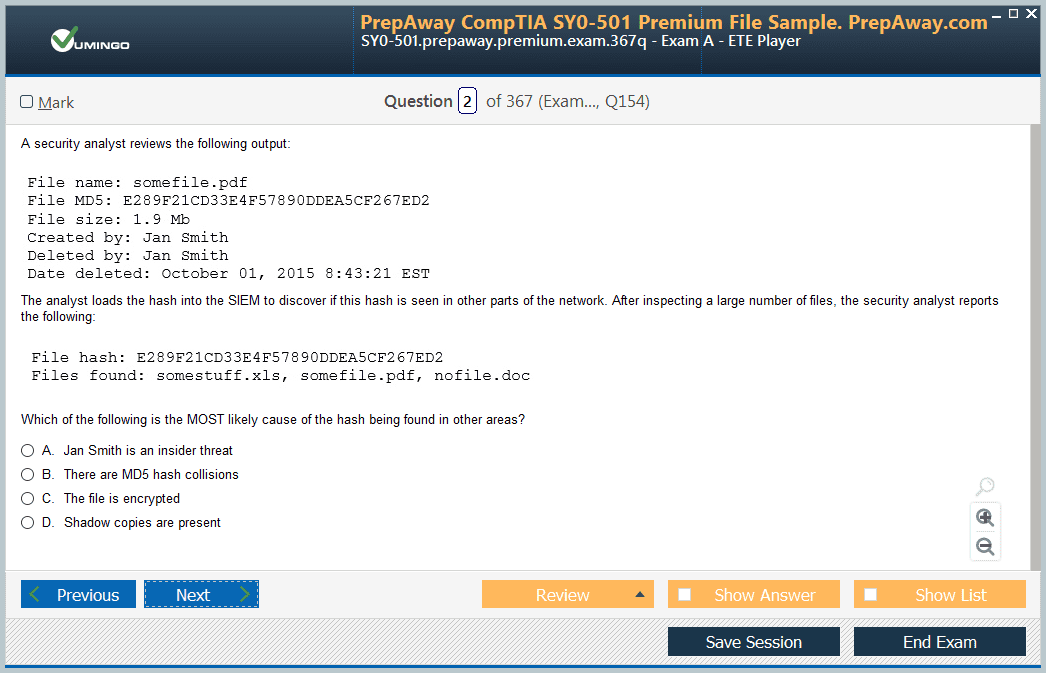
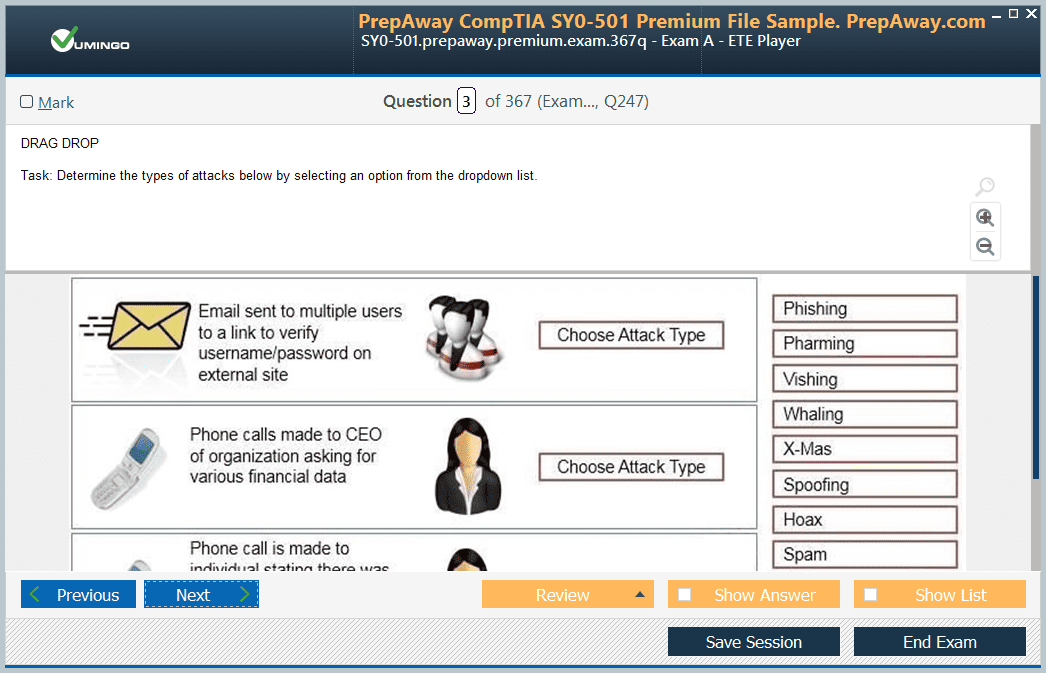
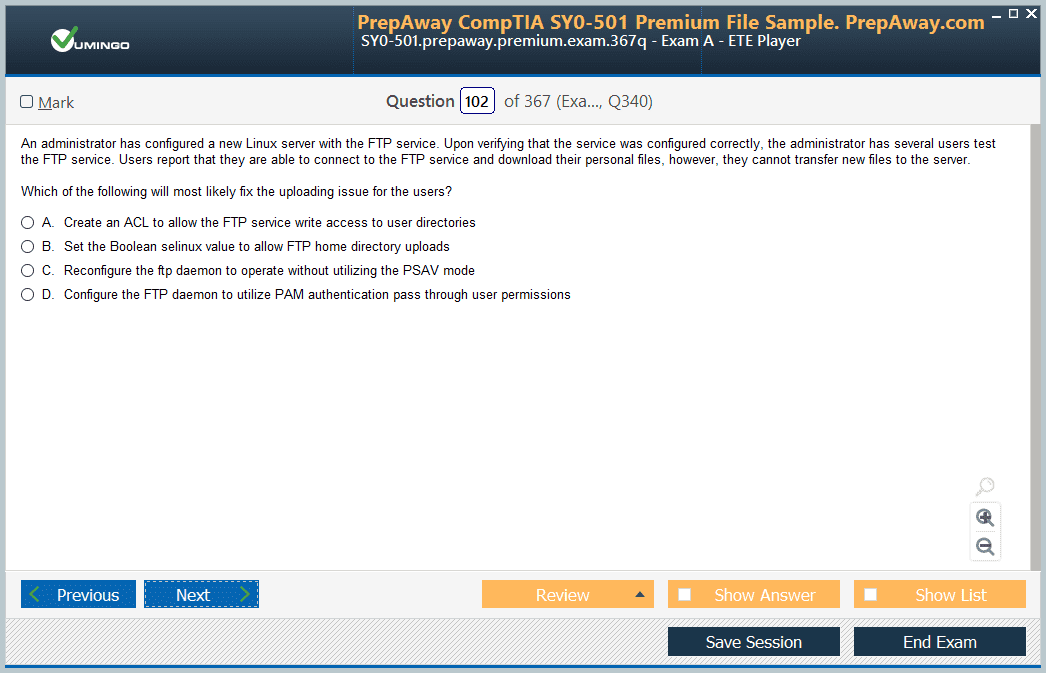
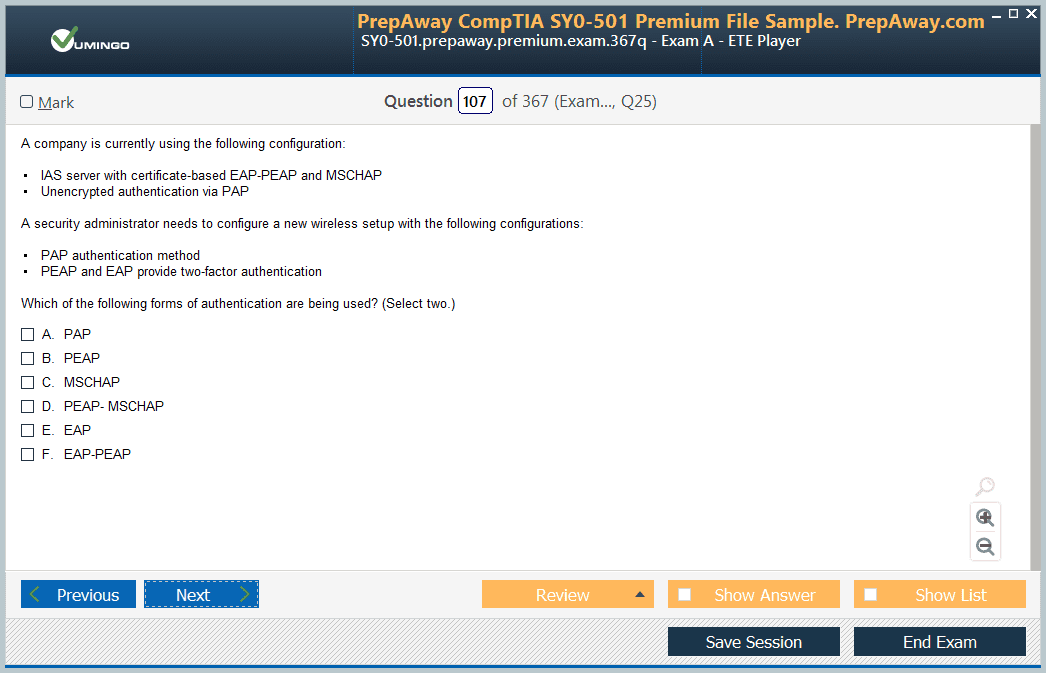
Last Week Results!
 83% students found the test questions almost same
All Workday Financials Reporting certification exam dumps, study guide, training courses are Prepared by industry experts. PrepAway's ETE files povide the Financials Reporting Workday Financials Reporting practice test questions and answers & exam dumps, study guide and training courses help you study and pass hassle-free!
Workday Pro Financials Reporting: Building Trusted Financial Reports
Workday Pro Financials Reporting is a current Workday certification for professionals who build and plan reporting for financial organizations. Workday’s current scope centers on the business object model, data sources, Report Writer, calculated fields, subreports, financial composite reports, migration tasks, and discovery boards.
The difficult part is not producing a report that runs. A useful financial report must return the intended population, calculate measures correctly, apply appropriate security, reconcile to authoritative financial results, and present enough context for a reader to understand the period and business meaning.
The credential belongs to the current Workday Pro certifications portfolio. Preparation is strongest when reporting is treated as a model-and-control problem rather than a screen-design exercise.
The business object model determines what a report can express
Workday reporting begins with business objects and their relationships. A field that appears simple on a screen may live on a related object or require traversal through one or more relationships. Candidates should learn to ask which object owns the value, which data source returns the required population, and whether the relationship preserves the intended grain.
This is fundamentally a data modeling question. If a report mixes facts at incompatible grains, totals can duplicate or filters can remove legitimate rows. Draw a small model for complicated requirements: identify the primary object, related objects, key identifiers, and whether relationships are one-to-one, one-to-many, or conditional.
Choose the data source because it matches the business question, not because its name sounds familiar. Test a few known records and edge cases before investing in layout. A report that starts from the wrong population can still look convincing while returning systematically wrong results.
Prompt design is part of the model as well. A prompt can change organization, period, book, currency, or other report context, so defaults should be intentional and labels should tell users exactly what they are selecting. A technically flexible report can become risky if users cannot tell which slice of the financial data they are viewing.
Historical reporting also requires clarity about effective-dated attributes. If an organization or classification changed, decide whether the report should show the value as it was at the transaction date or as it exists today. Both views can be legitimate, but they answer different questions and should not be mixed silently.
Calculated fields should make logic reusable and explainable
Calculated fields let report designers transform dates and text, evaluate conditions, traverse related objects, and perform arithmetic. They are powerful because they move logic closer to the data model, but that also means a poorly understood calculation can be reused across many reports and spread the same error.
Document the inputs, condition order, null handling, and expected outputs for important calculations. Test values at boundaries such as period cutoffs, missing attributes, zero amounts, and alternative organizational assignments. A calculated field should have a clear business meaning rather than existing only because a particular report happened to need a workaround.
When debugging, evaluate the calculation on a small set of known records before examining the entire report. This isolates whether the defect is in the calculation, the source population, or the report filters and presentation.
Financial reports need reconciliation before formatting
The relationship to Workday Pro Record to Report is direct because period-close and financial accounting processes produce the balances that reports explain. A reporting professional should know which source or standard report is authoritative for a given result and how custom output is expected to reconcile to it.
Build reconciliation checkpoints into development. Compare record counts, totals, period selection, currency context, book or ledger context, and organizational scope. If the custom report differs, investigate the difference before adding visual polish or distributing it to users.
The principle behind fixing upstream reporting problems also applies to Workday: clean definitions and validated source logic prevent presentation layers from becoming the place where upstream data problems are hidden.
Subreports solve specific problems but can hide grain changes
Subreports can combine information from different data sources, which is especially useful in financial statements and complex composites. The risk is that the report designer may lose sight of the grain of each component. A total that is correct in one subreport can be duplicated when combined with another structure.
Before joining subreport results, state what each row represents and which control fields align the pieces. Test one business unit, account, or period where the expected answer is known. Then expand the scope. This staged approach makes mismatches much easier to diagnose.
Performance should also be considered. A report that is technically correct but requires excessive processing may be unsuitable for frequent operational use. Simplify calculations, filters, and data retrieval where possible without weakening the business definition.
Composite reports are financial models in presentation form
Workday’s current certification scope explicitly includes complex financial composite reports with calculations, repeating column groups, column filters, multiple control fields, drill-down overrides, expansion hierarchies, and prompt sets. These features are best understood as ways to express a financial reporting model rather than a collection of formatting tricks.
Design the row and column logic on paper first. Decide which dimensions expand, which periods repeat, which prompts change the slice, and which calculations derive subtotals or ratios. Then verify that each interaction preserves the same definitions a finance user expects.
Drill-down behavior deserves testing because readers often move from an executive total to detailed transactions. The detail should explain the summary without changing the underlying scope unexpectedly. If the drill path uses different filters or security, document that difference clearly.
Composite reports should be tested under the same prompts and security conditions that business users will apply. A layout that reconciles for one company or period may expose a formula, expansion, or control-field defect when the scope changes. Build a small regression set covering materially different organizations and periods.
Migration is also part of the current certification scope. When moving report definitions between tenants or stages of a deployment, confirm that referenced fields, data sources, prompts, security, and dependent objects exist and behave the same way. Successful migration of the report definition does not prove equivalent results.
Security belongs in the data design
Financial reporting often exposes sensitive worker, supplier, customer, payroll, or accounting information. Report security should be tested with realistic roles, including users who should see only a subset of organizations or data. Administrator testing cannot prove that production security behaves correctly.
Treating row-level security as part of the data model is useful because access rules change which rows are visible and therefore change what totals mean. A report developer should understand whether a missing value is absent from the data, excluded by the source, filtered by the report, or hidden by security.
Cross-application skills from Workday Pro Platform Administrator reinforce this relationship. Reporting, security, business processes, and integrations share the same tenant, so a change in one area can alter what a financial report returns.
Discovery boards should answer a decision question
Discovery boards can make analysis interactive, but a dashboard is useful only when its measures and filters have clear business meaning. Start with the decision a finance user must make, then select the metrics and dimensions that support that decision. Avoid adding visuals simply because they are available.
A good quality check is to prioritize dashboard quality before aesthetics. Verify the definition, source, grain, period, and security of every metric before optimizing visual design. If a number cannot be reconciled, presentation should not make it look more authoritative.
Accessible dashboard design also improves analytical quality: readable labels, meaningful ordering, sufficient text context, and alternatives to color-only distinctions help more users interpret the same financial story accurately.
Prism and reporting solve different layers of the analytics problem
Workday Pro Prism Analytics is a natural adjacent skill because Prism can combine Workday and external data before that data is consumed in reporting. Financials Reporting focuses on constructing trustworthy output from available business objects and data sources; Prism adds pipeline, transformation, blending, and publishing responsibilities.
Know which layer should own a transformation. A simple report calculation may belong in a calculated field, while a repeated integration and transformation requirement may be better addressed upstream. Duplicating the same business rule in several reports makes reconciliation and maintenance harder.
Data-quality checks should accompany whichever layer performs the transformation. Record counts, valid keys, required fields, duplicate detection, and reconciliation totals are stronger evidence than assuming a successful load or report execution means the data is correct.
Prepare by rebuilding a financial reporting requirement from first principles
Choose one realistic requirement such as a period variance report or management statement. Identify the business objects, select the data source, create only the calculated fields that are needed, validate the population, and reconcile totals to an authoritative result before adding composite features or a discovery board.
Then test security with multiple roles, change the period, introduce missing data, and inspect drill-down behavior. Record why each discrepancy occurs. This turns report development into a repeatable diagnostic process rather than trial-and-error editing.
The current Workday certification scope rewards that integrated reasoning. A strong Financials Reporting professional understands the model, calculations, composite architecture, security, and analytical presentation well enough to explain why the report is correct—not merely that it rendered successfully.
Treat documentation as part of report quality. Record the report purpose, intended population, important prompts, calculated-field dependencies, security assumptions, reconciliation source, and owner. This makes later changes safer because another analyst can distinguish a deliberate financial definition from an accidental implementation detail. It also makes retirement easier when a report has been replaced by a better governed version.
Workday Financials Reporting practice test questions and answers, training course, study guide are uploaded in ETE Files format by real users. Study and Pass Financials Reporting Workday Financials Reporting certification exam dumps & practice test questions and answers are to help students.
Why customers love us?
What do our customers say?
The resources provided for the Workday certification exam were exceptional. The exam dumps and video courses offered clear and concise explanations of each topic. I felt thoroughly prepared for the Financials Reporting test and passed with ease.
Studying for the Workday certification exam was a breeze with the comprehensive materials from this site. The detailed study guides and accurate exam dumps helped me understand every concept. I aced the Financials Reporting exam on my first try!
I was impressed with the quality of the Financials Reporting preparation materials for the Workday certification exam. The video courses were engaging, and the study guides covered all the essential topics. These resources made a significant difference in my study routine and overall performance. I went into the exam feeling confident and well-prepared.
The Financials Reporting materials for the Workday certification exam were invaluable. They provided detailed, concise explanations for each topic, helping me grasp the entire syllabus. After studying with these resources, I was able to tackle the final test questions confidently and successfully.
Thanks to the comprehensive study guides and video courses, I aced the Financials Reporting exam. The exam dumps were spot on and helped me understand the types of questions to expect. The certification exam was much less intimidating thanks to their excellent prep materials. So, I highly recommend their services for anyone preparing for this certification exam.
Achieving my Workday certification was a seamless experience. The detailed study guide and practice questions ensured I was fully prepared for Financials Reporting. The customer support was responsive and helpful throughout my journey. Highly recommend their services for anyone preparing for their certification test.
I couldn't be happier with my certification results! The study materials were comprehensive and easy to understand, making my preparation for the Financials Reporting stress-free. Using these resources, I was able to pass my exam on the first attempt. They are a must-have for anyone serious about advancing their career.
The practice exams were incredibly helpful in familiarizing me with the actual test format. I felt confident and well-prepared going into my Financials Reporting certification exam. The support and guidance provided were top-notch. I couldn't have obtained my Workday certification without these amazing tools!
The materials provided for the Financials Reporting were comprehensive and very well-structured. The practice tests were particularly useful in building my confidence and understanding the exam format. After using these materials, I felt well-prepared and was able to solve all the questions on the final test with ease. Passing the certification exam was a huge relief! I feel much more competent in my role. Thank you!
The certification prep was excellent. The content was up-to-date and aligned perfectly with the exam requirements. I appreciated the clear explanations and real-world examples that made complex topics easier to grasp. I passed Financials Reporting successfully. It was a game-changer for my career in IT!