
- Home
- Amazon Certifications
- AWS Certified Generative AI Developer - Professional AIP-C01 AWS Certified Generative AI Developer - Professional AIP-C01 Dumps
Pass Amazon AWS Certified Generative AI Developer - Professional AIP-C01 Exam in First Attempt Guaranteed!
Get 100% Latest Exam Questions, Accurate & Verified Answers to Pass the Actual Exam!
30 Days Free Updates, Instant Download!


AWS Certified Generative AI Developer - Professional AIP-C01 Premium File
- Premium File 136 Questions & Answers. Last Update: Sep 29, 2026
Whats Included:
- Latest Questions
- 100% Accurate Answers
- Fast Exam Updates
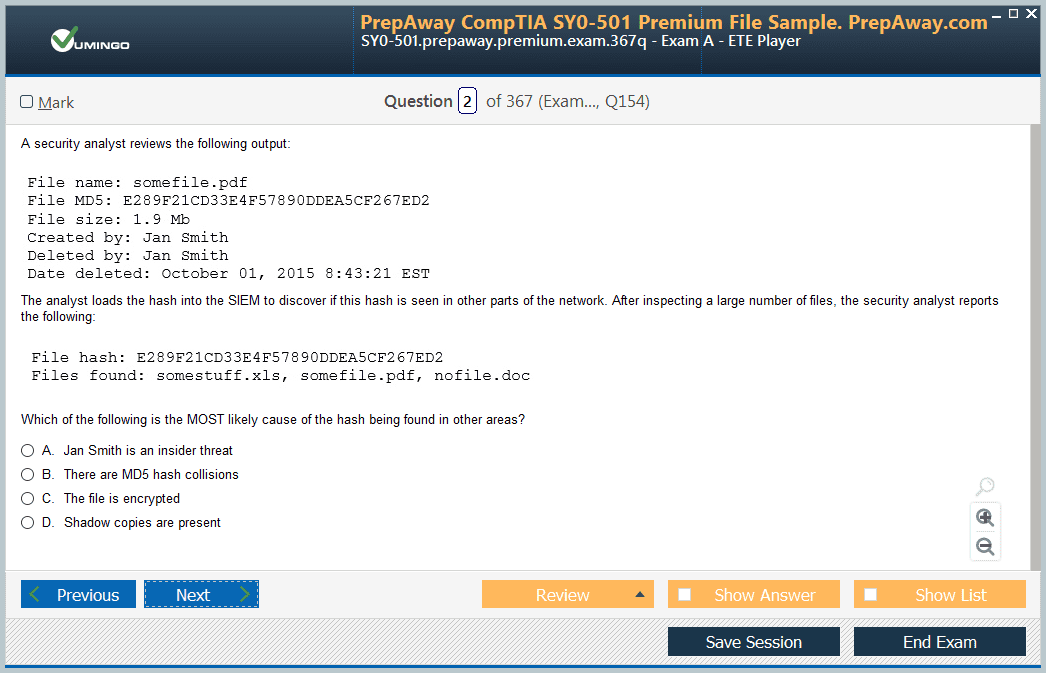
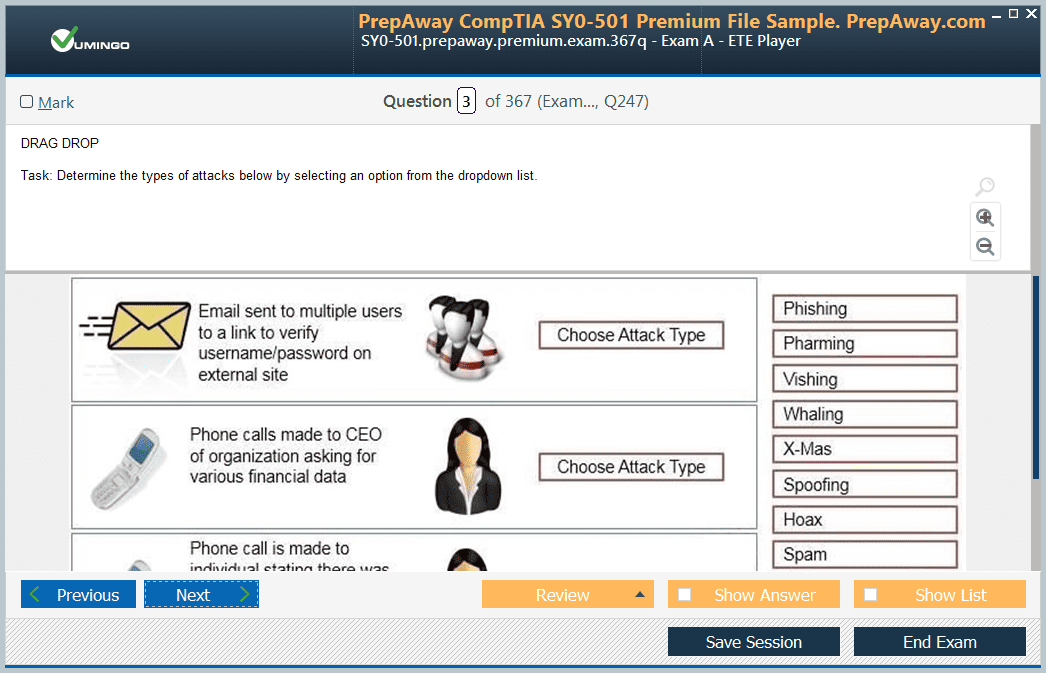
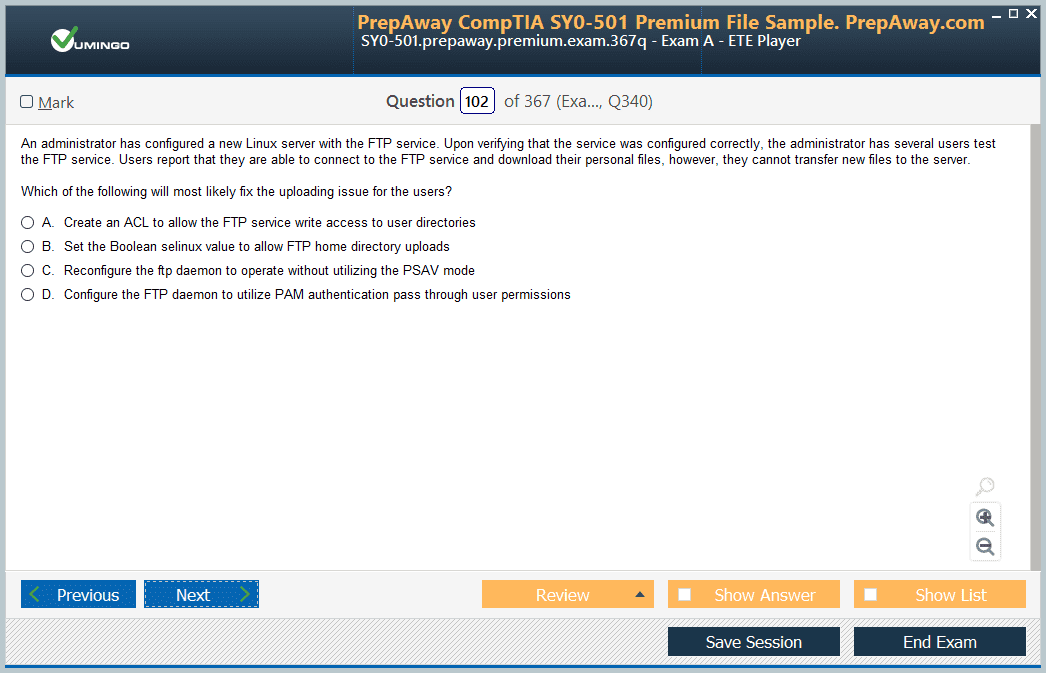
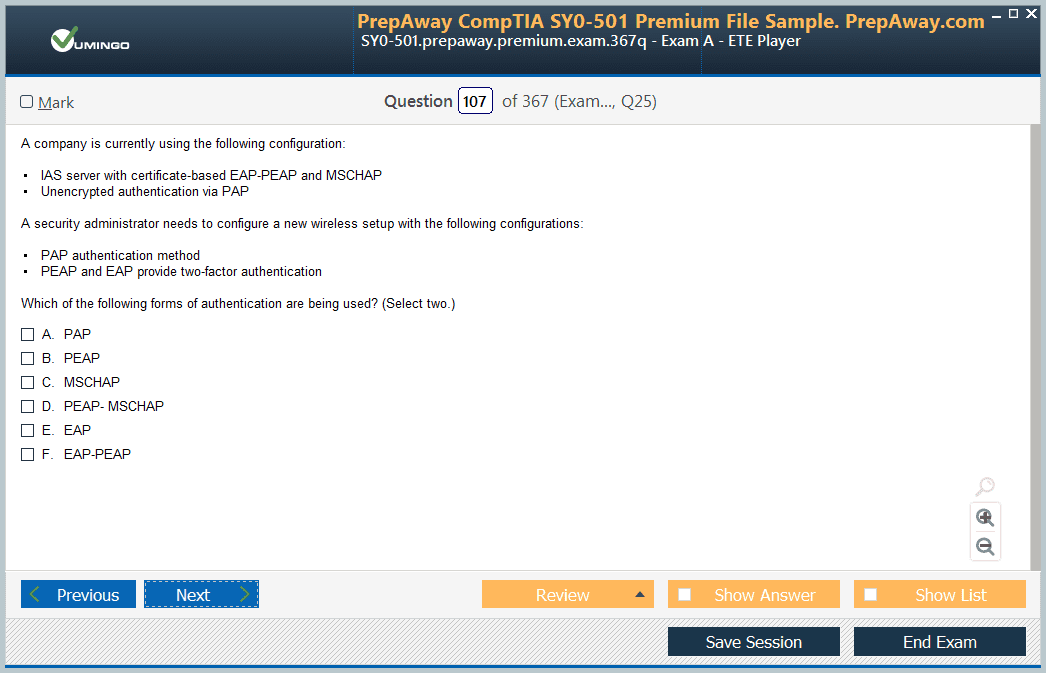
Last Week Results!
 92.1% students found the test questions almost same
All Amazon AWS Certified Generative AI Developer - Professional AIP-C01 certification exam dumps, study guide, training courses are Prepared by industry experts. PrepAway's ETE files povide the AWS Certified Generative AI Developer - Professional AIP-C01 AWS Certified Generative AI Developer - Professional AIP-C01 practice test questions and answers & exam dumps, study guide and training courses help you study and pass hassle-free!
AIP-C01 AWS Generative AI Developer Professional: Production GenAI on AWS
AWS Certified Generative AI Developer – Professional (AIP-C01) is the current professional credential for developers who integrate foundation models into production applications and business workflows. The AWS Generative AI Developer – Professional certification is intentionally different from a model-research credential: AWS states that advanced model development and training are outside the target role. The exam focuses on choosing and integrating models, building retrieval and agentic patterns, operating applications, and controlling security, responsibility, performance, and cost.
The blueprint gives 31% of scored content to Foundation Model Integration, Data Management, and Compliance; 26% to Implementation and Integration; 20% to AI Safety, Security, and Governance; 12% to Operational Efficiency and Optimization; and 11% to Testing, Validation, and Troubleshooting. That weighting makes architecture and integration the center of gravity. Candidates need to understand how a GenAI feature behaves as part of a larger system, including the data path, permissions, grounding source, tool access, observability, and fallback behavior.
AIP-C01 is also a useful signal of how AWS certifications are evolving. It connects application engineering with AI-specific concerns that were previously spread across machine learning, data, architecture, and security roles. The best preparation combines current AWS exam objectives with hands-on work in Amazon Bedrock, retrieval-augmented generation, agents, APIs, serverless or container compute, identity controls, monitoring, and evaluation.
Foundation-model selection starts with workload requirements
Model choice should be driven by the workload rather than brand familiarity. Candidates should consider modality, context size, latency, throughput, quality, supported Regions, customization options, safety controls, cost, and contractual or compliance requirements. A smaller model can be the better production choice when it meets the quality target at lower latency and cost. A more capable model may be justified for complex reasoning or higher-value interactions, but only if the rest of the architecture can support its operational profile.
The broader generative AI concepts behind tokens, context, temperature, grounding, hallucination, and model evaluation are therefore practical exam knowledge. AIP-C01 questions can present a business requirement and ask which integration pattern meets it. Read those scenarios for constraints such as deterministic output, private data, high request volume, multilingual content, or strict latency. Those constraints narrow the model and inference design before individual AWS services are considered.
RAG is a data architecture, not a prompt trick
Retrieval-augmented generation adds external information to model context at inference time. A production RAG system must ingest source data, chunk it sensibly, create embeddings, store searchable representations, retrieve relevant material, construct context, invoke the model, and return an answer with appropriate controls. Weak retrieval creates weak grounding even when the model is strong. Candidates should understand how chunk size, metadata, access filtering, embedding choice, and query strategy affect result quality.
On AWS, Amazon Bedrock knowledge bases and related services can reduce implementation work, while custom architectures may use other vector stores and data pipelines. The Amazon Bedrock application model is worth understanding as a managed foundation for model access, guardrails, knowledge bases, and agents. The exam is less interested in hand-coding a vector index than in selecting a design that keeps data current, protects tenant boundaries, and produces relevant context at acceptable cost and latency.
Prompt engineering becomes an application-management problem
Prompts in production need versioning, testing, input validation, and change control. Techniques such as clear instructions, examples, delimiters, structured output, role context, and decomposition can improve behavior, but the right pattern depends on the task. Prompt-engineering techniques are most useful when they are treated as part of a repeatable application interface rather than as one-off wording experiments.
Candidates should also understand the limits of prompting. If a system needs current private facts, retrieval may be more appropriate than an increasingly long prompt. If output must follow a schema, structured generation and validation may be needed. If the model must call business functions, tool use or an agentic architecture may fit better. Production prompt management also includes protecting system instructions, handling user-supplied content, testing prompt changes against representative cases, and watching for regressions.
Agentic systems add permissions and control-flow risk
Agentic AI can decide which tools to invoke, sequence actions, and use intermediate results to continue a task. That flexibility creates operational power and new failure modes. The connection between agentic AI systems and enterprise automation is especially important for AIP-C01 because an agent may be allowed to read records, update systems, call APIs, or launch workflows. Tool permissions must therefore be narrower than the conversational interface might suggest.
Design agents around explicit actions, constrained schemas, least-privilege roles, idempotency, timeouts, and error handling. Sensitive or irreversible operations may require confirmation or human approval. Candidates should think about what happens when a tool fails, returns malformed data, or is invoked repeatedly. The exam can test whether an architecture gives the model too much authority, exposes credentials, or lacks safeguards around action execution even though the generated text itself looks acceptable.
Responsible AI and security must be enforced outside the model
Prompt wording alone cannot provide a security boundary. Authentication, authorization, encryption, network controls, data classification, content filtering, logging, and policy enforcement belong in the surrounding system. A model should receive only the data and tools required for the request. Tenant isolation is especially important in RAG and agentic systems because retrieval or tool calls can accidentally expose information from another customer if authorization is applied only at the front end.
AIP-C01 also expects governance and responsible-AI thinking. Guardrails, safety filters, human review, auditability, data lineage, and evaluation help organizations manage harmful output, privacy risk, and policy violations. The security depth overlaps with AWS Security – Specialty, but the GenAI exam applies those controls to model inputs, retrieved context, model outputs, and tool execution. Treat the model as one component inside a zero-trust application architecture, not as a trusted decision maker.
Cost and latency are architecture variables from the first design
GenAI costs can be driven by input tokens, output tokens, model choice, provisioned capacity, embedding operations, retrieval infrastructure, and supporting compute. Latency is affected by the same design. Large prompts may improve context while increasing cost and response time. Retrieving too much material can reduce answer quality as well as efficiency. Caching, model routing, prompt compression, batching where appropriate, and selecting the smallest adequate model are all potential optimization strategies.
Operational efficiency also means matching capacity strategy to demand. A low-volume internal application and a high-throughput customer service workload may require different inference patterns. Candidates should be able to recognize when an optimization changes business behavior. Reducing context can save tokens but remove necessary evidence; aggressive caching can return stale answers; a cheaper model can create costly downstream errors. The correct design optimizes against a measurable quality and service target, not cost in isolation.
Evaluation must cover quality, safety, and business behavior
Testing GenAI applications is harder than checking a deterministic function. Exact text can vary while remaining correct, so teams need evaluation criteria such as factuality, relevance, groundedness, safety, format compliance, task completion, latency, and cost. Representative test sets matter because a system that works on carefully chosen demos can fail on ambiguous, adversarial, multilingual, or domain-specific inputs.
Production evaluation should combine automated metrics with human judgment where the risk warrants it. Regression testing is important when models, prompts, retrieval content, guardrails, or tool integrations change. Observability should capture enough metadata to diagnose failure without leaking sensitive content into logs. AIP-C01 candidates should be prepared to distinguish a model-quality problem from a retrieval problem, prompt problem, integration failure, permission error, or downstream service issue.
AIP-C01 sits between developer, data, and ML engineering paths
The exam does not require a prerequisite certification, but AWS identifies several useful foundations. AWS AI Practitioner covers broad AI and generative-AI concepts, AWS Machine Learning Engineer – Associate emphasizes production ML workflows, and AWS Data Engineer – Associate develops the data-pipeline skills that strong retrieval systems often depend on. Those credentials are not mandatory steps, but they reveal which knowledge gaps can make AIP-C01 difficult.
Candidates from application development may need deeper practice with embeddings, evaluation, and AI safety. ML engineers may need more work on enterprise APIs, event-driven integration, and application delivery. Data engineers may need to focus on model behavior and prompt design. Use the blueprint to identify which neighboring discipline is least familiar, because professional-level scenarios often combine all three rather than isolating a single specialty.
Study by building one production-style GenAI system end to end
A useful preparation project begins with a real requirement: for example, a private knowledge assistant that retrieves authorized documents, cites sources, uses a tool to create a support action, and records quality and latency metrics. Implement authentication, document ingestion, retrieval, prompt management, guardrails, tool permissions, monitoring, and failure handling. Then change one assumption at a time—larger traffic, sensitive data, a new model, cross-Region users, or a stricter cost target—and redesign.
That exercise forces the same cross-domain reasoning the exam expects. During final review, map each feature to the five blueprint domains and write down how you would detect a failure. If you can explain why the model was selected, how context is authorized, how actions are constrained, how quality is measured, how cost is observed, and how incidents are investigated, you are preparing for AIP-C01 at the right level: production engineering rather than AI vocabulary.
Amazon AWS Certified Generative AI Developer - Professional AIP-C01 practice test questions and answers, training course, study guide are uploaded in ETE Files format by real users. Study and Pass AWS Certified Generative AI Developer - Professional AIP-C01 AWS Certified Generative AI Developer - Professional AIP-C01 certification exam dumps & practice test questions and answers are to help students.
- AWS Certified Generative AI Developer - Professional AIP-C01
- AWS Certified Solutions Architect - Associate SAA-C03
- AWS Certified Solutions Architect - Professional SAP-C02
- AWS Certified AI Practitioner AIF-C01
- AWS Certified Security - Specialty SCS-C03
- AWS Certified Cloud Practitioner CLF-C02
- AWS Certified DevOps Engineer - Professional DOP-C02
- AWS Certified Advanced Networking - Specialty ANS-C01
- AWS Certified Machine Learning Engineer - Associate MLA-C01
- AWS Certified CloudOps Engineer - Associate SOA-C03
- AWS Certified Developer - Associate DVA-C02
- AWS Certified Data Engineer - Associate DEA-C01
- AWS Certified Security - Specialty SCS-C02
Why customers love us?
What do our customers say?
The resources provided for the Amazon certification exam were exceptional. The exam dumps and video courses offered clear and concise explanations of each topic. I felt thoroughly prepared for the AWS Certified Generative AI Developer - Professional AIP-C01 test and passed with ease.
Studying for the Amazon certification exam was a breeze with the comprehensive materials from this site. The detailed study guides and accurate exam dumps helped me understand every concept. I aced the AWS Certified Generative AI Developer - Professional AIP-C01 exam on my first try!
I was impressed with the quality of the AWS Certified Generative AI Developer - Professional AIP-C01 preparation materials for the Amazon certification exam. The video courses were engaging, and the study guides covered all the essential topics. These resources made a significant difference in my study routine and overall performance. I went into the exam feeling confident and well-prepared.
The AWS Certified Generative AI Developer - Professional AIP-C01 materials for the Amazon certification exam were invaluable. They provided detailed, concise explanations for each topic, helping me grasp the entire syllabus. After studying with these resources, I was able to tackle the final test questions confidently and successfully.
Thanks to the comprehensive study guides and video courses, I aced the AWS Certified Generative AI Developer - Professional AIP-C01 exam. The exam dumps were spot on and helped me understand the types of questions to expect. The certification exam was much less intimidating thanks to their excellent prep materials. So, I highly recommend their services for anyone preparing for this certification exam.
Achieving my Amazon certification was a seamless experience. The detailed study guide and practice questions ensured I was fully prepared for AWS Certified Generative AI Developer - Professional AIP-C01. The customer support was responsive and helpful throughout my journey. Highly recommend their services for anyone preparing for their certification test.
I couldn't be happier with my certification results! The study materials were comprehensive and easy to understand, making my preparation for the AWS Certified Generative AI Developer - Professional AIP-C01 stress-free. Using these resources, I was able to pass my exam on the first attempt. They are a must-have for anyone serious about advancing their career.
The practice exams were incredibly helpful in familiarizing me with the actual test format. I felt confident and well-prepared going into my AWS Certified Generative AI Developer - Professional AIP-C01 certification exam. The support and guidance provided were top-notch. I couldn't have obtained my Amazon certification without these amazing tools!
The materials provided for the AWS Certified Generative AI Developer - Professional AIP-C01 were comprehensive and very well-structured. The practice tests were particularly useful in building my confidence and understanding the exam format. After using these materials, I felt well-prepared and was able to solve all the questions on the final test with ease. Passing the certification exam was a huge relief! I feel much more competent in my role. Thank you!
The certification prep was excellent. The content was up-to-date and aligned perfectly with the exam requirements. I appreciated the clear explanations and real-world examples that made complex topics easier to grasp. I passed AWS Certified Generative AI Developer - Professional AIP-C01 successfully. It was a game-changer for my career in IT!