
- Home
- Novell Certifications
- 050-733 SUSE Certified Linux Administrator 12 Dumps
Pass Novell 050-733 Exam in First Attempt Guaranteed!
Get 100% Latest Exam Questions, Accurate & Verified Answers to Pass the Actual Exam!
30 Days Free Updates, Instant Download!


050-733 Premium File
- Premium File 158 Questions & Answers. Last Update: Oct 19, 2026
Whats Included:
- Latest Questions
- 100% Accurate Answers
- Fast Exam Updates
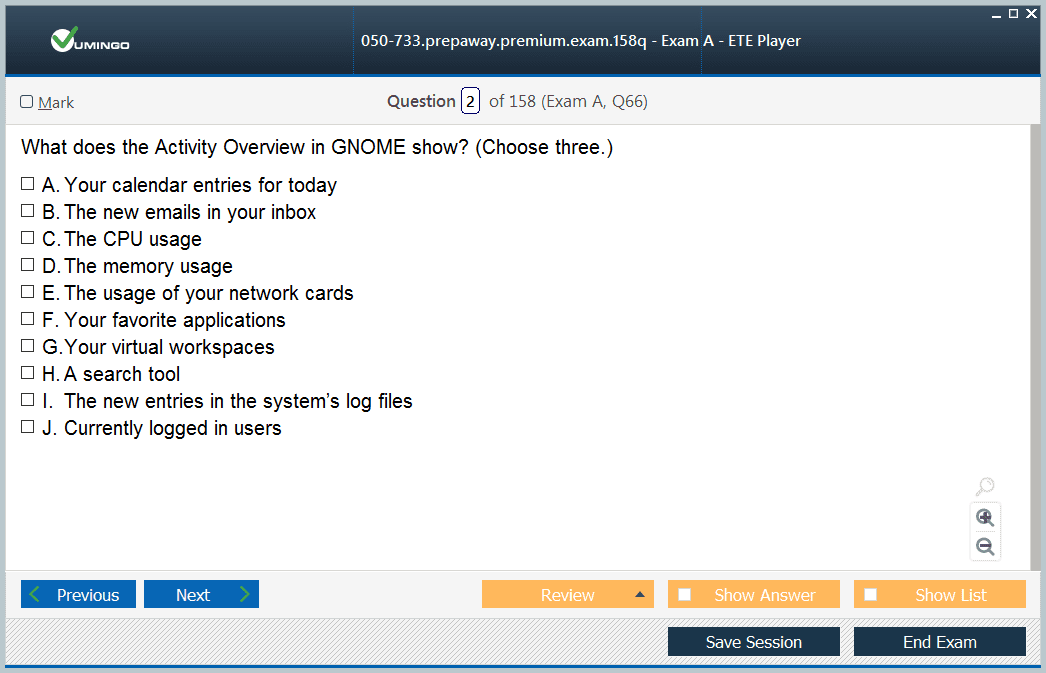
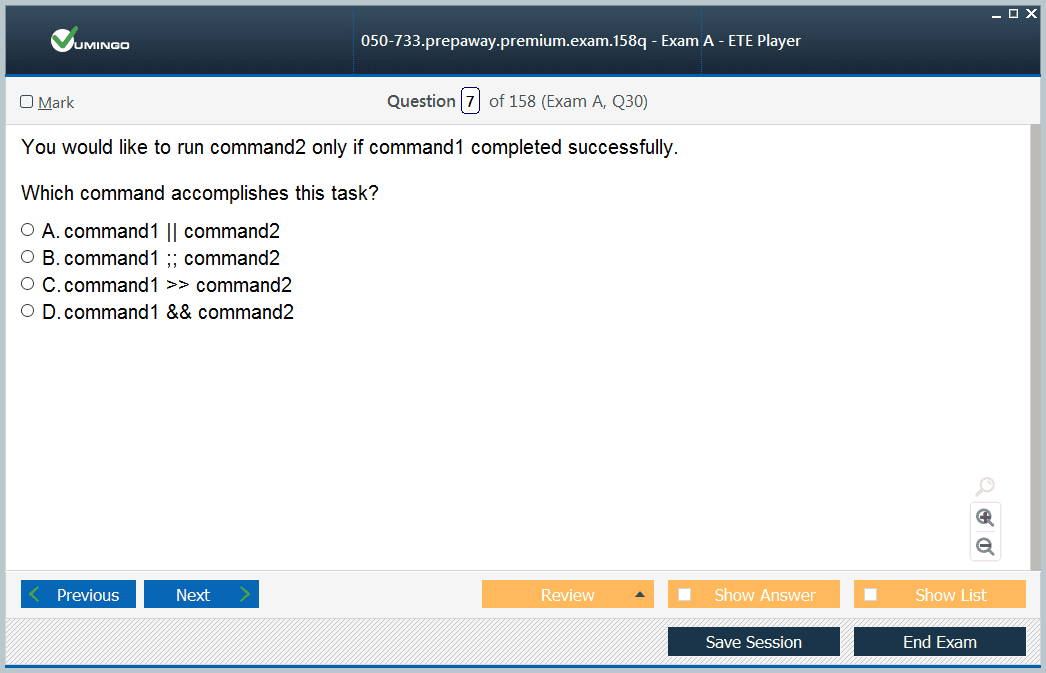
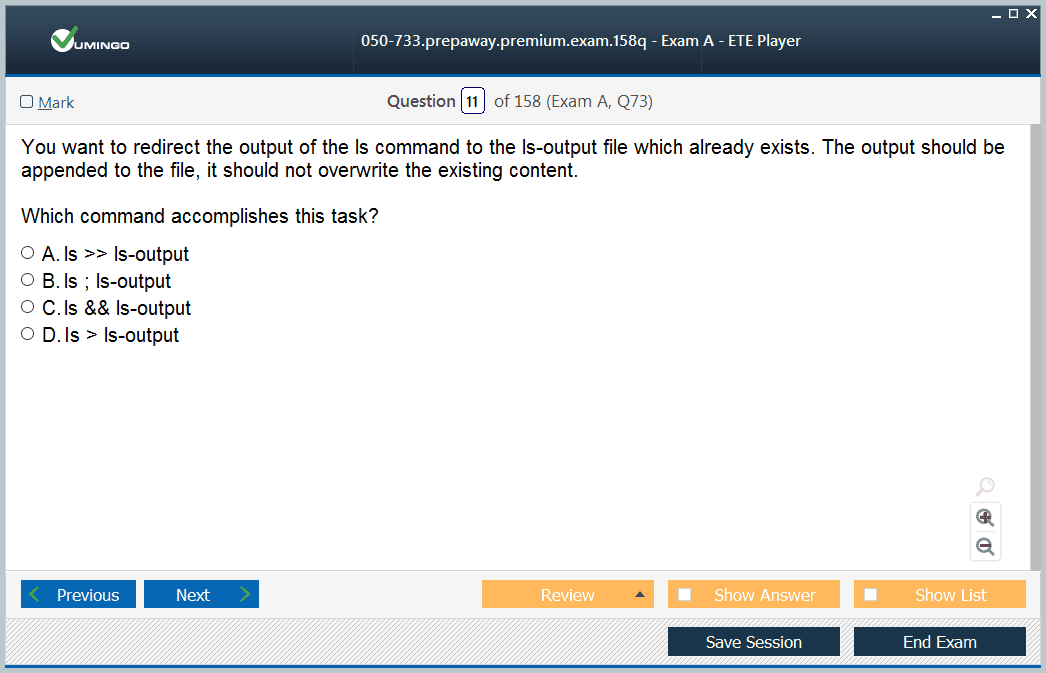
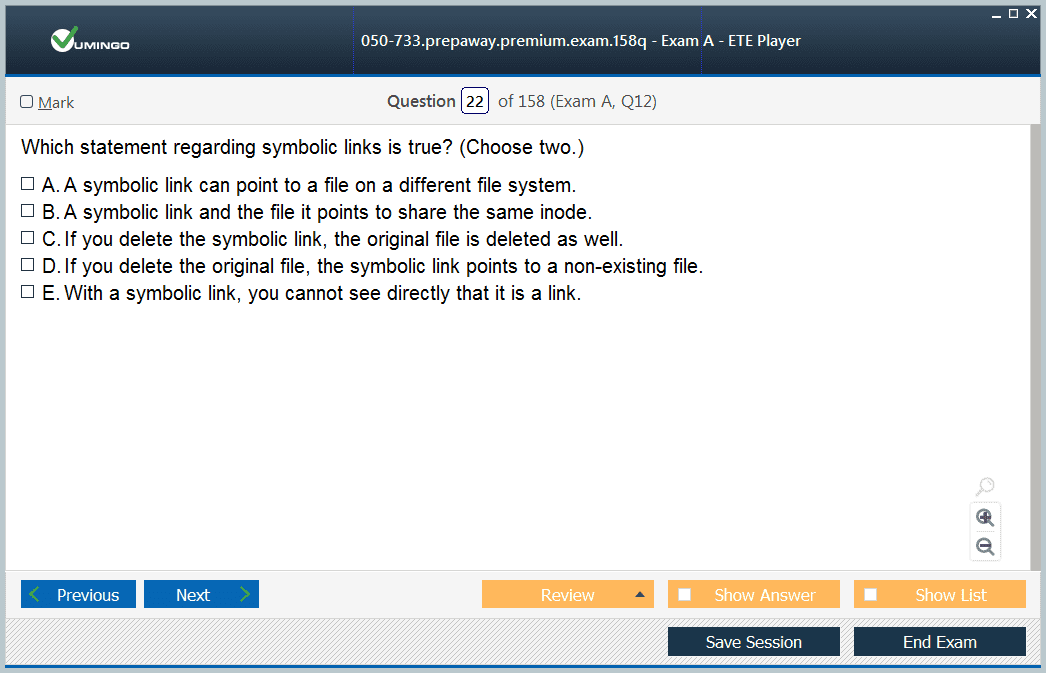
Last Week Results!
 83% students found the test questions almost same
All Novell 050-733 certification exam dumps, study guide, training courses are Prepared by industry experts. PrepAway's ETE files povide the 050-733 SUSE Certified Linux Administrator 12 practice test questions and answers & exam dumps, study guide and training courses help you study and pass hassle-free!
050-733 SUSE Certified Linux Administrator 12: Legacy SLES 12 Skills and the Current SLES 16 Path
The 050-733 SUSE Certified Linux Administrator 12 exam is a legacy SLES 12 credential and should not be treated as a current exam in 2026. SUSE’s active administrator certification has moved forward to modern releases, including the SUSE Certified Administrator in SUSE Linux Enterprise Server 16. The old exam remains a useful historical syllabus because SLES 12 introduced administration patterns—especially systemd-era service management and modernized system tooling—that are closer to current Linux practice than the earlier SLES 11 generation.
The right goal is not to recreate a 2016 test environment indefinitely. Use 050-733 to reinforce shell, permissions, processes, storage, networking, software management, services, and troubleshooting, then compare those skills with current SLES 16 objectives. This keeps durable Linux knowledge while avoiding outdated assumptions about installation, networking, security, or supported tools.
SLES 12 marks an important transition toward modern service administration
One of the practical differences between older enterprise Linux generations and SLES 12 is the growing importance of systemd as the service and system-management framework. Administrators need to understand units, dependencies, service state, boot targets, and journal-based troubleshooting rather than relying entirely on older init scripts. The underlying objective is still the same: start the right services in the right order and know why they fail.
Practice service incidents instead of only successful commands. A unit is enabled but not running, starts manually but fails at boot, depends on a missing mount, or restarts repeatedly after an application error. Inspect unit state, dependencies, exit information, and logs before changing configuration. These habits transfer directly to current SUSE systems.
The shell remains the fastest route to reliable system evidence
Bash, pipelines, redirection, command history, environment variables, and text-processing tools are central to administration because they let an engineer inspect and change a system through composable operations. A graphical interface can simplify routine work, but the shell exposes details needed during recovery, remote access, and automation. Candidates should be able to read command output critically rather than treating a successful exit code as proof that the intended result occurred.
Build small exercises that combine tools: find files by property, extract fields from logs, count repeated events, compare service configurations, and redirect results into an audit file. The Linux practice ideas in practical Linux certification work are useful when they reinforce hands-on administration rather than replacing SUSE-specific study.
Users, groups, permissions, and privilege escalation define the local security boundary
Local Linux security begins with identity and file access. Administrators should understand account databases, password state, group membership, ownership, permission bits, special modes, and ACLs. They also need a controlled way to grant administrative capability without sharing a root password broadly. The objective is to make access intentional and auditable while preserving enough privilege for operational roles to do their work.
Troubleshoot from the effective identity. If a service cannot read a certificate or write to a directory, determine the account under which it runs and test the complete path. If a user gains access unexpectedly, inspect supplementary groups and inherited permissions. Security problems are often created by one broad permission change made to solve a different incident, so document the narrow reason for every exception.
Software management depends on repositories, packages, and update discipline
SUSE uses RPM packages with zypper and repository metadata to manage dependencies and updates. Candidates should know how to query installed software, configure and refresh repositories, install and remove packages, and evaluate available updates. Repository trust and provenance matter: production systems should receive software from controlled sources rather than arbitrary packages copied from the Internet.
Update work should also consider service impact. A package change may require a restart, alter configuration defaults, or introduce a new dependency. Test important updates in a representative environment, review release information, and confirm service behavior afterward. The command that installs an update is usually the easiest part; change planning and verification are what keep systems reliable.
Storage tasks are safest when persistent identifiers and mount behavior are understood
Linux exposes disks, partitions, logical volumes, filesystems, swap, and mounts as separate layers. Administrators need to know which layer they are changing and how the change persists across reboot. Device names can shift, so persistent identifiers and correctly constructed filesystem configuration are safer than assumptions about discovery order. Capacity planning also needs to distinguish filesystem free space from underlying block-device capacity.
Practice in a virtual lab by adding storage, creating and mounting a filesystem, extending capacity, and recovering from an intentionally bad persistent mount entry. Include snapshots or backups before destructive operations. A storage command can succeed exactly as requested and still create an outage if the requested device or mount point was wrong.
Networking should be diagnosed as a path from local interface to remote service
A network problem can originate in interface state, address configuration, subnetting, routing, name resolution, firewall policy, or the remote application. Work outward in that order. Confirm the interface and address, verify the route selected for the destination, test the next hop, resolve the name independently, and finally test the service port or application protocol. This prevents DNS problems from being mistaken for routing failures and firewall problems from being mistaken for missing routes.
Configuration frameworks evolve across SUSE releases, so use 050-733 to learn the concepts and the SLES 12 tools in historical context. Current SLES 16 administration introduces newer networking and management approaches. A current production change should always follow the tooling and documentation for the installed release.
Btrfs and snapshot-aware administration change how recovery can be planned
SUSE has long emphasized Btrfs and snapshot capabilities in system administration. Snapshots can make certain rollback and recovery workflows faster, but they are not the same as independent backups. Candidates should understand the difference between filesystem snapshots, bootable system rollback, and backups stored outside the failure domain. A snapshot on the same damaged storage cannot protect against every failure.
Use snapshots deliberately around risky changes and learn how to inspect snapshot state before and after an update. Recovery practice should include the decision point: when is rollback appropriate, and when would restoring individual files or a full backup be safer? The technology is valuable because it gives administrators options, not because every incident should be solved by reverting the entire system.
Troubleshooting improves when systemd journal, kernel messages, and application logs are correlated
SLES 12-era administration increasingly centers on systemd journal data alongside traditional logs. Kernel messages reveal hardware and driver conditions, service logs show application state, and authentication records show access attempts. The difficult part is correlation. A service failure may be the downstream effect of a missing mount, a full filesystem, a DNS outage, or a security policy change that occurred seconds earlier.
Build an incident timeline rather than opening logs randomly. Identify when the symptom began, find system-level events immediately before it, and compare other services that share the same dependency. This method reduces unnecessary restarts and makes post-incident learning possible. The same evidence-first workflow is essential on modern SLES releases.
The current SLES 16 administrator path is the right destination for new certification candidates
SUSE now offers the SCA in SUSE Linux Enterprise Server 16 for day-to-day administration, covering contemporary shell use, remote management, users, permissions, storage, networking, firewalling, SELinux, logging, and deployment. That current path is the appropriate choice for someone seeking a credential today. 050-733 should be read as a historical milestone and a source of foundational exercises, not as a current registration target.
The earlier 050-720 SUSE Linux Administrator 11 page provides additional lineage, while the Novell certifications inventory preserves the older certification context. For transferable Linux fundamentals, the approved Linux Essentials 010-160 page offers a broader entry-level reference. Keep the status distinctions explicit so historical links do not imply current equivalence.
Remote administration is another area where operational discipline matters. SSH provides a secure command-line channel when host keys, user authentication, and privilege escalation are managed correctly. Avoid normalizing direct root logins or weak shared accounts simply because a lab is convenient. Use individual identities, key-based authentication where appropriate, and controlled sudo access so that administrative actions can be attributed and revoked without changing credentials for an entire team.
Task scheduling also changes between traditional cron-style workflows and newer systemd timer capabilities. The durable skill is understanding when a job runs, under which identity and environment, what happens if the system was offline, and where failures are recorded. A recurring maintenance task should produce observable success or failure rather than silently assuming execution. Review schedules as part of capacity and change planning so expensive jobs do not collide with backups or peak application workload.
Current SLES 16 also uses SELinux as an important mandatory access-control framework, while earlier SUSE generations used different security defaults and tools. That difference illustrates why version context matters. General permission knowledge transfers, but the enforcement mechanism and troubleshooting workflow can change. When a current service is denied despite correct Unix permissions, inspect the active mandatory-access-control policy instead of weakening file modes. Historical certification material should teach fundamentals, not freeze operational practice in the past.
Performance troubleshooting should start with evidence about the constrained resource. High load averages can reflect CPU demand or blocked I/O, free memory may be used productively as cache, and a slow application may actually be waiting on DNS, storage, or a remote dependency. Use process, memory, filesystem, network, and service metrics together before tuning. Changing kernel or application parameters without identifying the bottleneck can hide the symptom temporarily while creating a harder problem elsewhere.
Build a recovery checklist that includes the commands used to verify the system after each change. Confirmation is part of the task: a corrected configuration is useful only when the service, network path, storage state, and relevant logs show that the intended behavior has returned.
Novell 050-733 practice test questions and answers, training course, study guide are uploaded in ETE Files format by real users. Study and Pass 050-733 SUSE Certified Linux Administrator 12 certification exam dumps & practice test questions and answers are to help students.
Why customers love us?
What do our customers say?
The resources provided for the Novell certification exam were exceptional. The exam dumps and video courses offered clear and concise explanations of each topic. I felt thoroughly prepared for the 050-733 test and passed with ease.
Studying for the Novell certification exam was a breeze with the comprehensive materials from this site. The detailed study guides and accurate exam dumps helped me understand every concept. I aced the 050-733 exam on my first try!
I was impressed with the quality of the 050-733 preparation materials for the Novell certification exam. The video courses were engaging, and the study guides covered all the essential topics. These resources made a significant difference in my study routine and overall performance. I went into the exam feeling confident and well-prepared.
The 050-733 materials for the Novell certification exam were invaluable. They provided detailed, concise explanations for each topic, helping me grasp the entire syllabus. After studying with these resources, I was able to tackle the final test questions confidently and successfully.
Thanks to the comprehensive study guides and video courses, I aced the 050-733 exam. The exam dumps were spot on and helped me understand the types of questions to expect. The certification exam was much less intimidating thanks to their excellent prep materials. So, I highly recommend their services for anyone preparing for this certification exam.
Achieving my Novell certification was a seamless experience. The detailed study guide and practice questions ensured I was fully prepared for 050-733. The customer support was responsive and helpful throughout my journey. Highly recommend their services for anyone preparing for their certification test.
I couldn't be happier with my certification results! The study materials were comprehensive and easy to understand, making my preparation for the 050-733 stress-free. Using these resources, I was able to pass my exam on the first attempt. They are a must-have for anyone serious about advancing their career.
The practice exams were incredibly helpful in familiarizing me with the actual test format. I felt confident and well-prepared going into my 050-733 certification exam. The support and guidance provided were top-notch. I couldn't have obtained my Novell certification without these amazing tools!
The materials provided for the 050-733 were comprehensive and very well-structured. The practice tests were particularly useful in building my confidence and understanding the exam format. After using these materials, I felt well-prepared and was able to solve all the questions on the final test with ease. Passing the certification exam was a huge relief! I feel much more competent in my role. Thank you!
The certification prep was excellent. The content was up-to-date and aligned perfectly with the exam requirements. I appreciated the clear explanations and real-world examples that made complex topics easier to grasp. I passed 050-733 successfully. It was a game-changer for my career in IT!


