Pass Cisco CCIE Enterprise Wireless Certification Exam in First Attempt Guaranteed!
Get 100% Latest Exam Questions, Accurate & Verified Answers to Pass the Actual Exam!
30 Days Free Updates, Instant Download!


350-401 Premium Bundle
- Premium File 743 Questions & Answers. Last update: Oct 19, 2026
- Training Course 196 Video Lectures
- Study Guide 636 Pages
350-401 Premium Bundle
- Premium File 743 Questions & Answers
Last update: Oct 19, 2026 - Training Course 196 Video Lectures
- Study Guide 636 Pages
Purchase Individually

Premium File
Training Course

Study Guide
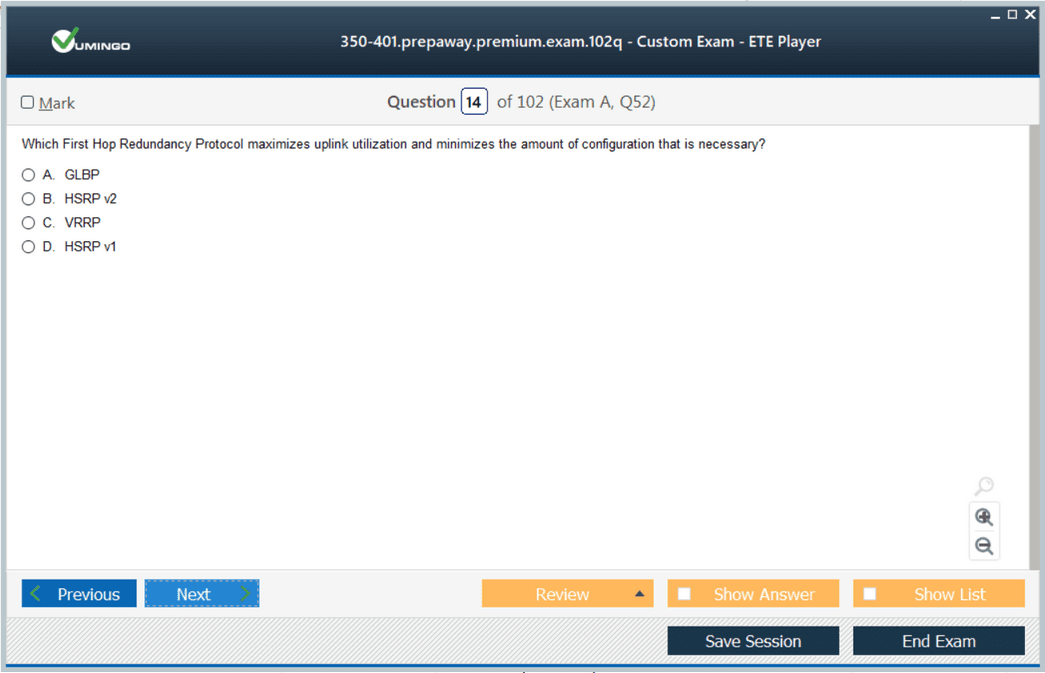
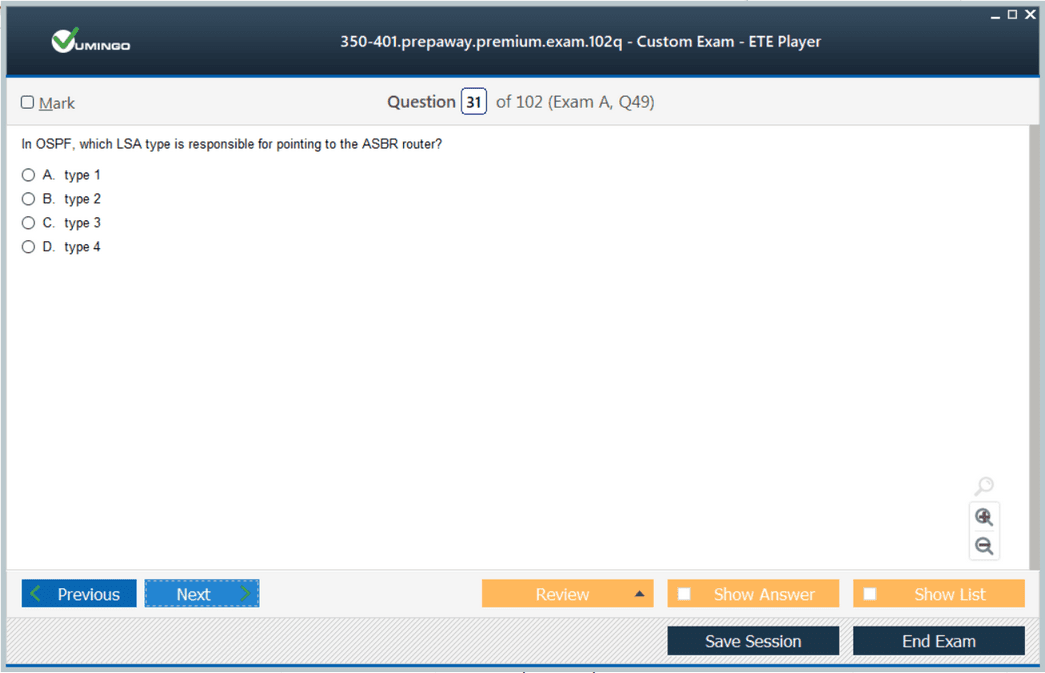
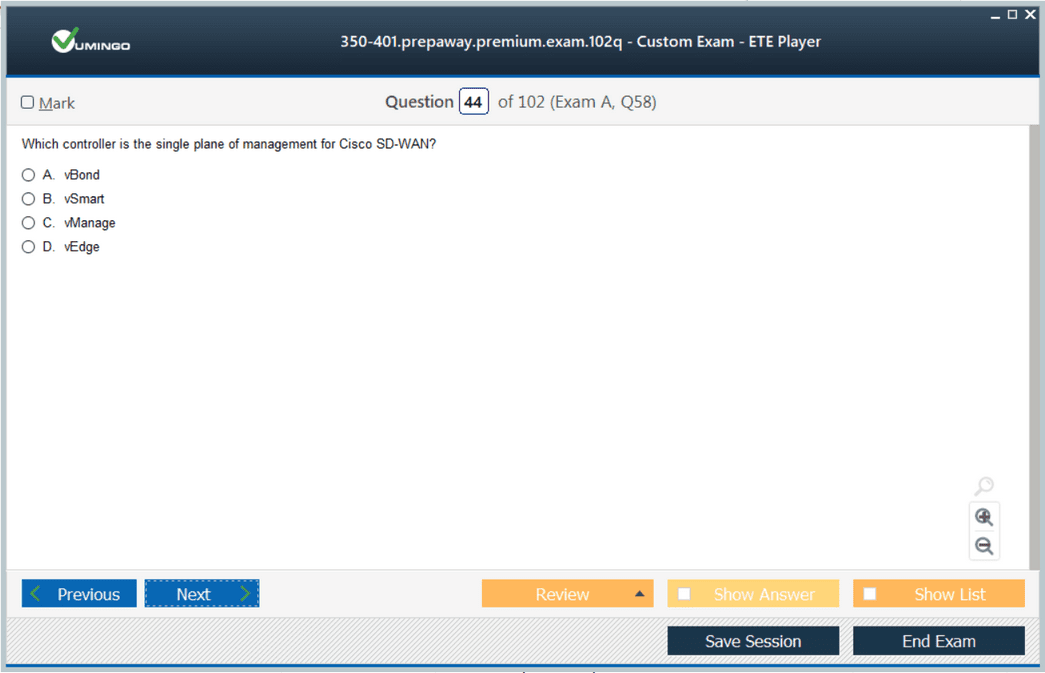
350-401 Exam - Implementing Cisco Enterprise Network Core Technologies (ENCOR)
| Download Free 350-401 Exam Questions |
|---|
Cisco CCIE Enterprise Wireless Certification Practice Test Questions and Answers, Cisco CCIE Enterprise Wireless Certification Exam Dumps
All Cisco CCIE Enterprise Wireless certification exam dumps, study guide, training courses are prepared by industry experts. Cisco CCIE Enterprise Wireless certification practice test questions and answers, exam dumps, study guide and training courses help candidates to study and pass hassle-free!
CCIE Enterprise Wireless to CCIE Wireless: The Current Expert Path in 2026
The PrepAway certification page retains the CCIE Enterprise Wireless name, but Cisco changed the wireless certification structure in March 2026. The current expert credential is CCIE Wireless, and the qualifying core is now 350-101 WLCOR rather than the shared enterprise ENCOR core. Cisco launched the dedicated CCNP and CCIE Wireless tracks on March 19, 2026, giving wireless engineering its own core blueprint focused on radio frequency, 802.11 behavior, client connectivity, monitoring, management, automation, and AI.
The page remains valuable because the technical lineage is continuous: enterprise wireless design, deployment, security, assurance, and troubleshooting are still the heart of the expert role. What changed is the certification architecture. Candidates preparing now should use current WLCOR and CCIE Wireless materials instead of assuming older CCIE Enterprise Wireless requirements are still the active path. The wider Cisco certifications inventory provides the neighboring enterprise and expert tracks.
The 2026 Wireless Track Is More Than a Rename
Before March 2026, CCIE Enterprise Wireless used 350-401 ENCOR as the qualifying core. The new structure gives wireless specialists a dedicated core exam. WLCOR is a 120-minute exam covering radio frequency and 802.11 fundamentals, client connectivity, wireless monitoring and management, and automation and AI. Passing it earns the Wireless Core Specialist credential and satisfies the core requirement for both CCNP Wireless and CCIE Wireless.
This matters for study planning. ENCOR-based preparation devoted significant time to broad enterprise routing, virtualization, security, and infrastructure topics. WLCOR narrows the center of gravity toward wireless systems while still requiring enough wired-network understanding to integrate access points, controllers, identity, switching, routing, services, and management platforms correctly.
RF Fundamentals Drive Real Design Decisions
Expert wireless engineers must understand what happens in the air, not just what the controller reports. Practice channel planning, channel width, power, interference, signal-to-noise ratio, noise floor, modulation, data rates, cell sizing, roaming behavior, antenna characteristics, and the effect of physical environments. A design that looks clean in a logical diagram can fail because the RF environment makes its assumptions impossible.
Build labs and survey exercises around requirements. A warehouse, lecture hall, hospital, office, and outdoor campus have different density, mobility, interference, and coverage needs. Ask whether the goal is coverage, capacity, voice quality, location accuracy, or high-density performance. Those priorities influence AP placement, power, channel reuse, and client expectations.
Wireless Architecture Still Depends on the Wired Network
Access points need switching, power, VLANs, IP addressing, routing, DHCP, DNS, QoS, security, and resilient paths. Controllers or cloud-managed systems still depend on upstream network behavior. When a client cannot reach an application, the failure may be RF, association, authentication, policy, DHCP, DNS, routing, firewall policy, or the application itself.
That is why broader enterprise knowledge remains useful even though WLCOR is now the core. The current CCIE Enterprise Infrastructure path is a useful adjacent reference for candidates who want deeper wired expertise, while CCNA covers the common routing and switching foundations that every wireless engineer still uses.
Client Connectivity Must Be Traced as a Sequence
Troubleshooting improves when you treat client access as a sequence of stages. Is the client seeing the SSID? Is it associating to the intended AP and band? Does authentication succeed? Is policy assigned correctly? Does the client receive addressing and DNS information? Can it reach the gateway? Does the application path work? Where does roaming change the state?
Capture evidence at each stage instead of guessing. Correlate controller state, AP information, packet traces, authentication logs, client telemetry, and wired network data. Expert-level troubleshooting means narrowing the failure domain before changing configuration, especially when only one device type, site, SSID, or mobility path is affected.
Security and Identity Are Core Wireless Concerns
Enterprise wireless security involves authentication methods, certificate trust, encryption, segmentation, guest access, policy assignment, device posture, and management-plane protection. Know how an identity decision becomes network access and how a failure in identity infrastructure can appear as a wireless problem.
Do not reduce security preparation to memorizing WPA terminology. Practice end-to-end access scenarios. Verify the client’s authentication method, the identity source, certificates, returned authorization, network policy, assigned segment, and final reachability. A secure design should also be operable: administrators need enough logging and telemetry to explain why a user was accepted, rejected, or placed into a restricted policy.
Automation, Analytics, and AI Are Now Explicit Wireless Skills
The dedicated WLCOR blueprint makes automation and AI part of current wireless core knowledge. Controllers and Cisco Catalyst Center can centralize configuration, assurance, analytics, and operational workflows, but expert engineers still need to understand what those systems are doing. Automated remediation that changes RF settings or policy without sufficient evidence can move a problem rather than solve it.
The PrepAway discussion of network automation helps connect APIs and programmability to operational work. In wireless labs, practice retrieving client or AP information programmatically, validating changes, and comparing controller recommendations with observed behavior.
Design and Survey Skills Need Practical Repetition
Expert study should include predictive design, validation, and troubleshooting in real or realistic environments. Start from requirements, create a design, then test whether the result delivers the required coverage, capacity, roaming, and application performance. Do not treat a green heat map as proof that the network will support the intended users.
The PrepAway article on enterprise wireless design is useful background even though the old ENWLSD exam was retired when the new wireless track launched. The design principles remain relevant: translate density, mobility, application, physical, security, and operational requirements into a deployment that can be measured after installation.
The Expert Lab Is an Operations Exam as Much as a Build Exam
CCIE Wireless candidates must be able to implement and optimize, but they also need to recover from faults. Create labs where an SSID is misconfigured, a certificate trust chain breaks, DHCP fails, a VLAN is missing, a client roams poorly, RF interference increases, or an automation policy produces unexpected state. Then diagnose from evidence with minimal disruption.
The PrepAway discussion of CCIE wireless lab preparation predates the 2026 certification restructure, so use it for lab discipline rather than current exam-version facts. The enduring lesson is that expert preparation must combine design, implementation, troubleshooting, and verification under realistic constraints.
How to Use a Legacy CCIE Enterprise Wireless Page Correctly
Legacy material is useful when it teaches RF behavior, WLAN design, roaming, security, assurance, and troubleshooting that still applies. It becomes risky when it describes the old certification structure as current, assumes ENCOR is still the qualifying core, or relies on retired concentration exams. Separate durable engineering concepts from program logistics every time you use older material.
For final review, trace a client from the air interface to the application. Explain RF conditions, association, authentication, policy, addressing, wired forwarding, QoS, roaming, monitoring, and failure recovery. Then explain how the same environment is managed at scale through controllers, analytics, and automation. That end-to-end model is more valuable than memorizing menu paths because it remains valid even when software and certification versions change.
Roaming deserves its own practical attention because it exposes the interaction between RF, authentication, controllers, switching, routing, and application tolerance. Test clients moving between access points and, where possible, between controllers or policy domains. Observe reassociation time, authentication events, IP continuity, voice or video behavior, and the effect of security methods. A network can provide excellent static coverage and still deliver a poor mobile experience if handoff behavior is not understood.
High-density design also changes the normal intuition that “more power†or “more access points†automatically improves service. Additional APs can increase co-channel contention if channel planning and power are not controlled. Wider channels can raise peak throughput while reducing channel reuse. Older clients can consume disproportionate airtime. Build scenarios where the optimization target is capacity rather than coverage and learn to read airtime, retry, utilization, and client-distribution data together.
Current wireless engineering also benefits from a professional-level design waypoint. Cisco’s new wireless track includes the 300-110 WLSD design concentration. It is not required for CCIE Wireless, but its focus on design can help candidates identify gaps in requirements analysis, RF planning, high availability, location services, and integration before moving into an expert lab.
Application validation should be part of wireless troubleshooting. A client can associate successfully and receive an IP address while still experiencing poor voice, video, SaaS, or roaming performance. Capture application symptoms alongside wireless metrics. Determine whether the issue is radio quality, latency, DNS, upstream congestion, security inspection, or the application itself. This prevents the wireless team from owning every problem simply because the user happens to be connected over Wi-Fi.
During final lab preparation, create a repeatable evidence checklist: client state, AP and radio state, authentication result, policy assignment, addressing, gateway reachability, DNS, application reachability, controller health, and relevant wired interfaces. Use it until the order becomes automatic. Expert speed comes from a consistent diagnostic method, not from typing commands faster.
Keep current program logistics separate from durable radio knowledge. The 2026 track changed the core exam and certification name, but RF physics, client behavior, secure authentication, roaming, and capacity planning do not become obsolete on the same schedule. Maintain two sets of notes: one for engineering concepts and another for version-sensitive exam structure. That separation makes future updates much easier to absorb.
CCIE Enterprise Wireless certification practice test questions and answers, training course, study guide are uploaded in ETE files format by real users. Study and pass Cisco CCIE Enterprise Wireless certification exam dumps & practice test questions and answers are the best available resource to help students pass at the first attempt.