ISEE Practice Test


ISEE Premium Bundle
- Premium File 450 Questions & Answers. Last update: Sep 27, 2026
- Study Guide 161 Pages
ISEE Premium Bundle
- Premium File 450 Questions & Answers
Last update: Sep 27, 2026 - Study Guide 161 Pages
Purchase Individually

Premium File
Study Guide
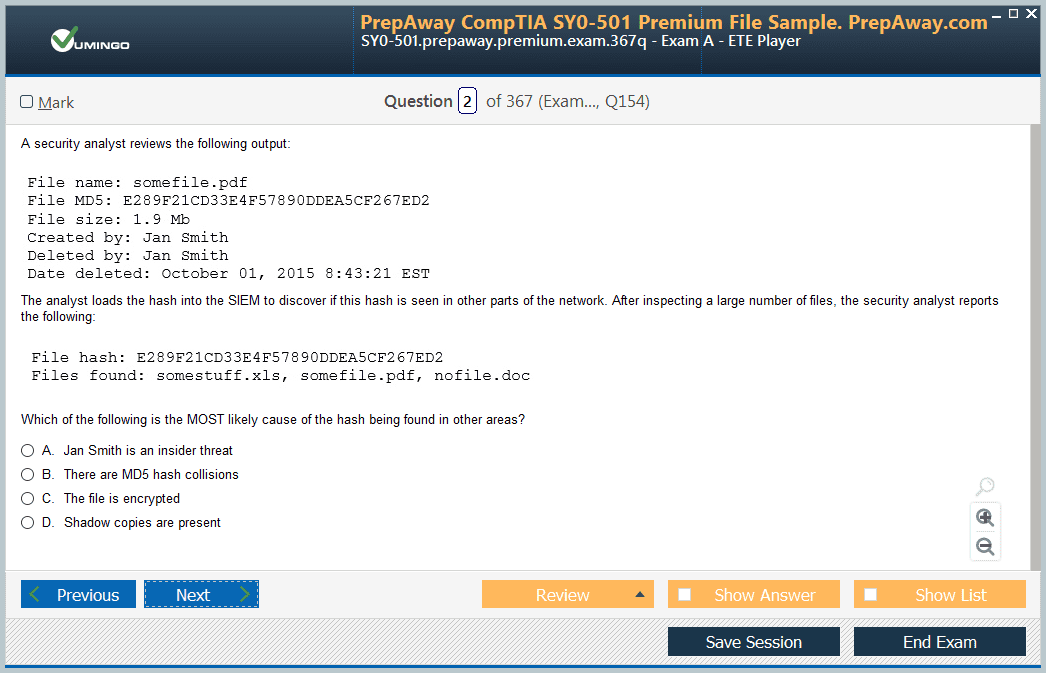
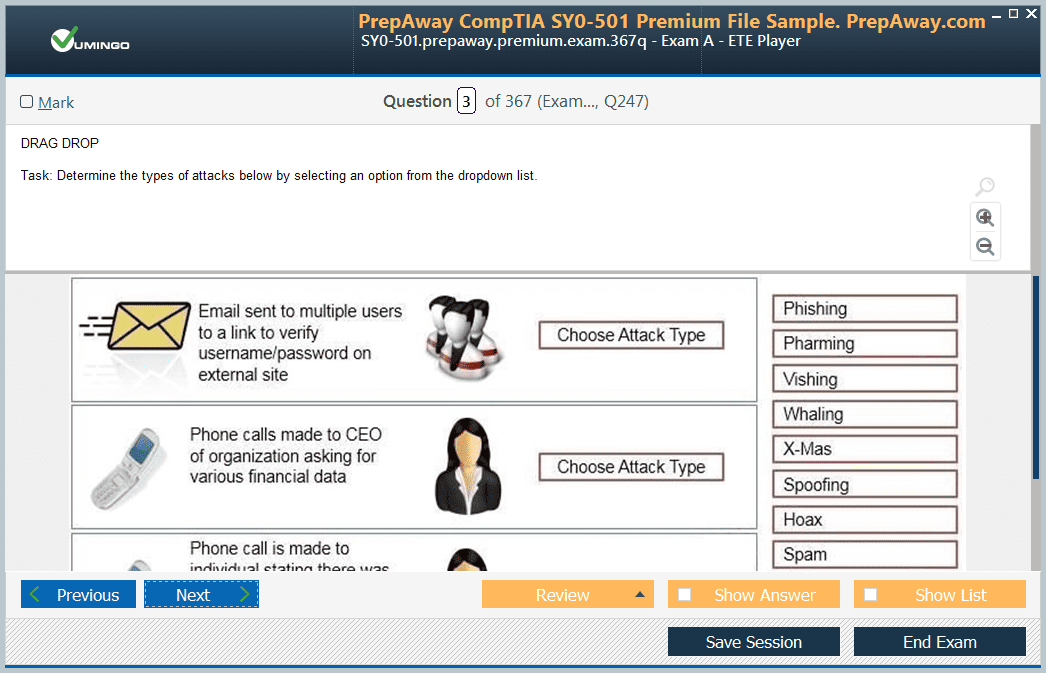
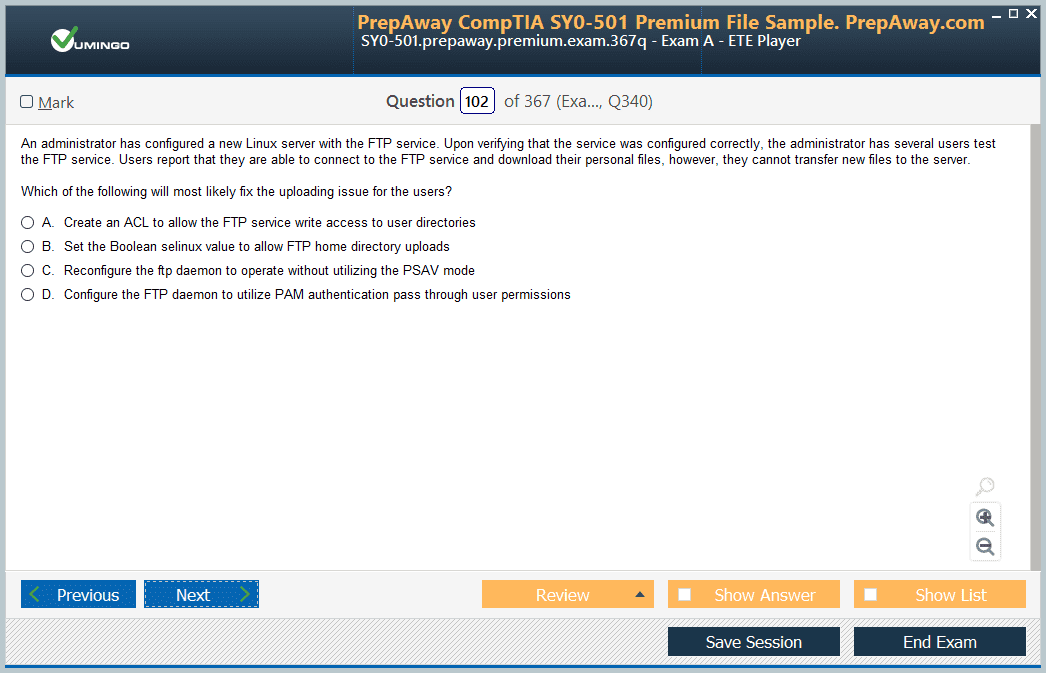
Test Prep ISEE Course Practice Test Questions and Answers, Test Prep ISEE Course Exam Dumps
All Test Prep ISEE certification exam dumps, study guide, training courses are prepared by industry experts. Test Prep ISEE certification practice test questions and answers, exam dumps, study guide and training courses help candidates to study and pass hassle-free!
ISEE certification practice test questions and answers, training course, study guide are uploaded in ETE files format by real users. Study and pass Test Prep ISEE certification exam dumps & practice test questions and answers are the best available resource to help students pass at the first attempt.
ISEE Exam - Independent School Entrance Examination
| Download Free ISEE Exam Questions |
|---|
Test Prep ISEE Certification Practice Test Questions and Answers, Test Prep ISEE Certification Exam Dumps
All Test Prep ISEE certification exam dumps, study guide, training courses are prepared by industry experts. Test Prep ISEE certification practice test questions and answers, exam dumps, study guide and training courses help candidates to study and pass hassle-free!
ISEE: Choose the Right Level and Prepare by Section
The Independent School Entrance Exam is not one identical test given to every applicant. Its level is determined by the grade a student is applying to, so preparation has to begin with the correct version of the assessment. Primary Levels serve applicants to Grades 2–4, Lower Level serves applicants to Grades 5–6, Middle Level serves applicants to Grades 7–8, and Upper Level serves applicants to Grades 9–12. Using material from the wrong level can distort both difficulty and pacing expectations.
For applicants to Grades 5–12, the ISEE combines Verbal Reasoning, Quantitative Reasoning, Reading Comprehension, Mathematics Achievement, and an unscored essay. Primary tests are shorter and focus on Reading and Mathematics, with Primary 2 also including auditory-comprehension items. Families should confirm level, format, and registration details before building a study schedule.
Testing Level Follows the Grade of Entry
The ISEE level is based on the grade the student seeks to enter, not simply the student’s current grade. That distinction matters most during application season, when a family may casually describe a child as “a sixth grader” even though the test level is tied to the next school placement. Lower Level applies to applicants for Grades 5 and 6, Middle to Grades 7 and 8, and Upper to Grades 9 through 12.
Primary 2, 3, and 4 are separate assessments for younger applicants and do not include the essay found on the higher levels. Before buying practice material, verify that the book or platform matches the target level. A general SSAT and ISEE can help families understand the admissions-testing landscape, but the receiving school’s instructions should determine which exam and level the student actually needs.
Lower Level Has a Different Question Count from Middle and Upper
On Lower Level, the published section structure is 34 Verbal Reasoning questions in 20 minutes, 38 Quantitative Reasoning questions in 35 minutes, 25 Reading Comprehension questions in 25 minutes, 30 Mathematics Achievement questions in 30 minutes, and one 30-minute essay. The total testing time is about two hours and twenty minutes, plus scheduled breaks.
Middle and Upper Levels use 40 Verbal questions in 20 minutes, 37 Quantitative questions in 35 minutes, 36 Reading questions in 35 minutes, 47 Mathematics Achievement questions in 40 minutes, and a 30-minute essay. Total testing time is about two hours and forty minutes, plus breaks. Students should practice with the timing for their own level rather than using one generic ISEE pacing rule.
Verbal Reasoning Rewards Vocabulary and Relationships
Vocabulary study should go beyond memorizing a stack of definitions. Learn words in clusters that show synonyms, contrasts, roots, and shades of meaning. When a word appears in a sentence or a relationship question, that network makes recall more flexible. Short daily retrieval sessions are usually more effective than one long weekly vocabulary session.
Students should also practice working from the relationship between words. If two choices are both loosely related to a prompt, the better answer is the one that matches the precise meaning or relationship required. Keep a vocabulary notebook that records why a tempting answer was wrong; confusion between near-synonyms is a more useful study target than a simple list of missed words.
Quantitative Reasoning and Mathematics Achievement Test Different Habits
Quantitative Reasoning asks students to reason with mathematical information, recognize patterns, and choose efficient relationships. Mathematics Achievement is more directly connected to grade-appropriate learned content. A student can therefore be comfortable performing computations but less comfortable deciding which mathematical idea applies in an unfamiliar problem.
Separate the two during error review. For a Quantitative Reasoning miss, ask whether the student recognized the structure. For a Mathematics Achievement miss, identify the underlying skill or procedure. Then mix the question types later so the student learns to diagnose the problem without relying on a chapter label. Calculators are generally not permitted unless specifically approved as an accommodation, so number sense and written work remain important.
Reading Comprehension Is About Evidence and Organization
Reading sections draw material from a range of subjects, including sciences and humanities. Students do not need specialized subject knowledge to succeed; they need to understand what the passage says and how its ideas are organized. Before answering detail questions, form a simple map of the passage: topic, purpose, main claim, major evidence, and any contrast or shift in viewpoint.
When two answers appear plausible, return to the passage and test each one. A correct inference should be strongly supported even if it is not written word for word. Wrong choices often use language from the passage but change the relationship, exaggerate the claim, or introduce a conclusion that would require additional evidence.
The Essay Is Unscored but Still Sent to Schools
For Lower, Middle, and Upper Levels, the essay is not included in the numerical ISEE score, but schools selected as score recipients receive the writing sample. That makes it worth taking seriously. The essay gives admissions readers a direct example of how the student organizes ideas and communicates under timed conditions.
Practice a simple structure: understand the prompt, decide on a clear focus, choose two or three supporting ideas, and leave time for a quick review. The best response is not necessarily the one with the most advanced vocabulary. It should sound like the student, answer the prompt directly, and develop ideas with enough detail to be coherent within thirty minutes.
There Is No Penalty for Wrong Answers
ERB guidance states that scores are based on the number of questions answered correctly and incorrect answers are not deducted. That has an important pacing implication: students should attempt every multiple-choice question. If time is running out, a reasoned guess is better than leaving items blank.
This does not mean guessing early. The student should first eliminate choices that clearly fail, then make the best remaining selection and preserve time for later questions. Practice should include controlled skipping so one difficult item does not consume the time needed for several easier ones. Some ISEE forms can also include questions used for test development that do not contribute to scoring, so students should focus on treating every presented question with the same steady process rather than trying to identify which items “count.”
Compare ISEE and SSAT at the school-requirement level
Some independent schools accept more than one admission test, while others specify a preferred assessment. Families should check each school’s current policy before assuming that ISEE and SSAT are interchangeable. PrepAway’s discussion of choosing between the SSAT and ISEE can help organize the comparison, but the admissions office is the authority on what will be accepted for a particular application cycle.
Students should also avoid overreacting to “experimental” questions. Test developers use unscored material to evaluate future items, and the student cannot reliably determine which question is unscored. The practical strategy described in experimental questions on the SSAT and ISEE is to apply the same reasoning standard throughout the exam and not waste time hunting for special-looking items.
Plan Testing Around the Three ISEE Seasons
ISEE registration is organized into fall, winter, and spring/summer testing seasons. Students may test once per season, which can allow up to three administrations within an admission cycle when timing and application deadlines permit. Families should not interpret that flexibility as a reason to schedule repeated tests automatically. The better question is whether another administration leaves enough time for meaningful improvement and for scores to reach the schools.
Paper, online, in-person, and at-home options may be available depending on level and location. Prometric testing is an option for Grades 5–12, while other administrations are offered through schools, offices, or approved remote settings. Verify the current format, identification requirements, technology checks, and score-reporting timeline for the chosen appointment.
Practice Should Build a Stable Process, Not a Peak One-Day Score
Begin with a diagnostic at the correct level and look for patterns rather than a single total. A strong reader may need vocabulary and quantitative work; another student may know the math but lose time interpreting verbal questions. Translate the result into weekly targets, then retest representative skills after several sessions to see whether the error type has actually improved.
In the final phase, use realistic timing and section order. Rehearse breaks, snacks, writing stamina, and the transition from verbal to quantitative work. Families can review unscored questions on the ISEE if the topic is causing anxiety, but the student’s test-day rule stays simple: answer the question in front of you, use evidence, manage the clock, and move forward.
Parents can support preparation without becoming the student’s second proctor every evening. Help establish a predictable schedule, make sure the practice material matches the correct level, and review patterns in the score report, but allow the student to own the actual problem solving. Excessive correction during timed work can prevent the student from learning how to recover independently when a question is confusing.
For younger Primary Level students, preparation should be especially light and familiar. Read together, practice age-appropriate mathematics, and use sample questions to make directions and the testing interface less surprising. For older students, the balance can shift toward deliberate section practice and error review. Across all levels, the purpose is the same: reduce avoidable uncertainty about the format while preserving the academic skills the exam is designed to measure. A calm, correctly leveled preparation plan is more useful than a high-volume program built around the wrong test.
ISEE certification practice test questions and answers, training course, study guide are uploaded in ETE files format by real users. Study and pass Test Prep ISEE certification exam dumps & practice test questions and answers are the best available resource to help students pass at the first attempt.